
Precision Valves & Actuators Series (Part I)
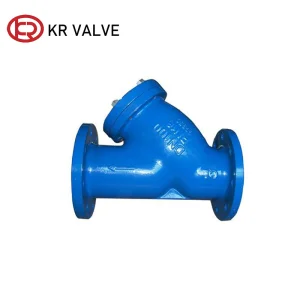
Discover our high-precision hydraulic control valves, soft-seated non-return mechanisms, and industrial strainers manufactured to ISO, BS, DIN, and ANSI specifications.
Global Industrial Hydro-Actuation Market: Technical Evolution & Strategic Imperatives
In modern heavy industry, severe-service processing plants, subsea oil manifolds, and municipal water diversion systems require flow control solutions capable of exerting immense mechanical force with unyielding reliability. OEM hydraulic valve actuators stand at the apex of fluid power automation, providing power densities that pneumatic cylinders and electric motor gearboxes simply cannot match.
As global energy networks transition toward higher operating pressures, automated grid control, and strict environmental compliance, the demand for specialized hydraulic quarter-turn actuators, linear hydraulic cylinders, and electro-hydraulic units (EHPUs) has accelerated. Traditional pneumatic actuators require massive air compressor stations and suffer from compressibility delays, whereas purely electrical actuators struggle under extreme emergency shutdown (ESD) torque spikes and high-frequency modulating duty cycles. Hydraulic actuation bridges this engineering gap by leveraging incompressible fluid power to yield power outputs up to 600,000 Nm of torque in compact physical footprints.
From an engineering perspective, modern hydraulic valve actuators must comply with rigorous international standards, including ISO 5211 (valve mounting interfaces), API 6D (pipeline valve specifications), ASME B16.34, and ATEX/IECEx directives for explosive atmospheres. Today's industrial procurement leads are no longer merely purchasing standardized off-the-shelf actuators; they require tailor-made OEM configurations with integrated hydraulic power units (HPU), spring-return emergency fail-safe mechanisms, smart digital positioners, and smart condition-monitoring sensors for predictive maintenance.
Engineering Architecture of Advanced OEM Hydraulic Valve Actuators
To select the optimal actuation mechanism for industrial ball valves, butterfly valves, gate valves, and check valves, OEM engineers must analyze structural kinematic designs, pressure ratings, and hydraulic control fluid dynamics.
Scotch Yoke Mechanism
Engineered specifically for quarter-turn ball, butterfly, and plug valves. Features a canted or symmetric yoke design that delivers maximum torque at the break-open and closing positions. Ideal for heavy-duty pipeline isolation requiring SIL-3 certified safety shutdowns.
Linear Hydraulic Cylinders
Designed for gate valves, globe valves, and hydro-power dam intake gates. Employs heavy-duty tie-rod or welded cylinder construction with honed steel barrels and induction-hardened chrome-plated piston rods for high-thrust linear positioning under extreme differential pressure.
Electro-Hydraulic (EHPU)
Self-contained units combining an electric motor, hydraulic pump, fluid reservoir, and actuator in one compact package. Eliminates external hydraulic piping networks while retaining fluid force density and high-speed emergency fail-safe capabilities.
Key Engineering Parameters & Material Science
Reliability in severe environments (subsea, chemical plants, desert oilfields) depends on advanced metallurgy and precise seal selection:
- Cylinder Barrel Construction: High-grade carbon steel or 316L stainless steel, inner surface micro-honed to Ra < 0.2 μm for minimal friction and extended seal life.
- Piston Rod Surface Treatments: Induction hardened carbon steel coated with hard chrome (25+ microns) or High-Velocity Oxygen Fuel (HVOF) thermal spray coatings to resist hydrogen sulfide (H2S) cracking and salt-spray corrosion (tested over 1,500 hours ASTM B117).
- Fluid Medium Compatibility: Engineered to operate smoothly with mineral oils (ISO VG 32/46), synthetic fire-resistant fluids (HFD-U), and eco-friendly water-glycol mixtures (HFC) for hydroelectric installations.
- Sealing Tech: Low-friction PTFE step seals, Viton (FKM) O-rings, and HNBR lip seals designed to operate in extreme ambient temperatures ranging from -40°C to +180°C.
China Factory 4.0: Manufacturing Ecosystem, Precision & Resilience
The global industrial valve and actuator manufacturing landscape has undergone a dramatic transformation. Chinese valve manufacturing hubs—such as Tianjin—have integrated smart foundry technologies, automated CNC machining centers, and digital quality assurance lines to offer unparalleled cost efficiency and supply chain resilience.
Automated Foundries
Ductile iron (GGG40, GGG50, QT450-10) and cast steel (WCB, CF8M) poured using automated green sand moulding lines with spectroscopic material composition validation.
5-Axis Machining
High-speed multi-axis CNC gantry centers guarantee micron-level dimensional tolerances for cylinder bodies, piston seals, and mounting drive shafts.
100% Quality Inspection
Every valve actuator undergoes computerized hydrostatic pressure testing, seal leakage verification, dynamic torque output profiling, and NDT ultrasonic scans.
Supply Resilience
Fully integrated vertical raw material sourcing reduces OEM lead times from standard 24-week European cycles down to 6–8 weeks for custom builds.
By combining local raw material abundance with lean automated assembly lines, Chinese OEM hydraulic valve actuator manufacturers deliver world-class build quality at a fraction of the Total Cost of Ownership (TCO), making them the preferred partners for international EPC contractors and valve brand owners.
Global Procurement Dynamics: Evaluating OEM Actuator Factories
When sourcing hydraulic valve actuators for enterprise-scale projects, procurement officers and engineering leaders must look beyond unit purchase prices. Strategic evaluation requires a multi-faceted audit framework focused on lifecycle reliability, international certifications, and customization agility.
Essential Vendor Evaluation Checklist for EPC Buyers:
1. Traceability & MTRs
Full mill test report (MTR) compliance matching EN 10204 3.1 standards. Verification of chemical composition, yield strength, and impact toughness tests down to raw casting heats.
2. Cycle Life Testing
Proven endurance test certifications (minimum 500,000 to 1,000,000 continuous operating cycles) performed under simulated full-rated pressure and maximum torque overload.
3. TPI Verification
Seamless integration of Third-Party Inspection (TPI) protocols with global agencies such as SGS, TÜV Rheinland, Bureau Veritas, or DNV for Factory Acceptance Testing (FAT).
Mission-Critical Application Scenarios Across Global Infrastructure
Hydraulic valve actuators operate in some of the most unforgiving working environments across the world. Below are primary field application profiles showcasing localized engineering deployment:
Subsea Oil & Gas
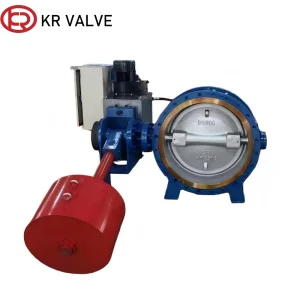
Deepwater pipeline isolation valves equipped with subsea hydraulic actuators designed for extreme external hydrostatic pressure, featuring fail-safe mechanical spring return systems.
Hydroelectric Dams
Large-diameter penstock emergency shut-off gates driven by long-stroke hydraulic linear actuators providing precise speed modulation and energy dissipation control.
Municipal Smart Water
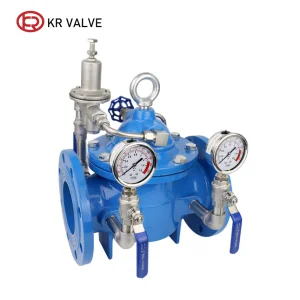
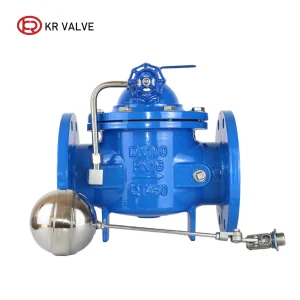
Diaphragm-operated hydraulic control valves (100X float control, 200X pressure reducing) managing surge protection and pressure regulation in urban distribution networks.
Refining & Chemicals
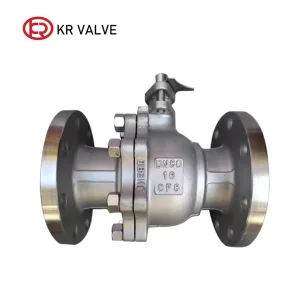
Explosion-proof electro-hydraulic emergency shutdown (ESD) actuators mounted on heavy-duty metal-seated ball valves for immediate thermal-cracking line isolation.
Hydraulic vs. Pneumatic vs. Electric Actuators
To clarify design selection, the table below compares key operational parameters across the three dominant industrial valve actuation technologies:
| Engineering Metric | Hydraulic Actuators | Pneumatic Actuators | Electric Actuators |
|---|---|---|---|
| Power Density & Max Torque | Ultra-High (> 600,000 Nm) | Medium to High (up to 100,000 Nm) | Moderate to High (up to 80,000 Nm) |
| Operating Fluid Pressure | 100 bar to 350 bar (1450 - 5000 psi) | 4 bar to 10 bar (58 - 145 psi) | N/A (Electrical Power) |
| Emergency Shutdown Speed | Fast (< 0.5s with Accumulator) | Fast (0.5s - 2s with Quick Exhaust) | Slow (Requires Battery/UPS Backup) |
| Positioning Precision | High (Incompressible Fluid Control) | Moderate (Air Compressibility Issues) | High (Digital Servo Control) |
| Explosion-Proof Rating | ATEX / IECEx Intrinsically Safe Option | Inherently Explosion-Proof | Requires Heavy Flameproof Enclosure |
| Physical Footprint | Very Compact for Torque Rating | Large (Requires Large Cylinders) | Moderate (Gearbox Dependent) |
Frequently Asked Questions by Industrial Buyers
Direct engineering responses to key sourcing, technical, and operational questions regarding OEM hydraulic valve actuators.
Hydraulic actuators utilize incompressible fluid at high operating pressures (100–350 bar), offering vastly superior power density. This enables them to generate enormous torque or linear thrust within a small mechanical footprint while providing instant, high-speed fail-safe operation during emergency shutdowns (ESD) using hydraulic accumulators or mechanical springs.
Double-acting actuators require hydraulic pressure to drive the valve in both opening and closing directions. They are ideal for standard modulating services where hydraulic power is always present. Spring-return actuators feature a heavy-duty internal mechanical spring package that automatically returns the valve to a safe position (Fail-Open or Fail-Closed) upon loss of hydraulic pressure or electric control signals, which is critical for emergency safety lines.
The most common international standard is ISO 5211, which defines flange dimensions, drive bolt circles, and female drive shaft configurations (double-D, square, or keyway). Linear actuators typically follow ISO 5210 or MSS SP-101 standards to ensure universal interchangeability with gate and globe valve stems.
Yes. We specialize in custom OEM Electro-Hydraulic Power Units (EHPUs) that integrate an electric motor, micro-hydraulic pump, fluid reservoir, solenoid manifold, and hydraulic cylinder into a single weather-proof or explosion-proof enclosure. They operate directly from localized electric signals without needing central hydraulic pipelines.
Our manufacturing line performs 100% hydrostatic testing at 1.5 times the rated operating pressure. Cylinder bores are micro-honed to Ra < 0.2 μm, and we utilize dual-lip PTFE PTFE-energized seals combined with Viton or HNBR backing rings, tested in accordance with ISO 5208 and API 598 zero-leakage criteria.
All shipments include comprehensive EN 10204 3.1 Material Test Reports (MTRs), hydrostatic test certificates, dimensioned assembly drawings, paint/coating inspection logs, and SIL-2/SIL-3 safety integrity documentation upon request.
Precision Valves & Actuators Series (Part II)
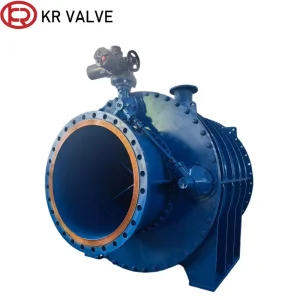
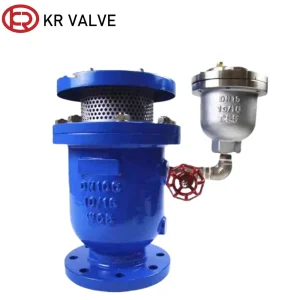
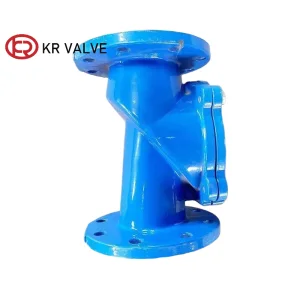
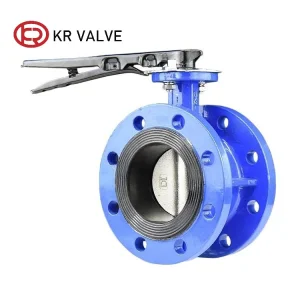
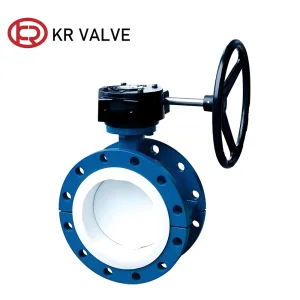
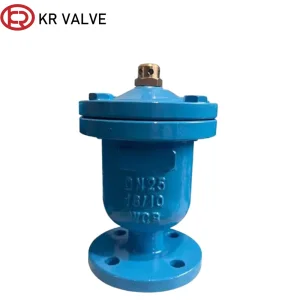
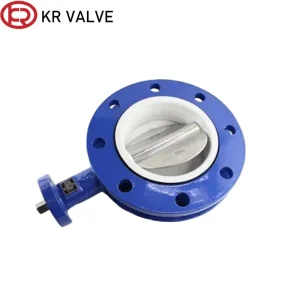
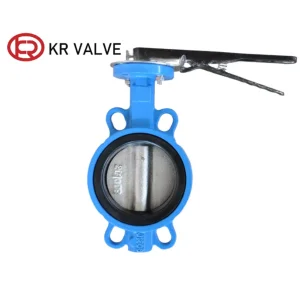
Explore our catalog of specialized butterfly valves, high-speed release air valves, energy dissipation conical valves, and split-body PTFE lined mechanisms.
Partner with a Trusted OEM Hydraulic Actuator Manufacturer
Whether you are engineering a custom subsea pipeline manifold, upgrading hydro-electric intake gates, or seeking high-volume OEM private-label manufacturing, our technical engineering team is ready to deliver tailored actuation solutions.
Request Technical Specifications & OEM Quotation