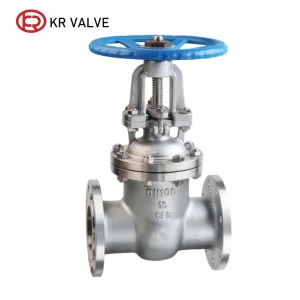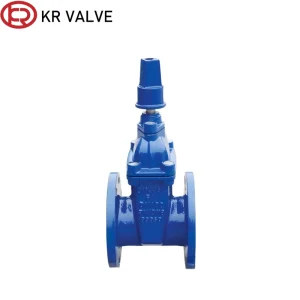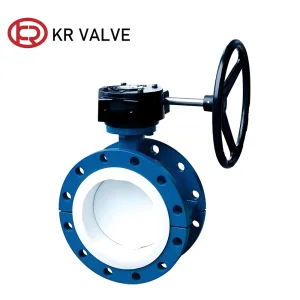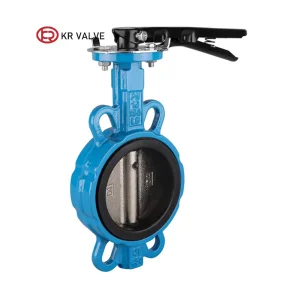
Featured Industrial Flow Solutions
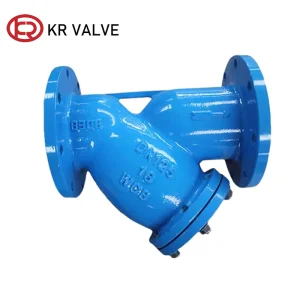
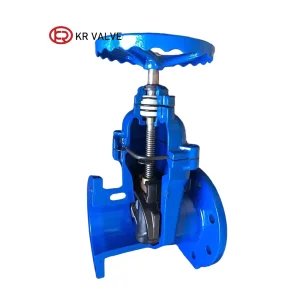
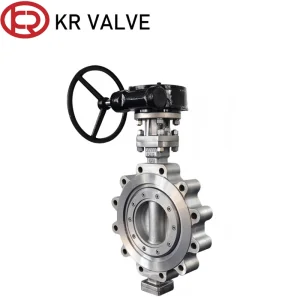
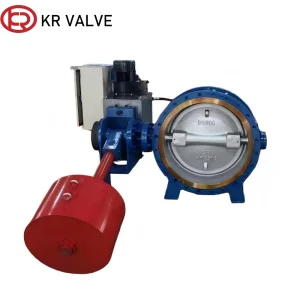
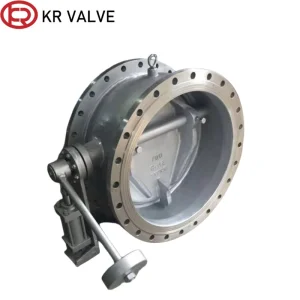
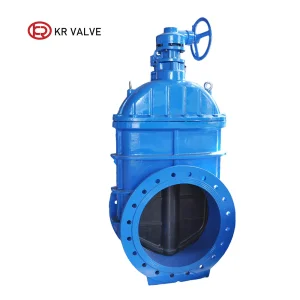
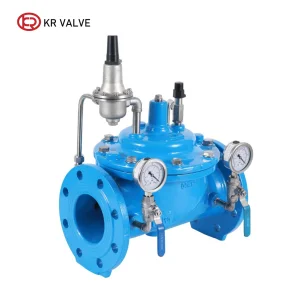
Explore our certified range of resilient seated gate valves, high-performance butterfly valves, hydraulic control units, and pipeline check valves engineered to AWWA, DIN, and BS standards.
Global Commercial Status & Industrial Demand Analysis
Strategic insights into the global expansion of resilient seat gate valves across municipal water distribution, wastewater management, and industrial fluid control.
The global industrial valve market is experiencing a profound paradigm shift, driven by municipal water infrastructure modernization, mega-scale seawater desalination expansion, and rigorous environmental regulations regarding fluid containment. Within this landscape, the Resilient Seat Gate Valve (RSGV) stands as the primary isolation standard for potable water, recycled water, and neutral liquid pipelines worldwide. Unlike legacy metal-to-metal seated sluice valves—which suffer from sediment entrapment, corrosion scaling, and chronic seat leakage—resilient seated gate valves incorporate a fully rubber-encapsulated wedge that yields a zero-leakage, bubble-tight seal even when micro-particulates are present in the flow stream.
As an established OEM Resilient Seat Gate Valve Manufacturer & Factory, our enterprise operates at the intersection of metallurgy, polymer chemistry, and automated mechanical machining. Global demand for RSGV solutions is expanding rapidly across North America, Europe, the Middle East, and Southeast Asia. Infrastructure asset managers and EPC contractors prioritize valves engineered with non-rising stems (NRS) for underground buried service and outside screw and yoke (OS&Y) configurations for fire protection systems (UL/FM standards) and plant-floor visibility.
Anatomy & Metallurgical Architecture of Resilient Seat Gate Valves
Technical breakdown of ductile iron castings, vulcanized elastomeric wedges, stem torque characteristics, and anti-corrosion barrier coatings.
Ductile Iron Body (QT450-10 / GGG50)
EPDM / NBR Encapsulated Wedge
Stainless Steel Stem & Thrust Bearings
| Component | Standard Specification | Material Options | Testing & Compliance Standard |
|---|---|---|---|
| Valve Body & Bonnet | EN-GJS-500-7 / EN-1563 | Ductile Iron GGG50, Cast Steel WCB, Stainless Steel CF8/CF8M | EN 1074-1/2, AWWA C515, DIN 3352 F4/F5 |
| Resilient Wedge Seal | High Elastomer Vulcanized EPDM | Potable Water EPDM (NSF-61/WRAS), Oil-Resistant NBR | ISO 4633 / EN 681-1 Rubber Seal Standards |
| Stem Nut | High Tensile Brass / Bronze | Aluminum Bronze, Brass CuZn39Pb2, Gunmetal CC491K | BS EN 1982 / ASTM B584 |
| Coating System | Fusion Bonded Epoxy (FBE) | Electrostatically Applied Epoxy Powder (250-300 microns) | DIN 30677-2 / GSK Anti-Corrosion Certification |
| Pressure Rating | PN10 / PN16 / PN25 / Class 125 / Class 150 | Hydrostatic Shell: 1.5x PN; Seat: 1.1x PN | ISO 5208 / EN 12266-1 Leak Rate Grade A |
OEM/ODM Customization & Manufacturing Workflow
From pattern design and automated sand casting to CNC machining and hydrostatic verification, our factory delivers tailor-made OEM valve solutions.
Precision Casting & Molding
CNC Machining & STEM Rolling
FBE Coating & Vulcanization
100% Hydrostatic Inspection
Localized Application Scenarios & Regional Customization
Adapting valve configurations to specific geographic environments, regional standards, and specialized fluid handling tasks.
North American Municipal (AWWA C515 / C509)
European Urban Distribution (DIN 3352 F4/F5)
Middle East High Salinity & Desalination
Industrial Fire Protection (UL / FM OS&Y)
Macro-Industry Solutions & System Reliability
Seamless integration of gate valves, butterfly valves, check valves, and strainers into total fluid control frameworks.
In modern water distribution networks and large-scale industrial plants, individual components must function as a synchronized ecosystem. Deploying an OEM Resilient Seat Gate Valve at isolation points ensures negligible head loss during full bore open operation (Kv value maximized). However, long-term network protection requires paired deployment with auxiliary valve technologies:
Pressure Reduction & Surge Mitigation
Debris Filtration & Pump Protection
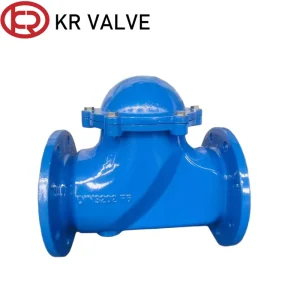
Backflow Prevention & Non-Return
Technology Roadmap: Next-Generation Valve Engineering
Pioneering smart monitoring integration, eco-friendly elastomeric formulations, and digital twin technology for smart water utilities.
1. IoT Sensor Integration & Real-Time Diagnostics
Future water grids demand predictive maintenance rather than reactive repairs. Our advanced R&D pipeline integrates low-power IoT sensor stems into resilient gate valves. Built-in micro-transducers measure stem torque drift, internal cavity pressure anomalies, and acoustic vibration signatures, wirelessly transmitting real-time operational metrics to SCADA control centers before total seal wear occurs.
2. Advanced Nano-Composite Rubber Coatings
In response to bio-fouling and chemical chloramination in modern water purification plants, our materials laboratory is testing fluoropolymer-grafted EPDM wedges. These nano-composite elastomeric seals double micro-tear resistance and reduce frictional torque coefficients by 35%, ensuring low handwheel operating forces over 10,000+ continuous cycling tests.
3. Carbon Neutrality & Sustainable Manufacturing
Our OEM manufacturing facilities are transitioning toward 100% closed-loop electric induction melting furnaces and VOC-free waterborne epoxy powder coating processes. Lightweight yet ultra-high-strength ductile iron casting designs reduce raw material consumption while preserving mechanical pressure ratings.
Comparative Analysis: Resilient Seat vs. Metal Seat Valves
Evaluating key differences to guide engineering selection for long-term project reliability.
| Evaluation Parameter | Resilient Seat Gate Valve (RSGV) | Metal Seat Gate Valve | Concentric Butterfly Valve |
|---|---|---|---|
| Sealing Leak Rate | Zero Leakage (ISO 5208 Rate A) | Rate D / E (Minor weeping allowed) | Zero Leakage (Rubber Lined) |
| Debris Tolerance | High (Debris flushes via smooth bore) | Low (Particulates scratch metal seat) | Medium (Disc blocks flow center) |
| Flow Resistance (Kv) | Maximum (Full unobstructed bore) | Maximum (Full unobstructed bore) | Medium (Disc remains in flow stream) |
| Max Media Temperature | Up to 80°C (EPDM) / 120°C (High-Temp) | Up to 300°C+ (Metal-to-Metal) | Up to 90°C (EPDM) / 180°C (PTFE) |
| Primary Application | Potable Water, Sewage, Fire Protection | Steam, Crude Oil, High Temp Fluids | HVAC, Space-Constrained Plants |
Frequently Asked Questions (FAQ) for OEM Buyers
Expert answers to key engineering, procurement, and quality assurance queries.
What is the key functional advantage of a Resilient Seat Gate Valve over a Metal Seated Valve?
The primary advantage lies in its cavity-free full-bore design and elastomeric wedge memory. Metal-seated valves have a bottom groove that traps sand, rust scales, and sediment, preventing the wedge from seating completely and causing persistent leaks. Resilient seat valves feature a flat bottom design where rubber-coated wedges absorb micro-solids and compress against a smooth coated body, yielding bi-directional, zero-bubble leakage.
What standard certifications should I specify for municipal drinking water applications?
For drinking water projects, you should specify NSF/ANSI 61 and NSF/ANSI 372 (North America), WRAS (UK), KWA (Germany), or ACS (France). These ensure that the internal Fusion Bonded Epoxy (FBE) coating and EPDM rubber wedge do not leach toxic compounds, heavy metals, or organoleptic impurities into potable water lines.
Should I choose a Non-Rising Stem (NRS) or Rising Stem (OS&Y) gate valve?
Choose NRS (Non-Rising Stem) for underground buried installations, valve pits, or compact spaces where headroom is limited. The stem thread remains inside the valve body. Choose OS&Y (Outside Screw & Yoke) for fire protection systems, chemical plants, or above-ground pumping stations where visual verification of open/closed status is required for safety protocols.
How does your factory ensure the adhesion and quality of the epoxy powder coating?
Our factory performs automatic shot-blasting to Sa 2.5 cleanliness before heating bodies to 200°C+. Electrostatically applied non-toxic epoxy powder cures to a minimum dry film thickness (DFT) of 250 to 300 microns. Every coating batch undergoes cross-hatch adhesion testing, holiday spark testing (at 2000V), and impact resistance checks according to DIN 30677-2.
What custom OEM options are available for global distributor orders?
We offer comprehensive OEM/ODM customization including: custom brand logo casting/embossing on bodies, specific stem materials (SS304, SS316, Duplex 2205), specialized flange drilling (ANSI B16.5, EN 1092-2, BS4504, JIS B2220), extension stems, gearbox operators, electric/pneumatic actuation top flanges (ISO 5210), and customized wooden crate export packaging.
Additional Specialized Industrial Valves
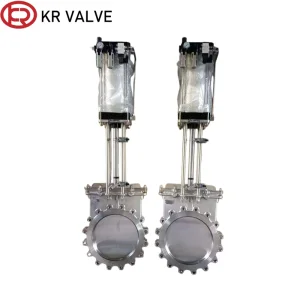
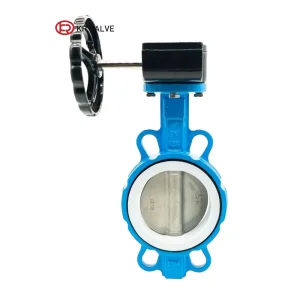
Explore our extended portfolio of high-pressure gate valves, PTFE lined butterfly valves, strainers, and underground ductile iron options.