OEM Spring Loaded Check Valve Supplier & Factories
Comprehensive Technical Reference Guide: Advanced Axial Hydrodynamics, Precision Cracking Pressure Calibration, and Zero-Downtime Smart Manufacturing for Critical Industrial Applications.
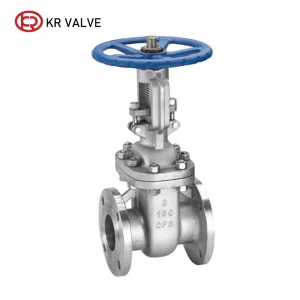
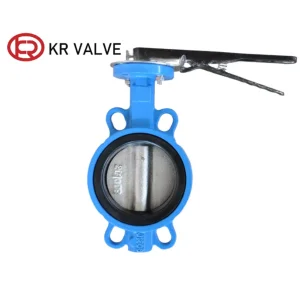
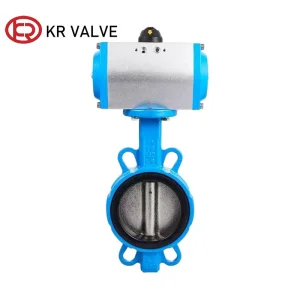
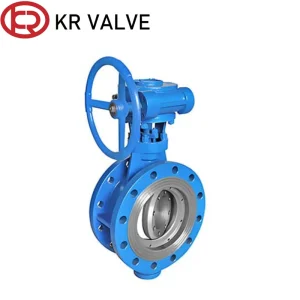
Featured Industrial Valves & Flow Assemblies
Explore our primary range of engineered non-return, isolation, and fluid control valves built to ANSI, DIN, and BS international benchmarks.
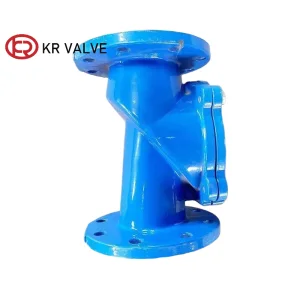
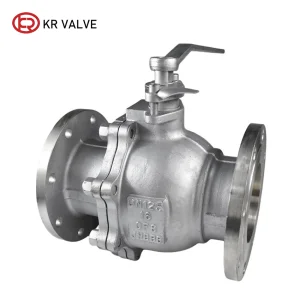
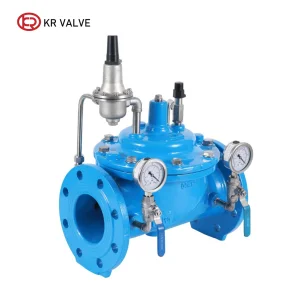
Fundamentals of Spring-Loaded Non-Return Hydrodynamics
In modern liquid and gas pipeline infrastructure, backflow prevention is not merely an operational necessity—it is a critical safety safeguard. A Spring Loaded Check Valve (also known as a silent or axial spring-assisted non-return valve) employs mechanical spring force to assist in closing the valve disc before fluid flow reverses. Unlike traditional gravity-dependent swing check valves, spring-loaded configurations function independently of gravity, rendering them ideal for vertical piping runs, high-velocity fluid circuits, and severe water hammer prone environments.
When an OEM buyer or EPC contractor partners with a specialized manufacturer, precise engineering parameters such as cracking pressure ($\Delta P_{crack}$), dynamic sealing behavior, flow coefficient ($C_v / K_v$), and seat metallurgy must be customized to the exact fluid dynamics of the host system. As a leading China valve manufacturer with over two decades of metallurgical and valve design expertise, our factories offer end-to-end original equipment manufacturing (OEM) and custom engineering capabilities tailored to global industrial standards.
Traditional swing check valves depend on reverse liquid velocity to force the disc closed, often creating hydraulic shockwaves (water hammer) exceeding 300% of nominal system pressure. A spring-loaded check valve initiates closure at the exact instant forward velocity drops to zero, seating the disc fractionally prior to flow reversal and reducing transient pressure spikes by up to 85%.
Metallurgical Synthesis & Internal Mechanics
Selecting the correct OEM specification requires an intimate understanding of component interaction inside the valve body under extreme pressure differentials, thermal stress, and aggressive media contact.
Spring Kinematics & Fatigue Life
Our OEM spring elements are custom-wound using high-tensile Austenitic Stainless Steel (SS316 / SS302), Inconel X-750, or Hastelloy C-276. We design helical compression springs operating at safe stress thresholds (< 45% of yield stress), guaranteeing over 1,000,000 continuous full-stroke cycles without relaxation or stress corrosion cracking (SCC).
Precision Body Castings
Utilizing investment casting (lost-wax process) for stainless steel (CF8/CF8M) and resin sand casting for ductile iron (GGG40/GGG50) or cast steel (WCB), our OEM factories ensure void-free pressure boundaries with wall thickness compliance exceeding ASME B16.34 standards.
Dual-Sealing Tribology
Depending on system requirements, our OEM factories engineer soft-sealed elastomer configurations (EPDM, Viton/FKM, NBR, PTFE) achieving ISO 5208 Rate A zero-leakage, or hard metal-to-metal seating (Stellite #6 facing or SS316 overlay) capable of handling temperatures up to 550°C and particulate-laden fluids.
Component Specification Matrix
| Component | Standard OEM Material Options | Optional High-Spec Alloy | Design Standard Compliance |
|---|---|---|---|
| Valve Body | Ductile Iron (GGG40 / EN-GJS-400-15), WCB Cast Steel, CF8 (304 SS) | CF8M (316 SS), Duplex SS 2205, Monel 400 | API 594 / ASME B16.34 / EN 12516 |
| Internal Disc / Plug | SS304, Stainless Steel CF8M, Ductile Iron with EPDM coating | Hastelloy C276, Titanium Gr. 2, Stellite Overlaid SS | API 598 Sealing Criteria |
| Helical Spring | Stainless Steel 304 / 316 Wire | Inconel X-750, Elgiloy, Nimonic 90 | ASTM A313 / EN 10270-3 |
| Seat & O-Rings | Resilient EPDM, NBR, Viton (FKM), PTFE Lined | Metal-to-Metal Stellite Hardfacing, FFKM | BS EN 12266-1 (Rate A Leakage) |
| Guided Stem | SS420 Heat Treated, SS316 Nitrided | 17-4PH (UNS S17400) Stainless Steel | Precision CNC Ground (Ra < 0.4 µm) |
Macro-Industry Solutions & System Integration
Spring-loaded check valves serve across vast industrial infrastructure sectors. Customization of spring rates and flow paths enables these valves to solve unique process engineering challenges.
1. Municipal Water Treatment & Desalination
In high-pressure reverse osmosis (SWRO) plants and deep-well submersible pumping stations, water hammer can ruin expensive membrane vessels and centrifugal pump impellers. Our customized wafer and flanged spring-loaded check valves incorporate silent closing hydrodynamics that absorb line pressure transients during sudden pump shut-offs. Rubber-disc soft sealing guarantees zero siphoning backflows.
2. HVAC, Commercial Boiler & District Heating
Closed-loop hydronic heating networks demand check valves with low cracking pressures (0.05 to 0.1 bar) to prevent thermal thermosiphoning without creating excessive pressure drop ($\Delta P$). Our custom OEM springs are calibrated to maintain precise open-state stability, preventing valve chatter that causes acoustic noise pollution in high-rise building risers.
3. Chemical & Petrochemical Process Lines
Corrosive fluids, acids, and volatile organic compounds (VOCs) require chemical-resistant materials. We offer full PTFE-lined WCB bodies, solid CF8M alloys, and Hastelloy springs that isolate aggressive media from the atmosphere, completely eliminating external leakage risk and meeting stringent ISO 15848-1 fugitive emission standards.
4. Mining, Slurry & Heavy Wastewater
Solid particulates quickly destroy traditional swing check hinges and cause jamming. OEM spring-loaded ball check and non-slam axial disk designs feature self-cleaning contours and hardened metallic seats that resist erosive wear from slurries, tailings, and untreated municipal sewage lines.
China Smart Factories: Resilience & OEM Efficiency
Global procurement teams require more than competitive pricing; they need unyielding supply chain predictability, strict metallurgical consistency, and rigorous quality control. Our modern manufacturing operations based in China leverage Industry 4.0 smart plant infrastructure to deliver unmatched OEM valve manufacturing throughput.
Automated CNC Machining Cells
Utilizing multi-axis robotic CNC turning centers and automated coordinate measuring machines (CMM), every valve body stem guide, disc face, and seat pocket is machined within tolerances as tight as $\pm 0.005$ mm, ensuring perfect axial alignment and frictionless stroke motion.
Full-Chain Material Traceability
From optical emission spectrometry (OES) chemical analysis of incoming raw heats to positive material identification (PMI) testing before dispatch, every batch is issued certified EN 10204 3.1 material test certificates (MTC).
Scalable Manufacturing Capacity
With centralized foundry networks and 30+ specialized production facilities, we easily scale production from specialized custom prototype orders to multi-container EPC project shipments while maintaining lead times up to 40% faster than European peers.
Spring-Loaded Check Valve Technology Roadmap (2026–2030)
As smart fluid distribution networks evolve toward digital twin monitoring and decarbonized green energy transportation, traditional mechanical check valves are undergoing continuous technological refinement:
1. IoT Smart Acoustic & Position Sensing Integration
Next-generation check valves will incorporate piezoelectric acoustic emission sensors embedded inside the body casing. These non-intrusive sensors capture ultrasonic vibrations caused by internal seat bypass, spring degradation, or disc fluttering—transmitting real-time health data to central SCADA systems via LoRaWAN/NB-IoT protocols for predictive maintenance before catastrophic failure occurs.
2. Computational Fluid Dynamics (CFD) Flow Optimization
Using advanced 3D CFD simulation, our R&D engineers are reshaping internal valve geometries to minimize turbulence and eddies around the spring guide spider. Modern streamlined internal contours boost flow coefficients ($C_v$) by 22% over traditional check valve designs, directly cutting lifetime pump power consumption and carbon footprints.
3. Cryogenic & Hydrogen Media Compatibility
With the global rise of Liquid Natural Gas (LNG) logistics and green hydrogen energy grids, spring-loaded check valves must operate flawlessly down to $-196^\circ\text{C}$. Our OEM cryogenic valves feature extended bonnets, specialized lip-seals, and austenitic stainless steels subjected to liquid nitrogen deep-freezing treatment to achieve dimensional stability and zero embrittlement.
4. Additive Manufactured Custom Trim Components
Direct metal laser sintering (DMLS) 3D printing enables our OEM factory to manufacture complex variable-pitch springs and lattice-structured discs. This technology drastically lowers disc moving mass while optimizing structural strength, allowing near-instantaneous dynamic response ($< 0.01\text{ s}$) to fluid deceleration.
Global Enterprise Valve Selection & Comparison Matrix
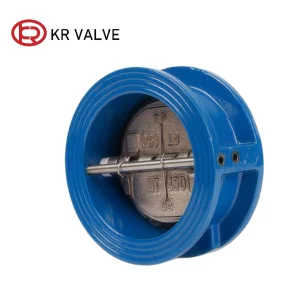
Determining whether a spring-loaded check valve, swing check valve, or dual-plate wafer valve is right for your project requires evaluating space limitations, fluid cleanliness, installation orientation, and initial vs. lifecycle costs.
| Performance Metrics | Spring Loaded Check Valve | Swing Check Valve | Dual-Plate Wafer Check Valve | Ball Type Check Valve |
|---|---|---|---|---|
| Silent Closing / Anti-Water Hammer | ★ ★ ★ ★ ★ (Excellent) | ★ ★ ☆ ☆ ☆ (Poor) | ★ ★ ★ ★ ☆ (Very Good) | ★ ★ ★ ☆ ☆ (Moderate) |
| Vertical Upward Line Suitability | ★ ★ ★ ★ ★ (Ideal) | ★ ☆ ☆ ☆ ☆ (Not Recommended) | ★ ★ ★ ★ ☆ (Capable) | ★ ★ ★ ★ ★ (Ideal) |
| Dirty / Slurry Media Handling | ★ ★ ☆ ☆ ☆ (Fair - Risk of clogging) | ★ ★ ★ ☆ ☆ (Good) | ★ ★ ☆ ☆ ☆ (Fair) | ★ ★ ★ ★ ★ (Self-Cleaning) |
| Face-to-Face Compactness | ★ ★ ★ ★ ★ (Ultra Compact) | ★ ★ ☆ ☆ ☆ (Long Length) | ★ ★ ★ ★ ★ (Ultra Compact) | ★ ★ ★ ☆ ☆ (Moderate) |
| Pressure Drop ($\Delta P$) & Head Loss | ★ ★ ★ ☆ ☆ (Moderate due to spring) | ★ ★ ★ ★ ★ (Lowest Head Loss) | ★ ★ ★ ★ ☆ (Low Head Loss) | ★ ★ ★ ☆ ☆ (Moderate) |
| Cracking Pressure Customization | ★ ★ ★ ★ ★ (Highly Adjustable) | ★ ☆ ☆ ☆ ☆ (Fixed by gravity) | ★ ★ ★ ★ ☆ (Spring adjustable) | ★ ★ ☆ ☆ ☆ (Limited) |
Localized Support, Global Standards & Quality Certification
To facilitate seamless global trade and field implementation, our OEM manufacturing framework adheres to major international quality assurance protocols and regional certifications:
Pressure Equipment Directive (CE PED)
All pressure-containing cast components conform to Category I, II, III, or IV of the European Union Directive 2014/68/EU (PED), enabling unrestricted deployment in European industrial installations.
WRAS & NSF/ANSI 61 Drinking Water
For municipal drinking water projects, our elastomeric seals (EPDM) and non-toxic epoxy coatings hold WRAS, ACS, and NSF certifications, guaranteeing zero migration of harmful substances into potable water networks.
Custom OEM Branding & Packaging
We support private label laser engraving, customized casting logos on valve bodies, client-specific tag numbers, and reinforced seaworthy wooden crate packaging compliant with ISPM-15 heat treatment standards.
Spring Loaded Check Valve FAQ (OEM Insights)
Detailed responses to common questions from plant operations teams and valve buyers:
What is cracking pressure, and how do I select the right rating for my OEM order?
Can spring-loaded check valves be installed vertically?
How do spring-loaded check valves eliminate water hammer?
What is the typical lifespan of the internal stainless steel spring?
What customization options are available for OEM buyers?
What quality testing does every valve undergo prior to export shipment?
Complementary Pipeline Components & Valves
Discover additional high-performance industrial valves manufactured in our OEM production lines.