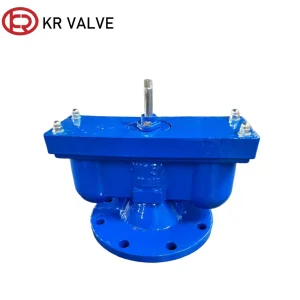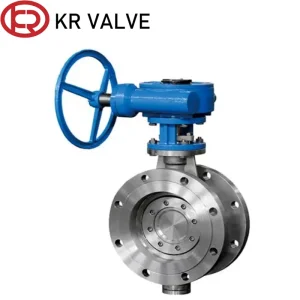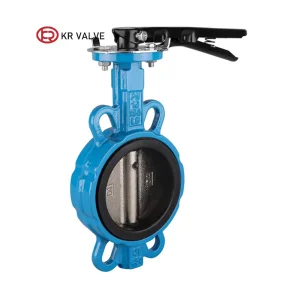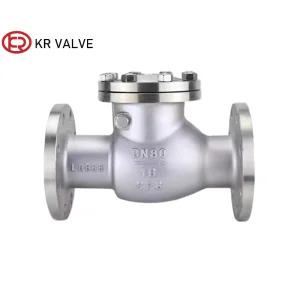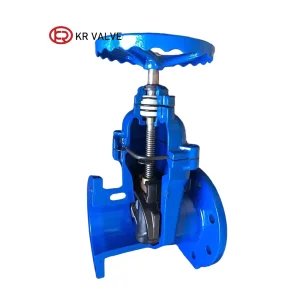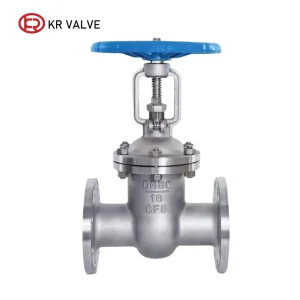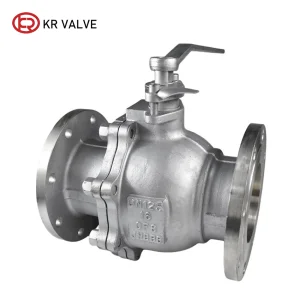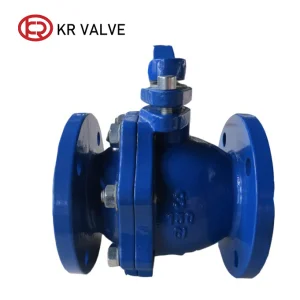
Featured Industrial Valve Lineup (Primary Selection)
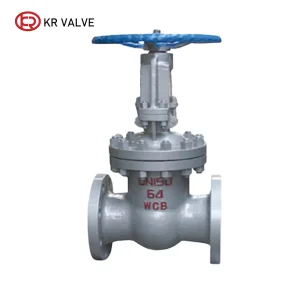
Explore our high-performance stainless steel and heavy-duty industrial valves built to international ANSI, DIN, and BS standards.
1. Global Industrial & Commercial Landscape of Stainless Steel Gate Valves
Analyzing structural demand shifts across petrochemical, desalination, cryogenic LNG, and high-purity chemical processing networks.
In modern process engineering, Stainless Steel (SS) Gate Valves serve as the critical line of defense for fluid isolation across high-consequence industrial infrastructure. Unlike secondary control components designed for flow throttling, gate valves are engineered specifically for full-bore, low-pressure-drop, bi-directional shutoff. As global industrial processing trends pivot toward aggressive chemical media, elevated operational temperatures, and strict environmental fugitive emission mandates, procurement specialists and project engineers are increasingly turning to specialized OEM SS gate valve manufacturers to secure tailor-made, high-alloy flow control solutions.
The macro-economic outlook for stainless steel gate valves indicates continuous structural growth, driven by key global industrial transformations:
- Energy Transition & Cryogenic LNG Expansion: The rapid movement toward Liquefied Natural Gas (LNG) transport and green hydrogen blending requires gate valves constructed from low-carbon austenitic stainless steels (such as ASTM A351 CF3M/316L) capable of maintaining structural ductility and bubble-tight isolation at cryogenic temperatures down to -196°C.
- Seawater Desalination & Offshore Marine Infrastructure: Rising global fresh-water scarcity has accelerated investments in Reverse Osmosis (RO) plants. Standard carbon steel valves fail rapidly in marine and brine environments due to chloride pitting. Consequently, Super Duplex (2507 / CE3MN) and Duplex Stainless Steel (2205 / CD3MN) gate valves with high Pitting Resistance Equivalent Numbers (PREN ≥ 40) are becoming standard specifications.
- Aggressive Chemical Processing & Refineries: Downstream petrochemical plants refining sour crude oil face severe NACE MR0175/ISO 15156 H₂S sulfide stress cracking conditions. Custom OEM manufacturing allows exact metallurgical tuning—such as Monel or Hastelloy trim overlays on SS bodies—to prevent catastrophic intergranular corrosion.
| Stainless Steel Material Grade | Equivalent Cast Standard | PREN Index | Primary Application Environment | Corrosion Resistance Profile |
|---|---|---|---|---|
| SS 304 / 304L | ASTM A351 CF8 / CF3 | ~19.0 | Potable Water, HVAC, Mild Organic Acids | Standard atmospheric & non-chloride aqueous media |
| SS 316 / 316L | ASTM A351 CF8M / CF3M | ~25.0 | Petrochemicals, Marine Water, Nitric Acid | Superior pitting resistance in moderate chloride environments |
| Duplex 2205 | ASTM A890 CD3MN / 4A | ~34.0 | Desalination High-Pressure Lines, Brine | High mechanical yield strength combined with stress-corrosion immunity |
| Super Duplex 2507 | ASTM A890 CE3MN / 5A | ≥ 42.0 | Offshore Subsea, Concentrated Acids, FPSOs | Maximum resistance to extreme chloride pitting and crevice corrosion |
2. Mechanical Architecture & Metallurgical Engineering White Paper
Deconstructing wedge dynamics, stem packing seal integrity, and pressure-temperature rating mechanics in heavy-duty OEM SS gate valves.
Flexible Wedge vs. Solid Wedge Mechanics
OEM SS gate valves utilize precision-machined flexible wedges featuring a cut-out slot along their perimeter. This design provides micro-elastic deflection, compensating for thermal line expansion and pipeline strain without binding. This prevents "thermal binding" in high-temperature steam lines up to 538°C.
Fugitive Emission Control & Packing Glands
To satisfy environmental EPA Method 21 and ISO 15848-1 Class AH standards, our OEM stems undergo precision roller burnishing to achieve a surface roughness of Ra < 0.4 µm. Combined with die-formed flexible graphite rings and Belleville live-loading springs, zero stem leakage is maintained across thousands of operational cycles.
Stellite #6 Hardfacing & Seat Surface Tribology
Gall resistance is critical in stainless steel valve operation due to the metal's natural tendency to work-harden and bind under high contact stress. We deposit Cobalt-base Stellite #6 hardfacing onto seat rings and wedge sealing faces using Plasma Transferred Arc (PTA) welding, maintaining a minimum 38 HRC surface hardness.
API 600 vs. API 603 Design Code Analysis for Stainless Steel Valves
When specifying OEM SS Gate Valves, plant designers must select between two dominant standards:
- API 600 (Heavy-Duty Industrial Standard): Mandates heavy wall thicknesses exceeding ASME B16.34 requirements. It specifies a removable or integral bottom seat ring design with substantial corrosion allowance, making it ideal for severe-service hydrocarbon refineries.
- API 603 (Lightweight Corrosion-Resistant Standard): Tailored specifically for stainless steel, duplex, and high-alloy formulations where chemical corrosion resistance—rather than structural wall erosion—is the primary design factor. API 603 provides thinner wall sections, reducing total valve weight and cost while maintaining complete mechanical integrity under ASME Class 150 to Class 600 pressure ratings.
3. Chinese Manufacturing Resilience & OEM Cost-Efficiency Advantages
How integrated industrial clusters, advanced investment casting foundries, and automated CNC lines deliver superior value to global EPC buyers.
The global valve sourcing dynamic has shifted decisively toward advanced manufacturing hubs in China. China’s engineering ecosystem offers unprecedented supply chain resilience, combining raw material foundry integration, precision machining, and rigorous quality testing under unified geographic industrial clusters (such as the Tianjin and Bohai Bay valve manufacturing zones).
Silica Sol Investment Casting Precision
Unlike conventional sand casting which yields coarse surfaces and potential internal porosity, modern Chinese OEM SS gate valve factories utilize fully automated Silica Sol Investment Casting. This process yields near-net-shape castings with dimensional accuracy compliant with ISO 8062 CT4-CT6 and surface finishes matching MSS SP-55 quality standards. Chemical homogeneity is verified on every melt heat via Optical Emission Spectrometry (OES).
Full Traceability & Zero-Defect QA Testing
Every single OEM valve shell and seat undergoes 100% hydrostatic and pneumatic pressure testing in accordance with API 598 and EN 12266-1 prior to shipment. Material test reports (MTRs) compliant with EN 10204 3.1 are automatically generated, including Positive Material Identification (PMI) spectrographic confirmation, Radiographic Testing (RT) on critical wall sections, and Dye Penetrant Inspection (PT) on hardfaced seating areas.
Furthermore, Chinese OEM valve factories leverage massive economies of scale in raw material procurement (304, 316, and Duplex ingots), reducing raw material lead times by 35% compared to Western counterparts. End-to-end digitised supply chains enable fast prototyping of non-standard valves, supporting custom flange face-to-face dimensions (DIN F4, DIN F5, ANSI B16.10) within compressed 4-to-6 week delivery schedules.
4. Hyper-Localized Industrial Application Scenarios
Custom OEM engineering adaptations for extreme operating environments around the world.
North American Petrochemical Refineries (NACE Compliance)
Operating Conditions: High-concentration hydrogen sulfide (H₂S) gas, sour water stripper units, and high ambient vibration.
OEM Solution: SS 316L body castings subjected to solution annealing heat treatment, strictly meeting NACE MR0175 / ISO 15156 hardness limits (<22 HRC). Outfitted with live-loaded packing to eliminate fugitive VOC leaks under US EPA Clean Air Act mandates.
Middle East Seawater Desalination Plants (High Salinity RO)
Operating Conditions: High-pressure seawater feed pumps operating at 70-80 bar with chloride concentrations exceeding 45,000 ppm.
OEM Solution: High-grade Duplex 2205 (ASTM A890 4A) or Super Duplex 2507 (5A) full-port gate valves equipped with sacrificial zinc/aluminum anodes or specialized epoxy-coated exteriors to mitigate crevice corrosion under intense Gulf ambient heat.
European District Energy & Geothermal Lines
Operating Conditions: Superheated hot water networks operating under PN16 to PN40 pressure ratings with cyclic thermal fatigue.
OEM Solution: DIN EN 1984 compliant face-to-face (F4/F5) SS gate valves with extended bonnets to allow thick insulation jackets. Metal-to-metal seated wedges with graphite bonnet gaskets ensure zero maintenance over multi-decade heating cycles.
Southeast Asian Chemical Manufacturing Hubs
Operating Conditions: Production lines handling sulfuric, nitric, and organic acids under high humidity.
OEM Solution: Custom SS 316 or Alloy 20 (CN7M) gate valves lined with virgin PTFE or PFA encapsulation along internal flow passages, eliminating metal contact with aggressive liquid media.
5. Technology Roadmap & Future Industry Outlook (2025–2035)
Next-generation innovations reshaping stainless steel gate valve manufacturing.
Smart IoT Valve Telemetry
Integration of wireless pressure, temperature, and stem-torque sensors within the valve yoke. Machine learning algorithms analyze packing friction and seat displacement, predicting seat wear and enabling predictive maintenance prior to valve failure.
Additive Manufacturing & 3D Topography
Selective Laser Melting (SLM) 3D printing enables custom internal flow channels within SS gates. Internal weight-reduction honeycombs preserve mechanical burst pressure while cutting valve mass by 30%, optimizing payload limits for subsea and aerospace installations.
Pure Hydrogen & Ultra-Low Leakage Sealing
With the transition toward green hydrogen grids, stem sealing systems are being redesigned for micro-molecular containment ($H_2$). Next-gen elastomer-graphite composite packings achieve helium leak rates below $1 \times 10^{-7} \text{ atm}\cdot\text{cm}^3/\text{sec}$.
6. OEM Customization, Quality Assurance & Global Compliance
Comprehensive engineering tailoring backed by international certifications and stringent quality verification.
Custom OEM Mechanical Engineering
Our engineering department supports customized valve designs to meet unique project challenges:
- Actuation Readiness: ISO 5211 direct-mount top flanges for seamless mounting of pneumatic, electric, or electro-hydraulic actuators.
- Specialized Flange End Connections: RF (Raised Face), RTJ (Ring Type Joint), FF (Flat Face), Butt-Weld (BW) to ASME B16.25, or EN 1092-1 Type 11.
- Extended Stem & Cryogenic Bonnets: Tailored stem extension lengths for buried underground service or low-temperature cold box isolation.
International Certification Framework
All manufactured SS Gate Valves comply strictly with global regulatory requirements:
- CE-PED (2014/68/EU): Pressure Equipment Directive compliance for European markets.
- API 6FA / API 607: Certified fire-safe structural performance under extreme thermal exposure.
- ISO 9001 / ISO 14001: Integrated quality management and environmental safety systems.
- SIL-3 Safety Integrity Level: Verified reliability for Emergency Shut Down (ESD) automated valve assemblies.
7. Exhaustive Technical Q&A (Frequently Asked Questions)
Direct answers from our senior engineering team to assist valve buyers and project engineers.
Q1: What is the main structural difference between CF8 (304) and CF8M (316) stainless steel gate valves?
Answer: The primary metallurgical difference lies in the addition of 2.0% to 3.0% Molybdenum in CF8M (cast SS 316). While CF8 (cast SS 304) provides excellent corrosion resistance in standard water, steam, and mild chemical services, CF8M offers significantly enhanced resistance to pitting and crevice corrosion in environments containing chlorides, sea salt, or sulfurous acids. For marine, off-shore, or severe petrochemical operations, CF8M or low-carbon CF3M is strongly recommended.
Q2: How does an OEM factory prevent galling on Stainless Steel Gate Valve seating surfaces?
Answer: Galling occurs when un-coated stainless steel surfaces slide against each other under load, leading to friction welding and severe surface damage. OEM factories mitigate galling by applying hardfacing materials—most commonly Cobalt-base Stellite #6—to either the seat rings, the wedge, or both using Plasma Transferred Arc (PTA) welding. Alternatively, differential hardness between the wedge (e.g., heat-treated 17-4PH SS) and body seat rings prevents adhesive wear during high-differential-pressure operation.
Q3: Why are Rising Stem (OS&Y) designs preferred over Non-Rising Stem (NRS) designs for stainless steel gate valves?
Answer: Outside Screw and Yoke (OS&Y) rising stem designs keep the stem threads completely external to the valve body cavity. This isolates the operating threads from corrosive process media and slurry abrasion, facilitating external lubrication. Additionally, the rising stem provides an immediate visual indication of valve position (open vs. closed), which is essential for safety inspection in industrial process plants.
Q4: What testing documentation is supplied with custom OEM SS Gate Valves?
Answer: Standard OEM documentation packages include EN 10204 Type 3.1 Material Test Reports (MTRs) detailing chemical heat analysis and mechanical tensile/impact testing, API 598 Hydrostatic and Pneumatic Pressure Test Certificates, PMI (Positive Material Identification) verification reports, NDT reports (Radiographic or Dye Penetrant), and Certificate of Compliance to dimensional standards (ASME B16.10 / EN 558).
Q5: Can stainless steel gate valves be used for flow throttling service?
Answer: No. Gate valves are strictly designed for fully open or fully closed isolation. Operating a gate valve in a partially open (throttling) position causes high-velocity fluid turbulence, leading to severe wedge chatter, localized erosion of the seating faces, and premature seat leakage. Globe valves or triple-offset butterfly valves should be specified for throttling service.
Q6: How does cryogenic bonnets protect the stem packing in low-temperature SS gate valves?
Answer: In low-temperature or cryogenic applications (such as LNG at -196°C), liquid gas in the valve body would freeze standard packing elastomers, causing immediate stem seal failure. An extended cryogenic bonnet elevates the packing gland box away from the cold fluid. The vapor column inside the extension tube acts as an insulator, ensuring the packing region remains at ambient temperature levels to preserve seal elasticity.
Additional Industrial Flow Control Products
Explore our complete catalog of specialized valves, check units, strainers, and high-pressure flow accessories.