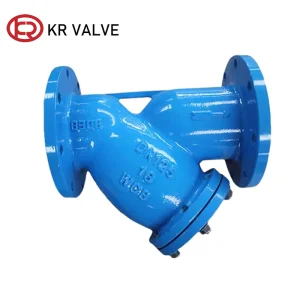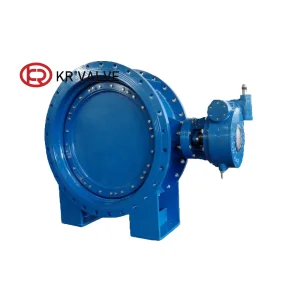
Direct Factory OEM/ODM Industrial Valve Solutions
Engineered to DIN, ANSI, BS, and ISO standards with 100% pressure inspection and mill test certs.
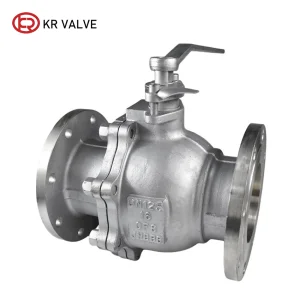
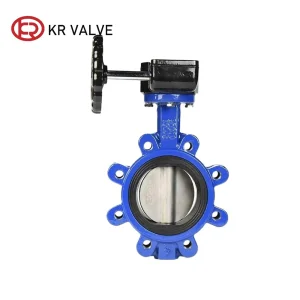
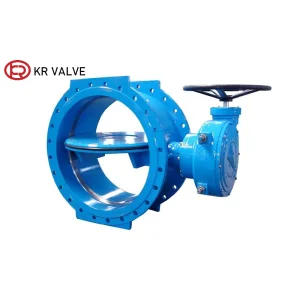
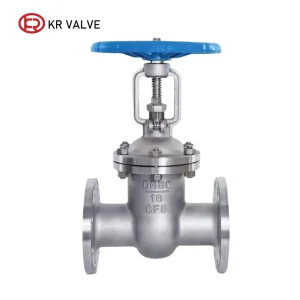
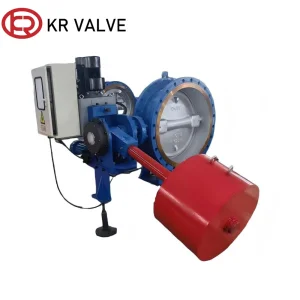
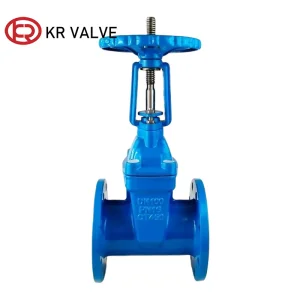
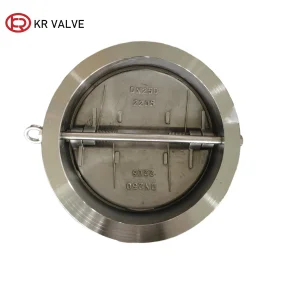
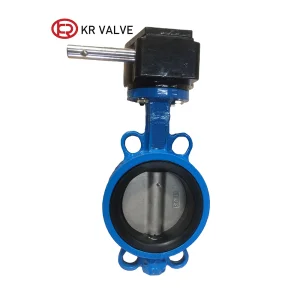
Metallurgical Integrity & Engineering Foundations of Stainless Steel Valves
An authoritative reference on material selection, mechanical properties, and sealing physics for fluid processing infrastructure.
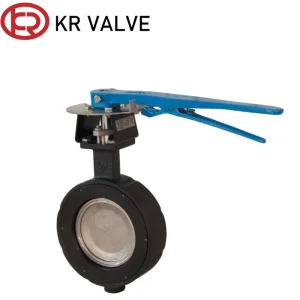
In modern industrial process engineering, the selection of an OEM Stainless Steel Butterfly Valve Supplier & Manufacturer dictates system reliability, operational safety, and lifecycle expenditure. Stainless steel butterfly valves serve as the cornerstone for flow regulation, isolation, and automated throttling across severe service environments including chemical synthesis, offshore desalination, cryogenic energy transport, and high-purity pharmaceutical manufacturing.
The primary advantage of employing austenitic and duplex stainless steel alloys—such as ASTM A351 CF8 (SS304), CF8M (SS316), CF3M (SS316L), and UNS S31803 (2205 Duplex)—lies in their intrinsic passivation capability. When exposed to oxygen, these alloys spontaneously form an adherent, chromium-rich oxide surface layer (Cr₂O₃) ranging from 1 to 3 nanometers in thickness. This microscopic barrier provides exceptional resistance to uniform corrosion, pitting attack, and stress corrosion cracking (SCC) under elevated chloride concentrations.
CF8 / SS304 Grade
Nominal 18% Chromium and 8% Nickel composition. Ideal for general water distribution, HVAC, light chemical processing, and sanitary food lines where nitric or organic acids are handled at ambient temperatures.
CF8M / SS316 Grade
Enhanced with 2.0% to 3.0% Molybdenum. Dramatically raises the Pitting Resistance Equivalent Number (PREN ≥ 25), making it mandatory for marine environments, halide chemical lines, and pulp processing.
Duplex 2205 / 2507
Biphasic ferritic-austenitic micro-structure achieving yield strengths exceeding 450 MPa with PREN > 40. Essential for high-pressure seawater reverse osmosis (SWRO) and aggressive sour gas (H₂S) media.
Seating Kinematics: Resilient vs. Double Offset vs. Triple Offset
Selecting the correct mechanical offset profile prevents premature seat wear, reduces break-open torque, and guarantees zero-leakage performance.
| Design Category | Kinematic Profile | Seating Interface | Temperature Range | Fugitive Class | Primary Industrial Duty |
|---|---|---|---|---|---|
| Concentric Resilient | Shaft centered in valve body & disc centerline | EPDM, NBR, Viton, or PTFE vulcanized liner | -20°C to +150°C | Class B / ISO 15848 | HVAC, Municipal Water, Slurry, Light Industry |
| High Performance Double Offset | Stem offset behind disc center & offset from pipe axis | R-PTFE, PEEK, or flexible metal energizer | -50°C to +260°C | Class A / ANSI FCI 70-2 VI | Hydrocarbon Processing, Steam, Midstream Gas |
| Triple Offset (TOBV) | 3rd offset: Inclined conical axis eliminates rubbing | Laminated SS316 + Graphite / Stellite hardface seat | -196°C to +600°C | Fugitive AH / Fire Safe API 607 | Refining, LNG Cryogenic, Power Plants, Chemical |
Information Gain Insight: The friction-free actuation of the Triple Offset Butterfly Valve (TOBV) is achieved via the third offset, where the shaft centerline is offset from the body seat centerline and the cone angle axis is tilted. This geometric design creates a cam-action sealing contact where seat friction only occurs at the final fraction of a millimeter of closure. Operating torques are significantly reduced, increasing actuator lifespan by up to 300% compared to conventional resilient valves in thermal cycling duties.
Global Industry Trends & Enterprise Procurement Demands
Navigating supply chain compliance, total cost of ownership (TCO), and strict carbon mitigation standards.
1. Fugitive Emissions & Environmental Decarbonization
Global EPC contractors and refinery operators now universally enforce zero-leakage standards under ISO 15848-1 Class AH and EPA Method 21. OEM stainless steel butterfly valve suppliers must supply live-loaded PTFE or expandable graphite stem packing systems. Live-loaded Belleville spring washers maintain constant axial packing stress during thermal cycling, preventing VOC leakages in volatile organic service.
2. Hydrogen Service Readiness & Cleanroom Manufacturing
As green hydrogen production scales globally, valve designs require specialized embrittlement-resistant materials like SS316L with electropolished internal surface roughness Ra < 0.38 µm. OEM manufacturers must maintain ISO Class 7 ultra-clean assembly bays for oil-free, grease-free cleaning and vacuum packaging compliant with oxygen and ultra-pure gas specifications.
3. Supply Chain Traceability & Material Test Reports (MTR)
Enterprise buyers require full material heat traceability back to the original foundry ingot. True compliance mandates EN 10204 Type 3.1 Inspection Certificates alongside 3.2 third-party verification (Lloyd’s Register, TÜV, DNV). Every OEM valve body must undergo positive material identification (PMI) via X-ray fluorescence spectroscopy before machining.
4. Direct ISO 5211 Actuator Automation Capability
Modern automated processing plants eliminate custom mounting kits by standardizing on direct-mount ISO 5211 top flanges. OEM stainless steel butterfly valves are engineered with precise square/double-D drive shafts, simplifying field retrofitting of pneumatic double-acting/spring-return cylinders or intelligent electric actuators with HART/Modbus protocols.
Macro Sector Solutions & Flow Control Architecture
Custom engineering packages tailored to the unique physical and chemical challenges of core industries.
Desalination & SWRO
High-salinity seawater causes severe crevice corrosion in standard metals. We configure Super Duplex 2507 discs with rubber-lined or solid Duplex bodies to guarantee 20+ year zero-leak maintenance cycles under high hydrostatic pressures (PN63 to PN100).
Petrochemical & Refining
Handling sour hydrocarbons, hot aromatics, and volatile streams requires API 607 7th Edition Fire-Safe certified Triple Offset valves with laminated metal/graphite seals that retain mechanical tightness even following total soft-seat destruction in plant fires.
Cryogenic LNG Terminals
Operating at -196°C demands deep cryogenic extended bonnets (per BS 6364). Extended gas columns isolate packing glands from cryogenic liquid boil-off, maintaining elasticity and preventing gland icing during continuous liquid natural gas loading.
Global Compliance & Quality Assurance Framework
Strict adherence to international valve manufacturing, pressure testing, and inspection benchmarks.
100% Factory Pressure Hydro-Testing
Every individual OEM valve produced in our facilities undergoes rigorous hydrostatic shell testing at 1.5 times nominal design pressure (PN/Class) and seat tightness testing at 1.1 times nominal rating per API 598 or EN 12266-1 Rate A (zero bubbles allowed). Pneumatic low-pressure seat testing at 6 bar is conducted on soft-seated configurations to detect micro-cavities.
Non-Destructive Evaluation (NDE) Standards
Critical pressure-retaining castings are verified using liquid penetrant testing (PT) on all stainless steel surfaces, magnetic particle inspection (MT) where applicable, ultrasonic thickness gauging (UT), and 100% radiographic examination (RT) on high-pressure cast bodies per ASME B16.34 Annex A.
International Certification Matrix
- CE-PED 2014/68/EU: Pressure Equipment Directive Module H Certification
- API 609: Butterfly Valves: Double-Flanged, Lug- and Wafer-Type
- ATEX Directive 2014/34/EU: Safe for Use in Explosive Zone 1 & 21 Areas
- SIL 3 Capable: Certified Functional Safety for Automated Emergency Shutdown
- NSF/ANSI 61 & WRAS: Potable Water Sanitary Material Approval
Technical Roadmap & Next-Generation Valve Technologies
Integrating IoT smart diagnostics, additive metallurgy, and zero-loss dynamic seals for Industry 4.0 automation.
IoT Smart Valve Integration
Embedded piezo-electric sensors inside the valve body measure internal pressure waves, stem torques, and localized seat vibrations in real time. Predictive maintenance algorithms detect cavitation damage and seal degradation before catastrophic line failures occur.
Additive Manufactured Discs
Utilizing Direct Metal Laser Sintering (DMLS) 3D printing to fabricate internal hollow-core stainless steel discs with optimized hydrodynamic flow profiles. Reduces disc mass by 40%, decreases pressure drop (ΔP), and enhances valve Cv flow coefficients by up to 18%.
Nanocomposite Hard-coatings
Replacing standard Stellite hardfacing with High-Velocity Oxygen Fuel (HVOF) applied Chromium Carbide (Cr₃C₂-NiCr) nanocomposite coatings. Reaches hardness ratings exceeding 68 HRC, extending operational service life in highly abrasive mining slurries.
Frequently Asked Questions (FAQ)
Detailed technical answers for engineering consultants, procurement executives, and plant superintendents.
What is the fundamental difference between SS304 and SS316 in butterfly valve manufacturing?
Why choose a Lug type butterfly valve over a Wafer type design?
How does a Triple Offset Butterfly Valve (TOBV) achieve zero leakage in high-temperature applications?
What OEM custom customization capabilities are available for international orders?
What documentation is supplied with custom OEM stainless steel valves?
Explore Additional Industrial Valve Lines
Full-spectrum industrial valves engineered for seamless pipeline integration and maximum uptime.