
Featured Industrial Valve Series (Part I)
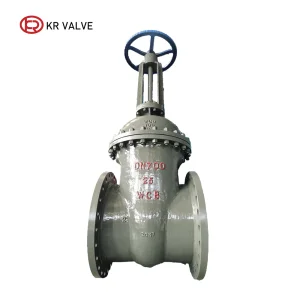
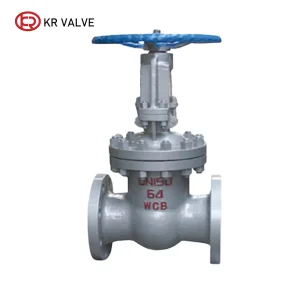
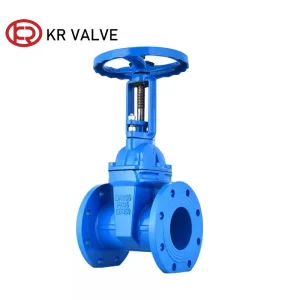
Explore our precision-manufactured OEM/ODM industrial valve catalog, engineered strictly according to EN, DIN, BS, and AWWA standards.
Industrial Whitepaper: Fluid Dynamics & Air Management Mechanics
An in-depth technical analysis of air entrainment, transient surge mitigation, column separation prevention, and the physics of triple-function combination air valves.
In pressurized liquid pipeline networks, the presence of entrained, trapped, or dissolved air represents one of the most critical structural and operational threats to system integrity. As a premier global wholesale air valve supplier and manufacturer, our engineering division emphasizes that air management is not merely an auxiliary consideration, but a foundational requirement for hydraulic efficiency, water hammer mitigation, and asset longevity.
1. The Hidden Physics of Entrained Air in Pressurized Systems
Water and aqueous fluids naturally contain dissolved air—typically 2% to 3% by volume under standard atmospheric conditions. When fluid moves through a pipeline, changes in pressure and temperature cause dissolved gases to come out of solution (Boyle’s Law and Henry’s Law). Additionally, air is introduced during initial pipeline filling, via mechanical pump intake vortexing, and through vacuum breaker operation.
Unmanaged air pockets coalesce at localized high points along the pipeline profile. This accumulation causes several severe hydraulic anomalies:
- Reduction of Flow Area (Baffle Effect): Stationary air pockets restrict the effective internal pipe diameter, dramatically increasing head loss, pumping friction, and energy consumption by up to 30%.
- Severe Transient Pressure Surges (Water Hammer): Trapped air pockets act as highly compressible springs. When sudden velocity changes occur—such as pump trips, rapid valve closures, or power outages—the rapid compression and expansion of air bubbles create destructive pressure surges exceeding 50 bar.
- Column Separation and Vacuum Collapse: During rapid line draining or pump failure, the fluid column splits. Without rapid, high-volume air intake, sub-atmospheric vacuum conditions develop, leading to pipe thin-wall collapse or structural liner buckling.
- Accelerated Cavitation & Internal Corrosion: Oxygen-rich air bubbles collapse violently near pump impellers and valve seats, causing localized metal erosion and accelerated oxidation.
Engineering Dynamic Insights: The Three Stages of Air Valve Operation
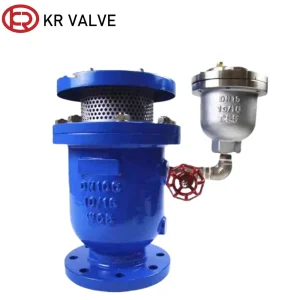
A true combination air valve performs three distinct automatic functions: (1) High-Velocity Air Intake during line draining; (2) High-Volume Air Discharge during pipeline priming; and (3) Small-Orifice Continuous Venting while operating under full line pressure.
2. Thermodynamic & Sonic Venting Calculation Formula
Determining the precise orifice size of an air valve requires evaluating choked (sonic) flow regimes versus sub-sonic flow conditions. When venting air during pipeline filling, the air discharge rate $Q_a$ across an orifice area $A$ is governed by the compressible flow equation:
Q_a = C_d \cdot A \cdot P_1 \sqrt{ \frac{\gamma}{R \cdot T_1} \left(\frac{2}{\gamma+1}\right)^{\frac{\gamma+1}{\gamma-1}} }
Where $C_d$ represents the discharge coefficient (typically 0.62 to 0.78 depending on CFD internal seat geometry), $P_1$ is absolute upstream pressure, $\gamma$ is the adiabatic index for air (1.4), and $T_1$ is absolute temperature. Our engineering manufacturing process utilizes 3D Computational Fluid Dynamics (CFD) optimization to maximize $C_d$, ensuring maximum volumetric air exhaust without premature closure ("slamming").
Manufacturing Scale & Quality Metrics
Quantifiable evidence of our enterprise production capacity, strict QA/QC testing standards, and international export track record.
Technical Comparison Matrix: Air Valve Architectures
A quick-reference selection matrix designed for municipal engineering consultants, procurement officers, and pipeline system designers.
| Air Valve Type | Primary Function | Orifice Configuration | Suitable Media | Typical Pressure Class | Key Standard Compliance |
|---|---|---|---|---|---|
| Single Orifice Air Release | Continuous small-volume venting of accumulated air while under pressure. | Micro-Orifice (1.5mm – 3.0mm) | Clean Water, Treated Potable Water | PN10 / PN16 / PN25 / Class 150 | AWWA C512, EN 1074-4 |
| Air / Vacuum Valve | High-volume air intake during line draining; high-volume exhaust during filling. | Large Orifice equal to valve inlet size | Raw Water, Irrigation, Stormwater | PN10 / PN16 / PN25 | BS EN 12627, DIN 3202 |
| Combination Air Valve | Triple-function: Large intake, large discharge, plus small pressure venting. | Dual Orifice (Integrated Large & Small Orifices) | Potable Water, Process Water, Cooling Towers | PN10 – PN40 / Class 150–300 | AWWA C512, ISO 5208 |
| Wastewater Air Valve | Non-clogging triple-function air control for sewage and solids-bearing fluid. | Elongated Conical Body with Bottom Liquid Barrier | Sewage, Slurry, Industrial Effluent | PN10 / PN16 | EN 1074-4, EN 12266 |
| Anti-Slam Combination Air Valve | Triple function with integrated surge-mitigating anti-slam dynamic disc mechanism. | Tri-Orifice with Spring/Float Regulated Disc | High-Surge Pipelines, Pumping Plants | PN16 / PN25 / PN40 / Class 300 | AWWA C512, EN 1074-4 |
Localized Application Scenarios & Industrial Deployment
Engineered air control solutions adapted to specific operating environments, fluid chemistry, regional climates, and infrastructure requirements globally.
1. Municipal Potable Water Transmission
Over long-distance cross-country water supply pipelines, undulating terrain creates multiple high points where air locks occur. Installed at peaks, change-of-slope points, and pump discharges, our combination air valves ensure uninterrupted continuous capacity and eliminate surge-induced pipe bursts.
2. Wastewater & Sewage Treatment Plants
Sewage contains floating grease, fibrous solids, and corrosive gas ($H_2S$). Our wastewater combination air valves feature an elongated conical lower body that isolates the operating mechanism from liquid debris, preventing clogging, stem jamming, and unwanted odor leakage.
3. Seawater Desalination & Marine Intake
High salinity and chloride concentrations cause rapid pitting corrosion in standard cast iron. We manufacture custom coastal air valves constructed from Duplex Stainless Steel (UNS S31803 / 2205), Super Duplex (2507), or Nickel Aluminum Bronze (NAB), fitted with solid Titanium internal floats.
4. Agricultural & Solar Pumping Networks
In automated irrigation and solar-powered well pumping, frequent start-stop cycles introduce severe air shocks. Lightweight ductile iron combination valves protect thin-walled HDPE and PVC piping from column separation during pump shutdown.
5. Industrial HVAC & Power Cooling Lines
High-rise building HVAC chilled water loops and thermal power station condenser lines require continuous micro-orifice air venting to maintain heat exchanger efficiency, eliminate noise, and prevent circulation pump air binding.
6. Mining Tailings & Slurry Transport
Abrasive slurry and mineral tailings pipelines demand heavy-duty, reinforced air release valves coated with thick polyurethane or ceramic linings to withstand severe particle abrasion during pressure venting.
Supply Chain Resilience & Direct Factory Manufacturing
Why Tier-1 EPC contractors, municipal water authorities, and international stocking distributors partner with our Tianjin valve industrial cluster.
As a leading wholesale air valve supplier and manufacturer based in Tianjin, China—the world’s largest valve manufacturing hub—we deliver unparalleled supply chain resilience, advanced metallurgical control, and direct factory cost efficiency to our global clientele.
1. Vertical Integration: From Foundry to Final Hydrostatic Testing
Unlike trading intermediaries, our manufacturing infrastructure encompasses the complete production value chain:
- Precision Foundry Casting: Automated sand casting and lost-foam casting equipment for Ductile Iron (EN-GJS-500-7 / ASTM A536) and Stainless Steel (CF8/CF8M/WCB), guaranteeing zero internal blowholes or porosity.
- Advanced CNC Machining: Multi-axis CNC lathes and machining centers achieve valve seat sealing tolerances down to $\pm 0.005\text{ mm}$, insuring absolute bubble-tight closure.
- Electrostatic FBE Powder Coating: Automated fluid-bed coating lines apply non-toxic, potable-water approved Fusion Bonded Epoxy (FBE) to AWWA C550 and EN 14901 standards (minimum dry film thickness: 250 microns to 300 microns).
- 100% Inspection Protocol: Every single air valve undergoes hydrostatic shell testing at 1.5$\times$ PN and seat sealing testing at 1.1$\times$ PN, alongside low-pressure bubble testing to guarantee zero micro-leakage.
2. Supply Chain Agility & Rapid Global Logistics
Located near Tianjin Xingang Port, our facility leverages direct ocean shipping routes to major international distribution centers across North America, Europe, the Middle East, Southeast Asia, and Latin America. We maintain an extensive raw casting inventory, allowing standardized combination air valves to be assembled, tested, packaged in export-standard wooden crates, and shipped within 14 business days.
Technology Roadmap: Next-Gen Smart Air Valves & Digital Twins
Integrating IoT telemetry, dynamic pressure transducers, acoustic leak sensors, and predictive maintenance algorithms into modern water grid infrastructure.
As smart cities and digital water utilities evolve, traditional mechanical valves are transforming into intelligent data nodes. Our R&D engineering division is pioneering the commercialization of Smart IoT Combination Air Valves tailored for real-time hydraulic monitoring.
Real-Time Transient Surge Telemetry
Integrated micro-pressure sensors capture high-frequency dynamic pressure spikes during water hammer events (up to 1,000 samples/second), transmitting real-time alerts via LoRaWAN, NB-IoT, or cellular networks directly to the municipal SCADA center.
Acoustic Leakage & Seat Jamming Alerts
Acoustic emission transducers detect micro-vibrations caused by unseated floats, grit entanglement, or continuous air leaks, allowing maintenance crews to perform targeted field servicing prior to catastrophic fluid loss.
Digital Twin Integration
3D CAD and CFD telemetry data feed directly into GIS and Bentley/WaterGEMS hydraulic software platforms, providing digital twin predictive modeling for municipal water network performance.
Global Regulatory Compliance & Quality Guarantees
Certified engineering quality adhering to global municipal drinking water and industrial valve standards.
To ensure seamless international trade and hassle-free project approvals, all products manufactured by our factory adhere strictly to major international standard frameworks:
- Potable Water Hygiene: Certified compliant with WRAS (UK), NSF/ANSI 61 & NSF 372 (USA), ACS (France), and DVGW (Germany) for non-toxic contact with drinking water.
- Manufacturing Quality Systems: Fully certified under ISO 9001 (Quality Management), ISO 14001 (Environmental Safety), and ISO 45001 (Occupational Health).
- Pressure Equipment Directives: CE PED 2014/68/EU marked for European Union member states.
- Design Standards: Manufactured in full compliance with AWWA C512, EN 1074-4, DIN 3542, BS EN 12627, and API 598 testing protocols.
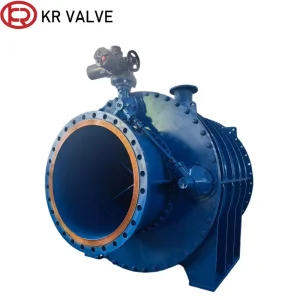
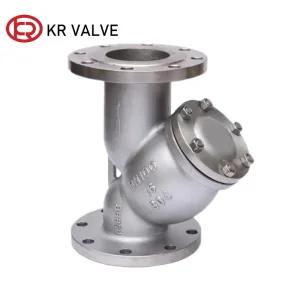
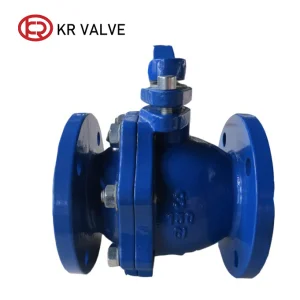
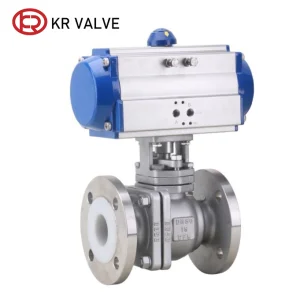
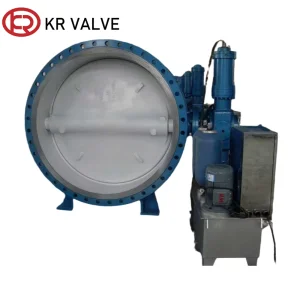
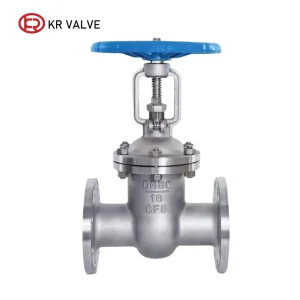
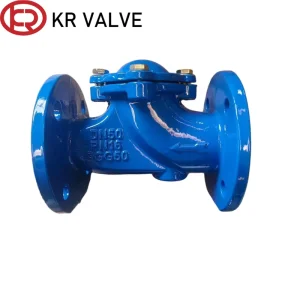
Featured Industrial Valve Series (Part II)
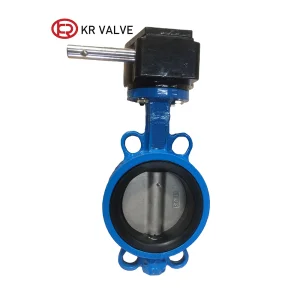
Explore our secondary lineup of gate valves, check valves, strainers, and special energy dissipation valves for comprehensive fluid control.
Comprehensive Technical & Engineering FAQ
Direct answers to critical questions asked by valve buyers, project engineers, and distribution partners.
What is the fundamental difference between an Air Release Valve and a Combination Air Valve?
How do I size an air valve for a long-distance water transmission pipeline?
Where should combination air valves be placed along a pipeline profile?
- High points along the pipeline elevation profile.
- Increases in downward slope or decreases in upward slope.
- Directly downstream of isolation valves and check valves.
- At regular intervals (every 500 to 800 meters) on long horizontal pipe runs lacking distinct high points.
- At pump discharge outlets prior to the non-return check valve.