
Top Industrial Check Valves & Flow Control Solutions
Explore our high-performance non-return ball valves, swing check valves, gate valves, and strainers manufactured for rigorous municipal and industrial fluid systems.
1. Fluid Dynamics & Engineering Fundamentals of Ball Check Valves
A comprehensive analysis of non-return spherical closure mechanisms in demanding municipal sewage, mining slurry, and industrial process applications.
Self-Cleaning Spherical Trajectory
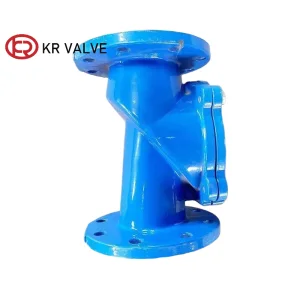
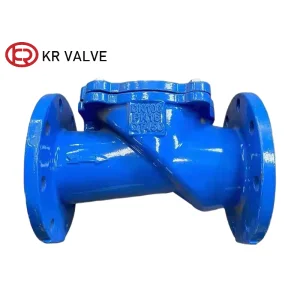
Unlike conventional swing check valves prone to ragging and solid accumulation, the ball check valve utilizes an elastomer-coated metal core ball that rotates freely along a guided hydraulic track. Flow velocity pushes the ball completely out of the flow stream into an off-line cavity, ensuring an unobstructed, full-bore opening with minimal friction head loss ($h_f$). As media flow halts, gravity and reverse pressure guide the rotating ball smoothly back onto its conical seat, wiping away debris automatically.
Water Hammer Mitigation
Hydraulic surge and water hammer cause catastrophic pipe rupture in high-lift pumping stations. The ball check valve provides rapid acoustic dampening. Due to the shorter travel distance of the floating ball compared to heavy swing discs, the valve achieves soft closing right at the moment of velocity zero-crossing. The resilient NBR/EPDM elastomeric coating absorbs kinetic energy, dramatically damping pressure spikes ($\Delta P$) defined by the Joukowsky equation ($\Delta P = \rho \cdot c \cdot \Delta v$).
Zero-Leakage Sealing Performance
Equipped with a vulcanized NBR or EPDM rubber layer chemically bonded over a ductile iron or carbon steel inner core, the ball conforms seamlessly to precision-machined valve seats under low backpressure conditions (<0.5 bar). For aggressive chemical media or high temperatures, solid PTFE or metallic core Viton (FKM) balls are engineered to provide bubble-tight shut-off in compliance with EN 12266-1 Rate A and ISO 5208 leak standards.
Engineering Insight: Flow Coefficient ($K_v$ / $C_v$) Advantage
Because the spherical ball lifts fully into a dedicated dome chamber during forward fluid velocity, the internal flow path maintains over 95% of equivalent nominal pipe diameter. This results in significantly higher $K_v$ flow coefficients and drastically lower energy consumption across municipal pumping operations compared to tilting disc or spring-loaded lift check valves.
2. Global Commercial Landscape & Industrial Sourcing Trends
Analyzing global demand, regulatory mandates, and regional adoption patterns across water utility, industrial, and infrastructure sectors.
| Valve Type | Solids Handling | Head Loss ($h_f$) | Water Hammer Risk | Primary Market Application |
|---|---|---|---|---|
| Non-Return Ball Check Valve | Excellent (<50mm solids) | Very Low ($K_v$ High) | Negligible / Dampened | Sewage, Slurry, Lift Stations, Stormwater |
| Standard Swing Check Valve | Moderate (Prone to fibrous clogging) | Moderate | High (Disc Slaming) | Clean Water, Low-Viscosity Liquids |
| Dual Plate Wafer Check Valve | Poor (Fibrous wrap risk) | Moderate to High | Low (Spring-assisted) | HVAC, Compact Industrial Piping |
| Tilting Disc Check Valve | Fair (Liquid only) | Low | Moderate | Potable Water Transmission Lines |
As municipal wastewater infrastructure undergoes modernization across North America, Western Europe, and the Middle East, stringency surrounding pump station uptime has reached unprecedented levels. Unscheduled downtime caused by clogged check valves incurs massive operational expenditures. Consequently, engineering procurement firms (EPCs) are increasingly specifying Wholesale Check Valve With Ball models compliant with standard flange dimensions (BS EN 1092-2, ANSI B16.1 Class 125/150, DIN 2501).
3. China Manufacturing Efficiency & OEM/ODM Factory Advantages
Why leading global valve distributors and engineering contractors partner with specialized Chinese manufacturing hubs like Tianjin for industrial valve production.
Integrated Metallurgical Foundries
China's industrial valve ecosystems integrate raw material casting, resin-bonded sand molding, ductile iron smelting (GGG40/GGG50), and precision CNC machining within concentrated industrial zones. This vertical integration reduces material transit lead times by up to 40% while ensuring strict spectral metallurgical consistency across batch castings.
Advanced Automated Polymer Coating
Factory production lines feature automated electrostatic fluid-bed powder coating processes. Valves receive a non-porous, corrosion-resistant fusion-bonded epoxy (FBE) coating (min. 250 microns thickness, RAL 5017 / RAL 5015) tested for pinhole isolation under high voltage (3kV), guaranteeing superior endurance against aggressive wastewater H2S off-gassing.
Rigorous International Quality Control
Export-oriented Chinese manufacturers maintain comprehensive Quality Management Assurance Systems (ISO 9001:2015, CE PED 2014/68/EU, WRAS). Every finished ball check valve, butterfly valve, and gate valve undergoes 100% hydrostatic shell testing (1.5x PN) and seat leakage testing (1.1x PN) prior to wooden crate packaging.
4. Material Selection Matrix & Engineering Specifications
Selecting the optimal metallurgy, elastomer compounding, and connection standard for long-term project reliability.
| Component Part | Standard Material Grade | Optional High-Spec Alloy | Engineering Selection Purpose |
|---|---|---|---|
| Valve Body & Bonnet | Ductile Iron GGG40 / EN-GJS-400-15 | WCB Cast Steel / CF8 (SS304) / CF8M (SS316) | Ductile iron offers exceptional tensile strength (400 MPa) and impact resistance against hydraulic shock. |
| Closure Ball Core | Carbon Steel / Cast Iron Insert | Stainless Steel SS304 / SS316 Core | Provides structural integrity and density to ensure gravity closure during dynamic flow deceleration. |
| Elastomeric Encapsulation | NBR (Nitrile Rubber) | EPDM / FKM (Viton) / Solid Polyurethane | NBR delivers excellent resistance to oily sludge & sewage; EPDM for hot water/potable line compliance. |
| Fasteners & Bolts | Stainless Steel SS304 (A2-70) | Stainless Steel SS316 (A4-80) / Dacromet | Prevents external galvanic and atmospheric corrosion in underground or marine environments. |
| Body Gasket | NBR / EPDM Profiled O-Ring | Reinforced PTFE / Graphite Composite | Guarantees hermetic sealing between bonnet cover and body under high pressure fluctuations. |
5. Localized Application Scenarios & Engineering Case Studies
Real-world performance evaluations of ball check valves across specialized municipal and industrial installations.
Municipal Wastewater Lift Stations
Scenario: A municipal sewage lift station experienced recurrent clogging every 72 hours using conventional swing check valves due to stringy wet wipes and fibrous suspended solids.
Solution: Retrofitted DN150 Flanged Ductile Iron NBR Ball Check Valves. The smooth ball track enabled unobstructed passage of solids up to 45mm diameter. Unscheduled maintenance visits were reduced to zero over a 24-month monitoring cycle.
Mining Slurry & Tailings Dewatering
Scenario: High-density abrasive mineral slurry lines in copper mining operations caused rapid scouring and premature seat failure on metallic check valves within 3 months.
Solution: Installation of heavy-duty ball check valves featuring thick polyurethane coated balls and high-chrome iron body liners. Polyurethane elasticity absorbed particle impact without permanent indentation, increasing operational service life by 400%.
High-Rise HVAC Cooling Loops
Scenario: Severe hydraulic water hammer noises vibrating through vertical chilled water risers in a 45-story commercial skyscraper during sudden pump shutdown cycles.
Solution: Installation of vertical spring-assisted dual plate and ball check valves designed for silent closure. Dynamic pressure logging verified backflow shockwave reduction of 18 bar down to less than 1.5 bar above operating pressure.
6. Global Procurement Guide & Quality Inspection Checklist
Essential verification steps for global supply managers when issuing Requests for Quotation (RFQ) and evaluating OEM factory capabilities.
1. Dimensional & Flange Compliance
Ensure face-to-face dimensions comply strictly with EN 558-1 Series 48 (DIN 3202-F6) for flanged ball check valves. Verify flange drilling aligns with ISO 7005-2, EN 1092-2 PN10/16, or ASME B16.1 Class 125/150 standards to guarantee field drop-in compatibility.
2. Coating Inspection Protocols
Require factory test certificates verifying Epoxy Powder Coating thickness via magnetic gauges (min. 250 µm). Request Holiday Spark Testing (2.5kV to 3.0kV) to prove zero micro-pinholes across all wetted internal flow passage surfaces.
3. Rubber Bonding & Hardness Test
Rubber encapsulation must demonstrate high peel strength from the metal core. Hardness testing (Durometer Shore A, typically $70 \pm 5$) balances elastomeric sealing elasticity against deformation under long-term static head backpressure.
7. Industry Evolution & Smart Flow Control Innovations
How IoT integration, eco-friendly elastomers, and advanced digital hydraulics are transforming classical non-return valve manufacturing.
IoT Position & Vibration Sensing
Integrating non-intrusive inductive proximity sensors into the top bonnet cover allows real-time telemetry feed to SCADA networks, tracking ball elevation position and acoustic vibration signatures to predict valve maintenance intervals before failure occurs.
PFAS-Free Sustainable Elastomers
Driven by global REACH and EPA regulations, R&D efforts focus on formulating fluorine-free elastomers and zero-VOC water-based epoxy coatings that eliminate toxic leachable compounds while enhancing mechanical tear strength.
Computational Hydrodynamic Optimization
Utilizing Finite Element Analysis (FEA) and Computational Fluid Dynamics (CFD) simulations, valve bonnet contours are sculpted to minimize recirculation eddies, reducing flow turbulence ($K_v$ optimization) and lowering pump power draw globally.
Expanded OEM & Wholesale Industrial Valves
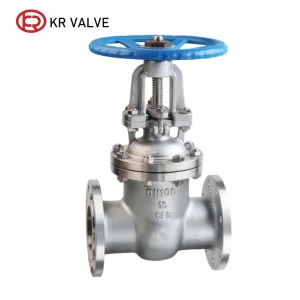
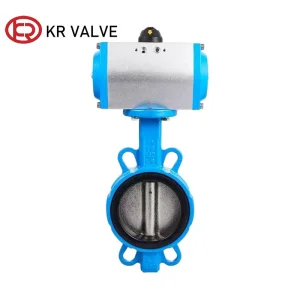
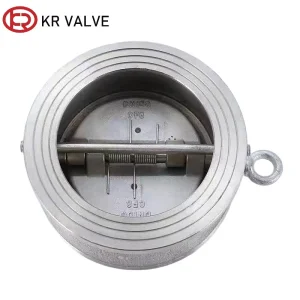
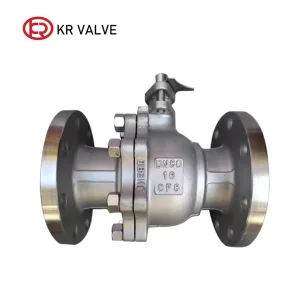
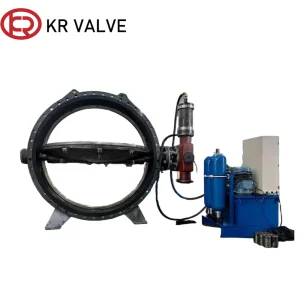
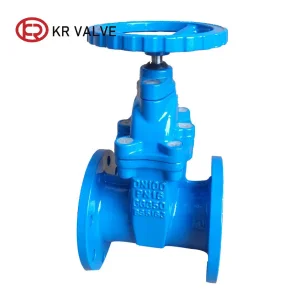
Discover our complementary line of resilient seated gate valves, high-pressure butterfly valves, strainers, and customized hydraulic control units.
Frequently Asked Questions (FAQ) for Valve Sourcing
Expert engineering answers addressing installation orientation, pressure drop calculations, maintenance practices, and wholesale procurement terms.
Can a ball check valve be installed in vertical pipeline runs?
Yes. Ball check valves can be installed in both horizontal and vertical upward flow pipelines. In vertical installations, ensure the fluid flow direction is upward so that gravity naturally assists the ball in settling back onto the conical seat during flow deceleration. Vertical down-flow installations are not recommended as gravity will prevent proper seating.
What is the minimum cracking pressure required to lift the ball?
Due to the optimized weight density of the internal rubber-encapsulated core ball, the typical cracking pressure required to unseat the ball is exceptionally low—generally between 0.03 bar to 0.05 bar (0.43 to 0.72 PSI). This extremely low opening threshold minimizes pump starting torque and energy consumption.
How does an NBR coated ball compare to an EPDM coated ball?
NBR (Nitrile Butadiene Rubber) offers superior resistance to mineral oils, greases, hydrocarbons, and raw municipal wastewater containing oily fats. EPDM (Ethylene Propylene Diene Monomer) provides outstanding resistance to hot water, ozone, weathering, and mild acids/alkalis, making it ideal for HVAC water systems and potable water plants compliant with WRAS or NSF standards.
What routine maintenance is required for ball check valves?
Because the internal ball rotates continuously during operation, wear is distributed evenly across the entire 360-degree spherical surface rather than concentrated on one spot. Maintenance involves inspecting the removable top bonnet cover O-ring gasket periodically and checking the rubber coating for abrasive gouges during annual plant shutdowns. The ball can be replaced in-line without removing the valve body from the pipeline.
What custom OEM/ODM packaging and branding services do you provide?
We provide comprehensive private label OEM manufacturing. This includes custom cast body logos, customer-specified body paint colors (RAL codes), custom nameplates with project tag numbers, custom face-to-face dimensions, and export-compliant fumigated wooden crates with barcoded inventory tags for seamless distributor warehousing.