High-Performance Industrial Valve Showcase (Part 1)
Direct Factory Wholesale Supply & Custom OEM Manufacturing for Global Pipeline Projects
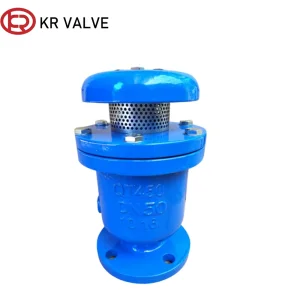
Fundamental Operating Dynamics of Composite Exhaust Valves
Analyzing Kinetic Air Venting, Vacuum Protection, and Transient Pressure Damping
In modern pipeline infrastructure engineering, entrapped air represents one of the most critical causes of head loss, pressure surges, acoustic resonance, and catastrophic pipe burst events. A Composite Exhaust Valve (also classified as a combination air release valve or kinetic air valve) is a triple-function fluid safety mechanism engineered specifically to manage gas-liquid interface behaviors across pressurised piping networks.
Triple-Function Kinetic Kinematics
Unlike conventional single-orifice air release valves, advanced composite valves operate via three discrete thermodynamic modes depending on line pressure and flow velocity:
1. Large Orifice Bulk Air Discharge
During initial pipeline charging or pump startup, massive volumes of air must be evacuated at low pressure (0.1 to 0.5 bar) to allow water to fill the pipe conduit. The composite float remains in a lowered position, maintaining a fully unobstructed large orifice area equal to the inlet nominal diameter.
2. Automatic Small Orifice Venting
Under full system operating pressure (up to PN25), dissolved gases continually come out of solution and accumulate at the high points of the system. As air accumulates in the valve chamber, the liquid level drops, causing the secondary high-pressure float mechanism to unseal a tiny calibrated micro-orifice, releasing tiny air pockets without pressure drop.
3. Rapid Air Intake & Vacuum Breaking
During sudden power outages, pump trips, or drain-down events, localized pressure drops below atmospheric levels, threatening sub-atmospheric pipe collapse. The composite float drops instantly, drawing maximum ambient air capacity to break vacuum conditions and prevent column separation shockwaves.
Where: Q_a = Mass flow rate of air, C_d = Discharge coefficient (~0.68), A = Orifice cross-sectional area, P_1 = Upstream absolute pressure, P_2 = Downstream atmospheric pressure, γ = Specific heat ratio (1.4 for air).
When liquid surges back into the valve chamber, standard metal air valves often experience premature closure due to high-velocity aerodynamic forces pushing the float upward. This causes severe secondary water hammer (up to 4x working pressure). Composite exhaust valves from specialized Chinese manufacturing facilities solve this problem using an integrated Anti-Surge / Anti-Slam kinetic mechanism, limiting air exit velocity to subsonic levels (~0.3 bar differential threshold) to cushion returning fluid columns seamlessly.
Composite Engineering Polymers vs. Metallic Alloys
Structural Durability, Chemical Resistance, and Lifecycle Performance Metrics
Traditionally, industrial air valves were produced using Cast Iron (GG25) or Ductile Iron (GGG40/GGG50) coated with epoxy resins. However, in aggressive water environments—such as seawater reverse osmosis (SWRO) desalination, acidic municipal wastewater, and high-salinity agricultural irrigation—metallic bodies suffer from internal tuberculation, galvanic corrosion, scale accumulation, and coating degradation.
Modern Wholesale Composite Exhaust Valves utilize glass-fiber reinforced thermoplastics, predominantly Glass-Fiber Reinforced Polyamide (PA66+GF30) and Reinforced Polypropylene (PP-GF), paired with ultra-lightweight Polyoxymethylene (POM) or Polypropylene floats and EPDM / Viton seals.
| Engineering Property | PA66-GF30 Composite Body | Ductile Iron (GGG40 + Epoxy) | Stainless Steel 316L |
|---|---|---|---|
| Specific Gravity / Density | 1.35 – 1.42 g/cm³ | 7.10 – 7.30 g/cm³ | 7.98 g/cm³ |
| Tensile Strength (ISO 527) | 175 MPa | 400 MPa | 520 MPa |
| Corrosion Resistance (Saline/Acidic) | Complete Immunity (pH 2 – 12) | Susceptible to Pinholes/Rust | Pitting Risk in High Chlorides |
| Weight Reduction Factor | ~70% Lighter | Baseline (100%) | +10% Heavier |
| Low Pressure Dynamic Sealing | 0.1 Bar (EPDM Soft Cushion) | 0.5 Bar (Rigid Stem Drag) | 0.3 Bar |
| Thermal Expansion Coeff. | 3.0 × 10⁻⁵ / K | 1.2 × 10⁻⁵ / K | 1.6 × 10⁻⁵ / K |
| Standard Compliance | AWWA C512, EN 1074-4 | EN 1074-4, DIN 3546 | ANSI/AWWA C512 |
Micro-Structure Integrity & Anti-Scaling Surface Mechanics
Composite injection-molded components feature smooth internal surfaces with a surface roughness ($R_a$) of less than $0.4\,\mu\text{m}$, compared to sand-cast ductile iron which typically exhibits $R_a > 12.5\,\mu\text{m}$. This ultra-smooth micro-finish prevents bio-fouling, mineral crystallization, and iron bacteria scaling. As a result, the float mechanism maintains unhindered movement without jamming even after years of continuous operation in raw water or municipal effluent systems.
Macro Industry Solutions & Application Scenarios
Optimized Flow Control Configurations Across Global Critical Infrastructure
1. SWRO Desalination & Marine Water Treatment
Seawater intake lines and Reverse Osmosis high-pressure membrane feed systems operate in highly corrosive chloride environments (TDS > 35,000 ppm). Metallic valves quickly degrade, shedding metal ions that damage expensive RO membranes. Non-metallic composite exhaust valves provide total chemical inertness, protecting membrane arrays while ensuring rapid air venting during feed pump priming.
2. Agricultural Smart Irrigation Networks
Modern micro-drip and overhead center-pivot irrigation systems operate under fluctuating pressures and frequent cycling. Entrapped air causes uneven emitter distribution and severe water hammer upon line filling. Lightweight composite valves installed on manifold headers discharge air at low start pressures (<0.2 bar), protecting thin-walled drip tubes from structural implosion during drain-down.
3. Municipal Potable Water Transmission
Long-distance municipal mains require strategic placement of kinetic air release valves at high points, slope change points, and major river crossings. Our WRAS and NSF/ANSI 61 compliant composite bodies prevent taste/odor contamination, reduce pump energy consumption by eliminating air pockets, and ensure surge protection across transmission networks.
4. Industrial Wastewater & Effluent Lines
Industrial wastewater streams often generate volatile organic compounds (VOCs) and corrosive hydrogen sulfide ($H_2S$) gases. Specialized composite valves engineered with an elongated conical body isolate the liquid media from the upper sealing mechanism, preventing solid clogging while exhausting toxic gas build-up safety.
Manufacturing Precision, Quality Assurance & Supply Chain Resilience
How Leading Chinese Valve Factories Deliver Unmatched Cost-to-Performance Advantages
Over the past decade, China’s valve manufacturing sector has evolved from labor-intensive assembly to advanced, automated Industry 4.0 production hubs. As a premier Wholesale Composite Exhaust Valve Supplier, our modern manufacturing facilities combine advanced polymer science, precision mold engineering, and rigorous non-destructive testing (NDT) to deliver global-tier quality at scale.
Automated 1,000-Ton Injection Molding
Our facilities utilize multi-cavity CNC injection molding machines with closed-loop thermal sensors. Fiber orientation within the PA66 matrix is carefully mapped via finite element simulation to ensure uniform wall density, high impact strength, and zero dimensional deformation under pressure spikes.
100% Automated Hydro-Pneumatic Testing
Every single valve produced undergoes 100% pressure verification on automated testing stations per ISO 5208 and EN 12266-1 standards. Tests include a 1.5x PN hydrostatic shell test and a 0.1 to 1.1x PN bubble-tight pneumatic seat test to guarantee dynamic sealing integrity.
Complete Material Traceability & Digital QC
Each production batch is tagged with a unique QR code laser-engraved onto the composite valve body. This code links to raw material Melt Flow Index (MFI) reports, tensile test logs, dimensional inspection reports, and final inspector sign-offs for seamless quality audits.
Through complete supply chain integration—from in-house resin compounding and precision tooling design to automated ultrasonic welding and robotic palletizing—Chinese valve factories achieve scale efficiencies that significantly lower capital expenditures for global procurement managers.
25-Year Total Cost of Ownership (TCO) Model
Quantifying Capex, Opex, Installation & Lifecycle Maintenance Efficiency
For EPC contractors, municipal water authorities, and industrial plant owners, evaluating valve procurement purely based on initial purchase price ignores significant long-term operational costs. Composite air valves offer a lower total cost of ownership (TCO) across a 25-year lifecycle compared to metallic alternatives.
Where: C_ic = Initial capital procurement, C_in = Installation & transport fees (weight dependent), C_energy = Pumping head loss cost, C_maintenance = Servicing & replacement parts.
1. Freight & Logistics Cost Reduction
Because composite valves weigh up to 70% less than equivalent ductile iron models, international container shipping costs, inland transport fees, and warehouse handling expenses are significantly reduced. Up to 3x more units can be shipped per standard 20ft container.
2. Ergonomic Single-Worker Installation
A 3-inch (DN80) ductile iron air valve weighs approximately 18 kg, requiring two workers or heavy lifting equipment for installation. A 3-inch composite valve weighs only 4.2 kg, allowing a single field technician to quickly complete flange alignment and bolt torqueing without hoisting machinery.
3. Zero Coating Maintenance & Repainting
Metallic valves installed in coastal or humid environments require routine surface sandblasting and epoxy recoating every 5–7 years to prevent corrosion. Composite polymers require zero surface painting or anti-corrosion treatments throughout their operating lifecycle.
Technology Roadmap & Future Outlook (2025–2035)
Smart Sensor Integration, Graphene Nanocomposites, and Predictive Maintenance
The next decade will see a transformation in industrial valve technology, driven by smart infrastructure and advanced materials science. Key developments in composite air valve technology include:
IoT Telemetry & Acoustic Pulse Monitoring
Integration of low-power LoRaWAN and NB-IoT wireless pressure sensors directly within the composite body cover. These sensors detect acoustic frequencies generated by air discharge events, measuring real-time venting volume and warning operators of micro-leaks or internal float jamming remotely.
Graphene-Reinforced Polymer Nanocomposites
Next-generation polymer formulations incorporating 0.5% graphene nanoplatelets into glass-fiber reinforced polyamide matrices. This technology boosts burst pressure thresholds to PN40 ratings while increasing UV resistance and lowering thermal expansion rates under extreme outdoor solar radiation.
Circular Economy Bio-Based Resins
Transitioning toward bio-attributed engineering polymers derived from renewable plant oils, reducing scope 3 carbon emissions by up to 60% without sacrificing mechanical yield strength or chemical resistance specifications demanded by global water utility standards.
Localized Support & Global Compliance Assurance
International Certification Standards, Custom Flange Drilling & Field Engineering Assistance
Navigating global regulatory frameworks requires strict compliance with regional drinking water standards and flange dimensional specifications. Our factory export division provides fully customized documentation, testing certificates, and localized technical support to ensure smooth project execution across North America, Europe, the Middle East, and Southeast Asia.
Global Standard Compliance
Our composite air release valves are designed and manufactured in full accordance with international standards, including AWWA C512, EN 1074-4, ISO 9001:2015, WRAS (UK), and NSF/ANSI 61 (USA) health certifications for potable water contact.
Multi-Standard Connection Flanges
To eliminate site retrofitting issues, composite valve bases are molded or fitted with adaptable multi-standard flanges compatible with ANSI Class 125/150, EN 1092-2 PN10/16/25, BS4504, and JIS 10K bolt patterns.
Dedicated Field Support & Logistics
We maintain regional spare parts inventories and dedicated technical engineering teams available 24/7 for surge analysis consultation, valve sizing calculations, installation supervision, and rapid air shipment of replacement seal kits.
Frequently Asked Technical Questions (FAQ)
In-Depth Answers to Critical Questions from Buyers, EPC Engineers, and Plant Operators
What is the primary operational advantage of a composite exhaust valve over cast iron?
How does the Anti-Surge / Anti-Slam kinetic mechanism protect pipelines?
What is the minimum working pressure required for dynamic bubble-tight sealing?
Are composite valves suitable for outdoor installation under direct sunlight?
What size range and connection types are available for wholesale orders?
Can composite air valves handle raw sewage or industrial wastewater containing solids?
How are composite air release valves sized for long-distance pipelines?
What testing standards are performed prior to factory export dispatch?
What is the lead time for OEM/ODM custom branding and private label orders?
What maintenance is required over a 10-year operating lifecycle?
High-Performance Industrial Valve Showcase (Part 2)
Complete Range of Hydraulic Control Valves, Gate Valves, Strainers & Check Valves