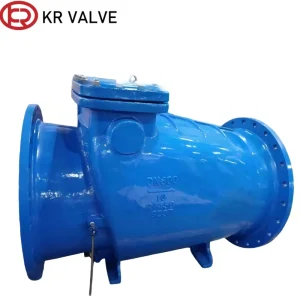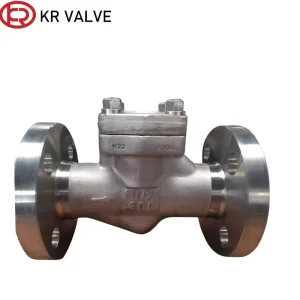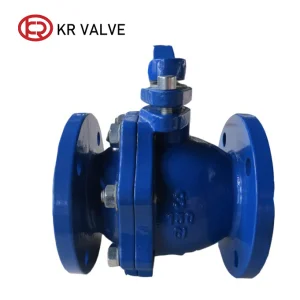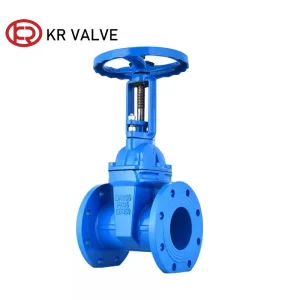
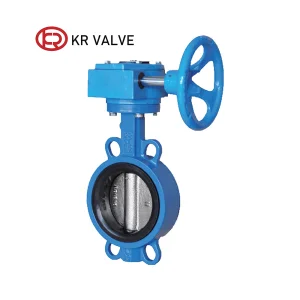
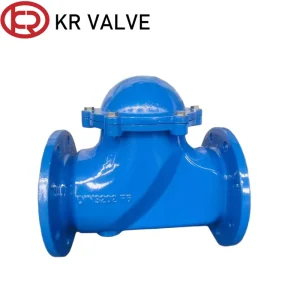
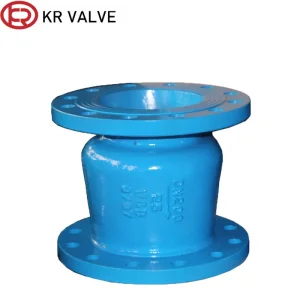
In municipal and industrial piping networks, the Ductile Iron (DI) Swing Type Check Valve serves as the primary defense against reverse flow and damaging hydraulic surges. Unlike standard inline valves, a swing check valve utilizes a hinger-mounted disc that swings freely off the seat to permit forward fluid flow. As forward velocity decreases to zero, gravity and backpressure force the disc back onto the body seat, creating a instant tight seal.
Modern engineering demands minimal pressure drop (Low Delta P) across the valve orifice. Advanced DI swing check valves manufactured in leading Chinese factories utilize CFD-modeled internal contours that reduce turbulence and head loss by up to 22% compared to legacy cast iron designs.
The global infrastructure sector has largely phased out Gray Cast Iron (GG25) in favor of Ductile Iron (EN-GJS-400-15 / GGG40 and EN-GJS-500-7 / GGG50). Nodular graphite morphology grants DI exceptional tensile strength (minimum 400 MPa) and superior yield strength (250-320 MPa).
This structural resilience allows DI swing check valves to absorb intense hydraulic shock waves—commonly known as water hammer—without structural fatigue or brittle fracture, making them indispensable in high-lift pumping stations and cross-country transmission lines.
| Parameter | EN / DIN Standard | BS Standard | ANSI / AWWA Standard |
|---|---|---|---|
| Design Standard | BS EN 12334 / DIN 3202-F6 | BS 5153 / BS EN 16767 | AWWA C508 / MSS SP-71 |
| Body Material | EN-GJS-400-15 (GGG40) / GGG50 | Ductile Iron Grade 420/12 | ASTM A536 65-45-12 / 80-55-06 |
| Flange Drilling | EN 1092-2 PN10 / PN16 / PN25 | BS4504 Table 10/16/25 | ASME B16.1 Class 125 / 150 |
| Face to Face Dim. | EN 558 Series 10 / DIN 3202 F6 | BS 5153 Long / Short pattern | ASME B16.10 / AWWA C508 |
| Testing Standard | EN 12266-1 Rate A (Zero Leakage) | BS 6755 Part 1 | API 598 / AWWA C508 |
| Sealing Options | Resilient EPDM/NBR or Bronze/SS304 | Gunmetal / Bronze Trim | Bronze to Bronze / SS Seat Ring |
| Coating Standard | Fusion Bonded Epoxy (FBE) ISO 12944 | WRAS Approved Epoxy Coatings | NSF/ANSI 61 Powder Epoxy |
Choosing between soft-seated (EPDM/NBR) and metal-seated (Bronze/Stainless Steel) DI swing check valves depends entirely on the working medium and operating temperature:
- Resilient Soft Seats (EPDM/NBR): Provide drop-tight (Zero Leakage, Bubble-Tight) shutoff in potable water systems, low-pressure municipal lines, and HVAC loops. Operating temperature range: -10°C to +120°C.
- Metal Seats (Bronze / SS304 / SS316): Engineered for aggressive industrial fluids, elevated temperatures (up to 200°C), and abrasive media such as untreated sewage, raw water, and mining slurry. Metal seats offer superior wear resistance against suspended solids.
For large-diameter pipelines (DN300 and above) operating under high flow velocities, standard rapid-closing swing valves can cause destructive pressure surges upon pump shutdown. Premier OEM factories offer specialized modifications:
- External Lever & Weight: Accelerates valve closure prior to flow reversal, suppressing reverse velocity spikes.
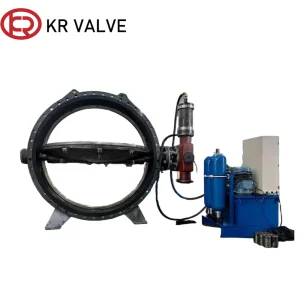
- Hydraulic Slow-Closing Dashpot: Controls the final 20% of the valve stroke, allowing controlled dissipation of fluid kinetic energy and completely eliminating water hammer noise and pipe vibration.
Modern valve factories in Tianjin and major industrial hubs employ electric arc induction melting paired with real-time optical emission spectrometers. This guarantees precise chemical composition, maintaining magnesium (Mg) nodulization rates above 90%.
Automated resin sand molding lines ensure consistent wall thickness across complex valve bodies, eliminating structural micro-porosity and ensuring high pressure rating integrity (PN10/PN16/PN25) under dynamic line pressures.
Corrosion prevention is vital for subterranean and marine pipeline longevity. Chinese factories utilize electrostatic thermal fluidizing bed technology to apply non-toxic, drinking-water-certified Fusion Bonded Epoxy (FBE) resin powder.
Coating thickness is controlled between 250 µm to 300 µm, compliant with EN 14901 and DIN 30677 standards. Every valve undergoes high-voltage spark testing (holiday testing) at 1.5 kV to confirm zero pinholes or coating discontinuities.
By leveraging fully integrated supply chains—from raw pig iron sourcing to internal machining, rubber vulcanization, assembly, and testing—Chinese OEM suppliers eliminate multi-tier contractor markups.
Engineering procurement managers realize 30% to 50% capital expenditure savings while securing fully certified products (CE, WRAS, ISO9001, API 598) backed by comprehensive EN 10204 3.1 material test certificates.
In high-capacity water distribution mains, DI swing check valves (PN10/PN16) are installed immediately downstream of centrifugal booster pumps. The full-port design allows unhindered flow during normal operations, minimizing electrical power consumption on pump drives.
Equipped with WRAS-approved EPDM soft seats and non-toxic FBE epoxy coating, these valves guarantee zero water contamination while providing instantaneous backflow protection during unexpected power outages.
Municipal wastewater and industrial effluent pipelines present severe clogging challenges due to solid suspended debris. DI swing check valves designed for wastewater feature a contoured disc travel path clear of the main flow stream.
Models specified with Bronze or Stainless Steel SS304 seats resist chemical abrasion and organic acid corrosion, ensuring long-term seat tightness without debris buildup under low head conditions.
High-rise commercial buildings and regional district cooling stations rely on DI check valves to maintain hydraulic loop balance and prevent back-siphoning through idle chillers and cooling towers.
Compact face-to-face dimensions (DIN 3202 F6 pattern) allow tight installation footprints in confined mechanical rooms, while resilient NBR/EPDM seals eliminate low-frequency hydraulic chatter.
Top-tier Chinese factories perform rigorous hydrostatic shell and seat leakage testing on 100% of manufactured check valves before shipment:
- Shell Test: Conducted at 1.5× Nominal Working Pressure (e.g., 24 bar for PN16 rating) to verify body casting structural integrity and flange tightness.
- High-Pressure Seat Test: Conducted at 1.1× Nominal Working Pressure to verify zero visible leakage across the valve disk and body seat.
- Low-Pressure Air Seat Test: Performed at 0.6 bar to ensure tight sealing under minimal backpressure conditions.
Every wholesale order shipped from certified OEM factories is accompanied by a full quality verification dossier required for project submittals:
- EN 10204 3.1 Material Certificate detailing melt chemical composition & mechanical tensile/impact testing.
- Coating Thickness Calibration & Holiday Test Inspection Reports.
- Third-Party Inspection (TPI) sign-offs from SGS, Bureau Veritas (BV), or TÜV.
- WRAS / NSF 61 Drinking Water Compliance Documentation.
Modern smart city infrastructure demands real-time diagnostic visibility. Chinese valve factories are pioneering the integration of wireless position switches and acoustic vibration sensors into DI swing check valve bonnets.
These sensors wirelessly transmit disc open/closed position data to SCADA control centers, detecting disc flutter, hinge pin wear, or partial blockage before catastrophic valve failure occurs.
In response to global environmental regulations (such as REACH and RoHS), Chinese foundries have adopted clean electric arc induction melting and closed-loop sand recycling system, reducing carbon emissions by up to 35% per ton of finished casting.
Furthermore, internal valve trims have migrated to lead-free silicon bronze and high-grade SS316 stainless steel, meeting stringent global standards for heavy metals in human drinking water distribution.