
Featured Industrial Directional & Hydraulic Control Valves
Precision-engineered flow regulation and isolation valves manufactured strictly under ISO 9001 and international pressure rating standards.
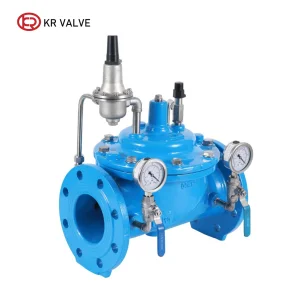
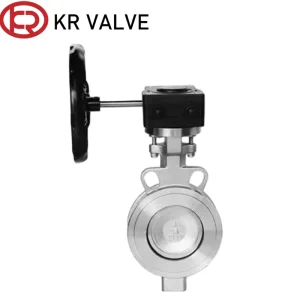
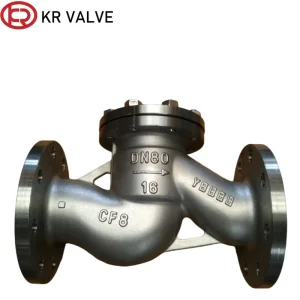
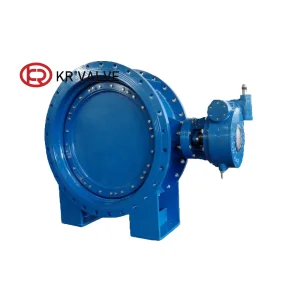
Industrial Directional Valve Control Architecture & Dynamics
Deep-dive into fluid circuit routing, electro-hydraulic pilot actuation mechanisms, and high-duty cycle spool geometry optimization.
Spool Overlap & Fluid Dynamics
Directional valve control units utilize precision-machined spools with positive, negative, or zero overlap. Positive spool overlap prevents pump pressure drops during transition phases, minimizing thermal spikes in heavy-duty hydraulic power units (HPUs). OEM production enforces sub-micron tolerances on spool clearance to keep internal leakage below ISO 4401 standards.
Electro-Hydraulic Pilot Actuation
For high-flow applications exceeding 100 L/min, direct-operated solenoids encounter magnetic force constraints. Tier-1 directional valve factories implement two-stage electro-hydraulic pilot valves. The primary solenoid routes pilot oil to shift the main spool, providing seamless direction switching at system operating pressures up to 350 bar (5,080 PSI).
Wet-Pin Solenoid Thermal Dissipation
Modern directional control valve blocks incorporate wet-pin solenoids where armature tubes are immersed in hydraulic oil. This design accelerates heat transfer away from the copper windings while lubricating moving parts, extending mechanical coil longevity to over 10 million switching operations in rigorous industrial cycles.
Global B2B Procurement Needs & Total Cost of Ownership (TCO)
Evaluating factory-direct sourcing strategies, lifecycle maintenance costs, and subplate compatibility for international engineering EPCs.
When global procurement managers evaluate wholesale directional valve control manufacturers, technical specifications must align with overall lifecycle economics. Downtime caused by valve spool stiction, fluid cavitation, or coil burnout can stall multi-million-dollar production lines. Sourcing direct from certified factories ensures stringent metallurgy control (ductile iron GGG40 vs cast steel WCB), precise surface treatment (phosphating, zinc plating), and 100% factory pressure testing.
| Valve Technology Category | Actuation Mechanism | Max Flow Rate | Pressure Rating | Primary Industrial Use Case |
|---|---|---|---|---|
| Direct Solenoid Directional Valve | AC/DC Wet-Pin Solenoid | Up to 120 L/min | 315 - 350 Bar | Machine tools, compact hydraulic power units, plastic injection molding. |
| Electro-Hydraulic Pilot Control Valve | Pilot Pressure Shifting | Up to 1,100 L/min | 350 Bar | Heavy metallurgy press machinery, marine winches, mining excavators. |
| Digital Proportional Directional Valve | LVDT Feedback & PWM Driver | Up to 600 L/min | 315 Bar | Closed-loop motion control, turbine governing systems, automated robotics. |
| Manual & Mechanical Override Valves | Hand Lever / Cam Roller | Up to 80 L/min | 210 Bar | Mobile agricultural machinery, emergency backup circuits, hazardous zones. |
Macro-Industry Solutions & Heavy-Duty Applications
Engineered fluid control deployments tailored for severe operational environments, explosive atmospheres, and high-tonnage production lines.
Metallurgy & Heavy Steel Rolling Mills
Steel processing plants require directional valves to operate reliably under extreme radiant heat, shock loads, and continuous water-glycol fluid exposure. Factories supply specialized manifold blocks fitted with viton (FKM) seals, flame-resistant solenoid coils, and hardened spool sleeves to guarantee 24/7 continuous casting operations.
Marine Hydraulic Deck Machinery & Offshore Rigging
Salt-spray corrosion is the primary enemy of naval directional valves. OEM manufacturers manufacture custom valve housings with nickel-chromium plating, 316 stainless steel fasteners, and IP69K waterproof solenoid enclosures. These designs power anchor windlasses, crane slew drives, and subsea ROV hydraulic manifolds.
Municipal Water Treatment & Large Flow Pipeline Routing
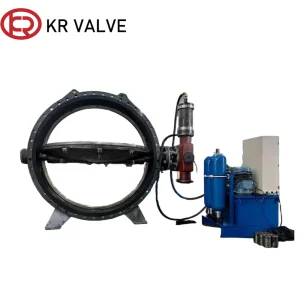
Integrating large-bore directional control valves (e.g., hydraulic butterfly valves, multi-port rotary valves) enables automated diversion of raw water and sludge flow. Utilizing hydraulic actuators coupled with directional pilot valves guarantees high torque output to turn massive DN1000+ pipeline gates smoothly without fluid shock.
Mining, Excavation & Mobile Earthmoving Equipment
Vibration resistance is paramount in mining excavators and underground drilling rigs. Directional control valves engineered for mobile applications feature anti-vibration coil encapsulation, integrated pressure relief cartridges, and compact stackable sandwich structures (Cetop 3 / Cetop 5) to withstand up to 30g mechanical impact.
Technical Roadmap & Industry 4.0 Smart Actuation (2026–2035)
The evolution of directional valve control: from analog solenoids to IO-Link digital communication, integrated condition monitoring, and eco-hydraulics.
IO-Link & Bus Communication Integration
Replacing traditional point-to-point solenoid wiring with onboard digital interfaces (CANopen, EtherCAT, IO-Link). Simplifies cabinet routing and allows real-time fieldbus parameter configuration.
Predictive Maintenance & Health Diagnostics
Incorporating embedded linear displacement sensors (LVDT) and thermal transducers directly into the valve body to track spool wear, coil degradation, and fluid contamination levels before failure occurs.
Energy-Efficient Eco-Hydraulics
Implementation of independent metering directional valves (IMV) using twin spool controls. Eliminates metering throttling losses, reducing overall hydraulic power consumption by up to 30%.
Bio-Fluid Compatibility & Additive Mfg
Widespread adoption of 3D-printed titanium/alloy valve manifolds with optimized fluid internal channels, fully compatible with environmentally acceptable ester-based synthetic hydraulic oils.
Global Compliance, Quality Assurance & Regional Support
Guaranteeing international market accessibility through rigid manufacturing standards, certified testing labs, and multi-regional technical service.
International Certification Standards
Products strictly conform to ISO 4401 (Subplate mounting dimensions), CE Machinery Directive 2006/42/EC, ATEX 2014/34/EU (Explosion-proof hazardous location coils), and SIL-3 Functional Safety ratings for emergency shut-off circuits.
Zero-Defect Quality Testing Lab
100% of manufactured directional control valves undergo automated hydraulic test benches evaluating internal leakage (cc/min), cracking pressure, solenoid insulation resistance (500V DC), and dynamic response times under maximum rated flow.
Worldwide Supply Chain & Fast Logistics
Supported by strategically located inventory hubs, OEM customized valve packages (custom nameplates, specific voltage coils like 12VDC, 24VDC, 110VAC, 220VAC) can be dispatched with short lead times via ocean, air, or express freight.
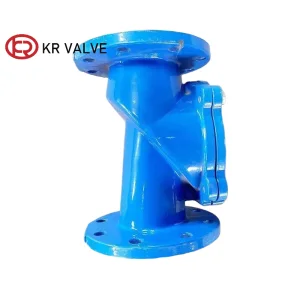
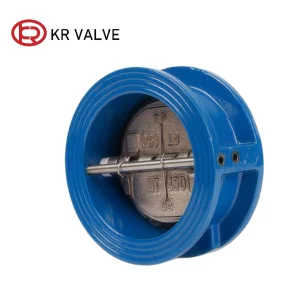
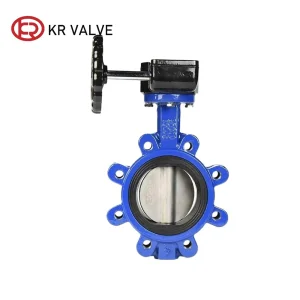
Comprehensive Fluid Isolation & Control Series
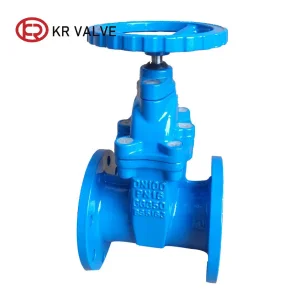
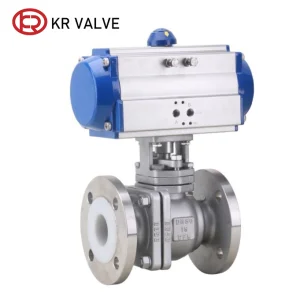
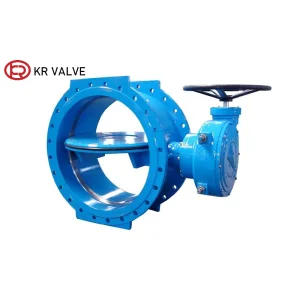
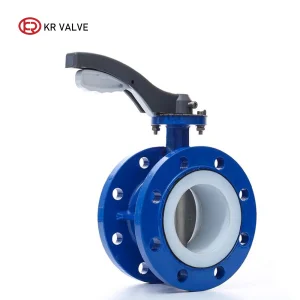
Explore our complete catalog of industrial butterfly, check, gate, and specialized flow routing valves designed for industrial plants and infrastructure.
Enterprise Knowledge Base & Engineering FAQ
Expert insights addressing key technical parameters, OEM manufacturing options, and fluid system troubleshooting for plant engineers.