Hydro-Dynamic Operating Principle
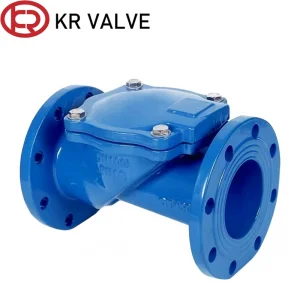
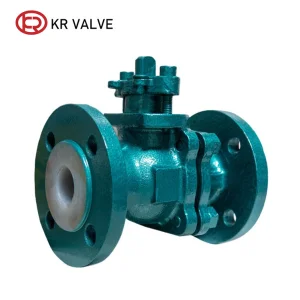
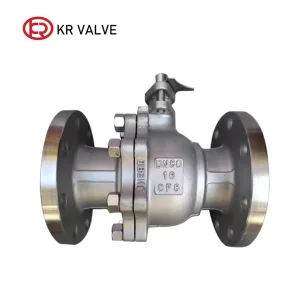
A Floating Ball Check Valve operates via an elegant, low-friction mechanism where an internal elastomer-coated or solid metallic ball moves within a specially designed guide chamber. As forward hydraulic pressure exceeds cracking pressure, the liquid media pushes the floating ball off its seated origin into a side recess channel. This movement opens an completely unobstructed, full-bore flow path that minimizes turbulent head loss, reducing system pumping energy costs significantly.
Zero-Backflow Soft-Sealing & Self-Cleaning
When forward line pressure ceases or backpressure develops during pump shutdown, gravity combined with reverse flow instantly propels the floating ball back onto its precision-machined conical seat. Because the floating ball rotates freely during every cycle, wear is distributed evenly across 360 degrees of its spherical surface. Additionally, continuous rotational turbulence washes away particulate buildup, ensuring reliable bubble-tight shut-off even when handling thick slurries, sewage, and viscous wastewater.
| Specification Parameter | Standard Configuration Option | High-Performance Industrial Option | Compliance Standards |
|---|---|---|---|
| Nominal Diameter (DN) | DN40 – DN300 (1.5" to 12") | DN350 – DN600 (14" to 24") Custom Bores | ISO 5752, EN 558 Series 48, DIN 3202-F6 |
| Body Metallurgy | Ductile Iron (GGG40 / EN-GJS-400-15) | Cast Steel (WCB), Stainless Steel (CF8/CF8M) | ASTM A536, ASTM A216, ASTM A351 |
| Floating Ball Core & Coating | Carbon Steel Core + Vulcanized NBR Rubber | SS304/SS316 Core + EPDM / Viton (FKM) / Polyurethane | BS EN 681-1, Drinking Water Approved (WRAS) |
| Pressure Rating | PN10, PN16 (10 Bar / 16 Bar) | PN25, Class 150 LB, Class 300 LB | EN 1092-2, ANSI B16.5, ASME B16.42 |
| Operating Temperature | -10°C to +80°C (NBR Seating) | -20°C to +180°C (FKM / High-Temp PTFE Coated) | ISO 5208 Leakage Rate A |
| Testing & Inspection | 100% Shell & Seat Hydrostatic Testing | NDT Radiography, Ultrasonic Testing, Dye Penetrant | EN 12266-1, API 598, API 6D standard |
Low Friction Losses
The smooth spherical ball recess chamber guarantees near-zero obstruction, leading to a minimal flow resistance coefficient (Kv value) compared to conventional swing check valves.
Water Hammer Mitigation
The lightweight vulcanized ball responds rapidly to reverse hydraulic transients, seating smoothly prior to severe water hammer wave generation.
Top-Entry Access
Featuring a removable bonnet bolted assembly, maintenance teams can inspect or replace the floating ball without dismounting the valve body from the main pipeline.
Municipal Wastewater & Sewage Lifting Stations
In municipal sewage networks, conventional swing check valves frequently experience jamming, ragging, and solids accumulation around hinges and pins. Our floating ball check valve provides a complete open passage during pumping. As there are no internal shafts, springs, or hinges exposed to the effluent, stringy solids and suspended rags pass smoothly without entanglement, preventing pump cavitation and catastrophic line blockages.
Mining, Dredging & High-Density Slurry Lines
Abrasive tailings, sand slurry, and mineral washing fluids wear out conventional metal seats in record time. By utilizing thick, highly resilient polyurethane or heavy-duty vulcanized NBR-covered floating balls within GGG50 ductile iron bodies, our valves absorb abrasive particle impacts. The spherical ball rotates dynamically during operation, continuously exposing fresh elastomeric surface area and dramatically extending wear life.
Chemical Processing & Corrosive Fluid Transport
When handling acidic pickling agents, aggressive industrial solvents, or chlor-alkali brine solutions, standard metallic valves quickly succumb to galvanic corrosion. We engineer custom split-body floating ball valves lined completely with virgin PTFE, PFA, or FEP materials combined with solid PTFE floating balls, offering total chemical immunity up to 180°C.
Desalination & Marine Coastal Pumping
Seawater intake, reverse osmosis (RO) high-pressure rejection lines, and marine ballast operations demand extreme resistance to chloride pitting and crevice corrosion. Our factory produces specialized Super Duplex Stainless Steel (2507 / CE3MN) and Nickel-Aluminum Bronze (C95800) floating ball check valves designed specifically for harsh saline and off-shore platform installations.
1. Automated Foundry & Metallurgy
Our smart casting facility incorporates electric induction melting furnaces coupled with automatic green-sand molding lines. Every batch of ductile iron (GGG40/50) or steel undergoes real-time optical emission spectrometer testing to guarantee precise metallurgical composition and tensile strength prior to pouring.
2. Multi-Axis CNC Machining
To achieve micro-inch seat smoothness and perfect concentricity, all valve bodies, bonnets, and internal ball recesses are machined on high-precision multi-axis CNC turning centers. This ensures zero binding and flawless ball seating tolerances under low head pressures.
3. High-Pressure Vulcanization
The rubber coating on our floating balls is processed using automated injection molding press systems. The high-density NBR or EPDM elastomer is thermal-bonded to the metallic core, eliminating air pockets and preventing delamination even under intense hydro-dynamic shock.
Rigorous 100% Quality Assurance Protocol (ISO 9001 Certified)
Every individual floating ball check valve leaving our production assembly line must pass 100% hydrostatic and pneumatic pressure testing in accordance with EN 12266-1 (Rate A Zero Leakage) and API 598. Shell tests are conducted at 1.5 times nominal design pressure, while seat sealing tests are verified at 1.1 times PN rating, including low-pressure seat sealing checks at 0.5 bar to guarantee backflow prevention under minimum fluid head conditions.
Initial Capex vs. Lifecycle Opex Savings
While low-cost commercial valves may offer a minimal upfront purchase price, frequent valve jams, elastomer degradation, and unscheduled municipal pump station shutdowns inflate operational costs drastically. By specifying our precision-cast GGG40 ductile iron floating ball check valves with vulcanized NBR balls, EPC contractors and procurement leaders achieve:
- Up to 40% Reduction in Energy Consumption: Lower hydraulic head loss reduces annual electric pumping expenditures.
- Zero Mechanical Wear Parts: Absence of pins, shafts, springs, or internal levers eliminates mechanical pivot fatigue.
- Extended Service Intervals: 360-degree ball rotation minimizes localized elastomer seating wear.
- Reduced Downtime: Quick top-entry bonnet inspection streamlines routine maintenance without pipeline cutting.
OEM Wholesale Support & Factory Customization Matrix
As a dedicated manufacturing facility, we offer comprehensive OEM and ODM support tailored to international valve brand owners, stocking distributors, and large engineering project contractors:
- Private Labeling & Branding: Customized body casting logos, laser-etched stainless steel nameplates, and color coating choices (RAL 5005/5015 Epoxy).
- Customized Drilling Standards: Flanges machined to EN1092-2 PN10/16/25, ANSI B16.1 Class 125/150, or JIS 10K/16K.
- Specialized Coatings: Fusion-Bonded Epoxy (FBE) coating (minimum 250 microns thick) with WRAS / NSF certification for potable water applications.
- Consolidated Container Freight: Packaging in solid export-grade plywood cases with sea-worthy moisture barrier protection.
IoT Acoustic Condition Monitoring
Integrating embedded piezo-acoustic sensors into the valve bonnet to provide real-time telemetry on ball movement, seating acoustics, and pipeline flow turbulence, enabling predictive maintenance before backflow leaks occur.
Graphene Nanocomposite Seals
Formulating next-generation elastomer ball coatings reinforced with graphene nanoparticles to dramatically improve tear strength, chemical resistance, and thermal tolerance up to +220°C.
Zero-Emission Green Foundry
Transitioning our manufacturing plants to 100% closed-loop water filtration and solar-powered electric smelting furnaces to deliver zero-carbon-footprint valve components for eco-conscious global infrastructure contracts.
International Quality Certifications
Our valves hold complete international compliance certifications including CE-PED (Pressure Equipment Directive 2014/68/EU), WRAS for UK drinking water approval, EAC certification for Eurasian Customs Union markets, and ISO 9001 / ISO 14001 / ISO 45001 integrated management system accreditation.
Complete Engineering Dossier Package
We provide full technical submittal packages for EPC engineers including 2D CAD dimensional layout drawings, 3D STEP/BIM model files, EN 10204 3.1 Material Test Reports (MTRs), hydro-test certificates, paint thickness verification records, and Certificate of Origin documentation.