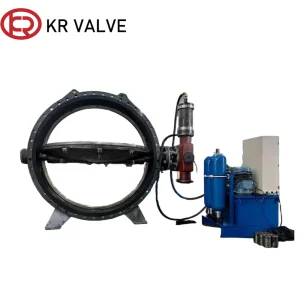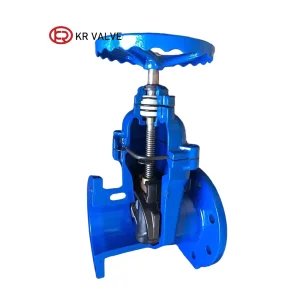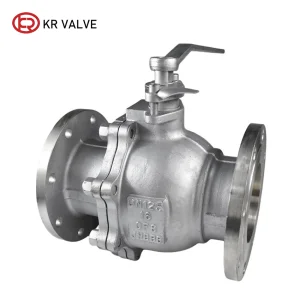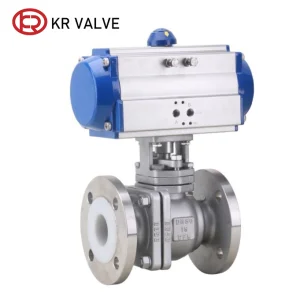
High-Performance Flow Control & Valve Series
Explore our core industrial valve inventory designed for water systems, hydraulic works, and industrial pipelines.
Executive Technical Overview: Mechanics & Physics of Hollow Jet Valves
In modern hydraulic engineering, the Hollow Jet Valve (frequently referred to as the Howell-Bunger Valve evolution or sleeve-discharge needle valve) represents a critical terminal regulating device for high-head dams, reservoir bottom outlets, and hydro-power bypass conduits. Unlike conventional gate or butterfly valves designed strictly for isolation, hollow jet valves are specialized flow-control mechanisms designed to discharge water freely into the atmosphere under extreme static heads without inducing destructive vibration, erosion, or hydrodynamic cavitation.
Core Engineering Information Gain: Energy Dissipation Mechanics
The core fluid-dynamic advantage of a hollow jet valve lies in its geometry. Water flows around an internal stationary cone, guided by an axially moving cylindrical sleeve. As water discharges into the air, it forms a hollow, expanding conical jet spray. This geometry maximizes the surface area of the water stream exposed to atmospheric air, facilitating rapid ambient air entrainment (aeration ratio Ra = Qair / Qwater ≥ 0.10) and dissipating up to 85–90% of kinetic energy before the water strikes the downstream plunge pool.
Kinematic Operation & Flow Coefficient Dynamics ($C_d$)
The control mechanism consists of an outer stainless steel cylindrical sleeve translating over a stationary internal valve body supported by radial splitter ribs. The position of the sliding sleeve adjusts the annular orifice area, providing linear or proportional discharge characteristics across the entire stroke length (0% to 100% opening).
The mathematical discharge rate ($Q$) through a hollow jet valve is governed by the standard hydrodynamic discharge equation:
Where Cd = Discharge Coefficient (~0.85 - 0.89), Aorifice = Net Annular Area (m²), Hnet = Net Hydrostatic Head (m).
Because the internal splitter ribs reduce liquid vorticity, hollow jet valves maintain a stable discharge coefficient ($C_d$) across varying head pressures. This prevents hydraulic instability and pressure surges within upstream steel penstocks during sudden load adjustments.
Global Commercial & Industrial Landscape (2025–2035)
Understanding supply chain shifts, modernization mandates, and global procurement trends for heavy hydraulic equipment.
North America & European Dam Modernization
Aging water storage infrastructure built between 1950 and 1980 across North America and Europe requires comprehensive spillway upgrades. Municipal water authorities are actively replacing outdated needle valves with modern hollow jet valves equipped with discharge hoods to ensure compliance with updated seismic and extreme flood release regulations.
Asia-Pacific & LatAm Hydropower Growth
Rapid industrialization and renewable energy transitions in Southeast Asia, South Asia, and Latin America have driven high demand for large-aperture terminal valves (DN1500–DN3000). Hollow jet valves serve as critical turbine bypass regulators, safeguarding hydro-turbines during sudden load rejection events.
Climate Resilience & Ecological Flow Requirements
Global environmental standards now require dams to discharge precise environmental minimum flows continuously. Hollow jet valves enable high-accuracy micro-metering even under minimal sleeve openings, preventing downstream riverbed scouring while maintaining oxygen-rich aquatic ecosystems.
China Manufacturing Efficiency & Quality Advantages
As a specialized valve manufacturing enterprise operating out of Tianjin, China’s industrial valve production epicenter, our facility combines vertical foundry integration, precision heavy machining, and stringent international quality assurance protocols to deliver world-class hydraulic control equipment.
1. Vertical Casting & Metallurgy Control
Our direct-ownership foundries utilize sand-casting and centrifugal casting processes with real-time optical emission spectrometry. We control exact chemical compositions for Ductile Iron GGG50 (EN-GJS-500-7), Cast Steel WCB (ASTM A216), Stainless Steel CF8M, and Duplex Stainless Steel 2205 sleeve components, guaranteeing structural integrity free from porosity or micro-fissures.
2. 5-Axis Heavy CNC Machining
Hollow jet valve sleeves require extreme roundness and axial alignment to prevent seal binding under multi-megapascal hydraulic loads. Our 5-axis vertical turn-milling centers achieve sleeve machining tolerances within ±0.03 mm, reducing friction torque and extending seal operational lifespan to over 25 years.
3. Total Cost Optimization (TCO)
By streamlining the complete manufacturing pipeline—from raw pattern design to final hydraulic testing—we provide EPC buyers and international distributors with a 30% to 45% overall cost advantage compared to European or North American OEMs, while fully meeting AWWA, DIN, BS, and ISO specifications.
Hollow Jet Valve Technical Specifications & Material Selection
Comprehensive component breakdown for hydro-engineers, consultants, and procurement managers.
| Component Name | Standard Material Option | Severe Service / High Head Option | Function & Engineering Detail |
|---|---|---|---|
| Main Valve Body | Ductile Iron GGG50 / ASTM A536 | Cast Steel WCB / Stainless Steel CF8M | Hydrodynamic housing with integral internal splitter ribs to guide flow. |
| Internal Stationary Cone | Cast Steel WCB + SS304 Facing | Full Duplex Stainless Steel 2205 / 2507 | Splits the water column into a hollow cylinder. High resistance to cavitation erosion. |
| Discharge Sleeve (Sliding) | Stainless Steel 304 / 316 | Duplex SS 2205 with Hard Chrome Plating | Axially driven cylinder that opens/closes the discharge orifice. Precision ground surface. |
| Main Sealing Ring | Resilient EPDM / NBR Soft Seal | Bronze Metal-to-Metal + EPDM Backup | Ensures bubble-tight shutoff (ISO 5208 Rate A) when fully closed under high head. |
| Operating Drive Rods | Stainless Steel 420 / 17-4PH | High-Tensile Stainless Steel 316L / Monel | Transmits force from actuators to the sliding sleeve without flex or backlash. |
| Actuation Options | Hydraulic Oil Cylinders / Bevel Gear | Electric Motorized (AUMA / Rotork) | Supports automatic remote PLC control, emergency gravity closure, or manual override. |
| Discharge Hood (Optional) | Carbon Steel Q235B with Epoxy Coating | Stainless Steel 304/316 Fabricated Hood | Concentrates the jet spray, directing water vertically downward into stilling basins. |
| Parameter Range | Technical Baseline Value |
|---|---|
| Nominal Diameters (DN) | DN300 mm to DN3000 mm (12 inch to 120 inch) |
| Nominal Pressure Ratings (PN) | PN6, PN10, PN16, PN25, PN40 (Class 150 to Class 300) |
| Applicable Media | Raw Water, River Water, Reservoir Water with Sediment/Silt Content |
| Medium Temperature Range | -10°C to +80°C |
| End Flange Standard | EN 1092-2, ASME B16.5, ASME B16.47, AWWA C207, DIN 2501 |
| Seat Leakage Rate | ISO 5208 Rate A (Zero visible leakage) / ANSI/FCI 70-2 Class VI |
Localized Engineering Application Scenarios
Real-world deployment profiles across key hydro-industrial sectors.
Dam Bottom Outlet Free Discharge
Installed at the terminus of reservoir bottom discharge tunnels to release floodwaters under high static pressure head. The hollow jet valve breaks the water into a fine spray cone, dissipating energy safely in open air before impacting riverbed structures.
Key Requirement: High Aeration & Zero VibrationTurbine Bypass & Pressure Relief
In hydroelectric stations, sudden electrical grid disconnections cause hydro-turbines to trip. Hollow jet valves open rapidly in synchronization with governor systems, redirecting penstock flow to prevent catastrophic water hammer pressure spikes.
Key Requirement: Fast Hydraulic Actuation (<5 Sec)Ecological Environmental Release
Used in municipal water reservoirs to maintain continuous downstream river flow. Equipped with jet disperser hoods to direct water neatly into concrete channels without wetting adjacent civil infrastructure or roads.
Key Requirement: High-Precision Sleeve PositioningGlobal Buyer Procurement Guide & Quality Checklist
When issuing Requests for Quotation (RFQs) for wholesale hollow jet valves, engineering procurement teams should verify the following parameters to ensure optimal hydraulic match and factory compliance:
1. Hydrodynamic Head & Flow Rate
Specify maximum static head (m), normal working head, and maximum discharge volume ($m^3/s$) to confirm correct orifice sizing and sleeve stroke length.
2. Cavitation & Aeration Margin
Provide tailwater elevation and ambient air ventilation ducting parameters to prevent sub-atmospheric pressure zones at the cone exit.
3. Actuator Duty Cycle & Controls
Select between electro-hydraulic power units (HPU) with accumulator backup, electric multi-turn gearboxes (400V 3-Phase), or manual handwheel drives.
4. Testing & Inspection Certificates
Mandate Material Test Reports (EN 10204 3.1), Dye Penetrant Testing (DPT) on stainless steel sleeve welds, and 1.5x PN hydrostatic shell testing.
Industry Development Trends & Next-Gen Innovations
The field of hydraulic discharge valve manufacturing is rapidly incorporating smart sensor integration and advanced surface engineering to handle harsher operating conditions.
HVOF Nano-Coating for High Sediment Water
In river systems with high quartz sand concentrations (e.g., Himalayan or Yellow River basins), standard stainless steel sleeves suffer abrasive wear. Modern factories apply High-Velocity Oxygen-Fuel (HVOF) Tungsten Carbide coatings to the sleeve sealing surfaces, raising surface hardness to over HRC 68 and extending service life 4-fold.
IoT Smart Sleeve Position Transducers
Integrating magnetostrictive linear position sensors and piezoelectric vibration transducers directly into the valve body enables real-time telemetry feeding into SCADA systems. Engineers can monitor micro-vibrations, sleeve displacement accuracy to 0.1 mm, and seal degradation without disassembling the valve.
Energy Dissipating Jet Hood Optimization
Using Computational Fluid Dynamics (CFD) modeling, modern discharge hoods are designed with internal variable-pitch guide vanes. This reduces the spray radius, containing 100% of water flow within compact plunge basins while eliminating misting damage to nearby high-voltage power lines.
Frequently Asked Questions (Q&A)
Expert engineering answers to common technical and commercial queries regarding hollow jet valves.
Complementary Industrial Valve Inventory
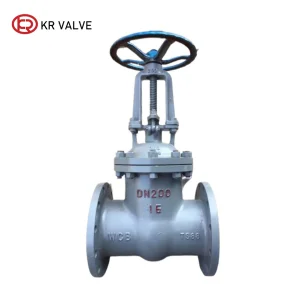
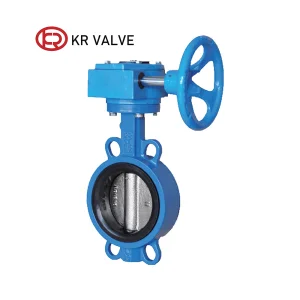
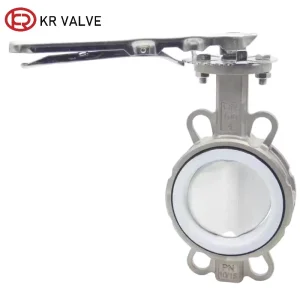
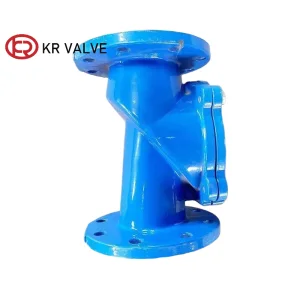
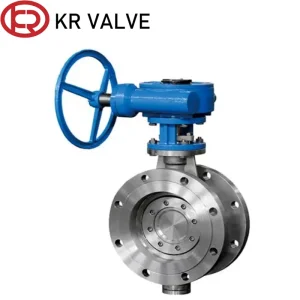
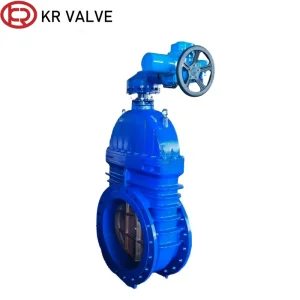
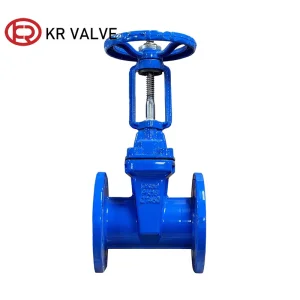
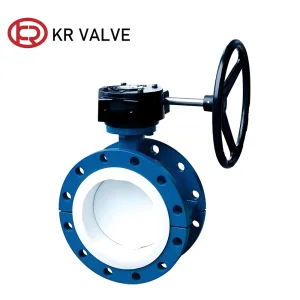
Browse our complete factory output of gate, butterfly, check, and ball valves available for consolidated wholesale shipment.