
Featured Industrial & Hydraulic Valve Solutions
Direct factory sourcing of high-integrity directional control components, specialized gate valves, and multi-standard flow regulation hardware engineered for high-pressure systems.
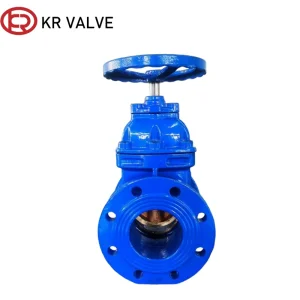
Custom China GGG40 Bronze Seat Hard Seal Flange Gate Valve
View Product Specs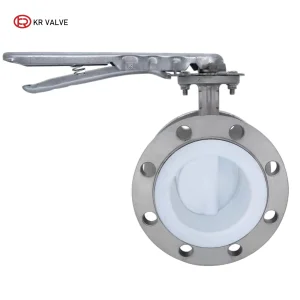
Custom Full PTFE Lined Flange Butterfly Valve CF8 Body
View Product Specs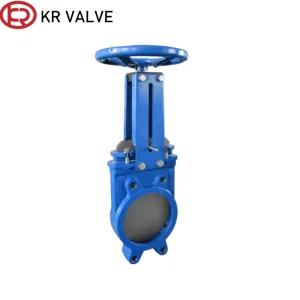
Wholesale Ductile Iron Wafer Knife Gate Valve PN16
View Product Specs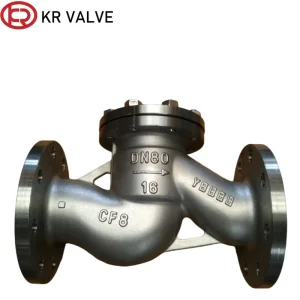
OEM Stainless Steel Lift Check Valve for Water Pump
View Product Specs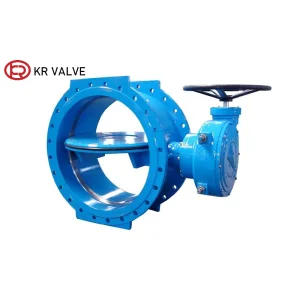
Wholesale Double Eccentric Butterfly Valve SS304 Sealing D342X
View Product Specs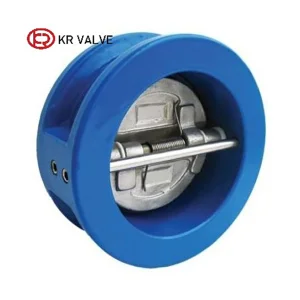
Wholesale One-Way Valve Ductile Iron Body CF8 Disc Wafer Type
View Product Specs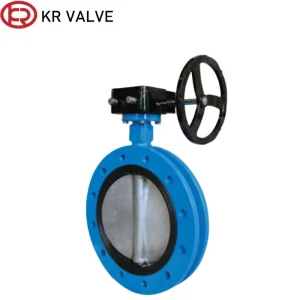
Custom Gear Box Operation DI Material U-Type Flange Butterfly Valve
View Product Specs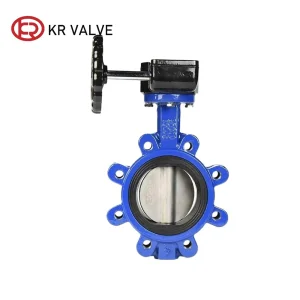
Wholesale Concentric Resilient Seated Lug Butterfly Valve EPDM Seal
View Product SpecsMacro Landscape of Wholesale Hydraulic Directional Valves
Analyzing the shift toward high-pressure, electro-hydraulic proportional control, precision spool tolerances, and supply chain consolidation across global industrial hubs.
Electro-Hydraulic Shift
Modern heavy machinery and automated manufacturing demand seamless integration between digital controllers and fluid power actuators. The global market for directional valves is accelerating toward proportional solenoid and servo-driven architectures that offer sub-millisecond response times and dynamic flow metering.
Internal Leakage & Energy Efficiency
Energy conservation mandates require hydraulic systems to operate with minimal parasitic volumetric loss. Direct-factory OEM suppliers are adopting ultra-precise micro-honing on valve bodies and induction-hardened spools to achieve radial clearances below 3 to 5 microns, drastically reducing internal bypass leakage.
OEM & Factory Direct Economics
Industrial buyers and system integrators are bypassing multi-tier distribution networks to work directly with qualified manufacturing hubs in China. This direct factory supply model ensures standardized ISO mounting patterns, customizable voltage solenoids, and cost-effective bulk procurement for high-volume production lines.
Hydraulic Directional Valve Mechanical Architecture
Understanding spool geometry, solenoid actuation dynamics, flow force compensation, and fluid routing physics in multi-way directional control units.
Spool-Type vs. Poppet-Type Directional Controls
Spool Valves: Utilize a cylindrical sliding spool inside a high-precision body bore. Spool lands selectively connect or isolate internal fluid galleries (P, A, B, T). They support complex 4/3 and 4/2 flow routing, providing smooth throttling notches for metering, though minimal oil film leakage occurs across the lands.
Poppet Valves: Employ hardened conical seats or balls. When actuated, the seat lifts to open fluid channels. Poppet valves offer true zero-leakage performance, ideal for load holding, safety lockouts, and harsh fluid power circuits where holding pressure without drift is mandatory.
Actuation Mechanisms & Pilot Control Systems
Directional control valves can be operated direct-acting or electro-hydraulically pilot-operated:
- Direct-Acting Solenoid: Wet-pin solenoids directly push the spool against spring force. Compact, cost-effective for smaller flows (up to 80-120 L/min, CETOP 3 / NG6 and CETOP 5 / NG10).
- Electro-Hydraulic Pilot-Operated: For large-flow systems (NG16 to NG32, flows up to 1100 L/min), a small primary pilot solenoid valve routes hydraulic fluid pressure to shift the massive main-stage spool.
- Manual & Mechanical Levers: Used in mobile equipment, monoblock, and sectional valves for tactile, proportional feedback.
Hydraulic Directional Control Valve Classification Matrix
A comprehensive engineering guide comparing porting arrangements, center positions, maximum pressure ratings, and system applications.
| Valve Type | Center Position / Function | Max Pressure (bar) | Max Flow Rate (L/min) | Primary Industrial Application | Key Advantage |
|---|---|---|---|---|---|
| 4/3-Way Closed Center (Type E) | P, T, A, B all blocked in neutral | 350 bar (5075 PSI) | 80 - 1100 L/min | Multi-actuator systems, power units | Holds load position; keeps system pressure charged |
| 4/3-Way Open Center (Type H) | P connected to T; A, B blocked | 315 bar (4568 PSI) | 60 - 800 L/min | Fixed-displacement pump systems | Unloads pump in neutral; minimizes heat buildup |
| 4/3-Way Tandem Center (Type G) | P connected to T; A & B blocked | 315 bar (4568 PSI) | 80 - 600 L/min | Series circuit hydraulic lines | Allows downstream valves to receive pump flow |
| 4/3-Way Float Center (Type J/Y) | P blocked; A & B connected to T | 350 bar (5075 PSI) | 80 - 1000 L/min | Hydraulic motors, winch drives, excavators | Allows motor or cylinder to freewheel/float smoothly |
| 4/2-Way Single Solenoid | Spring return to offset position | 350 bar (5075 PSI) | 60 - 450 L/min | Clamping, ejection, directional switching | Simple 2-position failsafe operation |
| Sectional / Monoblock Mobile | Custom spools with auxiliary relief | 250 - 315 bar | 40 - 180 L/min | Tractors, cranes, loaders, waste trucks | Compact, highly scalable with integrated relief valves |
Macro Industry Solutions & Multi-Sector Application Scenarios
Engineered for extreme operating environments across heavy machinery, municipal water management, offshore energy, and automated industrial plants.
Heavy Construction & Earthmoving
In mobile hydraulics, excavator boom arms, track drives, and loader buckets rely on multi-spool directional valves. High resistance to shock pressures, anti-cavitation secondary valves, and load-sensing (LS) proportional control allow smooth concurrent boom lift and swing movement under varying load weights.
Municipal Water Control & Hydro Engineering
Integrated hydraulic power units open and close massive sluice gates, dam spillways, and heavy water diversion valves. Directional control valves coupled with hydraulic lock valves maintain sub-millimeter position stability against immense hydrostatic backpressure without power draw.
Metallurgy & Injection Molding
High-speed die-casting machines and plastic injection systems demand rapid directional switching with zero pressure spikes. Proportional electro-hydraulic directional valves with integrated LVDT spool feedback ensure precise clamping speed control and smooth mold deceleration cycles.
Strict Quality Standards & Sub-Micron Precision
Every hydraulic directional valve manufactured in our facilities undergoes rigorous metallurgical checks, CNC precision boring, and 100% full-pressure functional bench testing.
ISO 4401 & CETOP Standard Compliance
Our directional control valves strictly adhere to international mounting footprints, including ISO 4401-03-02 (CETOP 3 / NG6), ISO 4401-05-04 (CETOP 5 / NG10), ISO 4401-07-07 (CETOP 7 / NG16), and ISO 4401-08-08 (CETOP 8 / NG25). This guarantees 100% drop-in interchangeability with major global hydraulic brands.
Metallurgical Integrity & Heat Treatment
Valve bodies are shell-cast from high-density ductile iron GGG40 or high-tensile gray iron GG25, preventing structural deformation under high pressure peaks. Spools are machined from carbon alloy steel, carburized, case-hardened to HRC 58-62, and super-finished to resist fluid erosion and particulate wear.
Localized Engineering Support & Factory-Direct Supply
Simplifying international procurement for OEMs, distributors, and EPC project contractors through rapid custom design, compliance documentation, and end-to-end logistics support.
Custom Solenoid & Voltage Engineering
We provide complete customization for solenoid operating voltages (12V DC, 24V DC, 110V AC, 220V AC, 50/60 Hz), connection interfaces (DIN 43650 ISO plug, Deutsch DT connectors, AMP Superseal), and explosion-proof coils (ATEX / IECEx) for hazardous mining or oil field installations.
OEM Branding & Private Label Logistics
For global hydraulic equipment manufacturers, we offer private-label branding, customized laser etching, localized user manuals, and specialized export packaging (vCI rust-inhibitor wrapping, reinforced seaworthy wooden crates) to streamline destination customs clearance.
24/7 Technical Selection & Assistance
Our dedicated hydraulic application engineers assist clients with fluid flow calculations, delta-P pressure drop analysis, circuit schematic review, and crossover part matching to replace obsolete hydraulic valves without pipeline modifications.
Future Technology Roadmap: Intelligent Digital Hydraulics
Bridging physical hydraulic systems with digital control networks, onboard sensor diagnostics, and energy-optimized electro-hydrostatic actuators.
CANbus & IO-Link Integrated Smart Valves
The next generation of proportional directional control valves integrates onboard digital electronics (OBE) with CANopen or IO-Link industrial fieldbus protocols. This enables real-time parameter tuning, precise position feedback, differential pressure sensing, and predictive maintenance diagnostics directly from the central PLC or cloud platform.
Energy-Decoupled Independent Metering (IMV)
Traditional directional valves tie meter-in and meter-out spool lands together. Advanced electro-hydraulic architectures utilize independent metering valve technology, decoupling inlet and outlet flow control. This eliminates throttling losses during overrunning loads, reducing total hydraulic power consumption by up to 30-45%.
Complementary Valve Engineering Showcase
Explore our complete range of specialized industrial ball valves, compound exhaust valves, non-return check valves, and remote water level control assemblies.
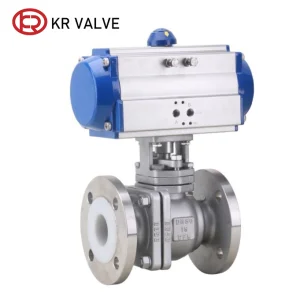
Wholesale Stainless Steel PTFE Lined Ball Valve Pneumatic Actuator
View Product Specs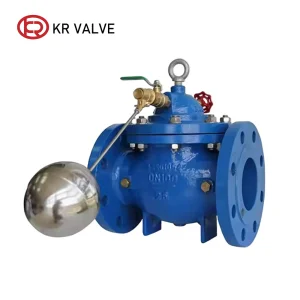
OEM Water Control Valve 100X Remote Control Float Ball Valve
View Product Specs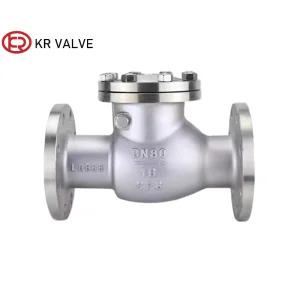
Custom China API Standard Stainless Steel Swing Check Valve
View Product Specs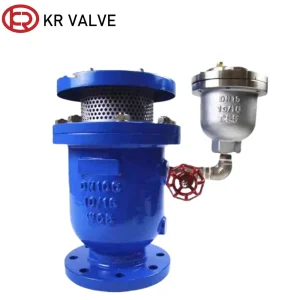
Wholesale China CARX High Speed Release Compound Exhaust Valve
View Product Specs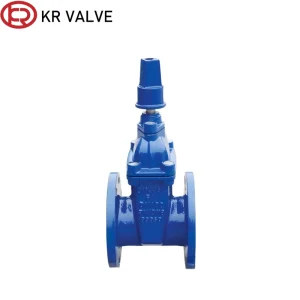
Wholesale Underground Gate Valve Ductile Iron Body EPDM Seat
View Product Specs
OEM CARX High Speed Release Compound Exhaust Valve Manufacturer
View Product Specs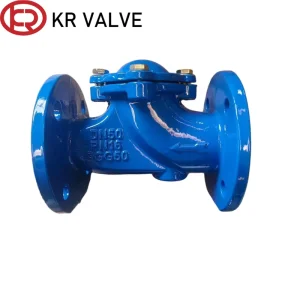
OEM Ball Check Valve Flange Connection EPDM Ball Non-Return
View Product Specs
OEM Stainless Steel PTFE Lined Ball Valve Pneumatic Q941F46
View Product SpecsFrequently Asked Technical Questions
In-depth answers to common selection, installation, and maintenance queries encountered by fluid power engineers and procurement teams.
What is the difference between a 4/2-way and a 4/3-way hydraulic directional control valve?
How do I determine whether to specify a direct-acting or pilot-operated directional valve?
What causes hydraulic spool sticking or valve jamming, and how can it be prevented?
- Fluid Contamination: Solid micro-particles bridging the 3-5 micron clearance between spool and body bore (silting). Maintaining oil cleanliness to ISO 4406 code 19/17/14 or cleaner via high-efficiency inline filtration is vital.
- Thermal Distortion: Uneven heating or excessive torque applied to subplate mounting bolts cause bore ovality, pinching the spool. Always use calibrated torque wrenches during installation.
- Hydraulic Side Loading: Asymmetrical pressure distribution along spool land grooves. Precision directional valves feature circumferential pressure-equalizing grooves around spool lands to equalize radial oil pressure and prevent binding.