
Featured Industrial Valve Products
Explore our flagship OEM & Wholesale Valve Solutions Manufactured to International Standards (DIN, BS, ANSI, AWWA)
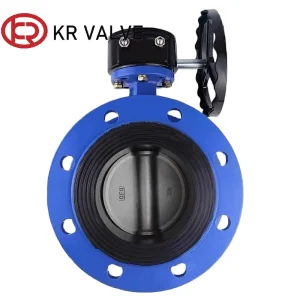
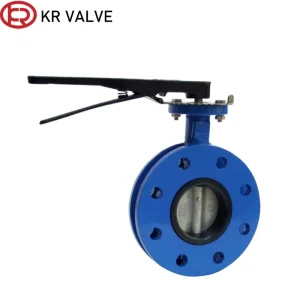
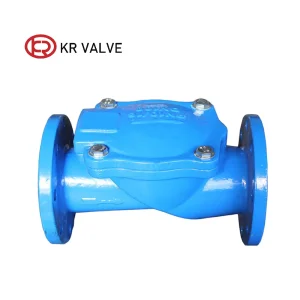
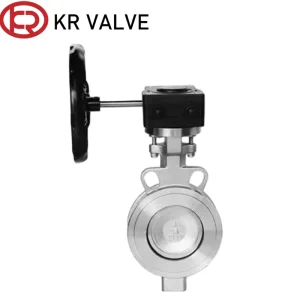
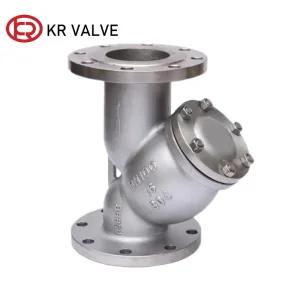
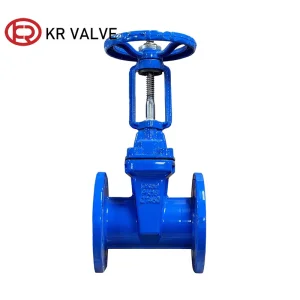
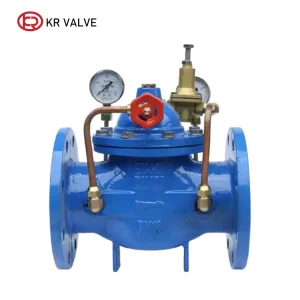
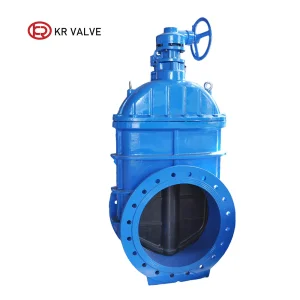
Global Commercial & Industrial Landscape of Lug Valves
An Executive Engineering Report on Market Demands, Supply Chain Dynamics, and Critical Flow Control Infrastructure
In modern industrial process plants, municipal infrastructure, and energy generation systems, fluid control components represent the foundational backbone of operational integrity. Among the diverse spectrum of quarter-turn isolation devices, the Lug Type Butterfly Valve stands out as one of the most versatile, mechanically robust, and economically viable solutions available to process engineers and EPC (Engineering, Procurement, and Construction) contractors worldwide.
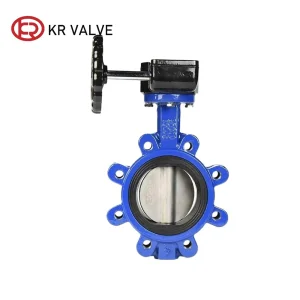
Unlike wafer-style butterfly valves, which are clamped between two companion pipe flanges via long through-bolts, a lug valve features fully threaded metal inserts (lugs) extending continuously around the perimeter of its cast or forged body. This structural configuration directly corresponds to ANSI B16.5, EN 1092, or JIS B2220 flange bolt patterns, allowing each side of the valve to be independently bolted to adjacent piping.
Structural Independence & Maintenance Safety
The defining operational advantage of a lug butterfly valve lies in its capability for dead-end service. In complex chemical, oil refining, or municipal water distribution pipelines, system operators frequently need to dismantle downstream pipe sections for cleaning, pump replacement, or modification while maintaining upstream operating pressure. Lug valves allow the downstream piping to be detached entirely without depressurizing or draining the upstream line.
Global Procurement Trends & Supply Chain Demands
Global demand for high-reliability lug butterfly valves is experiencing unprecedented growth driven by megatrends: the rapid expansion of seawater desalination plants in the Middle East & North Africa, comprehensive municipal water infrastructure revamps across North America, chemical processing gigafactories in APAC, and green hydrogen supply chains across Europe. Wholesale buyers and project managers now mandate strict compliance with E-E-A-T validated OEM standards, full traceability of casting heats, and zero-defect pressure testing certificates.
Lug Valve Technical Engineering Architecture
Deep-Dive Analysis of Body Metallurgy, Seating Kinematics, and Stress Distribution
Engineering Gain Note: Selection of lug butterfly valves requires rigorous evaluation of bi-directional shutoff pressure limits, hydrodynamic torque profiles, and disc acceleration forces under high fluid velocity. Standard resilient seats must resist explosive decompression and chemical swelling across thermal cycling zones.
1. Body Metallurgy & Mechanical Integrity
Wholesale manufacturing of lug valves demands rigid foundry quality controls. The valve body absorbs line stresses, piping expansion forces, and external structural bending moments. Typical metallurgical grades include:
- Ductile Iron (ASTM A536 / EN-GJS-400-15 / GGG40): Provides high tensile strength and toughness, serving as the industry standard for municipal water, HVAC, and fire protection systems.
- Carbon Steel (ASTM A216 WCB / WCC): High-strength cast steel designed for high-pressure, elevated-temperature hydrocarbon processes, steam lines, and industrial power plants.
- Stainless Steel (ASTM A351 CF8 / CF8M / CF3M): Superior corrosion resistance required for chemical synthesis, marine environments, and food/beverage applications.
- Duplex & Super Duplex Stainless Steel (2205 / 2507 / SMO 254): Reserved for hypersaline brine, reverse osmosis high-pressure manifolds, and offshore subsea oil & gas extraction.
2. Seating Kinematics: Resilient vs. High-Performance Offset Designs
The sealing capability of a lug butterfly valve is governed by its disc-to-seat offset geometry:
Concentric Rubber-Lined
The stem axis coincides with the body center and seat center line. Elastomeric liners (EPDM, NBR, Viton, FKM) provide bubble-tight bi-directional sealing up to PN16/Class 150. Ideal for low-friction, low-cost water duties.
Double Eccentric (Double Offset)
The stem is offset from the center of the seat and pipe centerline. The disc lifts off the seat immediately upon rotation, dramatically reducing seat wear and operating torque in high-cycle operations.
Triple Eccentric (Triple Offset / TOV)
Features a third angular axis offset creating a conical seating profile. Utilizes metal-to-metal sealing ring discs to achieve friction-free rotation and zero-leakage performance under extreme thermal gradients (cryogenic to +550°C).
Engineering Material & Specification Matrix
Cross-Reference Specs for OEM Engineering and Wholesale Procurement Optimization
| Valve Type & Trim | Pressure Class Range | Temperature Limits | Primary Sealing Material | Applicable Media & Environment | Dead-End Rating |
|---|---|---|---|---|---|
| Concentric Ductile Iron Lug | PN10, PN16, Class 150 | -20°C to +120°C | Vulcanized EPDM / NBR / FKM | Potable Water, Sewage, HVAC Chilled Water | 100% of Max CWP |
| PTFE-Lined Chemical Lug Valve | PN10, PN16, Class 150 | -30°C to +180°C | Virgin PTFE / PFA over EPDM Backup | Concentrated Acids, Caustics, Reactive Solvents | Full Bi-Directional |
| Double Offset WCB High-Performance | Class 150 / 300, PN25/40 | -40°C to +260°C | R-PTFE / Inconel 718 Spring Seat | High Pressure Steam, Hydrocarbons, Gas Lines | Class V / VI Bubble Tight |
| Triple Offset Stainless Steel Lug (TOV) | Class 150 to 600, PN100 | -196°C to +550°C | SS316L + Graphite Laminated Seal Ring | LNG Cryogenic, Refineries, Thermal Power Plants | Zero Leakage API 598 |
| Aluminum Bronze Marine Lug Valve | PN10, PN16, Class 150 | -10°C to +100°C | High-Grade Monel Disc / NBR Seat | Seawater Cooling, Ballast Systems, Offshore Rigs | Full Rated Dead-End |
Industry Development Trends & Technical Roadmap
Innovations Shaping Next-Generation Smart Valve Manufacturing
1. IoT Integration & Predictive Diagnostics
Modern industrial plants are rapidly migrating toward Industry 4.0 standards. Advanced lug butterfly valves are now specified with intelligent electro-pneumatic positioners, acoustic leak sensors, and wireless micro-transmitters. Real-time data regarding stem torque deviation, seat wear cycles, and partial-stroke testing (PST) allows predictive maintenance prior to catastrophic failure.
2. Zero Fugitive Emission Stem Seals (ISO 15848-1)
Environmental regulations across Europe (TA-Luft) and North America (EPA Clean Air Act) strictly limit VOC (Volatile Organic Compound) and greenhouse gas leakage. Wholesale valve manufacturers are redesigning lug valve stem packing incorporating live-loaded graphite rings, dual O-ring safety seals, and PTFE chevron sets certified for Class AH fugitive emission compliance.
3. Advanced Computational Fluid Dynamics (CFD)
Using finite element analysis (FEA) and 3D CFD flow simulation tools, OEM design engineers optimize the hydrodynamic profile of the valve disc. By sculpting the disc geometry, flow coefficients ($C_v$) are increased by 15-22% while pressure drop ($\Delta P$) and cavitation erosion risks under high fluid velocity are minimized.
Macro Industry Solutions & Application Scenarios
Engineering Tailored Valve Packages for Rigorous Operating Environments
Municipal Water Treatment & Mega Desalination
In municipal clean water networks and seawater reverse osmosis (SWRO) facilities, high-flow reliability and corrosion resistance are non-negotiable. OEM suppliers provide lug butterfly valves equipped with epoxy-coated ductile iron bodies (RAL 5005 / RAL 5017), SS316 discs, and WRAS/NSF-61 certified EPDM liners. These valves withstand continuous chlorine, ozone, and high-salinity exposure while maintaining zero seat degradation over 25+ year service lives.
Petrochemical & Hydrocarbon Refining
Hydrocarbon processing demands fire-safe designs certified to API 607 / ISO 10497 standards. Lug valves fabricated from A216 WCB carbon steel or A351 CF8M stainless steel with double offset geometry serve as header isolation valves in tank farms, distillation towers, and cracking units. The lugged design allows maintenance crews to safely isolate storage tanks without draining main supply loops.
HVAC, District Cooling & Energy Management
Commercial high-rise towers, data center cooling loops, and district heating plants utilize automated lug butterfly valves fitted with high-torque electric actuators. Rated for rapid modulating response, these valves precisely meter chilled water, glycol mixtures, and condenser water loops, reducing facility electrical energy consumption through reduced hydraulic drag.
Marine Engineering & Offshore Vessels
Shipbuilding and FPSO (Floating Production Storage and Offloading) vessels demand ultra-compact flow isolation. Nickel-Aluminum Bronze (C95800) lug valves installed in ballast water management systems (BWMS) and engine sea-chests resist severe marine biofouling and galvanic corrosion while complying with DNV-GL, ABS, and Lloyd's Register certifications.
Frequently Asked Questions (Technical & Commercial FAQ)
Direct Expert Answers to Key Procurement, Mechanical, and Operational Queries
- EPDM: Superior for cold/hot water, steam, drinking water (WRAS), and mild dilute acids (-20°C to +120°C). Unsuitable for hydrocarbons or oils.
- NBR (Nitrile): Excellent resistance to petroleum fluids, oils, fuels, grease, and compressed air (-10°C to +90°C).
- PTFE / PFA: Maximum chemical inertness for aggressive acids, solvents, and aggressive chemicals (-30°C to +180°C).
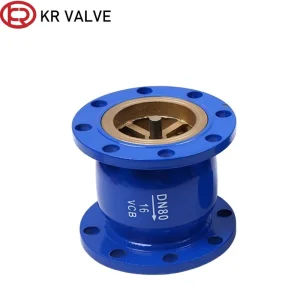
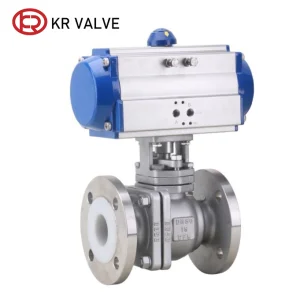
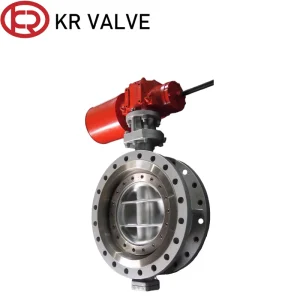
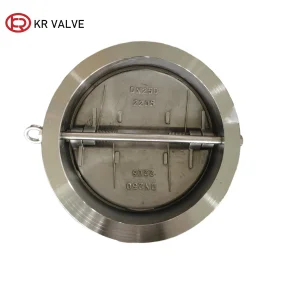
Additional Industrial Valve Lineup
Explore More Specialized Valves, Strainers, and Control Devices from Our Manufacturing Facilities
Partner with a Premier Wholesale Lug Valve Manufacturer
Looking for reliable OEM/ODM valve manufacturing, bulk pricing, or specialized engineering customizations for global projects? Our technical sales engineers provide 24-hour rapid response, CAD/BIM drawing support, and complete mill test certifications.