
High-Performance Industrial Valve Solutions
Explore our engineering-grade valve series manufactured to strict international standards (API, ANSI, BS, DIN, AWWA) for water supply, industrial process control, and gas pipelines.
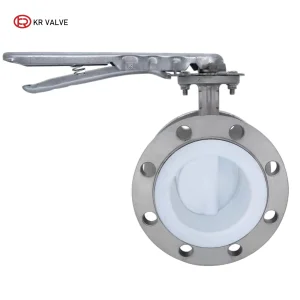
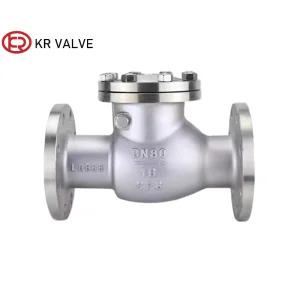
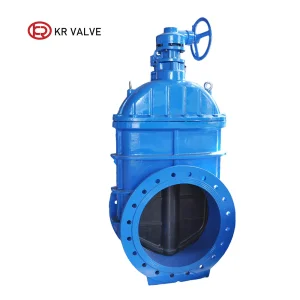
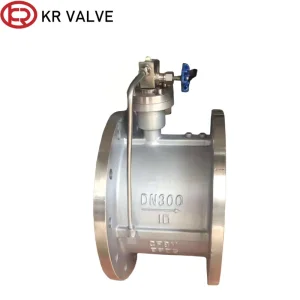
Single Vent Valve Technology: Dynamic Mechanics & Fluid Flow Engineering
In pressurized liquid piping networks—spanning municipal potable water distribution, industrial cooling circuits, agricultural irrigation, and high-rise hydronic HVAC installations—the accumulation of entrapped air poses a catastrophic threat to operational efficiency and structural integrity. Entrapped gas pockets restrict effective cross-sectional flow area, dramatically elevate head loss, induce severe pumping energy losses, and act as catalyst sites for destructive hydraulic transients (water hammer) and internal cavitation.
A Single Vent Valve (also frequently classified in mechanical engineering specifications as a single chamber automatic air release valve or small-orifice air vent) is an engineered safety device designed to continuously release small volumes of air that naturally separate out of liquid solutions during system operation under full working pressure. Unlike dual-orifice combination air valves designed for rapid pipeline filling/draining cycles, the single vent valve features a precision-calibrated micro-orifice coupled to a leverage-actuated float mechanism. This mechanical geometry allows the valve to dislodge pocketed gases even when internal hydrostatic pressure exceeds 16 to 25 bar.
Core Thermodynamic Principle: Henry’s Law dictates that gas solubility in water is directly proportional to partial pressure and inversely proportional to fluid temperature. As pressurized water passes through pump impellers, throttling valves, or high-elevation pipeline elbows, pressure drops and temperature fluctuations cause dissolved air (nitrogen and oxygen) to desorb into physical air bubbles. Without continuous automatic single-orifice venting, these bubbles coalesce at high points, reducing pipeline C-factor by up to 35%.
Mechanics of Small Orifice Air Bleeding under Full Line Pressure
The operational mechanics of a single vent valve rely on buoyance dynamics governed by Archimedes’ principle. When water fills the float chamber, the buoyancy force acts upon a lightweight, high-density spherical float (typically fabricated from AISI 316 stainless steel or hollow NBR/polypropylene). The rising float pushes against a stainless steel lever arm, driving a flexible elastomeric valve seal (EPDM or Viton) tight against the precision micro-orifice seat. This creates a bubble-tight, zero-leakage closure at min operational pressures of 0.2 bar up to maximum rated working pressure.
When air bubbles travel along the upper crown of the pipe and migrate into the top inlet of the vent valve, water within the float chamber is displaced downward. As the fluid level drops, the buoyancy force diminishes until the weight of the float and lever arm overcomes the internal hydrostatic upward force acting upon the small orifice area ($F = P \times A$). The float drops away, opening the micro-orifice seat for fractions of a second to purge accumulated gas into the atmosphere. The instant fluid replaces the vented air, the float ascends to instantly re-seal the orifice without liquid expulsion.
Industrial Manufacturing Specs & Material Matrix
High-performance wholesale single vent valves manufactured by leading China factories utilize robust metallic housings capable of enduring severe water hammer shocks, external soil stresses, and aggressive chemical environments. Below is the technical specification matrix standardized for global procurement contracts:
| Component / Parameter | Standard Water Specs | Industrial Chemical & HVAC Specs | High-Pressure / Mining Specs |
|---|---|---|---|
| Body & Bonnet Material | Ductile Iron GGG50 (EN-GJS-500-7) | Stainless Steel CF8 / CF8M (SS304/SS316) | Cast Steel WCB (ASTM A216) / Forged Steel |
| Internal Float Element | AISI 316 Stainless Steel (Hollow/Solid) | AISI 316L / PTFE Coated SS316 | Reinforced SS316 (High Crush Resistance) |
| Sealing Gasket / Seat | EPDM (Potable Water WRAS Approved) | FKM (Viton) / PTFE (Teflon) | NBR / HNBR High durometer rubber |
| Nominal Diameter (DN) | DN15 to DN50 (1/2" to 2" NPT/BSP) | DN15 to DN100 (1/2" to 4" Flanged) | DN25 to DN150 (Flanged ANSI 150/300) |
| Working Pressure Class | PN10 / PN16 (1.0 / 1.6 MPa) | PN16 / PN25 (1.6 / 2.5 MPa) | Class 150 / Class 300 (Up to 5.0 MPa) |
| Exterior Coating | Fusion Bonded Epoxy (FBE) ≥250μm | Pickled & Passivated / Epoxy Coated | Heavy-Duty Polyurethane / Ceramic Epoxy |
| Compliance Standards | EN 1074-4, AWWA C512, BS EN 12266 | ISO 5208, CE-PED 2014/68/EU | API 598, ASME B16.34 |
China Valve Factory Supply Chain: Economies of Scale & Precision CNC Engineering
In the global industrial procurement ecosystem, souring valves directly from specialized Chinese valve manufacturing clusters—particularly the Tianjin industrial hub—provides engineering buyers, OEMs, and municipal contractors with unparalleled competitive advantages. Over the past two decades, China’s industrial valve manufacturing sector has evolved from low-cost casting foundries into hyper-automated, precision-engineered manufacturing powerhouses.
Advanced Foundry Automation
Utilizing lost-foam casting and automated green sand molding technology ensures high-density, defect-free ductile iron bodies with zero porosity and ultra-smooth internal flow channels for minimal friction loss.
100% Zero-Leakage Quality Assurance
Every single vent valve unit undergoes dual-stage hydrostatic seat testing and pneumatic shell testing strictly compliant with ISO 5208 Rate A standards, guaranteeing zero bubble leakage prior to export packing.
End-to-End OEM & ODM Customization
From custom thread profiles (NPT, BSPT, BSPP) and custom flange dimensions (ANSI, DIN, BS, JIS) to private-label branding, customized epoxy colors (RAL 5005, RAL 5015), and non-standard float configurations.
Full-Chain Production & Vertical Integration
A primary factor contributing to China's supplier dominance is vertical integration. A premier wholesale single vent valve factory manages the entire lifecycle in-house: from 3D CAD modeling and Finite Element Analysis (FEA) to pattern making, metallurgy control, CNC multi-axis machining, electrostatic powder coating, hydraulic testing, and international freight containerization.
By eliminating third-party component sourcing markups and sub-assembly delays, Chinese factories deliver bulk OEM valve orders at cost-efficiencies 30% to 45% lower than European or North American valve assemblers, while maintaining identical or superior dimensional accuracy and coating longevity.
Global Enterprise Procurement Strategy & OEM Sourcing Needs
For international procurement managers, EPC (Engineering, Procurement, and Construction) contractors, and regional valve distributors, specifying wholesale single vent valves involves balancing initial unit cost against long-term operational expenses (TCO - Total Cost of Ownership). Improper valve specification leads to system shutdowns, destructive water hammer events, premature seat degradation, and massive municipal water loss.
Key Sourcing Criteria for B2B Enterprise Buyers:
- Material Traceability & Mill Test Certificates (MTC): Full compliance with EN 10204 3.1 certification detailing chemical composition and mechanical stress testing for every casting melt heat batch.
- Coatings for Potable Water & Aggressive Media: Non-toxic, WRAS and NSF/ANSI 61 certified electrostatic fusion-bonded epoxy (FBE) applied inside and out with minimum dry film thickness (DFT) of 250 microns to prevent tuberculation and bio-film growth.
- Anti-Slam & Anti-Surge Dynamic Enhancements: Optional addition of surge alleviation mechanisms or dual-port protection caps to shield internal floats from sudden high-velocity water spikes.
- Standardized Interchangeability: Dimensions conforming strictly to EN 1074-4 and face-to-face standards ensuring direct drop-in replacement during maintenance overhauls.
Localized Application Scenarios & Engineering Field Use Cases
Single vent valves play indispensable, localized roles across diverse industrial infrastructure sectors worldwide. Understanding specific field applications enables procurement engineers to match body metallurgy, orifice sizing, and sealing materials to their exact process media:
1. Municipal Water Supply & Main Transmission Pipelines
In municipal clean water networks, single vent valves are installed at high point elevations along long transmission mains, immediately downstream of pump discharge check valves, and at regular 500-meter intervals along flat pipeline stretches. By continuously expelling micro-air pockets desorbed by pressure changes, the valves prevent localized air binding, maintain design flow capacities, and prevent pressure surge fatigue on PVC, ductile iron, and HDPE pipes.
2. High-Rise Hydronic HVAC & District Heating Networks
In closed-loop heating and chilled water hydronic systems for tall commercial towers, air accumulation causes noise, vibration, severe pump impeller cavitation, and localized cold spots in heat exchangers. Compact brass or stainless steel single vent valves installed at top vertical risers and heat exchanger manifolds automatically purge trapped air, protecting boiler tubes and circulator pumps without needing manual bleeding.
3. Agricultural Drip & Sprinkler Irrigation Networks
Modern precision agriculture relies on extensive underground poly-pipe networks. Air trapped within irrigation laterals causes uneven pressure distribution across drip emitters and severe surge shocks when main pump stations start up. Installing weather-resistant, UV-stabilized ductile iron single vent valves at filter stations and hilltops ensures uniform water distribution and protects delicate emitters from pressure spikes.
4. Industrial Chemical Process & Wastewater Force Mains
In industrial chemical processing and municipal sewage force mains containing suspended solids and corrosive gases (such as hydrogen sulfide $H_2S$), specialized single vent valves featuring extended bodies, 316L stainless steel internals, and Viton seals prevent solids from fouling the upper sealing chamber. The extended chamber isolates the mechanical linkage from raw effluent, preventing clogging and acidic corrosion.
Industry Trends: IoT Integration, Anti-Slam Physics & Sustainable Coatings
The global industrial valve market is undergoing rapid technical evolution driven by smart water management initiatives (Industry 4.0), carbon footprint reduction goals, and extreme weather resilience mandates. Modern wholesale single vent valve manufacturers are actively integrating advanced technologies into traditional mechanical designs:
IoT Smart Pressure & Vent Monitoring
Integration of wireless pressure transducers and acoustic venting sensors within the valve bonnet allows smart municipal grids to remotely measure venting frequency, detect pipeline leaks, and predict pressure surges in real time via LoRaWAN or NB-IoT networks.
Anti-Slam & Water Hammer Alleviation
Next-generation single vent valves incorporate internal kinetic surge dampers. When water rushes into the chamber at destructive velocities, the anti-slam disc restricts instantaneous liquid impact, cushioning the float closure and suppressing hydraulic transients.
Eco-Friendly & Non-VOC Coatings
Transitioning from traditional solvent-based paints to 100% solvent-free, thermal-cured polyurethane and bio-based epoxy resins guarantees compliance with strict global drinking water regulations and reduces manufacturing VOC emissions.
Frequently Asked Questions: Single Vent Valves
Comprehensive engineering responses addressing selection, installation, maintenance, and international compliance for industrial pipeline air release valves.
Conversely, a combination air valve merges two distinct functions into one housing: a large orifice for purging high volumes of air during initial pipeline filling and admitting air during rapid draining (vacuum breaking), plus a small orifice for continuous air release under working pressure. Single vent valves are smaller, lighter, and more economical when high-volume air displacement during initial filling is handled by separate mechanical devices.
Generally, a single vent valve orifice is selected such that the maximum air venting capacity matches or exceeds 2% to 3% of the liquid volumetric flow rate at peak operating pressure. For standard municipal water mains up to DN300, a DN20 or DN25 (3/4" or 1") single vent valve with a 2.5mm or 3mm micro-orifice is typical. For larger lines (DN400 to DN800), DN50 (2") single vent valves are specified.
- High elevation peaks along long-distance horizontal pipelines.
- Immediately downstream of pump discharge check valves and deep-well pumps.
- High point crowns of vertical pipe loops and bridge crossings.
- Upstream of flow meters or control valves to eliminate gas measurement errors.
- Every 500 to 800 meters along relatively flat, horizontal pipeline stretches.
- Isolation & Flushing: Close the isolation ball valve beneath the vent valve, depressurize the chamber, and remove the bonnet bolts.
- Orifice & Seat Cleaning: Inspect the elastomeric seat gasket for mineral scale, debris, or bio-fouling. Clean gentle using soft nylon brushes and dilute citric acid if scale is present.
- Float Buoyancy Check: Inspect the stainless steel float for pinhole leaks or physical deformation. Ensure the lever pivot arm operates smoothly without mechanical friction.
- Re-assembly & Pressure Testing: Replace bonnet O-rings, re-torque bolts to manufacturer specifications, open the isolation valve slowly, and visually verify bubble-tight seating under system operating pressure.
- ISO 9001:2015: Quality Management System certification for manufacturing consistency.
- CE-PED (Pressure Equipment Directive 2014/68/EU): Mandatory for pressure vessel placement in the European Economic Area.
- WRAS / NSF/ANSI 61: Health compliance certifications verifying non-toxicity of elastomeric seals and internal epoxy coatings for drinking water.
- EN 10204 3.1 Material Test Reports: Verifying raw foundry chemical heat analysis and mechanical physical testing.
- ISO 5208 Pressure Test Report: Factory certificate demonstrating 100% hydrostatic shell and seat leak testing prior to shipment.
Supplementary High-Performance Industrial Valves
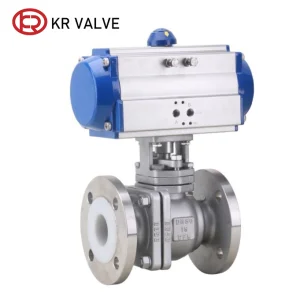
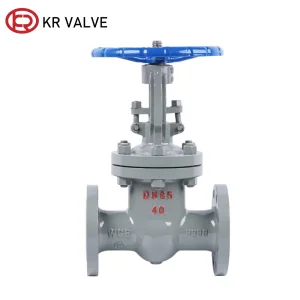
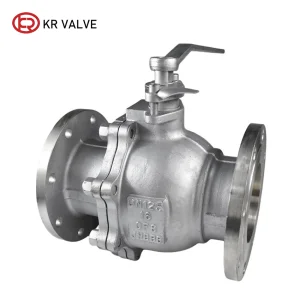
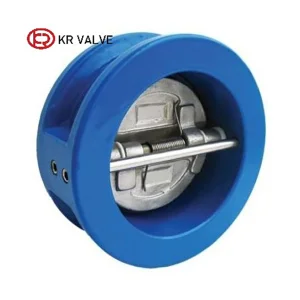
Complete your project procurement with our full suite of engineered industrial valves, featuring factory-direct pricing, certified quality, and global logistics support.
Request Factory Direct Wholesale Quotation & Technical Submittals
Partner with China’s premier valve manufacturer. Contact our application engineering team today for CAD drawings, WRAS/CE compliance certificates, and customized volume pricing.