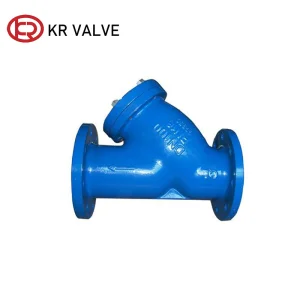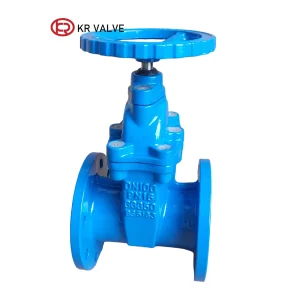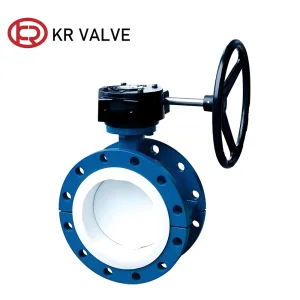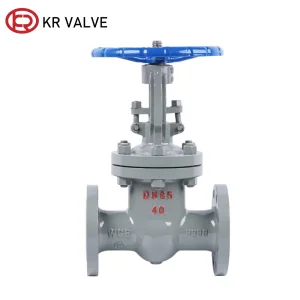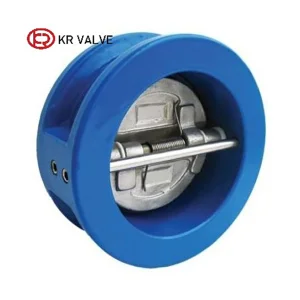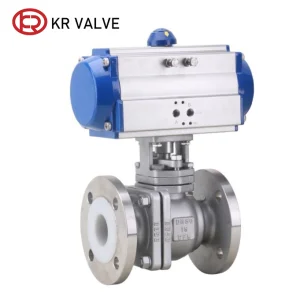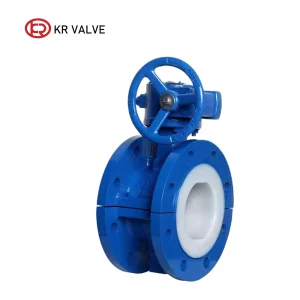
Featured Industrial Vent & Control Valve Series
Precision-Engineered OEM/ODM Flow Solutions Manufactured to International DIN, BS, AWWA, and ANSI Standards
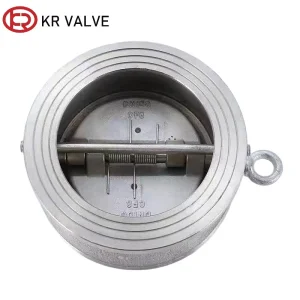
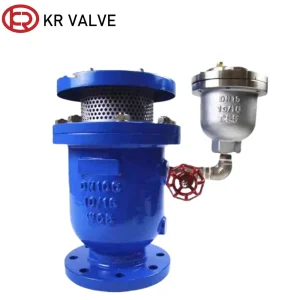
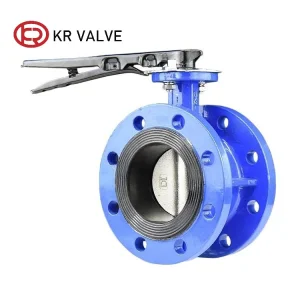
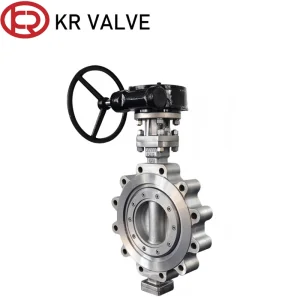
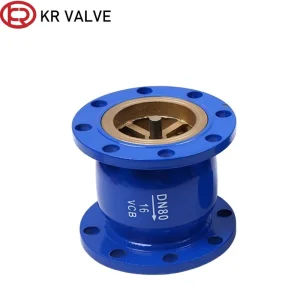
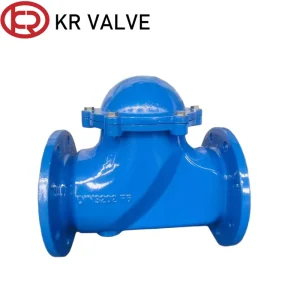
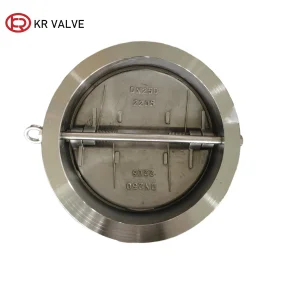
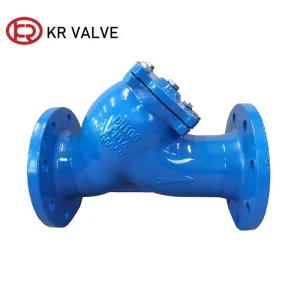
Architectural Anatomy & Hydraulic Mechanics of Two-Port Vent Valves
In complex industrial fluid networks and municipal water supply grids, the management of entrained air is crucial to prevent catastrophic pipeline failure, severe pressure surges, flow restrictions, and accelerated cavitation. A Two Port Vent Valve (also known as a dual-orifice air vent valve or compound air release valve) acts as an automated, double-function kinetic safety node designed to discharge large volumes of air during pipe filling, admit air during rapid draining, and continuously release micro-bubbles under working pressure.
Large Orifice Kinetic Venting
Operates during the initial pipeline priming phase. As water pumps initiate flow, air is purged through the primary large orifice at near-sonic velocities ($Ma \approx 1.0$) without premature aerodynamic float closure (anti-blowout capability).
Small Orifice Continuous Degassing
Under pressurized operating conditions, dissolved gases separate out of the liquid medium and accumulate at system high points. The secondary small orifice utilizes leverage-assisted float dynamics to drop under pressure and exhaust micro-air pockets automatically.
Vacuum Breaking & Anti-Surge
When pumps suddenly shut down or power outages induce column separation, the large port snaps open rapidly under sub-atmospheric pressure, ingesting mass volumes of atmospheric air to break column vacuum and suppress water hammer shockwaves.
Engineering Insight: Hydraulic Efficiency Loss from Trapped Air Pockets
A trapped air pocket at an unvented pipeline crest effectively reduces the hydraulic cross-sectional area, creating an artificial choke (Vena Contracta effect). This can increase dynamic pumping head by up to 30%, leading to massive electrical energy waste and severe risk of pipeline bursting due to compressed air energy storage.
Global Commercial & Industrial Market Landscape
The international market for industrial two port air vent valves, CARX high-speed compound release valves, and resilient seated isolation valves is expanding rapidly. Driven by global municipal water infrastructure retrofits, strict Non-Revenue Water (NRW) reduction targets, desalination mega-projects in the Middle East, and expanding chemical processing sectors in North America and Asia, valve suppliers face stringent technical requirements.
Municipal Water & Smart Utilities
Metropolitan water authorities are replacing legacy single-port manual vents with automated compound two port vent valves. By preventing air-induced water meter errors and pipeline shockwaves, utilities drastically reduce Non-Revenue Water (NRW) losses and extend piping asset lifespans beyond 50 years.
Desalination & Marine Industrial Projects
Seawater Reverse Osmosis (SWRO) facilities require specialized two port air valves manufactured from High-Grade Duplex Stainless Steel (2205/2507) or rubber-lined Ductile Iron GGG40. These valves withstand aggressive chloride attack while venting entrained air from high-pressure booster pump stations.
Thermal Power & HVAC Heating/Cooling Networks
District heating and industrial steam cooling loops demand high-temperature rated two port air release valves fitted with Viton or PTFE resilient seals. Efficient venting prevents oxygen-induced boiler tube corrosion and maintains optimal thermodynamic heat transfer.
Chemical Processing & Slurry Transport
Refining and tailings management require custom-engineered vent valves featuring full-bore internal paths, anti-clogging conical floats, and specialized internal coatings (Rilsan nylon or fusion-bonded epoxy) to handle aggressive, solids-laden fluids.
Engineering Matrix: Two-Port Vent Valves vs. Legacy Air Valve Technologies
Selecting the correct air control device requires evaluating structural design, dynamic venting capacity, pressure parameters, and maintenance intervals. The comparison table below highlights why two-port compound vent valves outperform traditional single-orifice and manual release mechanisms.
| Performance Feature | Two-Port Vent Valve (Compound CARX) | Single-Port Air Release Valve | Kinetic Air Vacuum Breaker | Manual Exhaust Petcock Valve |
|---|---|---|---|---|
| Primary Function | Dual Air Filling & Continuous | Small Pocket Air Exhaust Only | Bulk Air Discharging / Ingestion | Manual Air Purging |
| High-Speed Air Evacuation | Yes (Anti-Blowout Orifice) | Extremely Limited | Yes (High Capacity) | No (Minimal) |
| Continuous Venting Under Pressure | Yes (Leverage Float Mechanism) | Yes | No (Closes under 0.2 bar) | No (Requires manual operation) |
| Vacuum Breaking Capacity | High (Protects Against Collapse) | Negligible | High | None |
| Anti-Slam / Anti-Surge Device | Optional Integrated Disc | Not Applicable | Rarely Included | None |
| Standard Pressure Range | PN10 to PN40 / ANSI 150-300 | PN10 to PN16 | PN10 to PN25 | PN6 to PN10 |
| Maintenance Requirement | Low (Self-Cleaning Float) | Moderate (Nozzle Clogging) | Low | High (Manual Labor Heavy) |
Material Engineering & Metallurgical Manufacturing Standards
As an established wholesale supplier and OEM manufacturer, our production facilities utilize advanced metallurgy and CNC machining techniques to guarantee long-term operational integrity under high working pressures and corrosive environmental conditions.
Valve Body & Bonnet Casting Metallurgy
Utilizing high-tensile Ductile Iron GGG40 / GGG50 (EN-GJS-450-10) or WCB Cast Carbon Steel. Ductile iron provides superior yield strength and impact resistance compared to standard grey cast iron, preventing body fracturing during extreme hydraulic surge shocks.
Internal Float Assembly & Guidance Mechanism
Floats are precision-formed from AISI 304 or AISI 316 Stainless Steel, engineered with spherical or cylindrical profiles to withstand crushing pressures exceeding 50 bar. Polymeric guides prevent float tilting and body rubbing during high-velocity air streams.
Sealing Technology & Elastomeric Compounds
Seating interfaces feature vulcanized EPDM (WRAS / NSF-61 certified for potable water) or NBR for oil/gas services. The seating geometry is designed for tight sealing under low pressure differentials (down to 0.2 bar / 3 PSI) up to full nominal rating.
Corrosion Protection & Surface Coatings
100% of internal and external iron surfaces undergo shot-blasting to Sa 2.5 quality, followed by electrostatically applied Fusion Bonded Epoxy (FBE) coating (minimum thickness 250 microns), tested for pinhole-free dielectric resistance.
Macro Industry Engineering Solutions & System Integration
Integrating two port vent valves into complex hydraulic schemes requires strategic positioning based on pipeline topography, flow velocity, and pressure gradients. Below are four standard industrial application blueprints.
Scenario A: High-Rise Water Supply & Pressure Zones
Challenge: Air accumulation at the top of booster pump riser shafts causing flow pulsation and noise in high-rise buildings.
Solution: Installation of a DN50/DN80 Double Orifice Two Port Vent Valve at the peak of the vertical vertical stack, paired with a resilient seat gate valve for line isolation during routine maintenance.
Scenario B: Cross-Country Raw Water Transmission Mains
Challenge: Long-distance transmission lines crossing undulating terrain face severe air binding at elevated crests and risk structural vacuum collapse during drain-down operations.
Solution: Placement of CARX compound high-speed release exhaust valves at every major topographical peak, downstream of pump stations, and at regular 800m intervals along flat pipeline sections.
Scenario C: Industrial Pumping Plant Discharge Protection
Challenge: Water hammer shocks generated by sudden check valve closure when main distribution pumps trip out unexpectedly.
Solution: Implementation of combination air valves equipped with anti-slam surge protection devices. The anti-slam mechanism throttles outgoing air velocity, creating a cushioning air pocket that dampens pressure spikes.
Scenario D: Municipal Wastewater & Slurry Pipelines
Challenge: Entrained sewage gases ($H_2S$, Methane) cause intense internal pipeline corrosion and solid particulate build-up that jams standard air valve floats.
Solution: Installation of specialized elongated body wastewater two port air valves with conical lower bodies and isolated upper spring mechanisms that keep solid debris away from the sealing orifice.
Global Regulatory Compliance & Quality Certification Standards
International engineering contracts require absolute verification of product standards, material traceability, and pressure testing protocols. Our manufacturing facilities adhere to strict ISO 9001 quality management systems and international valve manufacturing standards.
European Union Standards
BS EN 1074-4: Valves for water supply - Fitness for purpose requirements and appropriate verification tests for air valves.
EN 12266-1: Industrial valves - Testing of metallic valves under pressure and tightness class A (Zero leakage).
North American Standards
AWWA C512: Air-Release, Air/Vacuum, and Combination Air Valves for Waterworks Service.
NSF/ANSI 61 & 372: Drinking Water System Components - Health Effects & Lead Content Compliance.
International & ISO Standards
ISO 5208: Industrial valves - Pressure testing of metallic valves.
DIN 3202 / EN 558: Face-to-face dimensions for flanged connection valves across global pipelines.
Technology Roadmap: Smart IoT-Enabled Venting Systems & Future Outlook
The industrial valve sector is undergoing a digital transformation. Next-generation two port vent valves are evolving from passive mechanical components into intelligent, data-generating network nodes within Smart Water Grids and Industry 4.0 process plants.
1. Acoustic Leak & Vent Sensing Telemetry
Integrating wireless acoustic micro-sensors within the valve bonnet to detect high-frequency ultrasonic signals emitted during air release. The system monitors air volume venting frequency and alerts operators to internal float sealing failure or line leakage.
2. Dynamic Anti-Surge Float Cushioning
Advanced computational fluid dynamics (CFD) modeled multi-stage floats that adjust air discharge orifices dynamically based on incoming fluid pressure gradients, completely mitigating transient pressure spikes during rapid fill cycles.
3. Zero-VOC Polymeric Eco-Coatings
Development of ultra-smooth fluoropolymer coatings that reduce friction resistance during air exhaust by 15%, preventing bio-fouling and mineral scaling inside the valve cavity in aggressive brackish water environments.
4. Remote Solar-Powered Diagnostic Nodes
Self-contained solar and energy-harvesting telemetry modules mounted directly to top flanged vents in remote cross-country pipelines, transmitting real-time pressure, temperature, and vent state data via NB-IoT or LoRaWAN protocols.
Technical FAQ: Engineering & Wholesale Buyer Guide
Comprehensive answers to common technical queries raised by procurement managers, hydraulic engineers, and project contractors when selecting and installing wholesale two port vent valves.
What is the fundamental difference between a single-port and a two-port vent valve?
A single-port vent valve typically features one small orifice meant strictly for releasing accumulated air under system working pressure. A two-port vent valve (compound air valve) integrates both a large kinetic orifice for high-capacity air discharge/ingestion during pipeline filling and draining, and a small orifice for continuous automatic degassing during pressurized operation.
How do I correctly size a two port vent valve for a main water pipeline?
Air valve sizing depends on the maximum pipeline filling rate ($m^3/h$), maximum gravity drainage rate, pipeline diameter, and working pressure. As a general engineering rule of thumb, the nominal diameter of the large air valve orifice should be approximately 1/8th to 1/10th of the main pipeline diameter.
Where should two port vent valves be installed along a pipeline route?
Two port vent valves must be positioned at all high points (crests) of the pipeline profile, at points where slope changes downward, directly after pump station check valves, at long horizontal pipeline sections every 500-800 meters, and upstream of water meters.
What prevents the float from blowing shut prematurely during rapid filling?
Our CARX compound and two port vent valves feature aerodynamic float guide channels and anti-blowout float designs. The high-velocity air stream flows around the float in an aerodynamically balanced path, ensuring the float remains open until water physically enters the chamber to buoy it upward.
What custom body and seat materials are available for OEM wholesale orders?
We supply valve bodies in Cast Iron GG25, Ductile Iron GGG40/50, Cast Steel WCB, Stainless Steel CF8/CF8M, and Duplex SS. Seats and seals can be customized in EPDM, NBR, Viton, or PTFE depending on fluid chemistry and temperature.
Why is an isolating gate valve recommended directly below an air vent valve?
Installing a full-bore resilient seated gate valve or ball valve below the air vent allows operators to isolate the vent valve for routine inspection, cleaning, or seat replacement without shutting down or draining the entire main pipeline network.
Additional High-Performance Industrial Valves & Strainers
Explore Our Complete Portfolio of Strainers, Butterfly Valves, Gate Valves, and Compound Exhaust Solutions