Primary Y-Strainer Series for New York Infrastructure
Engineered strainers tailored for high-differential pressure, urban heating mains, and aggressive fluid handling.
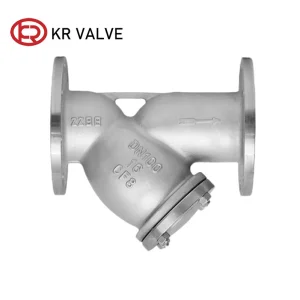
New York State Industrial Filtration Ecosystem
Analyzing fluid dynamics requirements from Manhattan skyscraper HVAC hydronics to Upstate NY semiconductor fab utility lines.
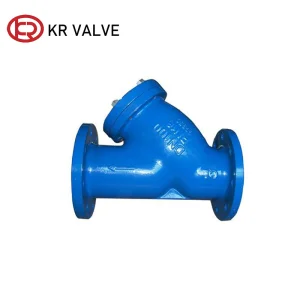
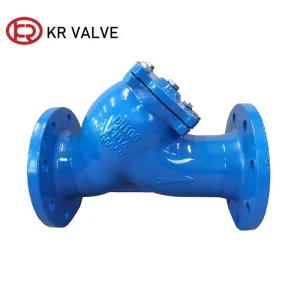
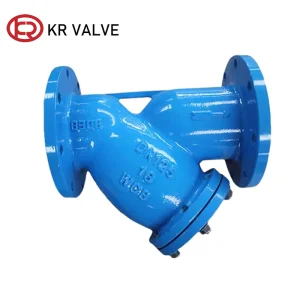
As the economic engine of the Northeastern United States, New York presents a uniquely diverse set of demands for mechanical piping infrastructure and inline filtration systems. From the underground district steam networks operated in Manhattan to the sophisticated high-tech semiconductor plants in the Capital Region (Albany, Saratoga County) and Central NY (Syracuse), mechanical engineers require ultra-reliable Custom Y Type Strainers to safeguard expensive capital equipment—including control valves, centrifugal pumps, flow meters, and heat exchangers.
NYC High-Rise Mechanical HVAC
Under NYC Local Law 97 decarbonization mandates, energy efficiency is paramount. Our low-pressure-drop Y strainers minimize pump head requirements in secondary chilled water loops and cooling tower circuits across Manhattan and Brooklyn towers.
District Steam Infrastructure
New York City operates the world's largest commercial steam system. High-pressure steam mains (125 PSI to 400 PSI) require heavy-duty WCB Cast Steel and Cast Iron GG25 Y strainers with reinforced SS304/SS316 screens to withstand thermal shock and scale entrainment.
Upstate Tech & Pharma Corridor
Specialized biopharmaceutical manufacturing (Hudson Valley) and advanced wafer fabs require corrosion-resistant CF8/CF8M Stainless Steel strainers and PTFE lined valve bodies to handle high-purity DI water and aggressive process chemicals.
Global Valve & Strainer Technology Directions
Understanding supply chain shifts, alloy developments, and structural compliance in international fluid control projects.
$4.8B
Global Strainer Market by 2028
3.5:1
Min. Screen Open Area Ratio
100%
Hydrostatic Shell Tested
ANSI 600
High Pressure Capability
Evolution from Legacy Cast Iron to High-Grade Ductile Iron (GGG40) & Alloys
Globally, industrial fluid control specifications are shifting rapidly away from traditional brittle grey cast iron (GG25) toward Ductile Iron (GGG40 / ASTM A536) and investment-cast stainless steel alloys. Ductile iron provides superior tensile strength (minimum 400 MPa) and impact resistance, drastically reducing catastrophic failure risks during pressure surges or water hammer events in municipal distribution networks.
Simultaneously, decarbonization programs in North America and Europe are forcing piping designers to optimize internal body geometries. Modern Y strainers utilize Computational Fluid Dynamics (CFD) modeled internal flow paths to minimize internal turbulence and achieve maximum Flow Coefficients ($C_v$ / $K_v$), reducing lifetime pumping electricity costs.
Material Selection & Technical Compliance Guide
Comprehensive engineering reference for selecting shell materials, sealing elements, and screen meshes based on fluid properties.
| Body Material Code | Equivalent Standard | Working Pressure | Temperature Range | Target New York Application |
|---|---|---|---|---|
| Ductile Iron GGG40 | EN-GJS-400-15 / ASTM A536 | PN10 / PN16 / 150LB | -10°C to 220°C | NYC Municipal Water, Hydronic HVAC Chillers, Fire Protection |
| Cast Iron GG25 | EN-GJL-250 / ASTM A126 Class B | PN10 / PN16 / 125LB | -10°C to 200°C | Low-Pressure Building Heating, Steam Condensate Return |
| Cast Steel WCB | ASTM A216 WCB | 150LB / 300LB / 600LB | -29°C to 425°C | ConEdison High-Pressure Steam Grid, Power Generation, Gas Lines |
| Stainless Steel CF8 | ASTM A351 CF8 (SS304) | 150LB / 300LB / PN40 | -196°C to 535°C | Long Island Chemical Loops, Deionized Water, Marine Utilities |
| Stainless Steel CF8M | ASTM A351 CF8M (SS316) | 150LB / 300LB / 600LB | -196°C to 600°C | BioTech Fine Chemical, High-Salinity Seawater Filtration |
Fluid Dynamics Formula & Screen Mesh Hydraulics
When selecting a Y type strainer for critical service, engineers must calculate the Open Area Ratio (OAR). The OAR represents the total net open area of the basket mesh relative to the internal cross-sectional area of the inlet pipe. A standard industrial Y strainer must maintain a minimum OAR of 3:1 to prevent premature clogging and excessive head loss:
OAR = (Total Screen Mesh Area × Net Screen Open % Area) / Pipe Internal Cross-Sectional Area
For high-viscosity media or high-velocity liquid lines (exceeding 3 m/s), our manufacturing facilities produce custom perforated baskets lined with fine woven wire cloth ranging from 20 mesh (840 microns) down to 400 mesh (37 microns), reinforced with heavy gauge outer support screens to prevent basket collapse under extreme pressure differential ($\Delta P$).
Technical Roadmap & Smart Strainer Integration
Deploying IoT-enabled differential pressure monitoring, anti-fouling coatings, and automated blow-off systems.
IoT Smart Pressure Transmitters
Integrating wireless differential pressure ($\Delta P$) sensors into the strainer bonnet blow-off port. Real-time telemetry alerts NYC facility managers via Building Management Systems (BMS) exactly when basket cleaning is required, eliminating manual routine inspections.
Fusion Bonded Epoxy (FBE) Coating
Electrostatically applied non-toxic epoxy coatings in accordance with AWWA C213 and NSF/ANSI 61. Prevents tuberculation, internal bio-fouling, and heavy corrosion in potable water utility mains across New York State.
Automated Self-Cleaning Blow-off
Replacing manual drain plugs with automated motorized ball valves synchronized to differential pressure thresholds. Enables continuous self-flushing operation without interrupting main process pipeline flow.
Frequently Asked Questions (FAQ) for New York Buyers
Expert engineering answers regarding custom Y strainer fabrication, ANSI standard matching, and procurement options.
What standards govern Y type strainers supplied to New York construction projects?
Y type strainers installed across New York must strictly adhere to North American mechanical codes. Our valves and strainers comply with ASME B16.34 (Valves - Flanged, Threaded, and Welding End), ASME B16.10 (Face-to-Face and End-to-End Dimensions), and ANSI/ASME B16.5 (Pipe Flanges). Hydrostatic pressure testing and seat integrity testing are performed 100% in accordance with API 598 or ISO 5208 prior to export.
How do I choose between Cast Iron GG25, Ductile Iron GGG40, and WCB Carbon Steel?
Selection depends on fluid pressure, temperature, and shock parameters. Cast Iron GG25 is cost-effective for standard low-pressure hydronic heating lines (125LB/PN10). Ductile Iron GGG40 offers superior mechanical strength and thermal resilience, making it ideal for municipal water and high-rise condenser water. Cast Steel WCB is required for high-pressure district steam (ANSI 150LB to 300LB) and oil/gas distribution where elevated temperatures (up to 425°C) occur.
Can your factory produce custom mesh sizes and non-standard face-to-face dimensions?
Yes. As a specialized OEM manufacturer, we offer customized screen perforation diameters (from 0.5mm to 5mm) and mesh lined liners (20 to 400 mesh). Furthermore, for retrofit projects in older NYC mechanical rooms with space constraints, we can manufacture strainers to custom face-to-face dimensions or engineer custom blow-off tapping sizes (NPT/BSP).
What is the recommended installation orientation for a Y type strainer?
In liquid service (chilled water, condenser loops, domestic water), Y strainers should be installed in horizontal pipelines with the leg/screen branch pointing downward. This prevents entrapped debris from falling back into the main line during cleaning. In steam or gas lines, Y strainers should be installed horizontally with the leg positioned horizontally (on its side) to prevent condensate collection inside the screen pocket, which causes steam erosion and water hammer.
How long is the typical production and delivery lead time for wholesale orders to New York?
Standard catalog models (GGG40, GG25, WCB flanged Y strainers) are maintained in stock for rapid dispatch. Custom engineering modifications or large volume project orders typically require 15 to 30 days for precision casting, machining, hydrostatic testing, and surface coating, followed by express ocean or air freight directly to the Port of New York & New Jersey or local project job sites.
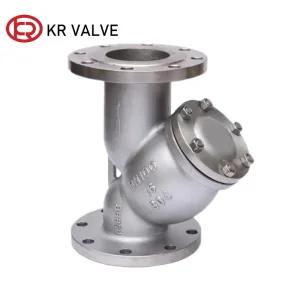
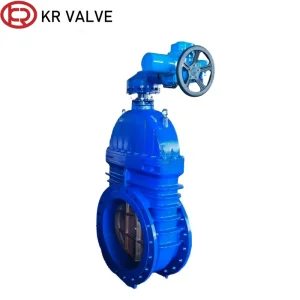
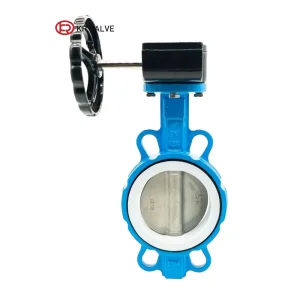
Complete Pipeline Valves & Strainers Portfolio for New York Buyers
Explore our full range of strainers, knife gates, check valves, and resilient seated valves for complete system integration.
Require Engineering Quotations or CAD Drawings for New York Projects?
Speak directly with our valve applications engineers. We provide full material test reports (MTR), pressure testing certificates, CAD/BIM models, and competitive direct factory pricing.
Send Inquiry Now