
Featured Conical & Heavy-Duty Control Valves for Algeria
Deploying high-reliability fluid control architecture for Algerian dams, water transfer lines, and municipal infrastructure. Below are our key specialized valve series built to European and international standards.
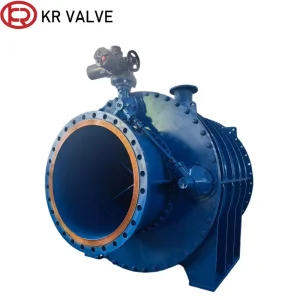
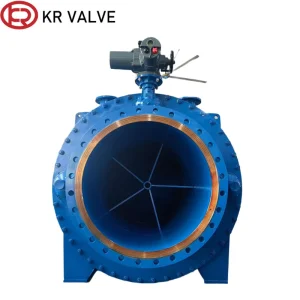
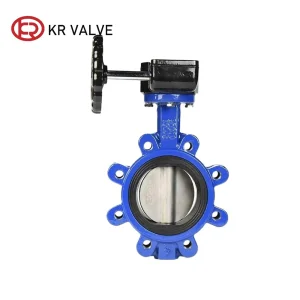
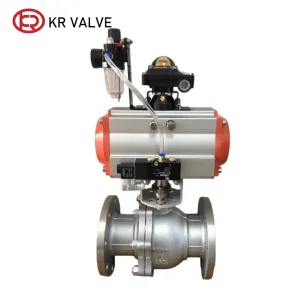
Algeria Hydraulic & Industrial Landscape: Macro Demand Analysis
Algeria stands as the largest nation in Africa by landmass, characterized by extreme climatic variations ranging from semi-arid Mediterranean coastal belts to harsh hyper-arid Saharan topographies. Managing national water resources is governed by strategic initiatives under the Plan National de l'Eau (PNE) and executed through key government bodies such as the Agence Nationale des Barrages et Transferts (ANBT) and Algérienne Des Eaux (ADE). The country’s commitment to securing potable water, expanding agricultural irrigation across the High Plateaus (Hauts Plateaux), and maintaining industrial cooling loops for Sonatrach energy facilities requires sophisticated hydraulic infrastructure capable of handling high static heads, heavy sediment transport, and extreme thermal gradients.
Critical Operational Challenges in Algerian Water Infrastructure
Engineering fluid control systems in Algeria involves mitigating several destructive forces inherent to the region’s topography and hydro-geology:
- High-Head Hydraulic Energy Dissipation: Dams located in mountainous regions like Kabylie discharge millions of cubic meters of water under elevated hydraulic heads. Traditional gate or globe valves suffer severe vibration, noise, and rapid destruction due to unbalanced kinetic energy. Fixed Conical Valves (Howell-Bunger type) break the high-energy water jet into a hollow radial spray, dissipating over 90% of kinetic energy harmlessly into the atmosphere or discharge basin.
- Severe Sediment Erosion (Silt & Sand Scrubbing): Rainfall in northern Algeria often causes severe soil erosion, populating reservoir water with highly abrasive quartz sand. Standard soft-seated valves experience immediate seal degradation. Our OEM Conical Valves feature hard-faced stainless steel (SS316 / Nitronic 60) body seats with micro-polished sleeve surfaces to prevent wire-drawing and particulate jamming.
- Cavitation Mitigation ($\sigma$ Control): When high-velocity fluid experiences sudden pressure drops, localized pressure falls below vapor pressure, causing explosive bubble collapse. Our conical valve geometry maintains optimal Cavitation Index ($\sigma > 1.8$) across all stroke percentages (10% to 100% opening), preserving pipe walls and valve internals from micro-pitting.
Conical Valve Mechanics: Physics, Fluid Dynamics & Metallurgy
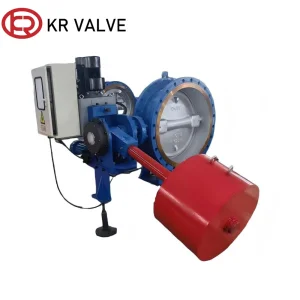
A Conical Valve (frequently designated as a Howell-Bunger Valve or Fixed Cone Energy Dissipation Valve) is specifically designed to regulate terminal discharge from dams, conduits, or hydro-electric bypass lines into atmosphere or downstream channels. Unlike conventional inline valves, the conical valve uses a stationary cone shell paired with an axially sliding outer sleeve.
Technical Physics of Fixed Cone Energy Dissipation
The flow velocity $V$ through the valve port is governed by the relation $V = C_v \sqrt{2g\Delta H}$, where $C_v$ is the discharge coefficient (typically ranging between 0.72 and 0.85 depending on sleeve travel and internal radial vane design). As water travels through the valve body, internal radial anti-vortex ribs convert tangential swirl into pure axial flow. When the outer sleeve retracts, fluid passes over the stationary cone, expanding into a hollow cone spray ($45^\circ$ to $90^\circ$ divergence angle). This massive surface area expansion maximizes aeration and momentum transfer with ambient air, reducing downstream hydraulic jump energy.
Material Selection Matrix for Algerian Environmental Stress Factors
To withstand the corrosive coastal brackish water near Mediterranean ports (Algiers, Oran, Skikda) and the elevated temperatures of interior pumping stations, our OEM manufacturing adheres to rigid material standards:
| Component | Standard Material Grade | High-Corrosion / High-Silt Option | Algeria Project Performance Benefit |
|---|---|---|---|
| Valve Body & Shell | Ductile Iron GGG50 / EN-JS1050 | Cast Steel WCB / SS316L Stainless Steel | High tensile strength, prevents body cracking under heavy hydraulic water hammer. |
| Sliding Outer Sleeve | Stainless Steel AISI 304 / 316 | Duplex Stainless Steel 2205 / SS316L | Resists atmospheric pitting & marine air corrosion in coastal water utility stations. |
| Cone Tip & Internal Vanes | Stainless Steel AISI 316 | Stellite / Hard Chromium Plated SS420 | Erosion-resistant against abrasive silica sand particles present in flash flood runoffs. |
| Resilient Body Seals | EPDM (KTW & WRAS Approved) | Fluoroelastomer (FKM / Viton) | Zero bubble-tight closure up to PN64; excellent resistance to ambient solar UV rays. |
| Actuation & Drive Screws | Bronze Nut + SS430 Stem | Duplex SS Stem + AUMA / Rotork Actuator | Maintenance-free, high-torque operation under dusty Saharan atmospheric conditions. |
Why Partner with Our Chinese OEM Factory for Algerian Tenders?
Procurement officers and EPC contractors in Algeria managing projects funded by national budgets or international development loans require the optimal balance between top-tier mechanical precision, rapid production lead times, and competitive capital expenditure (CAPEX). As a premier Chinese OEM valve manufacturer, we deliver distinct strategic advantages:
Large-Scale CNC Machining
Our plant is equipped with 5-meter vertical CNC turning lathes, horizontal boring mills, and automated submerged arc welding systems. We easily produce large-bore Conical Valves from DN300 up to DN3000 with precise tolerances ($\pm 0.02\text{ mm}$).
40% - 60% CAPEX Optimization
Compared to traditional Western European legacy valve makers (French/German OEMs), our integrated industrial supply chain in Tianjin cuts procurement costs dramatically while providing identical or superior material certifications (EN 10204 3.1 / 3.2).
Custom Dimension Retrofitting
Many Algerian dams built in the 1970s and 1980s contain obsolete European face-to-face dimensions. We engineer custom length sleeves and flange drillings (ISO, DIN, BS, ANSI) to allow direct drop-in replacement without expensive piping modification.
Localized Application Scenarios in Algerian Sectors
Our conical energy dissipators and accompanying high-pressure butterfly and gate valve lines serve four crucial national industrial domains across Algeria:
1. Dam Bottom Outlet & Spillway Discharge (ANBT Projects)
Installed at the terminus of reservoir discharge tunnels to maintain precise water release rates into downstream rivers (Oueds). The fixed conical valve regulates reservoir water level while ensuring zero scour damage to riverbeds due to atmospheric energy dispersion hood attachments.
2. Long-Distance Potable Water Transfer (ADE Trunk Networks)
High-capacity water transfer pipelines linking northern coastal desalination plants to inland cities require surge relief and pressure breaking nodes. Electric cone valves installed at break-pressure tanks dissipate excess static head safely during scheduled shut-offs.
3. Seawater Desalination Plant Brine Discharge (SDEM Plants)
Algeria’s expanding reverse osmosis seawater desalination installations (e.g., Cap Djinet, El Tarf, Oran) generate high-salinity brine waste. Super Duplex 2205 coated conical valves regulate concentrated brine outfall back into ocean depths without marine floor erosion.
4. Sonatrach Oil & Gas Industrial Utility Water Networks
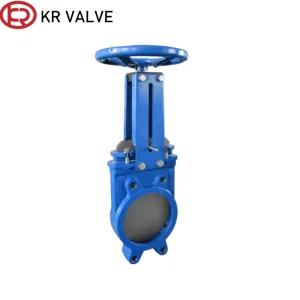
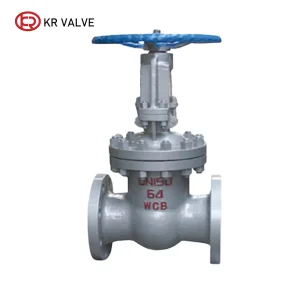
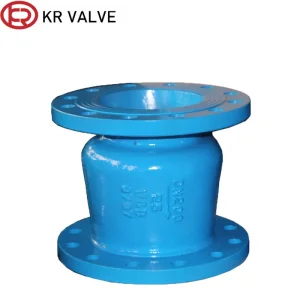
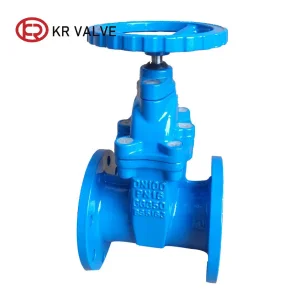
Petrochemical refineries in Hassi Messaoud, Skikda, and Arzew rely on massive cooling water towers and emergency fire suppression mains. Heavy-duty metal-seated gate valves and high-pressure check valves maintain system readiness under extreme Saharan ambient thermal conditions.
Procurement Protocol & Documentation for Algerian Tenders
Navigating customs clearance at the Port of Algiers, Oran, or Skikda requires meticulous adherence to Algerian trade compliance, banking mandates (Letter of Credit / L/C terms), and international quality verification. Our dedicated export documentation division guarantees smooth clearance through the following protocols:
1. Quality & Standard Audits
Fully certified under ISO 9001:2015, CE PED 2014/68/EU, AWWA C520, and EN 1074-5. Every valve undergoes hydrostatic body pressure testing at $1.5\times \text{PN}$ and seat tightness testing at $1.1\times \text{PN}$ before dispatch.
2. Inspection Certification
Complete compliance with third-party pre-shipment inspections (PSI) conducted by SGS, Bureau Veritas, or Cotecna, ensuring 100% compliance with Algerian Ministry of Water Resources specifications.
3. Banking & Legal Trade Papers
Provision of CCPIT-certified Certificate of Origin, EUR.1 preference certificates where applicable, bilingual (French/English) technical manuals, and strict alignment with Algerian L/C terms.
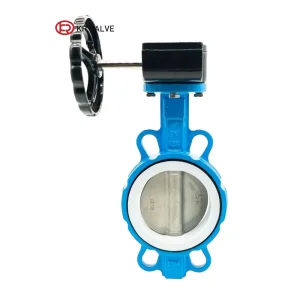
Complete Valve Portfolio for Algerian Water & Energy Systems
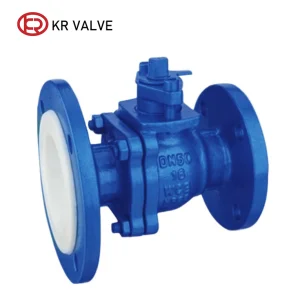
Explore our comprehensive industrial valve lineup, fully customizable for OEM supply contracts, municipal pipeline expansions, and specialized fluid management in North Africa.
Frequently Asked Questions (FAQ) for Algerian Engineering Buyers
Clear engineering and commercial responses to common technical inquiries regarding conical valves and global OEM supply logistics.
Partner with China’s Leading OEM Conical Valve Manufacturer
Request a comprehensive technical quotation, 3D CAD models, or custom design consultation for your upcoming Algerian water transfer, dam construction, or municipal infrastructure project.