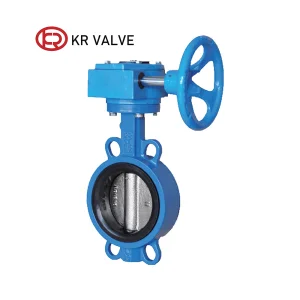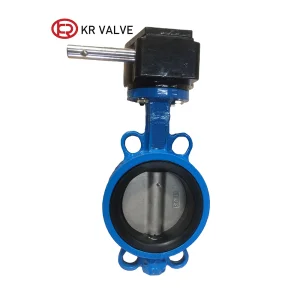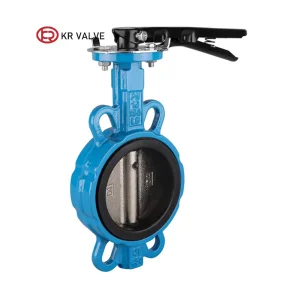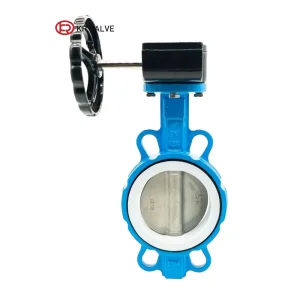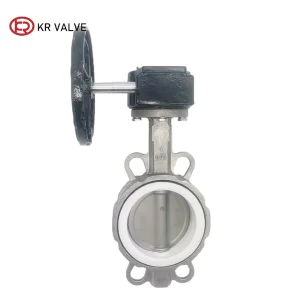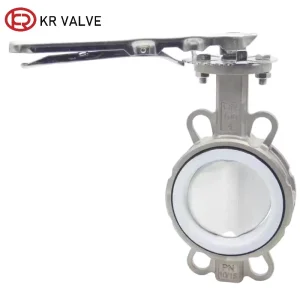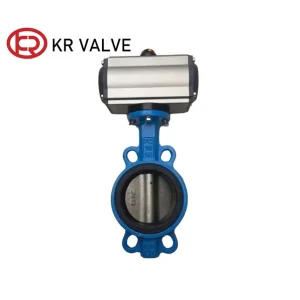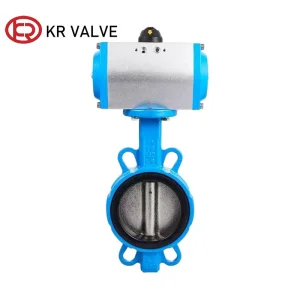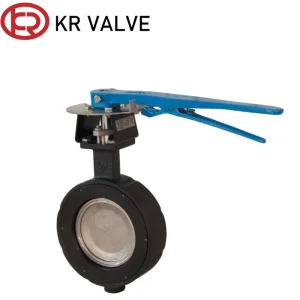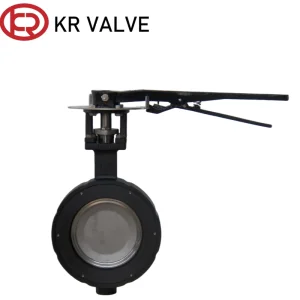
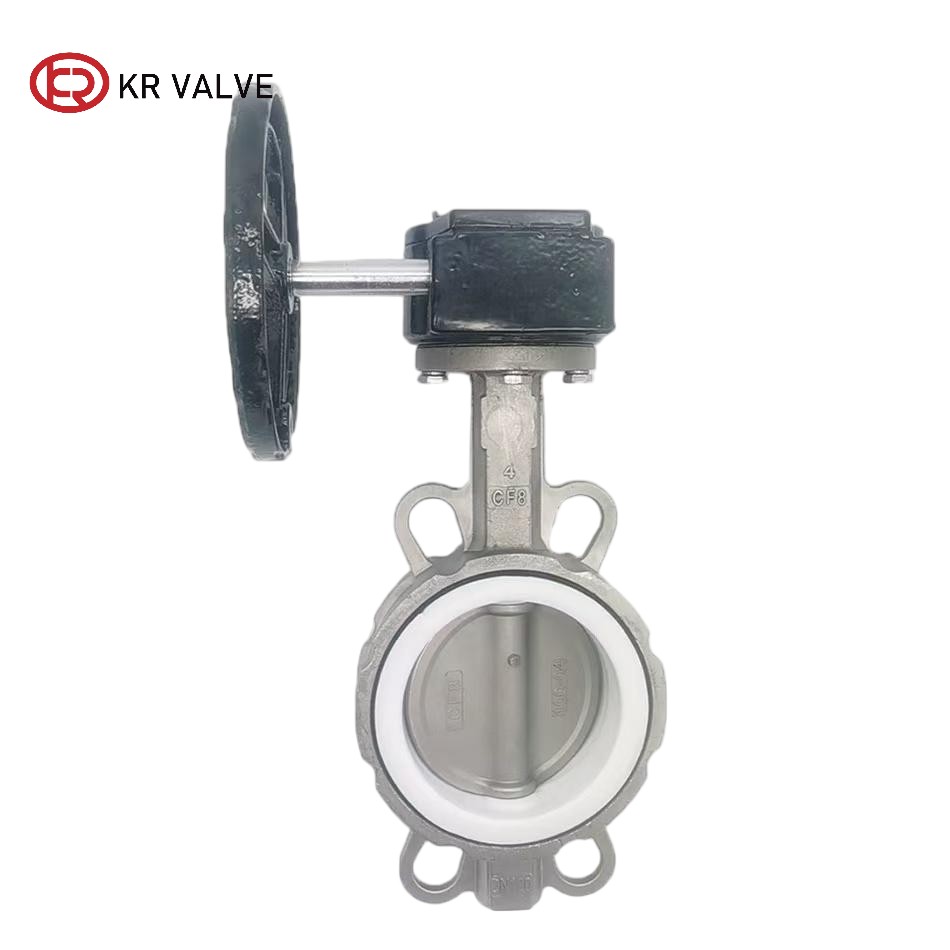
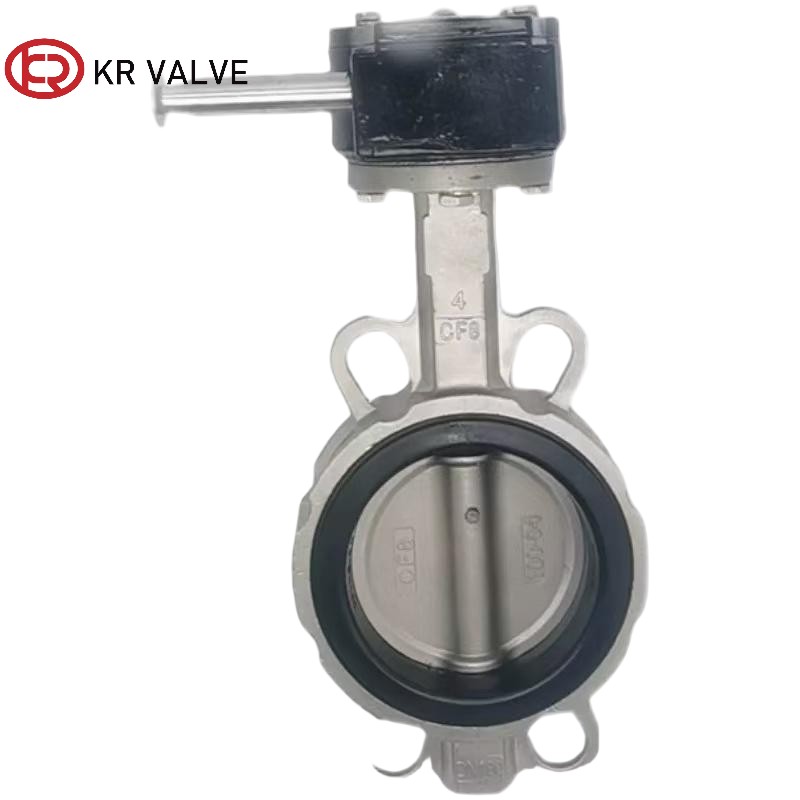
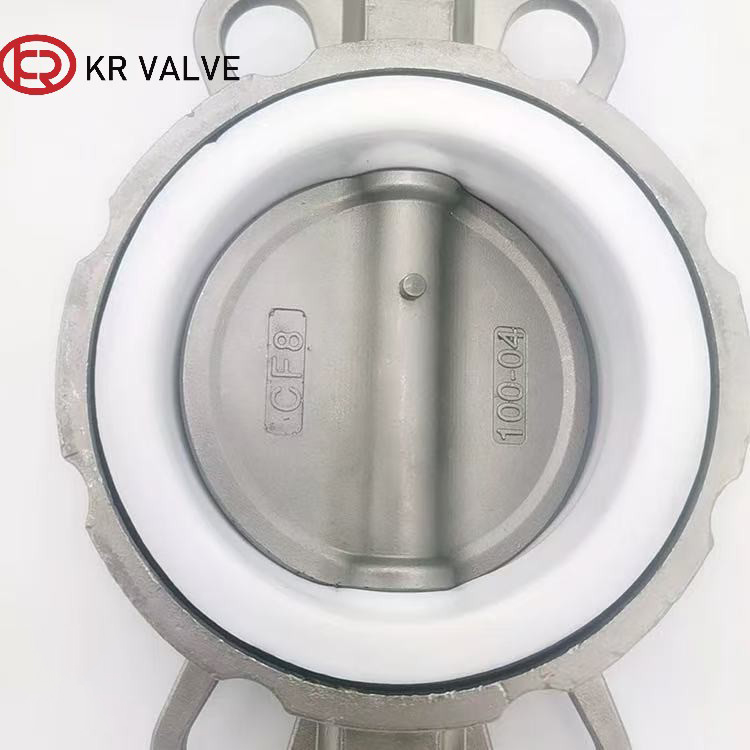
OEM Stainless steel body PTFE seat wafer butterfly valve Supplier, Suppliers
Product Description
| Valve Type: | Wafer butterfly valve | Structure: | Concentric |
| Standard: | EN593 | Workmanship: | Investment casting |
| Sealing direction: | Bidirectional | Sealing grade: | Zero leakage |
| Temperature: | -20°C<T<120°C | Operation: | Handle/Lever |
Characteristics
Four stage sealing structure is adopted, and the sealing surface is equipped with temperature resistant and anti-aging silicone rubber elastic gasket valve seat, which can completely achieve zero leakage of media. For example, the special transition curve at the connection between the shaft head and the butterfly plate circumference and the reasonable interference fit of the valve seat, as well as the use of elastic O-rings and rigid gaskets and elastic rubber pads at the shaft shoulder end face of the shaft head, all contribute to improving the sealing performance.
Advantages
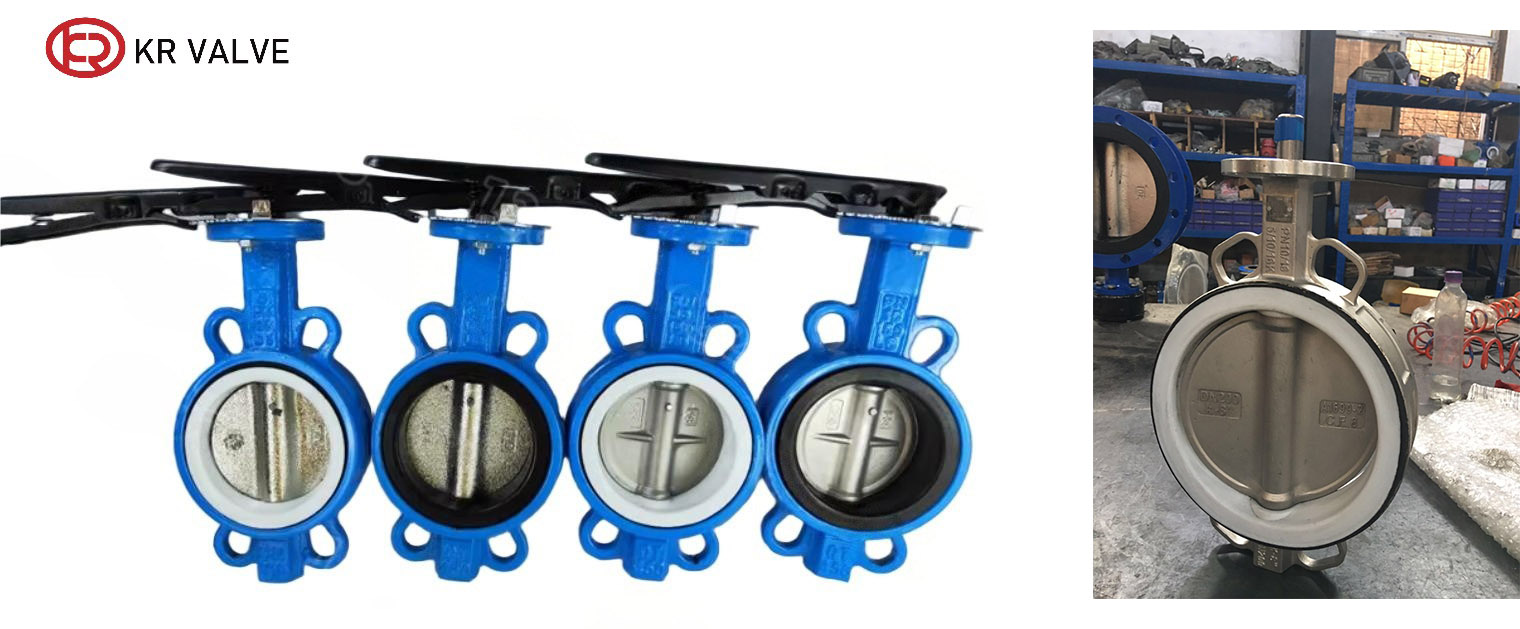
PTFE hardly reacts with most chemicals and can resist corrosion from strong acids, bases, and organic solvents. Only molten alkali metals and certain fluorides can degrade it at high temperatures.
It can operate continuously at temperatures ranging from -10 ° C to 180 ° C, with a maximum short-term tolerance temperature of approximately 290 ° C-320 ° C.
The friction coefficient is as low as 0.02-0.10, which can reduce the wear of moving parts and prevent the medium from adhering to the valve.
PTFE does not absorb water or gas, and can remain stable and uncontaminated in humid environments.
Packing
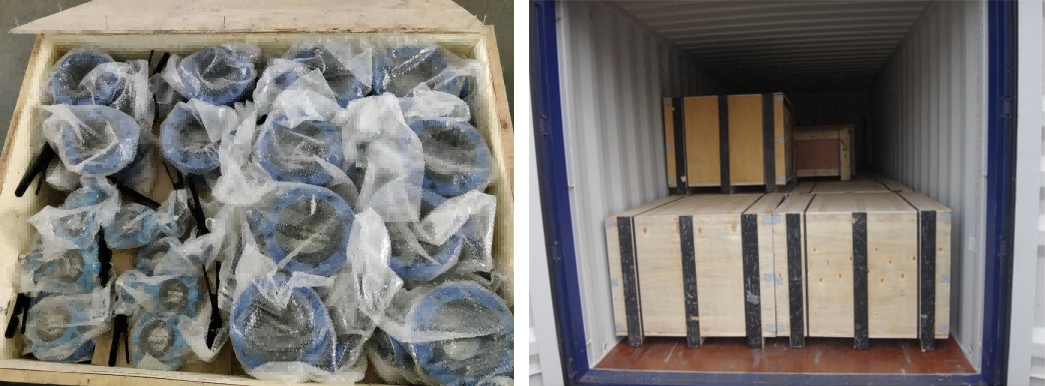
Standard export wooden case packaging
Application Scenarios
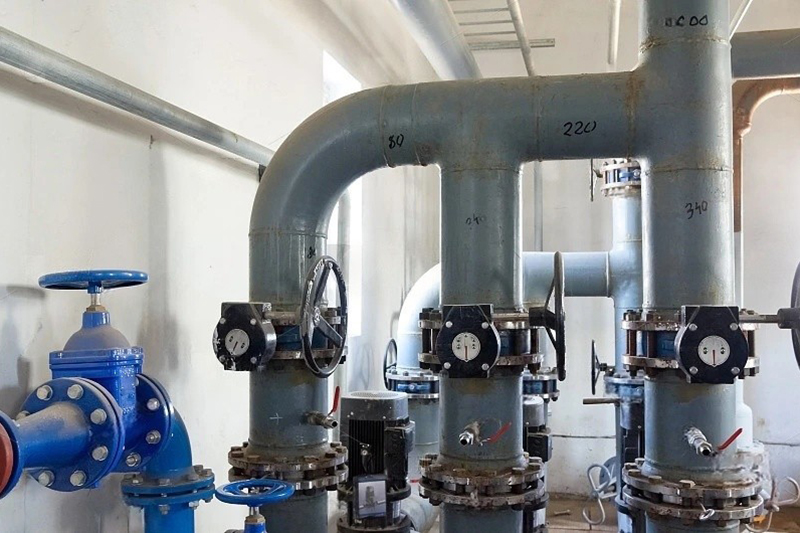
Within the chemical industry, it serves as a standard component for production lines processing aggressive media such as sulfuric acid and chlor-alkali products. In the pharmaceutical sector, its GMP-compliant hygienic design renders it ideal for sterile medium transfer systems. For power plant flue gas desulfurization (FGD) systems, it also provides an effective solution to mitigate valve erosion and wear caused by limestone slurry.
Material
| Body | Disc | Stem | Bushing | Seat | |||||
| Name | Code | Name | Code | Name | Name | Name | Code | ℃ Working temp | |
| Cast iron | Z | Plated ductile iron | B1 | Stainless steel | Lubrized bronze | NR | X1 | -20~+85℃ | |
| Ductile iron | Q | Aluminum bronze | B2 | Hypalon | X2 | -23~+121℃ | |||
| Aluminum bronze | T | ZG1Cr18Ni9Ti Stainless steel | B3 | EPDM | X3 | -23~+121℃ | |||
| ZG1Cr13Ni9Ti Stainless steel | P | Titanium steel | B4 | Neoprene | X4 | -7~+93℃ | |||
| CF8M Stainless steel | R | CF8M Stainless steel | B5 | NBR | X5 | -23~+100℃ | |||
| Carbon steel | C | Carbon steel | B6 | Wear-resistant rubber | X6 | -10~+100℃ | |||
| CF8 Stainless steel | CF8 Stainless steel | B7 | VITON | X7 | -23~+200℃ | ||||
| Hear-resistant rubber | X9 | -23~+135℃ | |||||||
| PTFE | F4 | +10~+150℃ | |||||||
Dimension
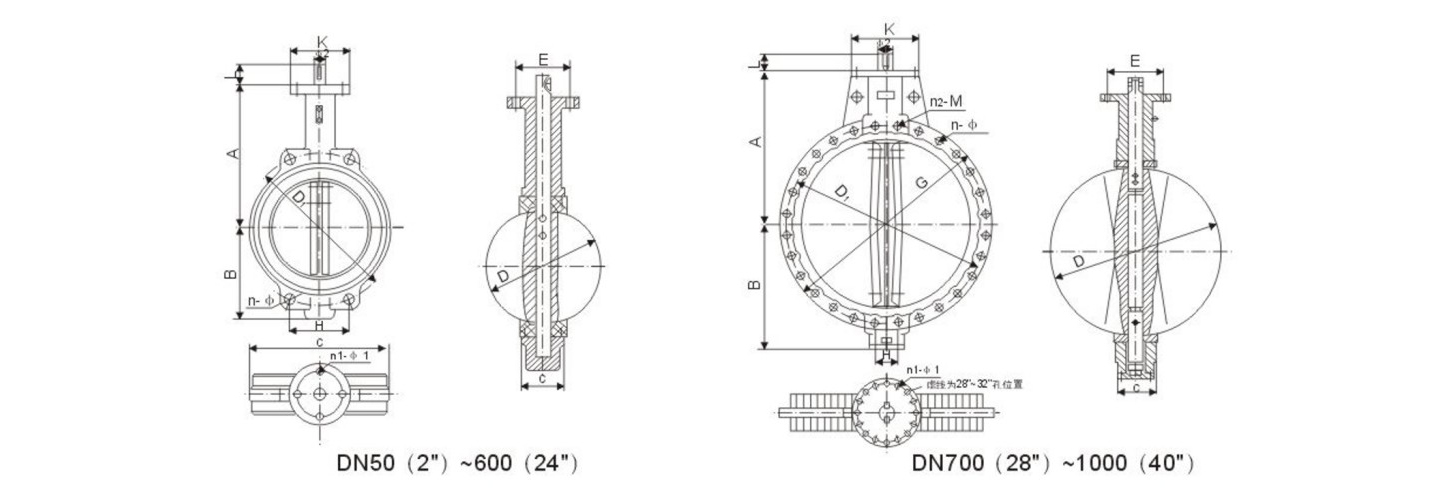
| DN | A | B | C | D | L | H | D1 | n- φ | K | E | n1- φ 1 | φ 2 | G | n2-M | |
| mm | inch | ||||||||||||||
| 50 | 2” | 161 | 80 | 42 | 52.9 | 32 | 84.84 | 120 | 4- φ 23 | 77 | 57.15 | 4- φ 6.7 | 12.6 | 118 | - |
| 65 | 2.5" | 175 | 89 | 44.7 | 64.5 | 32 | 96.2 | 136.2 | 4- φ 26.5 | 77 | 57.15 | 4- φ 6.7 | 12.6 | 137 | - |
| 80 | 3” | 181 | 95 | 45.2 | 78.8 | 32 | 61.23 | 160 | 8- φ 18 | 77 | 57.15 | 4- φ 6.7 | 12.6 | 143 | - |
| 100 | 4” | 200 | 114 | 52.1 | 104 | 32 | 70.80 | 185 | 4- φ 24.5 | 92 | 69.85 | 4- φ 10.3 | 15.77 | 156 | - |
| 125 | 5" | 213 | 127 | 54.4 | 123.3 | 32 | 82.28 | 215 | 4- φ 23 | 92 | 69.85 | 4- φ 10.3 | 18.92 | 190 | - |
| 150 | 6" | 226 | 139 | 55.8 | 155.6 | 32 | 91.08 | 238 | 4- φ 25 | 92 | 69.85 | 4- φ 10.3 | 18.92 | 212 | - |
| 200 | 8" | 260 | 175 | 60.6 | 202.5 | 45 | 112.89 76.35 | 295 | 4- φ 25 4- φ 23 | 115 | 88.9 | 4- φ 14.3 | 22.1 | 268 | - |
| 250 | 10" | 292 | 203 | 65.6 | 250.5 | 45 | 92.40 | 357 | 4- φ 29 | 115 | 88.9 | 4- φ 14.3 | 28.45 | 325 | - |
| 300 | 12" | 337 | 242 | 76.9 | 301.6 | 45 | 105.34 | 407 | 4- φ 29 | 140 | 107.95 | 4- φ 14.3 | 31.6 | 403 | - |
| 350 | 14" | 368 | 267 | 76.5 | 333.3 | 45 | 91.11 | 467 | 4- φ 30 | 140 | 107.95 | 4- φ 14.3 | 31.6 | 436 | - |
| 400 | 16’ | 400 | 309 | 86.5 | 389.6 | 51.2 72 | 100.47 102.42 | 515 525 | 4- φ 26 4- φ 30 | 197 | 158.75 | 4- φ 20.6 | 33.15 | 488 | - |
| 450 | 18" | 422 | 328 | 105.6 | 440.51 | 51.2 72 | 88.39 91.51 | 565 585 | 4- φ 26 4- φ 30 | 197 | 158.75 | 4- φ 20.6 | 38 | 539 | - |
| 500 | 20" | 480 | 361 | 131.8 | 491.6 | 64.2 82 | 95.99 101.68 | 620 650 | 4- φ 26 4- φ 33 | 197 | 158.75 | 4- φ 20.6 | 41.15 | 593 | - |
| 600 | 24" | 562 | 459 | 152 | 592.5 | 70.2 82 | 113.42 120.46 | 725 770 | 20- φ 30 20- φ 36 | 276 | 215.9 | 4- φ 22.2 | 50.65 | 816 | - |
| 700 | 28" | 624 | 520 | 163 | 695 | 66 82 | 109.65 840 | 840 | 24- φ 30 20- φ 36 | 300 | 254 | 8- φ 18 | 55 63.35 | 895 | 4-M33 |
| 800 | 32" | 672 | 591 | 188 | 794.7 | 66 82 | 124 950 | 950 | 24- φ 33 24- φ 39 | 300 | 254 | 8- φ 18 | 55 63.35 | 1015 | - |
| 900 | 36" | 720 | 656 | 203 | 864.7 | 118 | 117.57 | 1050 | 24- φ 33 | 300 | 254 | 8- φ 18 | 75 | 1115 | 4-M30 |
| 1000 | 40" | 800 | 721 | 216 | 965 | 142 | 129.89 | 1160 | 24- φ 36 | 300 | 254 | 8- φ 18 | 85 | 1230 | 4-M33 |
Frequently Asked Questions (FAQ)
This valve features a concentric structure manufactured in compliance with the EN593 standard via precision investment casting workmanship.
It employs a four-stage sealing structure featuring a temperature-resistant and anti-aging silicone rubber elastic gasket seat, combined with elastic O-rings, rigid gaskets, and shoulder end pads to ensure bidirectional zero leakage.
PTFE offers minimal reactivity with acids, bases, and organic solvents, features an extremely low friction coefficient (0.02-0.10), and operates stably without absorbing water or gas.
It is widely used in chemical processing lines (sulfuric acid/chlor-alkali), pharmaceutical sterile media transfer (GMP compliant), and power plant flue gas desulfurization (FGD) systems.
The standard working temperature range is -20°C to 120°C, with optional seat materials like PTFE or VITON allowing performance up to +150°C and +200°C respectively.
All valves are packaged in standard export wooden cases designed to protect components from impact and environmental damage during international transit.