
Featured Industrial Valve Lineup (Batch A)
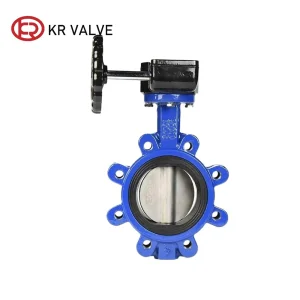
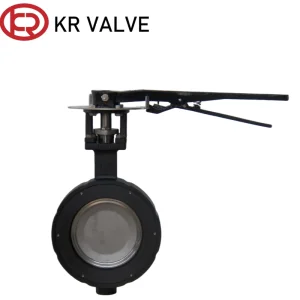
Precision-manufactured flow control assets certified to international standards including ANSI, DIN, BS, and ISO.
Executive Technical Blueprint: Polytetrafluoroethylene (PTFE / Teflon) Seating Dynamics
In high-stakes fluid handling environments, the seal interface represents the single most critical failure point of quarterly maintenance cycles. As a premier Custom Butterfly Valve Teflon Seat Manufacturer, our engineering philosophy revolves around solving the physical constraints of traditional elastomer seating—specifically chemical degradation, thermal hardening, and mechanical wear under high-velocity flow. Polytetrafluoroethylene (PTFE), commercially recognized as Teflon™, provides an unmatched combination of chemical inertness, an ultra-low coefficient of friction ($\mu \approx 0.05 \text{ to } 0.10$), and broad working temperature capabilities ranging from cryogenic conditions ($-200^\circ\text{C}$) up to continuous thermal operating limits of $+200^\circ\text{C}$ to $+260^\circ\text{C}$.
However, deploying raw virgin PTFE within heavy-duty industrial butterfly valves introduces distinct mechanical challenges, most notably cold flow (plastic creep) under sustained compressive loads and thermal expansion rates that exceed cast iron or stainless steel valve bodies by nearly tenfold. To mitigate these physical tendencies, our manufacturing facilities utilize advanced sintering profiles, specialized elastomer or phenolic backing cushions, and tailored polymer compounds (such as Glass-Filled PTFE, Carbon-Filled PTFE, and TFM™ modified fluoropolymers).
Compounded Teflon Seat Material Matrix
Matching the exact polymer compound to your specific fluid medium prevents unexpected shut-downs, torque spikes, and seat erosion. Our OEM engineering lab formulates and machines fluoropolymer seats categorized into five primary industrial grades:
| Material Formulation | Composition & Microstructure | Tensile Strength (MPa) | Temp Range (°C) | Primary Industrial Suitability |
|---|---|---|---|---|
| Virgin PTFE | 100% pure PTFE resin without additives | 25 - 35 | -190 to +180 | Ultra-pure water (UPW), food & beverage (FDA), fine chemicals, low-cycle isolation. |
| RPTFE (15% Glass Filled) | 85% PTFE + 15% milled glass micro-fibers | 20 - 30 | -100 to +220 | General chemical processing, steam lines, moderate abrasion resistance against micro-solids. |
| RPTFE (25% Carbon Filled) | 75% PTFE + 25% high-purity carbon powder | 15 - 25 | -50 to +260 | High thermal cycling, anti-static utility lines, severe steam, and conductive chemical media. |
| TFM™ (Modified PTFE) | Second-generation PTFE with perfluoroalkoxy modification | 30 - 40 | -200 to +230 | Severe fugitive emission containment, lower creep rate, ultra-smooth surface finish for biopharma. |
| PFA (Molded Liner) | Perfluoroalkoxy fluoropolymer melt-processable liner | 25 - 32 | -60 to +200 | Fully lined heavy-duty valves handling hot concentrated nitric, hydrofluoric, and sulfuric acids. |
Precision Machining & Custom OEM Manufacturing Architecture
Achieving reliable bubble-tight shut-off (API 598 Rate A Zero Leakage) with a Teflon-seated butterfly valve demands exacting dimensional tolerances during body casting, seat compression molding, and disc machining. Unlike soft EPDM or NBR seats that deform easily to accommodate disc misalignment, a PTFE seat possesses higher Shore hardness ($D55 \text{ to } D65$). Therefore, the interference fit between the disc edge and the Teflon seating face must be calculated down to the micrometer level.
1. Resilient Energized Seat Backing
To prevent permanent deformation under continuous compression, our custom seats incorporate an elastomeric (EPDM or Viton/FKM) or stainless steel spring energizer behind the Teflon sleeve. This memory cushion maintains continuous radial loading against the disc seal boundary despite temperature fluctuations.
2. Phenolic Ring-Reinforced Seats
For high-velocity pipeline applications ($> 4.5 \text{ m/s}$ for liquids), soft seats can experience displacement or cold-flow blowout. We press-fit our Teflon liners onto a rigid phenolic resin outer ring, ensuring structural stability, ease of field maintenance, and distortion-free torque dynamics.
3. Disc Geometry & Spherical Machining
Our CNC turning centers machine valve discs (SS316, Hastelloy C276, or PTFE-coated ductile iron) with a precise spherical radius. Disc edges undergo mirror polishing ($Ra < 0.2\,\mu\text{m}$) to eliminate micro-scratches that could tear fluoropolymer seating surfaces during high-frequency actuation cycles.
Global Field Applications & Localized Operating Scenarios
Every industrial municipality and chemical cluster operates under distinct environmental stresses and regulatory mandates. As a global custom factory, we adapt our Teflon-seated butterfly valve specifications to meet localized field parameters:
Chemical & Petrochemical Refining
In North American Gulf Coast and European chemical parks handling chlorinated hydrocarbons, sulfuric acid concentrations, and aggressive organic solvents, standard rubber seals fail within weeks. Our RPTFE and PFA-lined butterfly valves provide 100% corrosion immunity and prevent fugitive volatile organic compound (VOC) emissions.
Semiconductor Ultra-Pure Water (UPW)
East Asian semiconductor fabrication facilities require flow components with zero ion leaching and minimal particulate generation. Our Virgin PTFE and TFM™ seat designs undergo cleanroom washing, deionized water rinsing, and vacuum packaging to maintain absolute fluid purity.
Pharmaceutical & Food Processing
Pharmaceutical formulation plants require components compliant with FDA 21 CFR 177.1550 and USP Class VI mandates. Our sanitary PTFE butterfly valves feature crevice-free body designs compatible with harsh Clean-In-Place (CIP) and Steam-In-Place (SIP) sterilization cycles up to 150°C.
Desalination & Brine Management
Seawater reverse osmosis (SWRO) facilities in the Middle East handle concentrated brine with high chloride ions. Combining Super Duplex discs (2507) with 15% Glass-Filled RPTFE seats delivers long-term erosion-corrosion resistance at operating pressures exceeding 16 bar.
Mining & Slurry Processing
For mineral extraction plants handling acidic tailings, our heavy-duty lug and wafer butterfly valves utilize 25% Carbon-Filled PTFE seats backed by high-durability elastomers to prevent tearing from suspended particulate matter.
China Supply Chain Resilience, Manufacturing Scale & Cost Efficiency
Located in the heart of Tianjin’s industrial valve manufacturing hub, our manufacturing facilities integrate the complete production cycle—from raw fluoropolymer resin compounding and valve body casting (Ductile Iron GGG40, WCB, CF8M) to automated CNC machining, assembly, and 100% pressure testing. This vertical integration guarantees complete traceability, consistent quality control, and substantial lead-time advantages for overseas EPC contractors and MRO distributors.
100% Traceable Raw Materials
We source raw PTFE powders exclusively from tier-one chemical vendors. Every batch undergoes spectroscopic purity testing, density verification, and tensile strain analysis to guarantee uniform molecular structure free from recycled contaminants.
Cost Efficiency & Scalability
By operating automated multi-axis turning centers and dedicated seat-sintering ovens, we deliver OEM-customized valve assemblies at 30% to 45% lower capital costs than Western alternatives—without compromising on dimensional accuracy or safety ratings.
Rigorous QA & Spark Testing
Every lined valve body and Teflon seat undergoes high-voltage spark testing (up to 20kV) to detect micro-pinholes or thin spots, followed by 100% pneumatic seat closure testing and hydrostatic shell verification per API 598 standards.
Technology Roadmap & Next-Gen Fluoropolymer Innovations
As process industries transition toward higher operating temperatures, stricter fugitive emission limits, and smart IoT-enabled infrastructure, standard valve seat technologies must evolve. Our R&D team works at the forefront of polymer science to develop next-generation fluid control solutions:
Smart IoT-Integrated Actuation & Torque Monitoring
Unplanned valve seizure due to media crystallization or thermal expansion can disrupt entire plant operations. We are integrating micro-strain sensors into our Teflon seat backing cushions. These sensors transmit real-time seating torque data to SCADA control systems, enabling predictive maintenance before catastrophic seal failure occurs.
Ultra-Low Fugitive Emission Packing (ISO 15848-1)
Environmental regulations now mandate strict limits on stem leakage for toxic and volatile media. Our advanced PTFE butterfly valve series features live-loaded stem packing sets with Belleville spring washers and modified TFM™ V-rings, achieving ISO 15848-1 Class AH certification (< $10^{-5} \text{ mg/s}\cdot\text{m}$).
Nano-Composite Fillers for High-Cycle Service
By embedding carbon nanotubes and metallic oxides into the PTFE fluoropolymer matrix, our material engineers have developed nanocomposite seats that exhibit up to a 50% reduction in mechanical wear during high-cycle automated throttling applications.
Cryogenic Fluoropolymer Seating (down to -196°C)
With the rapid expansion of Liquefied Natural Gas (LNG) bunkering and liquid nitrogen distribution, our specialized Lip-Sealed PTFE and PCTFE butterfly valve lines deliver reliable zero-leakage performance under extreme thermal contraction.
International Compliance, Quality Assurance & Certification Framework
To facilitate seamless global procurement, engineering integration, and regulatory approval, all custom Teflon-seated butterfly valves manufactured in our facility adhere strictly to recognized international engineering design, testing, and material standards:
API 609 / EN 593
Butterfly valve design, face-to-face dimensions, and pressure-temperature ratings.
API 598 / ISO 5208
100% factory hydrostatic shell testing and zero-leakage Rate A seat testing.
FDA 21 CFR 177.1550
Food and pharmaceutical contact compliance for fluoropolymer seating materials.
CE-PED & SIL 3
Pressure Equipment Directive certification and Safety Integrity Level functional safety ratings.
Comprehensive Mill Test Reports (EN 10204 3.1)
Every shipment includes complete material traceability documentation, chemical analysis certificates, mechanical test reports, hydrostatic test charts, and fluoropolymer thickness/spark test certificates signed by our quality engineering division.
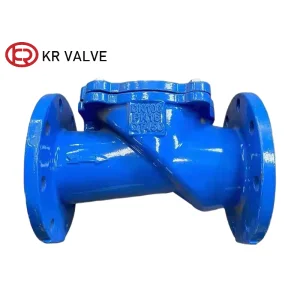
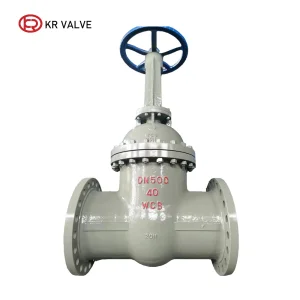
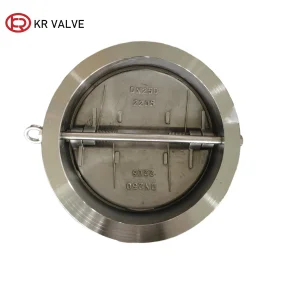
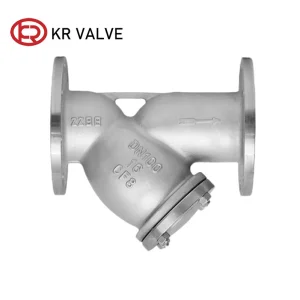
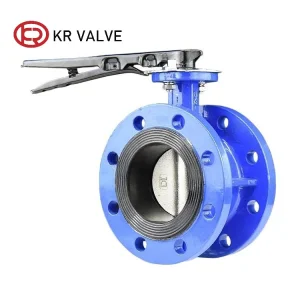
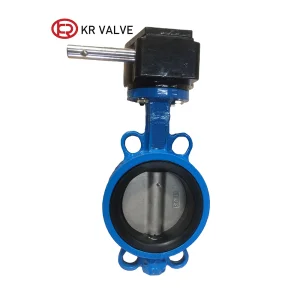
Featured Industrial Valve Lineup (Batch B)
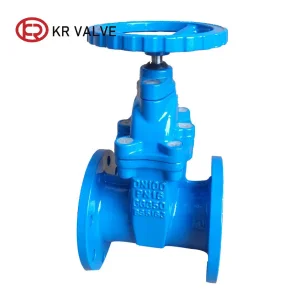
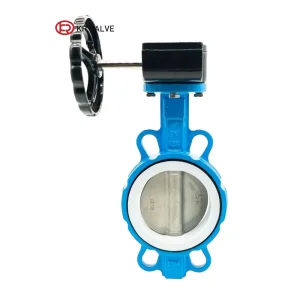
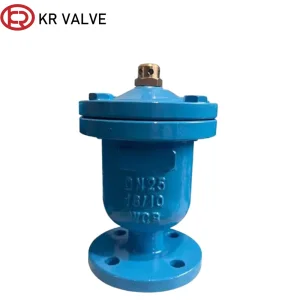
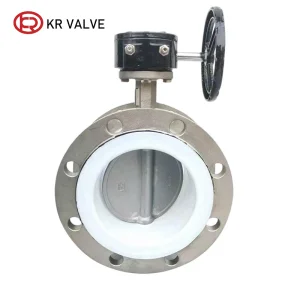
Explore our expanded series of check valves, Y-strainers, gate valves, and specialty butterfly valves.
Frequently Asked Engineering Questions (FAQ)
What is the key advantage of a Teflon (PTFE) seat over an EPDM or NBR rubber seat in butterfly valves?
While EPDM and NBR rubber seats offer cost-effective resilient sealing for water and air service, they suffer rapid degradation when exposed to aggressive acids, organic solvents, petroleum derivatives, and elevated temperatures above 120°C. A Teflon (PTFE) seat provides near-universal chemical inertness, a significantly lower coefficient of friction ($\mu \approx 0.05-0.10$), and continuous operating temperature capabilities up to 200°C–260°C depending on compound reinforcement.
How do your factories mitigate "cold flow" or creep deformation in custom Teflon seats?
Cold flow (plastic deformation under continuous compressive load) is mitigated through three engineering techniques:
- Reinforced Compounding: Blending virgin PTFE with 15% glass fiber or 25% carbon powder to increase tensile strength and creep resistance.
- Phenolic Ring Backing: Bonding the Teflon liner to a rigid phenolic resin ring to restrict lateral deformation.
- Elastomeric Energizers: Inserting an EPDM or Viton cushion behind the seat to maintain constant spring-like radial pressure against the disc edge.
Why is operating torque higher for Teflon-seated valves compared to soft rubber-seated valves?
PTFE has a higher Shore Hardness rating ($D55 \text{ to } D65$) than elastomeric rubber ($A60 \text{ to } A70$). Consequently, achieving a bubble-tight seal requires higher radial compressive force between the disc edge and the Teflon seat, increasing breakaway and running torque by approximately 30% to 50%. When sizing electric or pneumatic actuators, our technical team provides precise safety-factored torque curves tailored to your operating pressure.
What body and disc materials do you recommend for concentrated acid lines?
For concentrated sulfuric, hydrochloric, or hydrofluoric acid lines, we recommend a Ductile Iron (GGG40) or Stainless Steel (CF8M) valve body fully lined with PFA (Perfluoroalkoxy) or Virgin PTFE, paired with a Hastelloy C276, Titanium, or PFA-encapsulated stainless steel disc. This configuration ensures zero metal contact with the corrosive fluid.
Can Teflon-seated butterfly valves be used for vacuum or negative pressure service?
Yes. However, standard loose-liner PTFE seats can collapse under vacuum pressure. For negative pressure service (down to absolute vacuum), we manufacture bonded or phenolic-reinforced PTFE seats that are mechanically locked into the valve body groove, preventing liner suction or displacement.
What quality testing standards are performed before factory dispatch?
Every valve undergoes 100% factory inspection prior to packaging:
- High-Voltage Spark Test: Up to 20kV testing on PFA/PTFE linings to ensure zero micro-porosity.
- Hydrostatic Body Shell Test: Tested at 1.5 times the nominal pressure rating per API 598.
- Pneumatic Seat Closure Test: Air testing at 6 bar to confirm API 598 / ISO 5208 Rate A zero-leakage shut-off.
- Dimensional & Torque Verification: Flange drilling and actuation mounting pad checks per ISO 5211.
What lead times can overseas buyers expect for custom OEM Teflon butterfly valves?
Standard wafer and lug PTFE butterfly valves (DN40 to DN300) are typically dispatched within 15 to 20 business days. Custom engineered valves—such as large diameter double-flanged units ($>\text{DN600}$), specialized alloy discs, or PFA-lined custom molds—are delivered within 30 to 45 days, supported by expedited sea freight from Tianjin Port.