High-Performance Industrial Valve Solutions
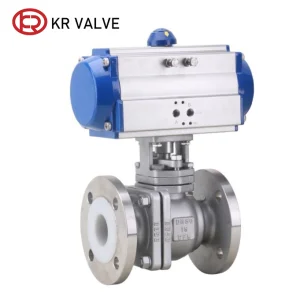
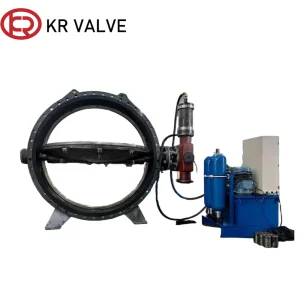
Explore our top-tier manual, pneumatic, and hydraulic flow control components manufactured under strict ISO quality benchmarks.
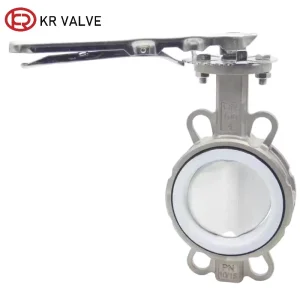
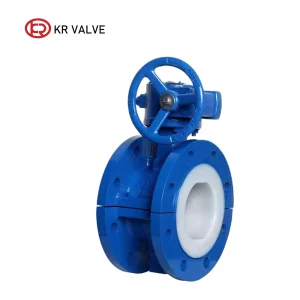
Global Landscape of Manual Butterfly Valve Actuation Systems
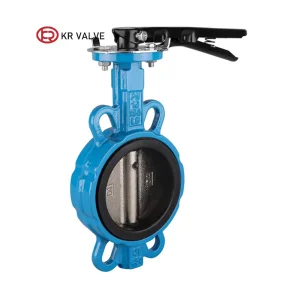
In modern fluid handling and industrial process control, the manual handle of a butterfly valve is far more than a simple lever—it is the critical interface between human operation and mechanical pressure containment.
Critical Safety Override
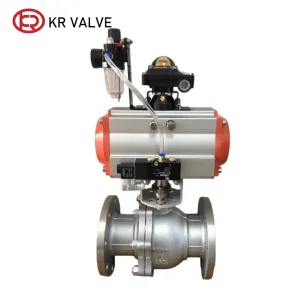
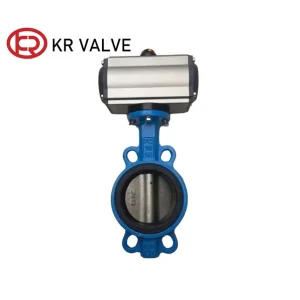
Even in automated process plants equipped with pneumatic or electric actuators, manual handles and memory-stop lever overrides provide essential fail-safe operation during emergency power outages, maintenance lock-outs, and calibration procedures.
Mechanical Efficiency
Custom lever geometry directly governs the mechanical advantage required to overcome break-away torque, seating friction, and dynamic fluid drag across nominal sizes ranging from DN40 (1.5") up to DN300 (12").
Custom OEM Solutions
Global procurement teams increasingly specify specialized notch plates, padlocking devices, extended shafts for insulated lines, and non-corrosive metallurgical compositions tailored for extreme offshore, chemical, and municipal installations.
Kinematic Design, Torque Physics & Ergonomic Mechanics
Engineering an optimal manual handle requires a rigorous balance of fluid dynamics, torque load calculations, and ergonomic hand-force constraints.
1. Torque Transmission Physics
The total operating torque ($T_{total}$) required to turn a butterfly valve disk consists of three distinct components:
- Seating/Unseating Friction Torque ($T_{s}$): Resistance caused by elastomeric (EPDM/NBR) or fluoropolymer (PTFE) seat compression against the disk edge.
- Dynamic Hydrodynamic Torque ($T_{h}$): Asymmetric fluid velocity profiles acting on the leading and trailing halves of the rotated disk.
- Bearing and Stem Friction Torque ($T_{b}$): Frictional force generated within the upper and lower stem bushings under pipeline line pressure.
The lever arm length ($L$) must be sized so that human rim force ($F_{hand}$) does not exceed 250 N (56 lbf) according to EN 12570 safety guidelines: $L = T_{total} / F_{hand}$.
2. Stem Drive Coupling Standardizations
Custom handle manufacturing requires absolute dimensional precision at the valve stem interface to eliminate hysteresis and mechanical backlash during quarter-turn (90°) actuation:
- Double-D (Flat-Parallel): Common in wafer butterfly valves; provides positive drive torque engagement via dual flat stem faces.
- Square Shaft Drive: Standardized top-works compliant with ISO 5211 (F05, F07, F10 patterns), allowing universal lever keying.
- Keyed Parallel Shafts: Utilized for high-torque ductile iron or cast steel valves (DN200 to DN300) to prevent stem shearing.
- Splined & Serrated Hubs: Custom fine-pitch spline hubs designed for vibration-proof positioning in heavy transport or marine applications.
Technical Insight on Throttling Precision: Premium butterfly valve custom handles incorporate a 10-position indexing notch plate (throttling plate) with integrated spring-loaded squeeze levers. This allows plant engineers to modulate flow rates incrementally in 10° increments from fully closed (0°) to fully open (90°), featuring built-in padlock holes for OSHA LOTO (Lock-Out / Tag-Out) compliance.
Metallurgy & Coating Selection Matrix for Global Suppliers
Selecting the appropriate material grade ensures long-term operational integrity and prevents mechanical failure under high humidity, marine salinity, or corrosive chemical environments.
| Material Alloy / Type | Tensile Strength (MPa) | Corrosion Resistance | Typical Industrial Applications | Cost Benchmark |
|---|---|---|---|---|
| Malleable Iron (KLT350-10) | ≥ 350 MPa | Moderate (Requires Epoxy Coating) | HVAC, Municipal Water, Fire Protection, General Piping | Economy / High Volume |
| Ductile Iron (EN-GJS-400-15) | ≥ 400 MPa | High (Epoxy Powder Coated) | Industrial Water Treatment, Irrigation, Low-Pressure Steam | Standard Commercial |
| Stainless Steel 304 (CF8) | ≥ 515 MPa | Excellent (Atmospheric & Organic) | Food & Beverage Processing, Pharmaceutical, Cleanrooms | Premium Grade |
| Stainless Steel 316 (CF8M) | ≥ 520 MPa | Superior (Chlorides, Acidic, Marine) | Offshore Platforms, Chemical Plants, Desalination Facilities | Ultra-Premium |
| Aluminum Alloy (ADC12 / Die-Cast) | ≥ 240 MPa | Good (Anodized Coating) | Weight-Sensitive HVAC Units, Compact OEM Valve Sets | Mid-Range / Lightweight |
Surface Coating Standard
Malleable and ductile iron handles undergo electro-deposited epoxy thermosetting resin powder coating (thickness ≥ 200 µm) tested to ASTM B117 500-hour salt spray endurance without blistering or red rust formation.
Ergonomic Thermoplastic Grip
For operator safety and tactile feedback in freezing or sub-zero environments, handles can be over-molded with high-impact vinyl, PVC, or UV-stabilized rubber coatings.
Stainless Notch Plates
Pairing a coated cast iron lever arm with a stamped SS304 indexing notch plate eliminates galvanic corrosion between the positioning teeth and the spring latch mechanism.
China Manufacturing Efficiency & OEM Customization Infrastructure
Why Tier-1 international valve brands and global EPC contractors partner with specialized Chinese manufacturing hubs for custom butterfly valve handle production.
Rapid Tooling & Investment Casting Precision
Utilizing advanced silica sol investment casting and automated shell-molding processes, Chinese foundries reduce custom die-development times from months to 10–14 working days. CNC multi-axis machining centers ensure stem-bore tolerances within ±0.02 mm, guaranteeing a slop-free fit onto valve stems.
End-to-End Quality Assurance (E-E-A-T)
Leading Chinese supplier factories implement rigorous batch quality control protocols before dispatch:
- Spectrometric Alloy Verification: XRF analyzer testing on every heat lot to confirm chemical compliance (EN, ASTM, JIS).
- Destructive Torque Load Testing: Applying up to 300% rated breaking torque to verify lever structural integrity.
- 3D Coordinate Measurement (CMM): Dimensional validation of ISO 5211 mounting hole circles and notch pitch angles.
Supply Chain Aggregation & Customization Scalability
From private-label laser engraving (customer brand logos, flow direction arrows, QR codes for digital maintenance manuals) to customized RAL epoxy color-coding (e.g., Yellow for Gas, Blue for Water, Red for Fire Control, Green for Chemicals), Chinese factory clusters offer unmatched agility for small-batch custom engineering or high-volume wholesale shipments.
Localized Application Scenarios & Specialized Handles
Engineered solutions tailored to specific environment challenges, working pressures, and spatial constraints across global industrial sectors.
Scenario A: Underground Municipal Pits & Vaults
Operational Challenge: Valves situated deep inside flooded pits or buried pipeline trenches are inaccessible using standard manual levers.
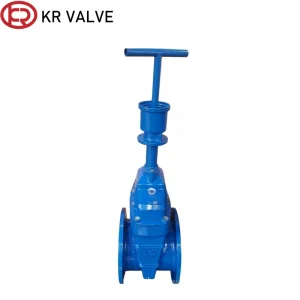
Custom Handle Engineering: Extended stem T-Key handles and heavy-duty square cap extensions. Manufactured from hot-dip galvanized ductile iron with telescoping extension rods, allowing operators to open or shut valves safely from ground level.
Scenario B: Offshore Marine & Desalination Facilities
Operational Challenge: Extreme salt fog, high ultraviolet exposure, and aggressive brackish water cause rapid exfoliation of standard paint coatings.
Custom Handle Engineering: Electropolished Investment Cast SS316 (CF8M) handles with integrated fluoropolymer anti-galling washers and heavy-duty marine grade stainless notch plates.
Scenario C: High-Vibration Power Plants & Compressor Lines
Operational Challenge: Continuous micro-vibration from heavy compressors causes traditional friction-clamp handles to back off or shift position.
Custom Handle Engineering: Positive Ratchet-Locking Handles featuring dual spring-loaded locking pawls that mechanical lock into hardened teeth, preventing accidental movement.
Scenario D: Food, Dairy & Hygienic Chemical Processing
Operational Challenge: Strict FDA hygiene requirements mandate smooth, cleanable surfaces free of crevice corrosion or dirt-trapping pockets.
Custom Handle Engineering: 316L Stainless Steel hygienic pull-handle multi-position levers polished to a surface roughness of Ra < 0.8 µm, fully compatible with Clean-in-Place (CIP) regimes.
Step-by-Step OEM Customization Workflow for Buyers
A streamlined, risk-mitigated technical procurement procedure for engineering buyers, OEM manufacturers, and global valve distributors.
Step 1: Stem & Flange Audit
Verify stem head geometry (Square, Double-D, Keyed), stem diameter ($d$), top flange bolt pattern (ISO 5211 F03 to F14), and maximum expected valve torque ($N\cdot m$).
Step 2: Drawing & Prototype Validation
Our engineering team generates 3D STEP/CAD models within 24 hours. Rapid 3D resin or metal prototypes are produced to verify ergonomic clearance and latching mechanisms.
Step 3: Mass Production & QA
Tooling approval triggers automated casting, CNC machining, epoxy coating, assembly of stainless latches, 100% torque sample checks, and export-grade pallet packaging.
Frequently Asked Engineering Questions
Direct technical answers to common queries raised by pipeline design engineers and OEM buyers.
Explore Related Industrial Valves & Actuators
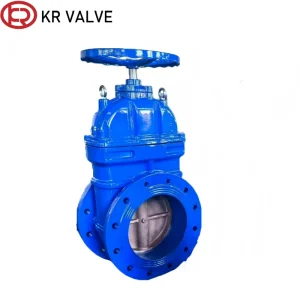
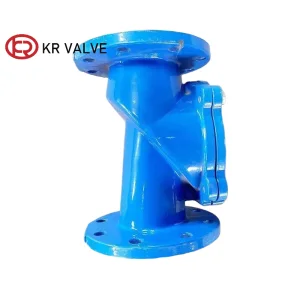
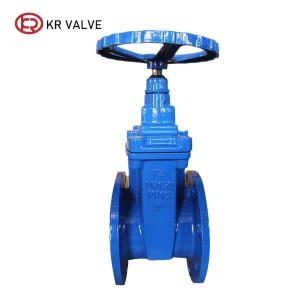
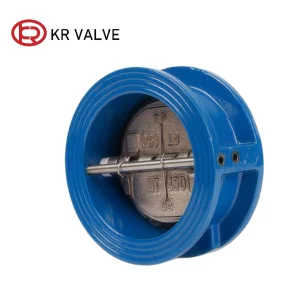
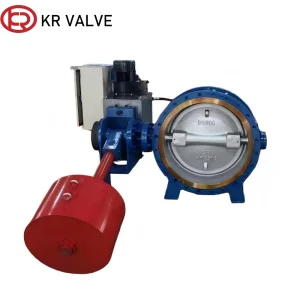
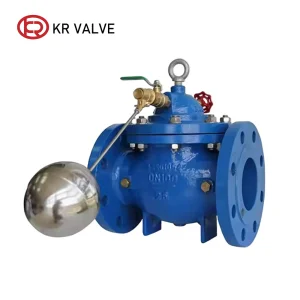
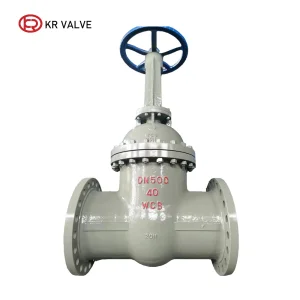
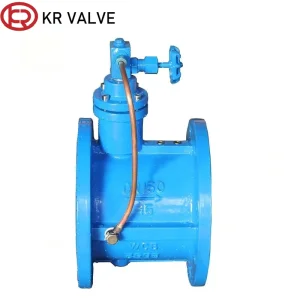
Browse our full spectrum of resilient seated gate valves, dual-plate check valves, control valves, and strainers manufactured for worldwide delivery.