Industrial Valves & Valve Control Components
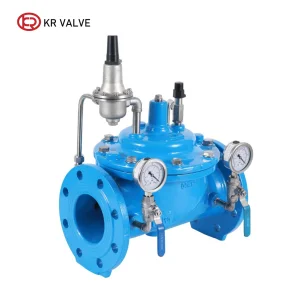
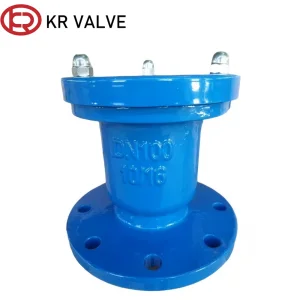
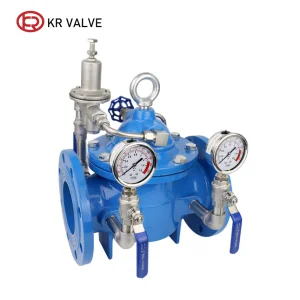
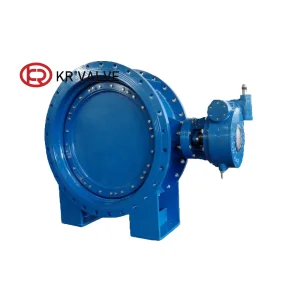
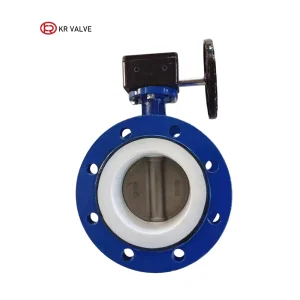
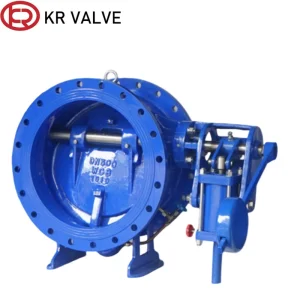
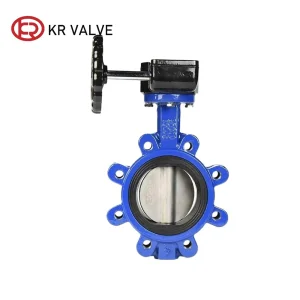
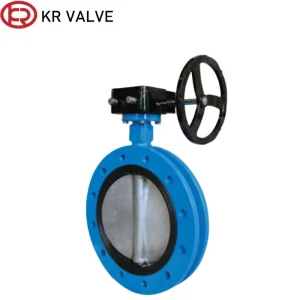
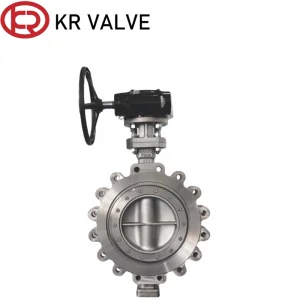
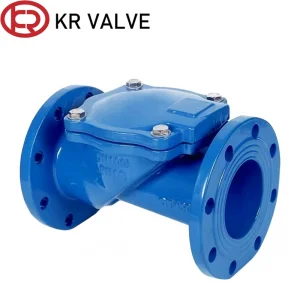
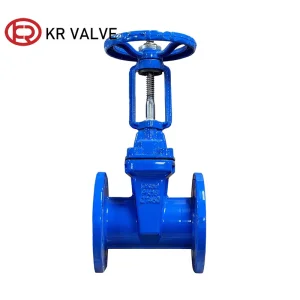
Explore our flagship lineup of industrial flow isolation, non-return, and hydraulic control valve series engineered to international standards.
State of Global Fluid Power: The Strategic Imperative for Custom Directional Valves
In modern high-duty industrial equipment and mobile hydraulics, custom hydraulic directional control valves represent the primary intelligence unit governing dynamic fluid routing, actuator actuation velocity, and system pressure isolation.
As heavy machinery OEMs transition toward higher power densities, electro-hydraulic automation, and zero-emissions efficiency targets, off-the-shelf standardized directional valves frequently fall short. Custom hydraulic directional control valve suppliers and manufacturers are now tasked with engineering tailored spool dynamics, minimal metering pressure losses, integrated secondary safety relief valves, and direct CANbus proportional interfaces within compact manifold envelopes.
Globally, the market for hydraulic valves is experiencing a structural pivot. Energy losses attributable to fluid throttling in classical open-center systems can account for up to 35% of total engine power consumption. By implementing custom load-sensing (LS) directional control valves combined with post-pressure compensation (LUDV technology), flow delivery is tailored dynamically to load requirements regardless of system operating pressure—significantly dampening fuel consumption and thermal degradation of hydraulic fluids.
Engineering Customization Matrix & Spool Hydrodynamics
Selecting the precise architectural framework—whether monoblock, modular sectional, or subplate-mounted CETOP/ISO interfaces—determines performance longevity under harsh operational regimes.
Monoblock vs. Modular Sectional Configurations
Monoblock directional control valves feature a single cast-iron housing (EN-GJS-400-15 or GG25), eliminating inter-section tie-rod seal leak risks and maximizing structural rigidity against 350+ bar pressure spikes. Modular sectional valves, conversely, allow machine designers to mix up to 10 distinct work sections—integrating secondary relief valves, port anti-cavitation checks, and electro-hydraulic proportional solenoids per specific circuit.
Spool Geometry & Notch Micro-Metering
Precision-machined from 20CrMnTi case-hardened alloy steel (HRC 58-62), spools utilize computer-modeled triangular or U-notch throttling lands. Custom spool geometry enables linear, progressive, or parabolic flow curves, eliminating abrupt pressure shocks during actuator starting and stopping, and ensuring feather-light control in delicate lifting applications.
Actuation Technology: Manual to CANbus Solenoids
Custom valve assemblies offer multi-mode actuation options: direct mechanical hand levers, pneumatic actuation for hazardous plants, hydraulic pilot control (6–30 bar), and PWM proportional solenoids with integrated LVDT spool position feedback. Advanced digital solenoids support J1939 CANbus protocols for direct integration into machine PLC architectures.
| Valve Type Family | Max Pressure (Bar) | Nominal Flow (L/min) | Primary Actuation Modes | Customization Options | Target Machine Application |
|---|---|---|---|---|---|
| Custom Monoblock (1-6 Spools) | 250 – 315 Bar | 45 – 160 L/min | Manual Lever, Cable, Direct Solenoid | Main Relief, Port Checks, Detent Kits | Agricultural Tractors, Mini-Excavators, Log Splitters |
| Modular Sectional (1-10 Spools) | 315 – 350 Bar | 70 – 250 L/min | Proportional Hydraulic Pilot, PWM Solenoids | Anti-Cavitation Valves, Secondary Overload Relief | Mobile Cranes, Rigging Equipment, Aerial Platforms |
| Load Sensing / LUDV Proportional | 350 – 420 Bar | 140 – 450 L/min | Electro-Hydraulic Proportional, CANbus J1939 | Post-Pressure Compensators, Individual Work Port Limits | Heavy Excavators, Drilling Rigs, Forestry Machinery |
| Industrial Subplate (ISO 4401 / CETOP) | 315 – 350 Bar | 60 – 650 L/min | AC/DC Solenoid, Wet Pin Armature, Explosion-Proof | Zero-Overlap Spools, Soft-Shift Orifices, Viton/FKM Seals | Plastic Injection Molding, Metal Stamping Press, Mills |
Regional Field Applications & Heavy-Duty Solutions
Custom hydraulic directional control valves are optimized to withstand extreme environmental parameters across global operational theaters.
North American Mining & Construction Heavy Duty
Engineered for high duty-cycle operations in severe cold (-40°C) and dust environments. Custom valve bodies feature ductile iron housing (GGG40), high-strength nickel-plated spools, and heavy-duty weather-sealed solenoids compliant with IP69K ingress ratings.
European Green Mobility & Eco-Hydraulic Systems
Designed around stringent EU Stage V emission mandates, our custom proportional directional control valves incorporate ultra-low internal leakage spool fits (<5 cm³/min at 200 bar), reducing fluid energy loss and enabling seamless pairing with electric power units (e-hydraulics).
Offshore Marine & Subsea Infrastructure
Featuring chemical-passivated stainless steel 316L housings or 500-hour salt-spray resistant Zinc-Nickel (Zn-Ni) plating. Solenoids are certified under ATEX/IECEx explosion-proof standards for safe operation in explosive gas zones on offshore oil platforms.
Next-Generation Roadmap: Smart Hydraulics & Additive Manufacturing
The trajectory of custom hydraulic directional valve manufacturing is rapidly merging fluid mechanics with digital IoT intelligence and additive manufacturing breakthrough technologies.
Integrated Onboard Electronics (OBE) & IO-Link
Next-gen directional control valves embed microprocessors directly inside the solenoid housing. Featuring IO-Link communication, valves transmit real-time telemetry—including spool position deviation, fluid temperature, coil resistance, and operating hour counts—enabling predictive maintenance before physical failure occurs.
3D Printed Additive Manifold Optimization
By utilizing Selective Laser Melting (SLM) 3D printing for valve manifolds, internal flow channels are optimized with smooth, curved internal radii instead of right-angled cross-drilled holes. This eliminates dead-water zones, reduces pressure drops ($\Delta P$) by up to 30%, and reduces manifold weight by 45%.
Bio-Degradable Fluid Compatible Sealing Systems
To support environmental sustainability, custom directional control valves are engineered with proprietary Fluorocarbon (FKM) and Hydrogenated Nitrile (HNBR) compound seal matrices, guaranteed chemically stable when operating under synthetic ester and bio-based hydraulic oils (HEES/HETG).
Strict Compliance, Quality Assurance & Global Technical Support
Every custom directional valve manufactured under our quality system undergoes 100% full-load hydro-functional verification prior to shipment.
International Standard Alignment
Custom designs fully satisfy ISO 4401 (Subplate mounting surface dimensions), CETOP RP 123H, NFPA T3.5.1, DIN 24340, CE Machinery Directive, and RoHS/REACH compliance. Port threads are precision-machined in SAE, BSPP, or Metric configurations based on buyer destination.
Automated Hydro-Testing Bench Check
Valves undergo automated testing covering: internal spool cross-leakage (measured in cc/min at max pressure), cracking pressure of relief valves, electrical solenoid power consumption, hysteresis loop mapping, and 1.5x proof pressure testing for structural casing integrity.
Frequently Asked Questions: Custom Directional Control Valves
Expert responses to critical engineering, selection, and purchasing questions asked by OEM machine builders and fluid power distributors.
How do I select between a monoblock and a modular sectional custom hydraulic directional control valve?
Selection depends on pressure class, circuit flexibility, and serviceability requirements. Monoblock directional valves feature a single cast body housing (1 to 6 spools). They are more compact, economical, and immune to inter-section external tie-rod leakage, making them ideal for standard machinery like agricultural tractors, mini-excavators, and mobile log splitters (operating up to 250-315 bar). Modular sectional valves allow machine designers to combine up to 10 independent work sections with different spool functions, port relief valves, anti-cavitation checks, and electro-hydraulic actuators within one valve stack. Sectional valves are preferred for complex machinery like mobile cranes, aerial platforms, and heavy forestry equipment operating up to 350 bar.
What is the functional difference between open-center, closed-center, and load-sensing (LS) directional control valves?
In an Open-Center valve, pump flow passes directly back to the oil reservoir when all spools are in neutral position, minimizing pump load when idle (typically paired with fixed-displacement gear pumps). In a Closed-Center valve, the neutral spool blocks pump flow at the valve inlet, maintaining continuous pressure in the line (paired with variable-displacement pressure-compensated pumps). A Load-Sensing (LS) valve routes a pilot signal representing the highest actuator workload back to a variable-displacement pump control margin. The pump then adjusts its output flow and pressure to match the exact demand of the active load plus a fixed pressure differential (delta P), dramatically reducing heat generation and fluid energy loss by up to 30%.
How does spool radial clearance affect internal leakage and temperature build-up in high-pressure systems?
Spool-to-bore radial clearance is critical to valve volumetric efficiency. A clearance that is too loose (> 6 microns) increases internal fluid slippage from high-pressure work ports to tank return lines exponentially (governed by Poiseuille's law where flow leakage scales cubic with radial clearance). This causes actuator drift under load and elevates oil temperatures due to throttling heat. Conversely, clearance that is too tight (< 1.5 microns) risks spool binding due to thermal expansion differential or minor particulate contamination. Custom manufacturers utilize high-precision CNC hone-matching processes to maintain consistent 2.5 to 3.5 micron radial gaps, balancing ultra-low internal leakage (< 5 cm³/min at 200 bar) with thermal stability.
What customization parameters can be specified when ordering solenoid-operated directional valves?
Custom solenoid specification options include:
1) Operating Voltages: 12V DC, 24V DC, 110V AC, or 230V AC coils;
2) Connector Standards: Deutsch DT04-2P, ISO 4400 (DIN 43650 Form A), or AMP Junior-Timer;
3) Protection Class: IP65, IP67, or IP69K high-pressure washdown ingress rating;
4) Control Type: On-Off bang-bang solenoids vs. PWM Proportional Solenoids;
5) Safety Certifications: ATEX/IECEx explosion-proof coils for hazardous mining and oil/gas environments;
6) Manual Overrides: Push-button, twist-lock, or lever-actuated manual override pins for emergency commissioning.
How do integrated anti-cavitation and secondary port relief valves protect hydraulic cylinders and motors?
When heavy hydraulic machinery comes to a sudden stop or encounters overrunning external loads (such as a lowering excavator boom or a rotating winch), inertia can pull fluid out of an actuator faster than the main pump supplies it, creating a vacuum (cavitation). Integrated anti-cavitation valves open automatically to draw fluid directly from the tank line into the work port, preventing void formation and mechanical implosion damage. Integrated secondary port relief valves vent localized high-pressure spikes directly to tank if an external shock force impacts a specific cylinder while the main directional spool remains in neutral, preventing cylinder barrel bursting or hose rupture.
What quality certifications and documentation should I request from custom valve suppliers for export projects?
For international machine procurement, buyers should verify:
1) ISO 9001:2015 Quality Management System certification;
2) EN 10204 3.1 Material Test Certificates for valve body castings and forged spools;
3) Full-load Hydro-Factory Inspection Test Reports (showing pressure drop curves, cracking pressures, and cross-leakage rates);
4) CE Declaration of Conformity under the Machinery Directive 2006/42/EC and Pressure Equipment Directive (PED 2014/68/EU);
5) RoHS/REACH hazardous substance environmental compliance statements.
Explore Additional Industrial Valves & System Strainers
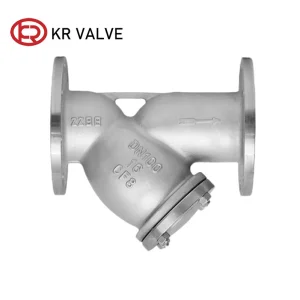
Browse our extended catalog of pressure control valves, non-return check valves, air release valves, and Y-type piping strainers.