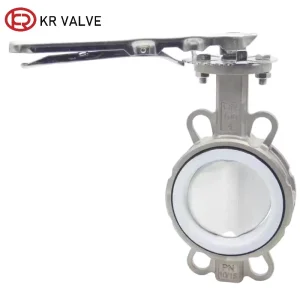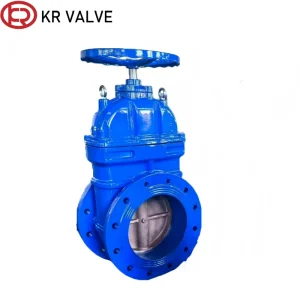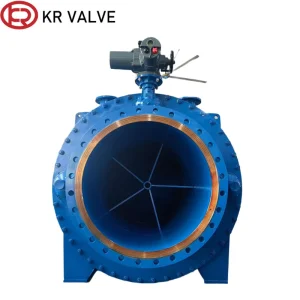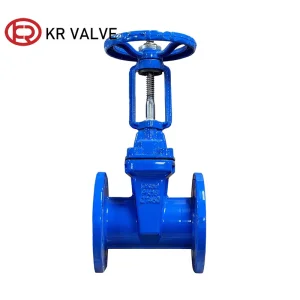
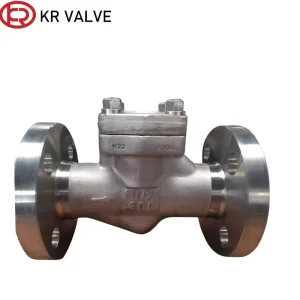
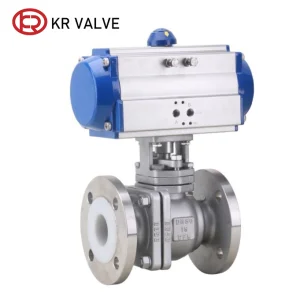
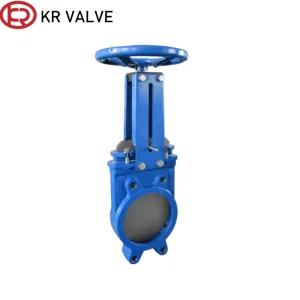
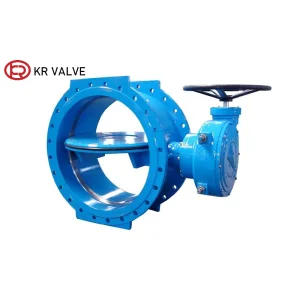
Featured OEM Check Valve & Flow Control Portfolio
Explore our high-performance non-return valves, knife gate systems, and specialized industrial valve configurations built for critical pipeline projects globally.
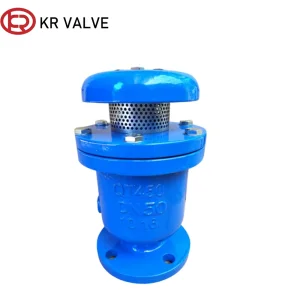
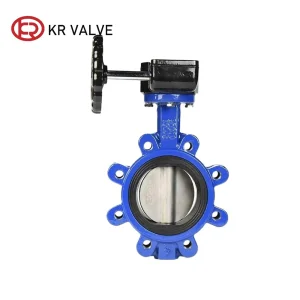
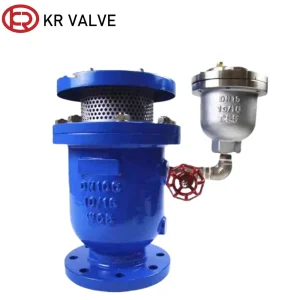
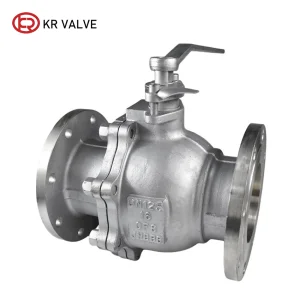
500+
Standard & OEM Valve Models
100%
Hydrostatic Shell & Seat Inspected
50+
Global Export Destination Countries
20+
Years Engineering Excellence
Industrial Hydrodynamic Physics of OEM Ball Check Valves
A comprehensive engineering analysis of self-cleaning non-return mechanisms, cavitation suppression, and high-viscosity media handling.
Hydrodynamic Self-Cleaning Geometry
Unlike conventional swing check valves prone to hinge pin binding and solids accumulation, OEM ball check valves utilize an unguided or guided elastomer-coated spherical core. The medium flow lifts the ball completely out of the flow path into a side cavity, creating an unobstructed full-bore passage that prevents clogging in wastewater, slurry, and viscous fluids.
- Eliminates solids settlement in dead zones
- Minimizes head loss ($\Delta P$) across high-velocity networks
- Self-rotating ball design ensures uniform seat wear
Non-Slam Water Hammer Suppression
Water hammer poses a severe destructive threat to municipal and industrial pumping stations. The low inertia of the hollow or lightweight vulcanized core in ball check valves allows rapid gravity-assisted or backpressure-driven seating prior to flow reversal, stopping surge waves before hydraulic shock occurs.
- Near-zero reverse flow velocity at closure
- Protects downstream booster pumps and instrumentation
- Acoustic vibration dampening via resilient elastomeric outer skin
Advanced Elastomeric Vulcanization
The core of a high-performance OEM ball check valve relies on vulcanization chemistry. Our facilities bond high-density NBR, EPDM, or Viton (FKM) to metallic or phenolic internal cores under high-pressure thermal molding, preventing debonding under high pressure drops and corrosive chemical exposure.
- Resistance to oil, grease, hydrocarbons, and aggressive acids
- Maintains soft-sealing elasticity across -20°C to +180°C
- Bubble-tight zero-leakage shut-off (Class VI compliance)
Information Gain Technical Note for Pipeline Procurement Engineers
When selecting OEM ball check valves for vertical vs. horizontal installations, ensure the valve body includes an angled guiding track. Vertical upward flow applications benefit from weighted metallic-core balls to overcome fluid drag during closing, whereas horizontal lines require smooth, low-density hollow cores to maximize lift efficiency at low flow velocities (v < 0.7 m/s).
Technical Roadmap: Next-Generation Ball Check Engineering
How cutting-edge materials science, Computational Fluid Dynamics (CFD), and Industry 4.0 automation are transforming check valve longevity and performance.
CFD Topological Optimization
Utilizing 3D fluid-structure interaction (FSI) simulations to redesign interior valve body contours, eliminating turbulent vortex formation and reducing flow drag coefficient ($C_d$) by up to 18%.
Smart IoT Acoustic Monitoring
Embedding high-frequency acoustic piezo sensors into OEM valve bonnets to detect real-time seat erosion, ball chatter, and internal bypass leakage before catastrophic line failure.
Super-Duplex & Alloy Seats
Integrating laser-cladded Stellite 6 and Duplex Stainless Steel (2205/2507) body seats to endure abrasive slurry mining and high-salinity reverse osmosis desalination duty.
PFAS-Free Green Elastomers
Pioneering eco-compliant, non-toxic elastomeric formulations that meet stringent international drinking water pureness directives (NSF/ANSI 61 and WRAS certification standards).
Macro-Industry Solutions & Pipeline Engineering
Tailored OEM valve configurations engineered to meet rigid operating parameters across diverse international infrastructure sectors.
| Industry Sector | Primary Operating Challenge | Recommended OEM Valve Specs | Material & Sealing Matrix | Standard Compliance |
|---|---|---|---|---|
| Municipal Wastewater | Stringy solids, grit abrasion, high backpressure | Full-Bore Flanged Ball Check Valve | Ductile Iron GGG50 + EPDM Core | EN 1092-2, BS 5153 |
| Mining & Mineral Slurry | Severe particulate wear, acidic tailing fluid | Heavy-Duty Lined Slurry Ball Check | WCB Cast Steel + High-Tear NBR | ASME B16.34, API 594 |
| Chemical & Refining | Corrosive media, thermal cycling (-10°C to 160°C) | PTFE/PFA Lined Ball & Butterfly Valves | SS316 / CF8M + PTFE/FKM | ISO 15761, CE-PED |
| Marine & Desalination | Pitting corrosion, high chloride pressure drops | Duplex Stainless Lift & Ball Check | Duplex 2205 / SS316L + Viton | AWWA C508, DIN F5 |
| High-Rise Water HVAC | Water hammer noise, strict zero-leakage needs | Silent Spring-Loaded Dual Disc / Ball Check | Ductile Iron GGG40 + Brass/EPDM | DIN 3202-F6, PN16/25 |
China Industry 4.0: Supply Chain Resilience & OEM Efficiency
Combining world-class foundry automation, full-spectrum material traceability, and agile OEM custom engineering for global enterprise buyers.
Fully Automated Resin-Sand Foundry
Our Tianjin smart manufacturing base incorporates automated electric arc melting furnaces and continuous sand-reclamation lines. Castings exhibit high dimensional accuracy, uniform wall thickness, and superior surface finish, eliminating structural blowholes and micro-porosity.
100% Spectrometric & NDT Material Audit
Every single batch of molten ductile iron, carbon steel, and stainless steel undergoes real-time Optical Emission Spectrometry (OES) chemical analysis. Finished valve bodies undergo ultrasonic (UT) and magnetic particle testing (MT) to guarantee ZERO internal defects under high pressure.
Flexible OEM/ODM Private Labeling
We provide full-spectrum OEM manufacturing, including custom face-to-face dimensions, specialized paint coatings (such as 300-micron fusion-bonded epoxy), custom laser-etched nameplates, bespoke flange drilling patterns, and private-label wooden box packaging for international distributors.
Global Enterprise Procurement & Quality Compliance
Ensuring absolute legal, safety, and mechanical compliance with internationally recognized pipeline regulatory frameworks.
ISO 9001:2015 Certified
Rigid quality control workflows spanning raw material incoming inspection (IQC), in-process machining checks (IPQC), and final hydrostatic testing (FQC).
CE-PED 2014/68/EU
Full compliance with the European Pressure Equipment Directive, certifying safety standards for high-pressure fluid installations across the EU region.
API 594 & AWWA C508
Engineered design verification matching American Petroleum Institute and American Water Works Association requirements for dimensioning and valve wall thickness.
24/7 Global Field Support
Dedicated multilingual application engineers available around the clock to provide technical submittals, CAD/BIM model downloads, and installation guidance.
OEM Ball Check Valves: Technical & Sourcing FAQ
In-depth answers to critical technical questions asked by EPC contractors, procurement managers, and pipeline project engineers.
Q1: What is the main structural advantage of a ball check valve over a swing check valve in wastewater applications?
Swing check valves feature internal hinge pins, discs, and arm mechanisms exposed directly to the fluid stream. In sewage or slurry applications, stringy debris and solids easily wrap around the hinge pin, leading to severe valve jamming and open-state failure. Ball check valves feature a simple unguided elastomeric ball that rolls completely out of the flow path into a side recess during operation, leaving an unobstructed 100% full-bore passage that allows solids to pass freely without clogging.
Q2: How do I select between an NBR, EPDM, and Viton (FKM) vulcanized ball core?
Elastomer selection depends entirely on media chemistry and temperature. EPDM is optimal for municipal water, HVAC, and mild alkaline solutions (-10°C to 120°C). NBR (Nitrile) excels in hydrocarbon, oil, gas, and wastewater environments containing mineral oils (-20°C to 80°C). Viton (FKM) is specified for aggressive chemicals, acids, high-temperature petroleum, and industrial solvents (-10°C to 180°C).
Q3: Can ball check valves be installed vertically in high-pressure pumping pipelines?
Yes. Ball check valves operate effectively in vertical pipelines with upward fluid flow. In vertical orientation, gravity assists the ball to seat rapidly as soon as fluid velocity decreases, preventing reverse backflow and mitigating water hammer shock. Ensure that the fluid flow direction moves vertically upward, as downward vertical flow will prevent the ball from sealing correctly.
Q4: What hydrostatic testing standards are performed on OEM ball check valves before export?
All OEM ball check valves manufactured in our facilities undergo 100% factory pressure testing in accordance with ISO 5208, EN 12266-1, or API 598. Shell tests are conducted at 1.5 times the cold working pressure (CWP) to verify structural casting integrity, while seat sealing tests are performed at 1.1 times CWP to confirm zero-bubble shut-off capability.
Q5: What customized OEM options are available for overseas private-label buyers?
We provide full OEM custom manufacturing services including: customized body casting logos and part numbers, custom color RAL fusion-bonded epoxy powder coating, specialized flange drilling (ANSI B16.5 Class 150/300, EN 1092-2 PN10/PN16/PN25, JIS 10K/16K), customized core weight densities for specific cracking pressures, and localized project certification paperwork.
Q6: How does your factory prevent core ball deformation under high continuous pressure?
Our engineering team utilizes a reinforced metallic (ductile iron or forged steel) or high-strength phenolic internal solid core, over-molded with a precision-controlled elastomeric outer layer via high-pressure vulcanization. This composite structure guarantees that the ball maintains its perfect spherical geometry under high pressure drops while offering soft elastomeric sealing against the seat.
Complete Pipeline Valve Accessories & Specialized Solutions
Browse our expanded catalogue of butterfly valves, gate valves, air release valves, and specialized flanged piping components.