Featured Industrial Flow Control Valves
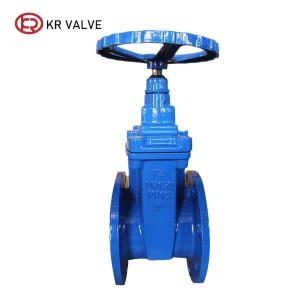
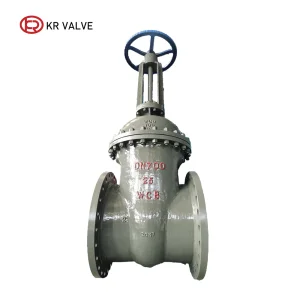
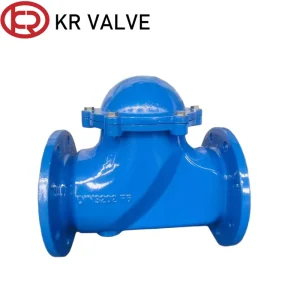
1. Executive Engineering Overview: Next-Generation Brass Check Valve Technology
Understanding the critical role of brass non-return valves (check valves) in modern industrial hydraulic systems, municipal water infrastructure, and HVAC networks.
In high-performance fluid transportation networks, preventing backflow and mitigating hydraulic surge forces—commonly known as water hammer—is a fundamental engineering requirement. Brass non-return valves (NRVs), characterized by their exceptional mechanical strength, superior corrosion resistance, and high thermal endurance, serve as primary safety mechanisms in fluid control circuits worldwide.
As a leading OEM brass non return valve supplier and manufacturing factory, our engineering paradigm revolves around absolute metallurgical precision, optimized hydrodynamic geometry, and zero-defect quality control. Unlike basic off-the-shelf valves, industrial-grade OEM brass check valves require precise alloy formulation, custom spring rating calibration, and advanced surface finishing to withstand severe cavitation, rapid pressure transients, and corrosive media environments.
Hydrodynamic Efficiency
Designed with computer-modeled flow channels (CFD optimized) to minimize boundary friction, reduce internal pressure drops (Delta-P), and eliminate flow turbulence during full-open operating states.
Metallurgical Integrity
Utilizing high-density hot-forged brass alloys such as CW617N, CW602N (DZR), and lead-free C46500 to protect against dezincification, stress corrosion cracking, and structural fatigue under pulse pressure.
Zero-Downtime Sealing
Features precision-lathed elastomer seals (EPDM, NBR, Viton/FKM) combined with stainless steel SS304/SS316 spring mechanisms to deliver instant, bubble-tight shutoff even under micro-differential pressures.
2. Metallurgical Formulations & Standard Technical Matrix
Choosing the correct brass alloy grade is pivotal to extending operational life in variable fluid chemistry environments.
Non-return valves installed in commercial and industrial environments are subject to diverse chemical stresses. For instance, aggressive municipal water supplies with high free chlorine levels can trigger dezincification in standard yellow brass (leaching out zinc and leaving a weak, porous copper matrix). As an expert OEM factory, we specify exact brass formulations mapped directly to global compliance benchmarks.
| Alloy Grade / Standard | Copper (Cu) % | Zinc (Zn) % | Lead (Pb) % | Key Engineering Characteristics | Primary Target Applications |
|---|---|---|---|---|---|
| CW617N (EN 12165) | 57.0 - 59.0% | Remainder | 1.6 - 2.5% | Standard European hot-forging brass; high mechanical strength, good machinability. | HVAC systems, general plumbing, compressed air. |
| CW602N / DZR (EN 12164) | 61.0 - 63.0% | Remainder | 1.7 - 2.8% | Dezincification Resistant (As added 0.02-0.15%); handles aggressive/acidic water. | Potable water supply, warm coastal climate piping. |
| C37700 (ASTM B124) | 59.0 - 62.0% | Remainder | 1.5 - 2.5% | Forging brass with excellent impact resistance and tight sealing tolerance. | North American commercial HVAC & industrial hydraulics. |
| C46500 Lead-Free Brass | 59.0 - 64.0% | Remainder | ≤ 0.25% | Eco-friendly alloy compliant with NSF/ANSI 372; high corrosion resistance. | Direct drinking water, food & beverage liquid lines. |
3. Global Industry Trends & Macro Procurement Drivers
Key industrial transformations shaping the global demand for custom brass non-return valves through 2030.
Smart Building Management (BMS) Integration
Modern commercial facilities require valve assemblies capable of integrating with IoT monitoring systems. OEM manufacturers are designing low-torque, ultra-sensitive check valves with embedded smart pressure differential sensors to provide real-time leakage alerts to central BMS dashboards.
Transition to Low-Lead & Lead-Free Mandates
Global environmental regulations (such as US Safe Drinking Water Act, EU Drinking Water Directive 2020/2184) strictly enforce ≤0.25% lead limits. OEM factories must upgrade continuous casting and hot forging setups to handle lead-free silicon/bismuth brass alloys smoothly.
Energy Efficiency & Low Head-Loss Requirements
Rising energy costs make hydraulic efficiency paramount. Pumping stations consume significant electrical power pushing liquid through restrictive components. Next-gen non-return valves prioritize streamlined valve discs to achieve maximum flow coefficient (Cv/Kv) values.
4. Global B2B Enterprise Procurement & Supply Chain Optimization
Strategic advantages of establishing direct partnership with a high-capacity OEM/ODM brass valve factory.
For international distributors, EPC contractors, and original equipment manufacturers (OEMs), procuring industrial valves is not simply a price-per-unit transaction—it is an exercise in total cost of ownership (TCO) management, risk mitigation, and supply chain continuity. Working directly with a dedicated manufacturing plant yields distinct operational leverage:
Customized Engineering & Rapid Prototyping
From initial 3D CAD modeling and Finite Element Analysis (FEA) to rapid 3D printing of sand-casting patterns or direct CNC sample machining, our OEM team accelerates your product development lifecycle from months to weeks.
- Custom cracking pressure spring calibration (0.02 bar to 0.5 bar)
- Private branding (laser etching, custom cast logos)
- Bespoke end connections: NPT, BSPP, BSPT, Press-fit, Compression
Rigorous Automated Quality Control (QA)
Quality guarantees require automated, repeatable validation protocols. Our manufacturing facilities enforce multi-stage inspection frameworks aligned with ISO 9001:2015 quality management standards.
- Spectrometric raw material chemical analysis prior to forging
- 100% pneumatic seat bubble testing at 6 bar & 16 bar hydro-testing
- CMM dimensional verification for micrometric thread tolerances
Supply Chain Resilience & Freight Logistics
Global procurement teams need predictable delivery schedules. By maintaining raw brass rod buffer inventories and multi-axis automated forging presses, our factories shield clients from global material volatility.
- Scalable capacity exceeding 1.5 million units monthly
- Consolidated multi-product shipping options
- Full export compliance documentation (CO, Form E, REACH, RoHS)
5. Macro Industry Solutions & Structural Application Architectures
Deconstruct how distinct brass non-return valve configurations solve critical engineering challenges across major sectors.
HVAC & District Hydronic Heating
Problem: Thermal expansion backfeeding and gravity circulation when circulation pumps are idle.
Solution: In-line spring-loaded vertical brass check valves equipped with high-temperature EPDM/Viton seals rated up to 150°C, ensuring strict directional flow without acoustic vibration.
Municipal & Commercial Plumbing
Problem: Cross-contamination of potable supply lines caused by siphonage backflow.
Solution: Dual-check brass backflow preventer units certified under EN 13959, featuring independent internal check modules and low-cracking pressure springs for continuous safety.
Industrial Pumping Systems & Solar
Problem: Loss of pump prime and destructive water hammer shockwaves damaging impellers during abrupt shutdown.
Solution: Heavy-duty foot valves with integral brass mesh strainers and weighted brass guided disc plates to maintain pump prime and cushion fluid deceleration.
6. Technology Roadmap: 2025–2035 Innovation Horizons
Pioneering advancements in smart metallurgy, low-friction coatings, and automated valve production.
1. Nanocomposite Surface Treatments
Application of PVD (Physical Vapor Deposition) nano-coatings on internal valve seats to reduce scale buildup, calcification, and frictional drag in hard-water utility environments.
2. Additive Manufacturing & Hybrid Forging
Integrating 3D metal printing for rapid prototype tooling with high-speed automated hot forging presses, slashing custom OEM sample development timelines by over 70%.
3. Low-Noise Hydrodynamic Discs
Computational fluid dynamics (CFD) redesigned check discs using high-performance engineering polymers (PEEK, PPS) to achieve whisper-quiet closing action in luxury residential high-rises.
7. Comprehensive Technical FAQ: Expert Q&A
In-depth answers to critical technical and procurement questions asked by valve engineers and supply chain directors.
- EPDM: Excellent for potable hot/cold water, steam, and glycol mixtures (-20°C to +120°C). Not suitable for oils or hydrocarbons.
- NBR (Nitrile): Ideal for petroleum, oils, compressed air, and general plumbing (-15°C to +80°C). Excellent wear resistance.
- Viton / FKM: Required for aggressive chemicals, fuel lines, high-temperature industrial fluids (-10°C to +180°C). Superior thermal and chemical endurance.