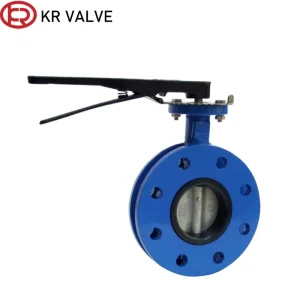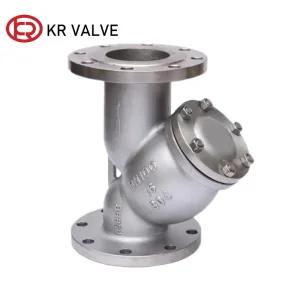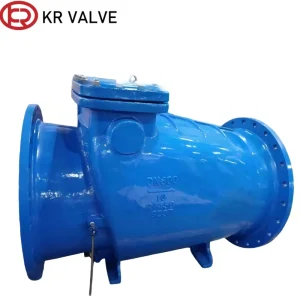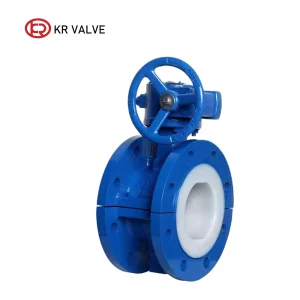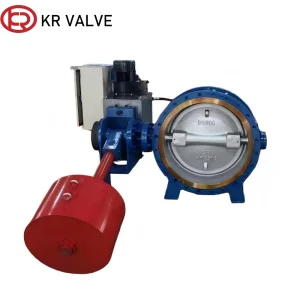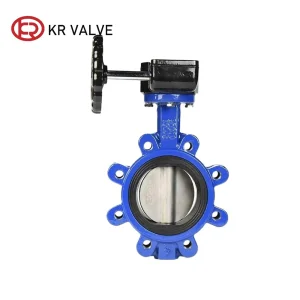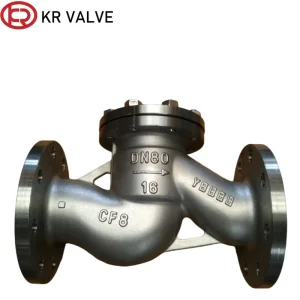
Featured Industrial Valve Solutions
Explore our OEM factory-certified check, gate, butterfly, and control valve assemblies engineered for international municipal and industrial pipeline infrastructure.
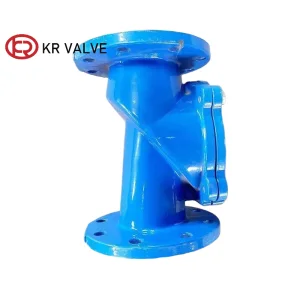
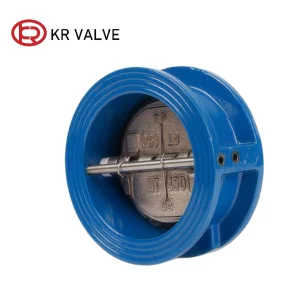
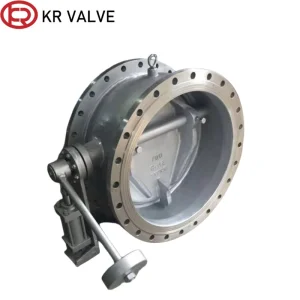
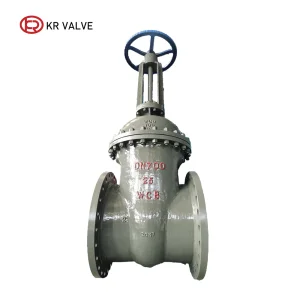
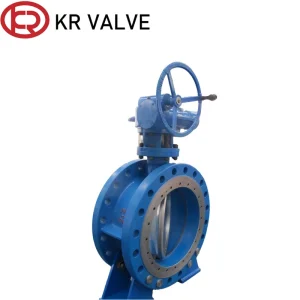
The Commercial & Industrial Landscape of Brass Swing Check Valves
An exhaustive technical evaluation of non-return flow control valves in modern fluid engineering ecosystems.
1. Global Supply Chain Dynamics and OEM Manufacturing Synergies
In modern industrial hydraulic systems, the brass swing check valve serves as an essential automatically actuated safety device designed to prevent reverse flow (backflow), protect rotating equipment such as positive displacement pumps and compressors, and maintain system pressure stability. Global procurement data reveals a surging demand for precision-forged OEM brass swing check valves across residential hydronic heating, commercial HVAC, municipal potable water distribution, maritime bilge management, and light chemical fluid transport.
Tier-1 OEM brass swing check valve factories have shifted from legacy gravity casting toward high-tonnage automated hot die forging. This process eliminates structural microporosities, ensures tight grain alignment, and dramatically reduces raw material waste. As global regulatory bodies tighten lead-content limits in drinking water systems (such as the United States NSF/ANSI 61 and NSF/ANSI 372 standards, alongside EU Drinking Water Directive 2020/2184), specialized factories in manufacturing hubs like Tianjin, China have established dedicated production lines for Lead-Free DZR (Dezincification Resistant) brass alloys.
2. Macro-Economic Drivers in Industrial Piping Infrastructure
The acceleration of global urbanization, paired with retrofitting aging municipal water grids in North America and Western Europe, has elevated expectations for valve operational lifespans. Engineers no longer evaluate purchasing decisions solely on initial unit cost; total cost of ownership (TCO), cavitation resistance, mean time between failures (MTBF), and alloy chemical stability take precedence. High-volume OEM factories that provide full material traceability—including EN 10204 3.1 chemical inspection certificates—provide EPC contractors and global brand owners with a distinct competitive advantage in international project bidding.
Brass Metallurgy & Manufacturing Architecture
Analyzing alloy compositions, forging physics, and anti-corrosion treatments employed by world-class OEM valve manufacturers.
DZR / CW602N Alloys
Dezincification resistant brass specially formulated with arsenic trace elements (0.02–0.08%) to prevent selective leaching of zinc in acidic or soft water environments, preventing structural embrittlement.
Hot Precision Forging
Forged at temperature ranges between 680°C and 750°C under 600–1200 ton friction presses. Ensures dense, pore-free molecular structure capable of withstanding hydrostatic burst pressures exceeding 60 bar.
Lead-Free Compliance
Advanced silicon-brass (e.g., C69300 / ECO BRASS) and bismuth-treated alloys containing <0.25% weighted average lead, exceeding international safety mandates for human consumption water lines.
Comprehensive Brass Alloy Comparison Matrix
Selecting the appropriate alloy formulation is critical for OEM purchasers seeking to balance performance against material cost. Below is a comparative technical matrix mapping common brass compositions utilized by leading factories:
| Alloy Standard | UNS / EN Designation | Cu (%) | Zn (%) | Pb (%) | Key Application Environment |
|---|---|---|---|---|---|
| EN 12165 CW617N | CuZn40Pb2 | 57.0 - 59.0 | Rem. | 1.6 - 2.5 | General HVAC, non-potable hot/cold water, industrial oil lines. |
| EN 12165 CW602N | CuZn36Pb2As (DZR) | 64.0 - 66.0 | Rem. | 1.7 - 2.8 | Aggressive soft water, municipal potable networks, geothermal loops. |
| ASTM B584 C83600 | Leaded Red Brass (85-5-5-5) | 84.0 - 86.0 | 4.0 - 6.0 | 4.0 - 6.0 | Heavy industrial castings, high-pressure steam utility services. |
| ASTM C69300 | ECO BRASS (Lead-Free) | 73.0 - 77.0 | Rem. | ≤ 0.09 | Strict NSF 61/372 potable drinking water systems across US/EU. |
| EN 12165 CW614N | CuZn39Pb3 | 57.0 - 59.0 | Rem. | 2.5 - 3.5 | Precision CNC turned valve bonnet components, internal hinge pins. |
Flow Mechanics, Sealing Interfaces & Anti-Slam Engineering
Understanding the internal physics of brass swing check valves to eliminate water hammer and operational noise.
1. The Kinematics of Swing Disc Movement
A brass swing check valve operates through fluid energy: downstream forward flow pressure overcomes gravity and the weight of the hinged brass disc, rotating it around a pivot pin into an open position. When forward flow velocity drops below the minimum cracking pressure (typically 0.01 bar to 0.05 bar), the combination of gravitational vector and reverse fluid motion forces the disc back onto the integral body seat.
In high-velocity pump discharge lines, rapid flow reversal can cause the disc to slam violently against the seat, producing pressure surges known as water hammer (transient pressure spikes). Professional OEM factories optimize disc thickness, mass distribution, and seat seating angles (inclined seat design between 15° and 30°) to shorten the travel distance of the disc, reducing closure response time and absorbing shock energy before acoustic hammer develops.
2. Soft Sealing vs. Metal-to-Metal Seat Configuration
Depending on the intended industrial medium and operating temperature profile, OEM factories equip swing check valves with specialized sealing interfaces:
- Integral Metal Seat (Brass-to-Brass): Machined directly into the forged brass body and disc face with sub-micron surface smoothness ($Ra < 0.8 \mu m$). Designed for high-temperature steam lines, petroleum derivative fluids, and applications up to 180°C where soft polymers would degrade.
- NBR (Nitrile Rubber) Soft Seat: Provides zero-leakage tight shutoff (Bubble-Tight ISO 5208 Rate A) for cold water, compressed air, and hydraulic oils up to 90°C. Excellent resilience against trace particulate abrasion.
- EPDM Soft Seat: Formulated for potable water, hot water heating systems, and glycol solutions up to 120°C. Exceptional resistance to ozone, oxidation, and chlorine treatment chemicals.
- PTFE / Viton (FKM) Seat: High-performance fluoropolymer seals engineered for mild chemical processing, higher thermal endurance (up to 200°C), and low-friction disc movement.
Full-Port Flow Area
Internal port diameter matches the nominal pipe size (NPS), maximizing flow coefficient ($C_v$) and drastically minimizing head loss across low-pressure domestic and commercial supply lines.
Precision Hinge Pin Mechanics
Stainless steel (AISI 304/316) pivot pins housed within double-O-ring bonnet caps prevent media leakage and pin binding over decades of continuous duty cycles.
Threaded Interface Standards
OEM CNC threading capabilities cover ISO 228-1 (G), ANSI/ASME B1.20.1 (NPT), and BS 21 (BSPT) threads to ensure seamless integration into international piping manifolds.
Localized Application Scenarios & Macro Solutions
Real-world engineering implementations across commercial, industrial, and municipal infrastructure networks.
HVAC & Hydronic Radiant Heating
Installed on circulating pump discharge headers in commercial boiler systems. Prevents gravity thermal siphoning and back-feeding when zone pumps are inactive, improving seasonal heating efficiency by up to 14%.
Submersible & Well Pump Systems
Mounted directly at deep-well pump discharge heads to retain prime column pressure. High-torque brass bonnets withstand pressure transients created by frequent motor starting cycles without body deformation.
Solar Thermal Loop Systems
Specially fitted with high-temperature Viton soft seats or precision brass-to-brass seats to handle anti-freeze glycol fluid mixtures subjected to stagnation temperatures reaching 160°C.
Marine Engine Cooling & Bilge Lines
Dezincification resistant (DZR) forged brass valves resist salt-spray corrosion and marine bio-fouling, providing reliable non-return operation in auxiliary boat engine raw-water cooling circuits.
Compressed Air & Pneumatics
Prevents air tank back-pressure from loading air compressor cylinder heads during unloader cycle phase. Heavy-duty stainless steel hinge springs ensure chatter-free operation under pulsating air delivery.
OEM Custom Equipment Integration
Tailored factory solutions including private-label brand stamping, customized thread lengths, specific opening cracking pressures, and specialized surface plating (e.g., Nickel or Chrome plating) for equipment builders.
The OEM/ODM Valve Manufacturing Roadmap
Step-by-step quality engineering implemented inside advanced brass valve production facilities.
5-Stage Precision Manufacturing & Verification Workflow
Achieving zero-defect production in high-volume OEM brass swing check valve manufacturing demands rigorous adherence to multi-stage quality gates. The diagram below details the auditing path executed for every production batch:
STAGE 01
Spectrometric Raw Material Verification
Every incoming brass rod batch undergoes Direct-Reading Optical Emission Spectrometry (OES) to confirm alloy elemental thresholds (Cu, Zn, Pb, As, Fe, Ni) before forging approval.
STAGE 02
Automated Hot Forging & Trimming
Precision induction heating heats billets to exact forging temperatures. Automatic robotic arms place billets into forging dies, followed by flash trimming to maintain uniform weight and wall thickness.
STAGE 03
Multi-Axis CNC Machining
High-speed rotary transfer machines and CNC lathes cut internal threads, face valve seats, and bore hinge housings to tight dimensional tolerances within $\pm 0.015\text{ mm}$.
STAGE 04
100% Hydrostatic & Air Testing
Following assembly, 100% of finished check valves undergo shell water pressure testing ($1.5\times \text{PN}$) and seat pneumatic air testing ($6\text{ bar}$) according to ISO 5208 / EN 12266-1 standard protocols.
STAGE 05
Custom Branding & Export Packing
Laser marking applies custom customer logos, pressure ratings, and directional flow arrows. Valves are individually bagged, boxed, and packed in reinforced export-ready seaworthy wooden crates.
Technical Roadmap & Industry Outlook (2025–2035)
Key technological shifts redefining brass valve manufacturing, sustainability, and smart system integration.
1. The Global Transition Toward Zero-Lead Metallurgy
Regulatory pressures across North America, Europe, and Asia-Pacific are driving a complete phase-out of traditional lead-alloyed brasses. Over the next decade, OEM factories will transition up to 85% of total production volume to bismuth-doped brasses, silicon-red brasses (such as C69300 / CW724R), and advanced eco-friendly copper alloys. These materials maintain excellent machinability while completely eliminating environmental leaching risks.
2. Integration of Smart Sensors and Industry 4.0 IoT Monitoring
In high-reliability industrial infrastructure, valve failure can trigger costly system downtime. Emerging OEM brass swing check valve designs incorporate micro-embedded magnetic position sensors and acoustic vibration chips within the valve bonnet. These Smart Valves transmit real-time telemetry regarding disc position, oscillation frequency, and seat wear directly to plant SCADA systems, enabling predictive maintenance before catastrophic backflow events occur.
3. Green Foundry Operations & Low-Carbon Production
Leading OEM manufacturing facilities are adopting closed-loop induction melting furnaces, scrap brass recycling protocols, and solar-powered machining centers. By recovering 99% of brass machining swarf (chips) and reducing per-unit energy consumption during forging, modern factories are providing carbon-neutral product lifecycle reports (EPDs) to support green building standards like LEED and BREEAM.
Frequently Asked Technical Questions
Direct answers to critical questions asked by valve engineers, project buyers, and procurement specialists.
Complementary Flow Control Products
Explore our complete portfolio of high-performance industrial valves manufactured to international ANSI, DIN, and BS specifications.