
Industrial Valve & Sealing Product Line
Precision-manufactured flow control assemblies, heavy-duty valve bodies, and customized seat configurations matching ISO, DIN, ANSI, and BS standards.
The Global Commercial State of Butterfly Valve Seats
Analyzing macro-economic shifts, fluid dynamics engineering requirements, and OEM supply chain paradigms shaping the valve seating industry worldwide.
In modern process industries, the butterfly valve seat is no longer treated as a simple disposable polymer ring; it represents the primary seal barrier governing system safety, fugitive emissions compliance, and operational lifecycle efficiency. As global industrial fluid handling infrastructure transitions toward higher operating pressures, harsher chemical environments, and zero-leakage mandates, the demand for precision OEM butterfly valve seat manufacturing has accelerated exponentially.
The global valve market, currently valued in excess of $75 billion USD, relies heavily on quarter-turn butterfly valve technology across municipal water transport, seawater reverse osmosis (SWRO) desalination, petrochemical refining, pharmaceutical processing, cryogenic LNG transport, and district heating networks. Within this market, specialized OEM seat manufacturers occupy a vital position in the supply chain, supplying valve original equipment manufacturers (OEMs) and engineering, procurement, and construction (EPC) contractors with precision-molded elastomer, fluoropolymer, and metallic sealing rings.
Elastomer, Fluoropolymer & Metal Seat Metallurgy
A deep technical analysis of seat formulations, chemical compatibility matrix, and structural seat retention mechanisms.
Peroxide-Cured EPDM & NBR Compounds
Resilient elastomer seats rely on sulfur or peroxide cross-linking to establish high tear strength and low compression set under ISO 5208 testing. Peroxide-cured EPDM offers superior heat aging (up to 150°C) and chloramine resistance for municipal potable water (NSF/ANSI 61 certified).
Nitrile (NBR) formulas are optimized with carboxylated additives (XNBR) to prevent hydrocarbon swell and abrasive wear in raw crude oil, oily sludge, and pneumatic conveying lines.
Virgin & Modified PTFE / TFM 1600
For aggressive acids, solvents, and ultra-pure chemical lines, pure virgin PTFE or modified TFM 1600 liners are pressure-molded and bonded to elastomer backings (EPDM or Silicone). TFM 1600 provides reduced cold-flow deformation, lower permeation rates, and smoother surface topography.
Reinforced PTFE (RTFE) loaded with 15% glass fiber or carbon-graphite enhances wear resistance under dynamic torque cycles, preventing seat creep under high differential pressures (PN16-PN25).
Tri-Offset Laminated Metal Seats
In high-temperature (up to 600°C) steam, thermal fluid, and cryogenic hydrogen/LNG services, resilient soft seats fail. OEM factories produce laminated triple eccentric butterfly valve seats constructed from alternating layers of SS316L / Duplex 2205 stainless steel and flexible graphite.
Stellite 6 hardfacing applied via Plasma Transferred Arc (PTA) welding onto the metal seat ring guarantees zero-leakage sealing to API 598 standards despite severe thermal shock.
| Seat Material Formulation | Hardness Range | Temperature Limits | Chemical & Media Suitability | ISO/API Sealing Rate |
|---|---|---|---|---|
| Peroxide-Cured EPDM | 65 - 75 Shore A | -40°C to +150°C | Potable Water, Ozone, Dilute Acids, HVAC Chilled Water | ISO 5208 Rate A (Zero Leak) |
| High-Nitrile (NBR 70) | 70 ± 5 Shore A | -20°C to +100°C | Crude Oil, Hydrocarbons, Compressed Air, Hydraulic Fluids | ISO 5208 Rate A (Zero Leak) |
| FKM / Viton® B | 75 - 85 Shore A | -15°C to +200°C | Aromatic Hydrocarbons, Concentrated Acids, High Temp Gas | ISO 5208 Rate A (Zero Leak) |
| Pure Virgin PTFE / TFM | 55 - 65 Shore D | -50°C to +200°C | Chlor-Alkali, Sulfuric Acid, Ultra-Pure Water, Solvents | API 598 Soft Seat Standard |
| SS316L + Flexible Graphite | Metallic / Hardened | -196°C to +550°C | High-Pressure Superheated Steam, LNG, Hydrocarbon Flare | API 598 / ISO 5208 Rate B/C |
OEM Seat Manufacturing Process & Quality Engineering
Inside automated vulcanization lines, cold runner injection molding, laser profilometry, and finite element torque optimization.
Direct Bond Injection Vulcanization
Advanced OEM factories employ high-pressure vacuum injection molding machines where raw elastomer compound is directly vulcanized onto a rigid phenolic, aluminum, or stainless steel backing ring. This eliminate seat deformation, twisting, or blow-out under high flow velocity (>5 m/s).
Cryogenic Deflashing & Laser Scanning
To ensure micro-inch dimensional accuracy across seal seating profiles, molded seats undergo automated liquid nitrogen cryogenic deflashing. Sub-millimeter tolerances on seat sealing lips are verified via 3D optical laser profilometry to ensure consistent seating torque profiles.
FEA Sealing Interference Optimization
Finite Element Analysis (FEA) computer modeling balances disc interference pressure against seating torque. Optimized radial lip profile geometry reduces valve operational breakaway torque by up to 25% while maintaining bubble-tight bi-directional isolation up to 25 bar.
Macro Industry Solutions & Application Scenarios
Custom engineered valve seat solutions tailored for diverse global operating conditions and regulatory mandates.
1. High-Salinity Seawater Reverse Osmosis (SWRO) Desalination
In Middle Eastern and Mediterranean desalination plants, high chloride content and pressure spikes cause rapid pitting corrosion in standard valve hardware and swift degradation of cheap rubber seats. OEM manufacturers solve this by combining Super Duplex 2507 disc edges with peroxide-cured EPDM seats or full PTFE body liners. The seat geometry features reinforced flange face seals, eliminating the need for separate flange gaskets during installation.
2. Chlor-Alkali & Chemical Processing Plants
Handling wet chlorine gas, sodium hydroxide, and hydrochloric acid demands complete media isolation. OEM split-body full PTFE lined butterfly valves utilize thick, continuous molded fluoropolymer seats backed by silicone cushions. The silicone backing provides constant radial spring energy, compensating for PTFE cold flow and thermal cycling between batch processing runs.
3. District Energy & High-Cycle HVAC Networks
Modern smart cities require municipal HVAC and district heating networks to run without shutdown for decades. Seats installed in wafer and lug butterfly valves undergo dynamic endurance testing exceeding 25,000 full stroke cycles under continuous 120°C water circulation. Specially lubricated EPDM compounds lower stem torque, allowing smaller electric actuators to cut overall project capital expenditure.
4. Marine Ballast Water Treatment Systems (BWTS)
International Maritime Organization (IMO) ballast water regulations mandate biological sterilization using electrochlorination or UV treatment. OEM butterfly valve seats for marine applications utilize high-grade Viton (FKM) or specialized chlorosulfonated polyethylene (CSM) to withstand active chlorine oxidant dosing without embrittlement or swelling.
Valve Sealing Technology Roadmap & Future Outlook
Next-generation smart materials, self-lubricating nano-composites, and zero-carbon manufacturing processes driving the future of flow control.
Smart Embedded Piezoelectric Sensors
The transition toward Industry 4.0 and predictive maintenance has sparked development of "smart seats." OEM factories are prototyping elastomer seats embedded with thin-film conductive polymers and micro-piezoelectric sensors. These sensors track real-time seating pressure distribution, wear rates, and thermal degradation, alerting control rooms prior to catastrophic seal failure.
Self-Lubricating Nano-Fluoropolymers
By incorporating graphene nano-platelets and molybdenum disulfide (MoS2) directly into the PTFE sintering matrix, next-generation soft seats reduce surface friction coefficients by over 40%. This dramatically cuts valve operating torque, eliminates stick-slip behavior in modulating control service, and doubles seal life in dry gas lines.
Bio-Based & Recyclable Elastomer Matrix
In response to stringent EU REACH regulations and global carbon-neutral mandates, valve seat foundries are pioneering bio-based EPDM monomers synthesized from sugarcane ethanol. Combined with non-PFAS fluoropolymer alternatives, these eco-friendly sealing rings ensure full compliance with future environmental standards without sacrificing mechanical seal integrity.
Specialized Valve & Flow Control Solutions
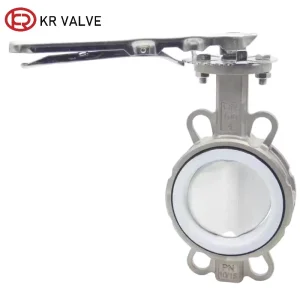
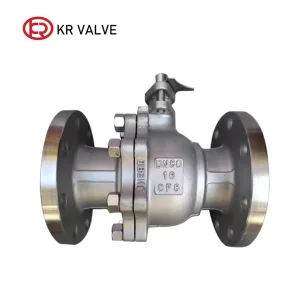
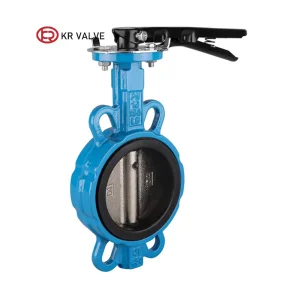
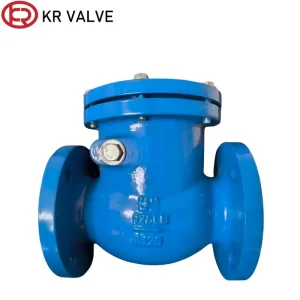
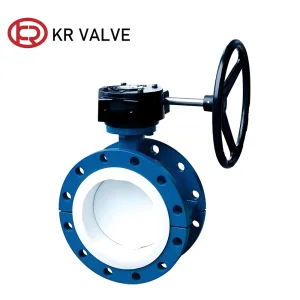
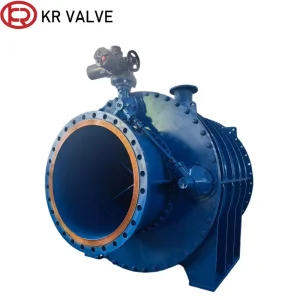
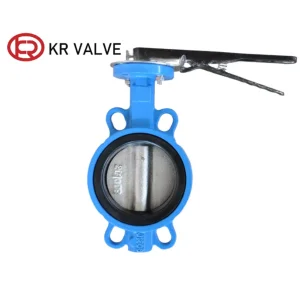
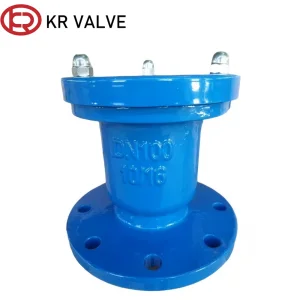
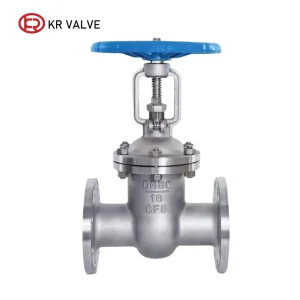
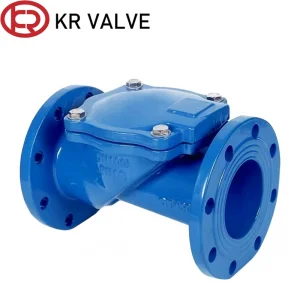
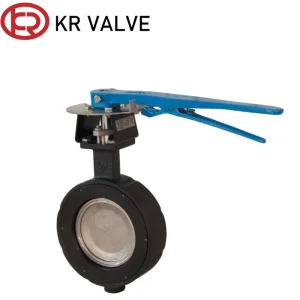
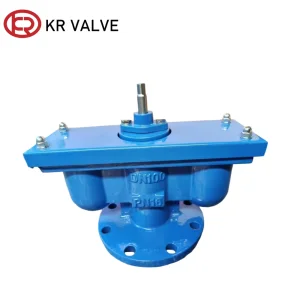
Explore our full line of specialized industrial check, air evacuation, gate, and split-body PTFE butterfly valve assemblies.
Frequently Asked Technical Questions
In-depth answers from our senior OEM valve seating engineers regarding material selection, testing standards, and maintenance guidelines.
What is the difference between bonded rubber seats and replaceable loose rubber seats in butterfly valves?
Replaceable loose seats (often snap-in or dovetailed) allow lower-cost field maintenance without replacing the whole valve assembly, but are susceptible to dynamic swelling, distortion under vacuum, or elevated seat friction over extended duty cycles.
How does peroxide-cured EPDM compare to sulfur-cured EPDM for potable water applications?
Why is PTFE cold flow a concern, and how do OEM manufacturers mitigate it in lined butterfly valves?
- Utilizing modified TFM 1600 fluoropolymer, which has a higher molecular density and up to 50% lower creep deformation than virgin PTFE.
- Compounding virgin PTFE with 15% glass fiber or carbon fillers (RTFE).
- Installing resilient silicone or fluorosilicone rubber energizing cushions behind the PTFE seat ring to provide continuous dynamic radial pre-load.
What standards define pressure testing and leakage rates for soft-seated butterfly valves?
- ISO 5208 / EN 12266-1: Specifies "Rate A" as zero visible leakage (no bubble formation) during high-pressure hydrostatic (1.1x PN) and low-pressure air seat tests.
- API 598: Standard for valve inspection and testing widely used in oil & gas, defining zero allowable drops/minute for soft-seated valves.
- ANSI/FCI 70-2: Defines control valve seat leakage classes, where Class VI specifies maximum allowable bubble counts based on valve size for resilient soft seats.