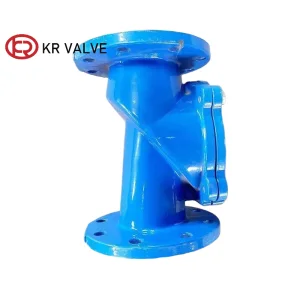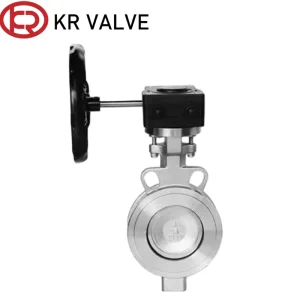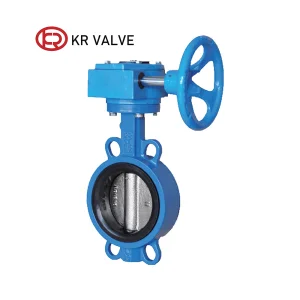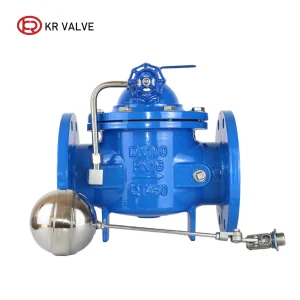
Precision Flow Control Solutions — Part I
Explore high-performance OEM cast iron and ductile iron valve configurations engineered for global municipal, HVAC, chemical, and heavy industrial water networks.
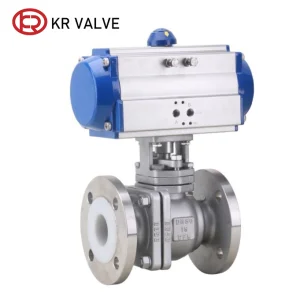
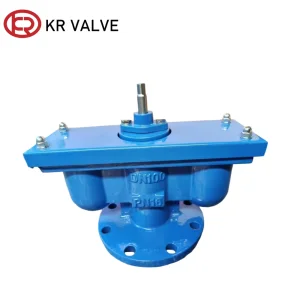
Executive Summary & Industrial Capabilities
Quantifiable excellence in quarter-turn valve manufacturing, advanced metallurgy control, and custom OEM precision engineering.
In the realm of global fluid dynamics and industrial pipeline architecture, Cast Iron (CI) and Ductile Iron (DI) Butterfly Valves serve as fundamental isolation and regulation apparatuses. The modern industrial landscape demands uncompromising mechanical integrity, hydrodynamic efficiency, and precise torque control. As premier OEM CI Butterfly Valve Manufacturers, our manufacturing ecosystems synthesize traditional metallurgical casting expertise with automated CNC machining and computer-modeled fluid dynamics (CFD).
Whether navigating low-pressure municipal potable water distribution networks, high-salinity seawater desalination projects, or volatile chemical handling pipelines, selecting the appropriate OEM partner dictates long-term operational expenditure (OPEX) and systemic uptime. This comprehensive technical whitepaper explores the macro-industrial status, technical specifications, custom engineering capabilities, and strategic technology roadmaps governing cast iron butterfly valve manufacturing.
Technical Breakdown: Metallurgy, Sealing & Kinematics
Understanding the microstructural difference between Gray Cast Iron (CI) and Ductile Iron (DI) alongside resilient vs. high-performance fluoropolymer sealing technologies.
Material Metallurgy (CI vs. DI)
Gray Cast Iron (ASTM A126 Class B / GG25) provides exceptional damping capacity and cost efficiency for low-stress applications. Ductile Iron (ASTM A536 65-45-12 / GGG40 / GGG50) incorporates magnesium treatment, forming spheroidal graphite nodes that drastically enhance tensile strength (≥ 400 MPa) and impact resistance, enabling PN16 and PN25 pressure ratings.
Elastomer & Polymer Science
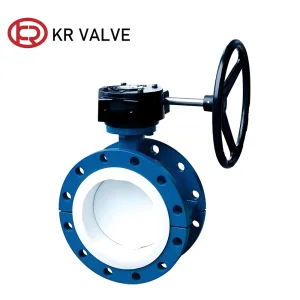
Sealing performance relies on vulcanized rubber linings or fluoropolymer encapsulation. EPDM exhibits high resilience in water treatment (up to 120°C). NBR delivers oil-resistant hydrocarbon sealing. For aggressive media, split-body designs utilize thick PTFE/RTFE liners bonded to EPDM backings, isolating the iron body completely from corrosive reagents.
Kinematic Offset Configurations
Concentric designs position the stem through the centerline of the disc, ideal for standard low-torque quarter-turn throttling. Double Eccentric (Offset) and Triple Offset configurations displace the shaft axis away from the sealing plane, drastically reducing seat wear, eliminating friction during travel, and ensuring bubble-tight bi-directional isolation under high cyclic frequencies.
| Parameter / Characteristic | Gray Cast Iron (CI / GG25) | Ductile Iron (DI / GGG40 / GGG50) | Stainless Steel / PTFE Lined (CF8 / PTFE) |
|---|---|---|---|
| Tensile Strength (MPa) | 150 - 250 MPa | 400 - 500 MPa | 515 - 620 MPa |
| Yield Point / Elongation | Nil (Brittle behavior) | ≥ 15% Elongation | ≥ 30% Elongation |
| Standard Pressure Ratings | PN6 / PN10 / Class 125 | PN10 / PN16 / PN25 / Class 150 | PN10 - PN40 / Class 150 - Class 300 |
| Typical Body Geometry | Wafer / Concentric Flanged | Wafer, Lug, U-Section, Double Flange | Split Body, Wafer, Lugged Body |
| Primary Application Spectrum | HVAC, low-pressure water mains | High-pressure municipal mains, sewage | Chemical refining, acids, ultra-pure water |
| Applicable Standards | ISO 5752, BS EN 593, MSS SP-67 | EN 593, API 609, DIN 3202 F4 | API 609 Category B, ISO 5208 Rate A |
Global Macro-Industrial Application Solutions
Deployment strategies tailored to critical infrastructure, extreme operating environments, and stringent regional regulatory frameworks.
1. Municipal Water Treatment & Desalination
Potable water distribution lines require WRAS or NSF/ANSI 61 certified non-toxic EPDM seat materials. OEM ductile iron butterfly valves (DN50 - DN2400) featuring electrostatic fused-bonded epoxy (FBE) coatings (minimum thickness 250 µm) resist soil corrosion and internal tuberculation. For SWRO (Seawater Reverse Osmosis) plants, duplex stainless steel (2205) or nickel-aluminum bronze discs prevent pitting corrosion under hyper-saline conditions.
2. Heavy HVAC & District Energy Systems
Centralized cooling tower circuits and chilled water systems demand precise quarter-turn throttling to optimize thermal efficiency. Wafer-style cast iron butterfly valves with electric or pneumatic positioners interface with automated Building Management Systems (BMS) via BACnet or Modbus protocols, adjusting flow coefficients ($K_v / C_v$) dynamically based on real-time delta-T sensor feedback.
3. Chemical Processing & Highly Aggressive Media
Standard metal-seated or EPDM-lined valves quickly fail when exposed to concentrated acids, alkalis, or organic solvents. Split-body ductile iron butterfly valves featuring full PTFE linings isolate the valve casting entirely. The disc stem utilizes dynamic spring-loaded V-ring packing systems to mitigate fugitive emissions, satisfying ISO 15848-1 environmental compliance standards.
OEM Manufacturing Spectrum & QA Benchmarks
Full-chain production control, customized engineering parameters, and multi-stage non-destructive testing (NDT).
Partnering with a specialized OEM CI Butterfly Valve Manufacturer provides EPC contractors and international distributors with extensive customization capabilities tailored to exact project tender documentation. Our modern production lines adhere to stringent ISO 9001 quality management frameworks.
Custom Branding & Private Labeling
From custom casting logos integrated directly into the iron mold tooling to tailored stainless steel nameplates, we provide complete private-label OEM manufacturing services for global valve brands and regional distributors.
Actuation & ISO 5211 Direct Mounting
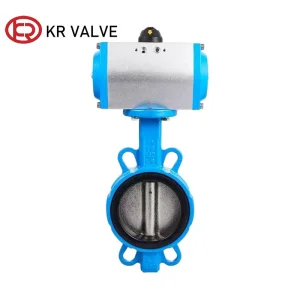
All OEM butterfly valve bodies feature standardized ISO 5211 top flanges and double-D or keyed drive shafts, allowing seamless direct-mount integration of manual gearboxes, pneumatic double-acting/spring-return actuators, or electric intelligent positioning units without external brackets.
100% Hydrostatic Inspection
Every single valve undergoes pressure testing prior to dispatch in accordance with ISO 5208 and API 598 standards. Shell hydrostatic tests are conducted at 1.5× PN rating, while bi-directional seat leakage testing ensures Rate A (zero visible leakage) performance.
Strategic Technology Roadmap & Future Outlook
Transitioning from traditional mechanical isolation devices to intelligent, IoT-enabled fluid nodes in smart cities.
Smart Valves & Predictive Maintenance
Next-generation OEM cast iron butterfly valves integrate wireless acoustic leak sensors, vibration analysis transducers, and torque tracking smart positioners. By analyzing real-time operating torque curves, system operators can predict seat degradation and schedule preventative maintenance before catastrophic valve failure occurs.
Eco-Friendly Metallurgy & Decarbonization
As global foundries face carbon-neutral imperatives, our OEM manufacturing facilities utilize electric induction melting powered by clean energy, ultra-low VOC water-borne epoxy coatings, and 100% recyclable sand-molding scrap techniques to reduce the embodied carbon footprint of every cast iron valve produced.
Advanced Hydrodynamic Geometry
Utilizing high-performance CFD simulations, disc geometries are optimized to streamline flow lines, maximizing flow coefficient ($C_v$) values while minimizing localized cavitation and turbulence. This hydrodynamic refining directly translates into reduced pumping energy consumption across urban water distribution mains.
Comprehensive Engineering FAQ
Expert answers addressing real-world procurement queries, technical specification challenges, and installation protocols.
- EPDM: Operating range from -20°C to +120°C. Excellent for hot/cold water, air, and mild chemicals.
- NBR (Nitrile): Operating range from -10°C to +82°C. Optimized for oils, petroleum products, and gas lines.
- Viton (FKM): Operating range from -10°C to +200°C. High chemical resistance and elevated temperature threshold.
- PTFE: Operating range from -30°C to +180°C. Near-universal chemical inertness for corrosive reagents.
Precision Flow Control Solutions — Part II
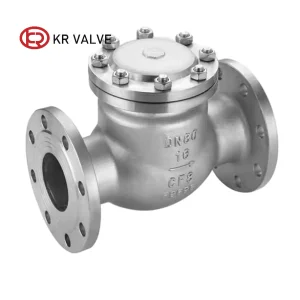
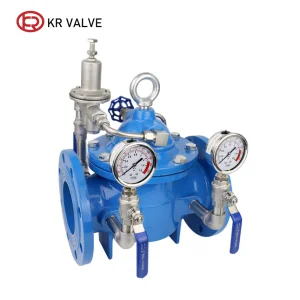
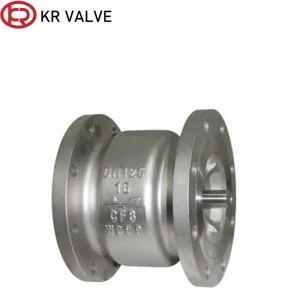
Additional specialized flow control assemblies, non-return check valves, and high-performance actuation-ready butterfly valve series.