
High-Performance Air & Flow Control Solutions
Explore our precision-engineered OEM evacuation valves, check valves, and resilient seating gate systems deployed in over 50 countries worldwide.
Fluid Dynamics & Fundamentals of Air Evacuation Valves
A comprehensive examination of air entrapment physics, transient hydraulic surge phenomena, and kinetic discharge mechanisms in modern pipeline networks.
Air Entrapment Mechanics
In pressurized piping networks, air exists in two distinct phases: dissolved air released due to temperature and pressure gradients, and pockets introduced during system charging or pump starts. Unvented air pockets reduce effective cross-sectional pipe area, driving up friction losses by 15% to 35% and provoking acoustic pressure oscillations.
Transient Hydraulic Surge & Water Hammer
Rapid liquid displacement into air voids creates severe transient surges (water hammer). When high-velocity water columns compress entrapped air, the air cushion behaves like a non-linear spring. Upon venting without kinetic discharge throttling, the liquid slams against the valve orifice, producing destructive pressure spikes exceeding 40 bar.
Vacuum Breakdown Protection
During sudden pump trips, pipe drainage, or main bursts, liquid columns split, inducing sub-atmospheric sub-zero pressure profiles. Without dynamic high-volume air intake (vacuum breakdown), thin-walled ductile iron, HDPE, or steel pipelines face total structural buckling due to negative hoop stresses.
Technical Principle: Kinetic Orifice Choking Velocity ($M = 1.0$)
An OEM evacuation valve must balance rapid venting with orifice sonic limitation. When air is purged under high differential pressure ($\Delta P > 0.53 \times P_{absolute}$), choked sonic flow occurs at the orifice. KR Valve’s engineered float geometry prevents premature dynamic closure (premature blow-shut) under high differential sonic velocities, maintaining maximum flow discharge coefficient ($C_d \ge 0.82$) until the liquid interface reaches the float chamber.
Tri-Functional vs Dual-Port Air Evacuation Valve Dynamics
| Valve Architecture Type | Air Release Orifice Size | Vacuum Intake Capacity | Surge Protection Mechanism | Primary Infrastructure Duty |
|---|---|---|---|---|
| Automatic Air Release Valve | Small Orifice (1.5mm - 3.0mm) | Negligible / Maintenance Venting | Gradual micro-bubble degassing under line pressure | Pipeline high points, pump discharge headers |
| Air & Vacuum Valve (Single Port) | Large Orifice (= Nominal Bore) | Full Nominal Capacity Intake | High velocity intake during vacuum events | Raw water transmission lines, column separation points |
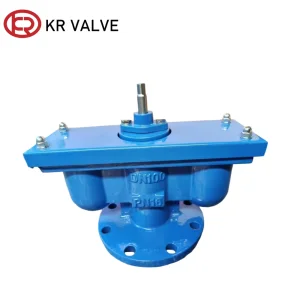
| Combination Double Port Evacuation Valve | Dual Orifice (Small + Large) | High-Volume Kinetic Intake | Non-slam float design with anti-surge switching disc | Cross-country mains, treatment plant manifolds, HVAC loops |
| Anti-Surge / Anti-Shock Evacuation Valve | Triple Stage Controlled Venting | Ultra-High Intake Capacity | Spring-loaded disc converts large orifice to small orifice at critical pressure differential | High-head pumping stations, surge-vulnerable networks |
OEM Technical Roadmap & Digital Innovation
Integrating Industry 4.0 IoT telemetry, advanced computational fluid dynamics (CFD), and anti-cavitation metallurgy into modern air evacuation platforms.
Smart IoT Condition Monitoring
Integration of wireless acoustic sensors, displacement transmitters, and piezo-resistive pressure transducers directly within the valve bonnet to provide real-time air release telemetry and predictive seat wear diagnostics.
3D CFD Orifice Optimization
Utilizing Ansys Fluent transient multiphase flow simulations to sculpt internal chamber hydrodynamics, eliminating turbulent eddies and maximizing kinetic air expulsion efficiency without triggering premature float lock.
Anti-Cavitation Trim Metallurgy
Transitioning from traditional brass internal trims to Super Duplex Stainless Steel (2507), Monel K500, and solid PTFE/EPDM encapsulated floats designed for aggressive desalination, brine, and industrial chemical media.
Modular Non-Slam Surge Devices
Standardizing interchangeable anti-shock mechanism inserts that can be retrofit onto existing double-port bodies in the field, adjusting spring tension based on site-specific hydraulic water hammer modeling.
Macro-Industry Solutions & Field Deployments
Tailored OEM valve configurations engineered to meet extreme environmental and operational parameters across diverse industrial sectors.
Municipal Potable Water Networks
For long-distance water transmission pipelines, KR Valve provides combination air evacuation valves with NSF/ANSI 61 and WRAS certified EPDM soft seats and Fusion Bonded Epoxy (FBE) coatings (300 microns thickness). Designed to AWWA C512 standards, these valves maintain water purity while protecting buried mains from vacuum-induced collapse during rapid draining.
- Standards: AWWA C512, EN 1074-4
- Body Material: Ductile Iron GGG40 / EN-GJS-450-10
- Pressure Class: PN10, PN16, PN25, Class 150
Wastewater & Sewerage Systems
Untreated sewage generates high volumes of hydrogen sulfide ($H_2S$) and organic solids that cause standard floats to stick and corrode. Our customized OEM wastewater evacuation valves feature elongated conical bodies, isolating the working mechanism from solids, paired with 316 Stainless Steel floats and chemical-resistant NBR/Viton seating seals.
- Design: Single chamber elongated air release
- Internal Trim: SS316, Hastelloy options
- Anti-Clogging: Self-cleaning fluid interface
Desalination & Heavy Industry
Seawater reverse osmosis (SWRO) plants demand high-alloy materials capable of resisting severe pitting corrosion ($PREN > 40$). We manufacture custom air evacuation valves built from CF8M, CF3M, Duplex 2205, and Super Duplex 2507, featuring full PTFE lining and titanium hardware for continuous hypersaline splash zone exposure.
- Media: High-Cl- Seawater, Brine Effluent
- Metallurgy: Duplex 2205 / 2507, CF8M
- Rating: PN40, Class 300, High Pressure Duty
China Factory 4.0: Supply Chain Resilience & Precision
Combining automated resin-sand foundry casting, 5-axis CNC machining, and rigorous quality control to deliver OEM valve excellence at scale.
Automated Foundry Metallurgy
Our Tianjin casting lines utilize resin sand molding paired with real-time spectrographic metal analysis. Every melt batch is verified for chemical composition and tensile elongation (minimum 400 MPa tensile strength for GGG40 ductile iron), ensuring zero micro-porosity and flawless pressure containment integrity.
CNC Machining & Tolerance Control
All valve seats, float guides, and flange faces are machined on multi-axis CNC turning centers to tolerances within $\pm 0.01\text{mm}$. Critical sealing surfaces receive mirror-polish finishing, guaranteeing bubble-tight seat closure even under ultra-low pressure heads ($P \le 0.2\text{ bar}$).
Fluidized Bed FBE Coating Line
Valve bodies undergo shot blasting to Sa 2.5 cleanliness before entering an automated electrostatic powder coating system. Thermosetting non-toxic epoxy resin (RAL 5005 / RAL 5015) is applied to an average thickness of 300 microns, complying with DIN 30677-2 holiday testing (zero pinhole defects at 2500V).
Global Procurement & Total Cost of Ownership (TCO)
Optimizing capital expenditure (CAPEX) and operational expenditure (OPEX) through direct factory procurement, custom OEM branding, and consolidated shipping.
CAPEX vs. OPEX Analysis in Air Management
Procuring low-quality air valves frequently leads to catastrophic line failures, pinhole leaks, and high pump energy loss due to air restriction. A comprehensive TCO model reveals that valve purchase price accounts for less than 10% of total lifecycle costs over a 25-year operational window. High efficiency air evacuation valves cut pumping energy overhead by up to 12% by eliminating air resistance head losses.
Direct OEM Value Advantages
- Direct factory pricing eliminating regional distribution markups (30%-45% CAPEX reduction).
- Customized OEM flange drilling (ANSI B16.5, EN1092-2, AS4087, JIS B2220) on a single production line.
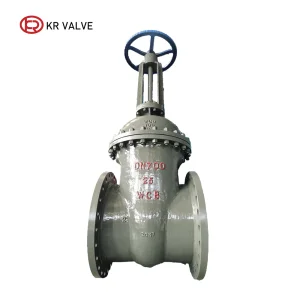
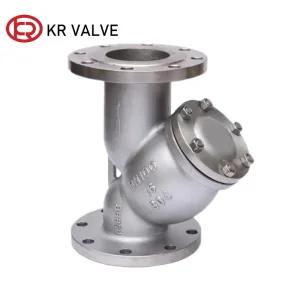
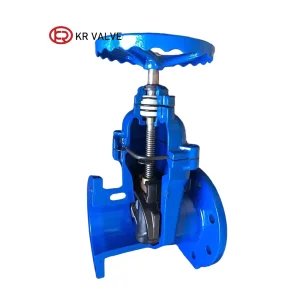
- Consolidated container packing combining Gate Valves, Check Valves, Strainers, and Air Release Valves.
Custom OEM/ODM Engineering Workflow
KR Valve provides complete private-label manufacturing programs tailored for global valve brands, EPC contractors, and municipal water authorities:
- Requirement Analysis & CFD Verification: Hydraulic pipeline data input, transient sizing analysis, and customized 3D CAD modeling.
- Pattern Making & Prototype Testing: Rapid prototyping with CMM dimensional checks and hydrostatic chamber verification.
- Custom Branding & Surface Finishing: Cast-in or laser-etched corporate logos, customized stainless steel nameplates, and region-specific color coding.
- Export Packaging & Documentation: Heavy-duty fumigated wooden crates, EN 10204 3.1 material certificates, hydrostatic test reports, and third-party inspection (SGS, TUV, BV).
Regional Standards & Quality Assurance Safeguards
Ensuring complete alignment with international waterwork engineering codes and stringent environmental guidelines.
AWWA C512 Compliance
Designed and factory tested in strict accordance with AWWA C512 standards for Air-Release, Air/Vacuum, and Combination Air Valves in waterworks service.
BS EN 1074-4 Approval
Full compliance with European safety and performance criteria for water supply air valves, verifying seat tightness, shell integrity, and flow discharge coefficient.
Hygienic Certifications
Elastomers, coatings, and internal lubricants meet WRAS, NSF/ANSI 61, and ACS certifications for safe use in human drinking water distribution systems.
ISO 9001:2015 & CE PED
Manufactured under ISO certified quality management processes and CE certified under Pressure Equipment Directive 2014/68/EU Module H.
Engineering Questions & Technical Insights
In-depth responses from our senior fluid engineers addressing critical selection, installation, and maintenance queries.
How do I size an air evacuation valve for a long transmission pipeline?
Sizing an air evacuation valve involves two main criteria: Vacuum Breakdown Rate (Air Intake) and Filling Venting Rate (Air Discharge).
1. Air Intake: The valve must admit air at a volume rate equal to the maximum possible gravity flow rate resulting from a pipe break or rapid valve opening downstream. Use the slope and Hazen-Williams friction formula to calculate maximum drainage flow.
2. Air Discharge: During pipeline filling, air must be purged at a rate corresponding to pump charging capacity (typically at a maximum differential pressure of 0.3 bar to prevent column separation surge). The effective orifice diameter ($d$) is determined using compressible gas flow equations based on choked and unchoked pressure ratios.
What is the difference between kinetic air valves and automatic air release valves?
Kinetic Air Valves (Air/Vacuum Valves) feature large orifice openings equal to or near the nominal pipe diameter. They operate only during system filling (purging high volumes of air) or system draining (admitting high volumes of air). Once the line is pressurized, they blow shut and cannot open against internal line pressure.
Automatic Air Release Valves feature small orifices (typically 1.5mm to 3mm). They operate continuously under full working line pressure, venting small pockets of dissolved gases that accumulate at high points over time via leverage float mechanisms.
Combination Air Valves unite both mechanisms in a single housing (or dual chamber design), delivering complete system protection.
Why is "blow-shut" or premature closure a risk, and how does KR Valve prevent it?
Premature blow-shut occurs when high-velocity air escaping through a large orifice creates a local aerodynamic pressure drop above the float (Bernoulli effect). This dynamic lift forces the float upward to seal the orifice before all air has been evacuated from the pipeline, entrapping large air pockets.
KR Valve prevents blow-shut by employing aerodynamic spherical float geometries, guided aerodynamic baffles, and optional anti-surge switching discs that balance pressure forces, ensuring the float responds strictly to liquid buoyancy rather than aerodynamic drag.
What body material should I select for aggressive marine or wastewater applications?
For standard municipal water, Ductile Iron (GGG40) coated with 300-micron Fusion Bonded Epoxy (FBE) is optimal. For wastewater, specify an elongated Ductile Iron or Stainless Steel 316 body to protect the mechanism from scum accumulation. For marine or desalination plants (SWRO), Duplex Stainless Steel (2205) or Super Duplex (2507) bodies with solid PTFE floats offer superior resistance to chloride pitting ($PREN > 40$).
What is the recommended installation location for air release and evacuation valves?
Air evacuation valves should be strategically installed at:
- High points of pipeline profiles (peaks where air naturally collects).
- Increased downward slope points and decreased upward slope points.
- Long horizontal pipeline runs (spaced every 500m to 1000m).
- Pump discharge manifolds (upstream of check valves).
- Adjacent to sectionalizing gate valves and elevated pipe bridge crossings.
Can KR Valve supply customized OEM flange standards for international projects?
Yes. As a direct OEM factory, we machine mounting flanges to any international standard including EN 1092-2 (PN10/16/25/40), ANSI/ASME B16.5 (Class 150/300), AS/NZS 4087, and JIS B2220. Threaded connections (BSP/NPT) are also available for sizes DN15 to DN50.
What maintenance procedures are required for double port evacuation valves?
Combination evacuation valves are virtually maintenance-free. However, annual inspections are recommended: isolating the valve via an underlying gate/ball valve, removing the top bonnet, flushing internal sediment, and inspecting the elastomeric seat ring for debris or mechanical wear. All KR valve internal seats are replaceable without removing the valve body from the line.
How does hydrostatic and operational testing take place prior to factory dispatch?
Every single valve undergoes 100% factory hydrostatic shell testing at $1.5 \times \text{PN}$ (e.g., 24 bar for a PN16 valve) and seat leakage testing at $1.1 \times \text{PN}$ per EN 12266-1 and API 598. Low-pressure seating tests at 0.2 bar are also performed to confirm seal integrity under minimal head pressure.
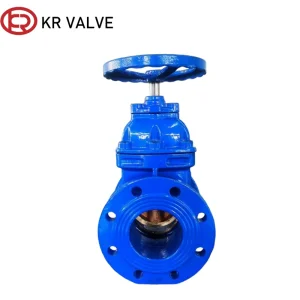
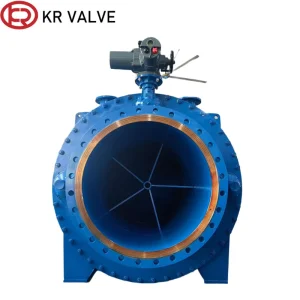
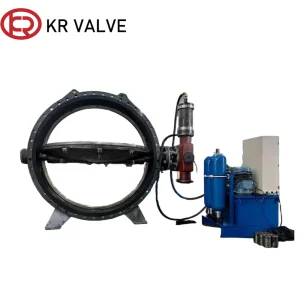
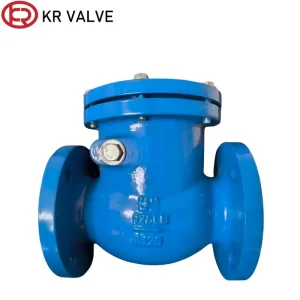
Complementary Pipeline Valves & Strainer Systems
Explore our complete industrial valve manufacturing catalog, engineered for full flow control compatibility.
Partner with China's Premier OEM Evacuation Valve Factory
From technical drawing verification to volume foundry casting and export delivery, KR Valve delivers engineered air management solutions backed by 20+ years of manufacturing expertise.