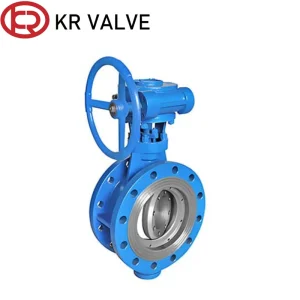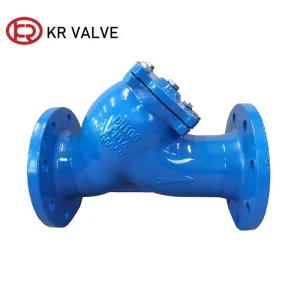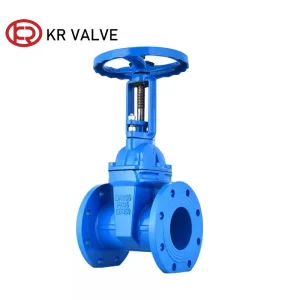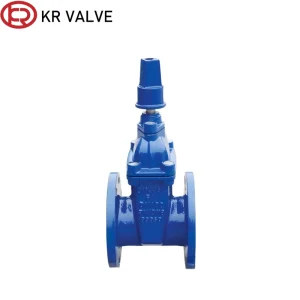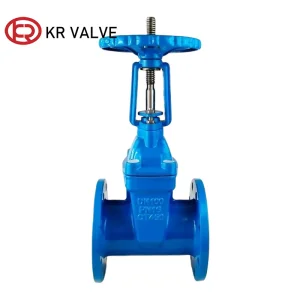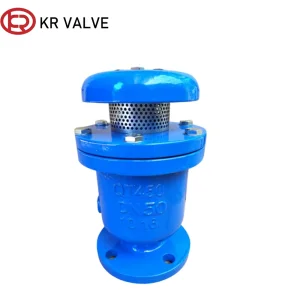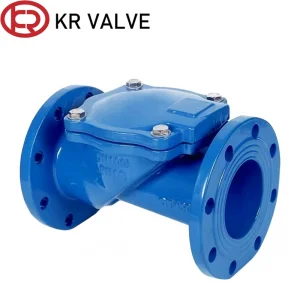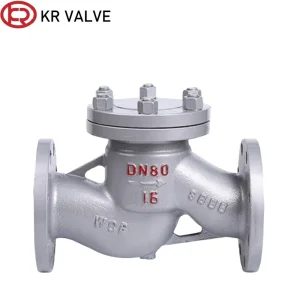
Featured OEM Pneumatic & Industrial Valve Series
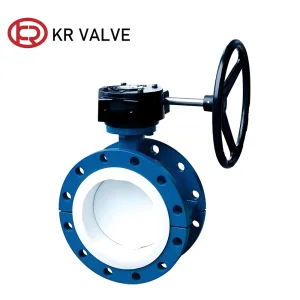
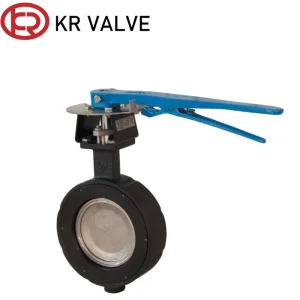
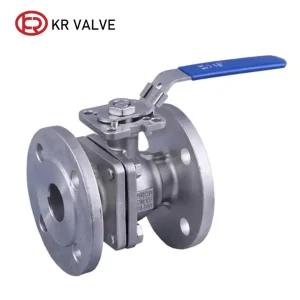
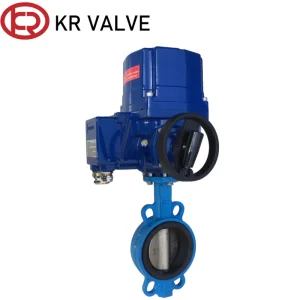
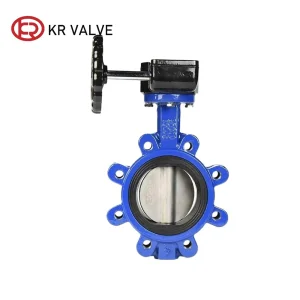
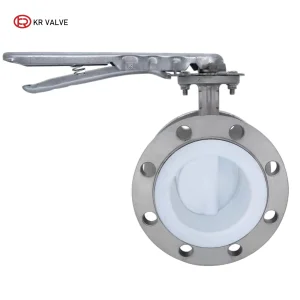
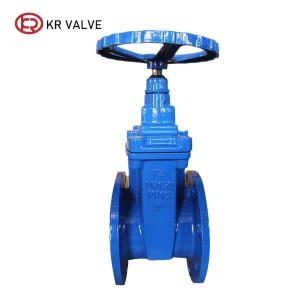
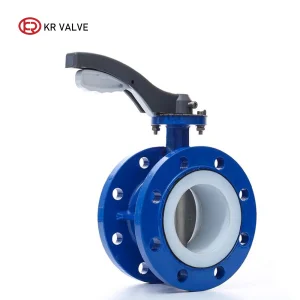
Explore our primary manufactured range, engineered to stringent ISO 5211 actuator mounting standards and tested to API 598 pressure metrics for rigorous industrial operations.
1. Global Commercial & Industrial Landscape of Pneumatic Gate Valves
In modern fluid dynamics and heavy industrial automation, pneumatic gate valves serve as the linchpin for bi-directional isolation, rapid emergency shut-off (ESD), and high-frequency cycling in harsh media conditions. As global manufacturing transitions toward Industry 4.0, pneumatic actuation has evolved from simple linear mechanical movement to intelligent, sensor-integrated flow control systems.
The macroeconomic trajectory of pneumatic gate valve manufacturing reflects intense demand across municipal water networks, mining slurry transportation, petrochemical refining, bulk powder handling, and thermal power generation. Unlike electric actuators, which present spark hazards in volatile environments and require high duty-cycle cooling periods, pneumatically actuated gate valves offer inherent explosion-proof safety, high torque-to-weight ratios, and unmatched fail-safe mechanisms (via spring-return linear cylinders or air reservoir tanks).
North America & Europe Focus
Driven by strict fugitive emission standards (EPA Method 21, ISO 15848-1) and aging infrastructure upgrades. Demand centers on stainless steel (CF8M/CF3M) and high-alloy pneumatic knife gate valves with zero-leakage packing glands.
Asia-Pacific Expansion
Rapid industrialization, massive desalination projects, and expansion of lithium mining in South America and Australia have catalyzed demand for heavy-duty, resilient-seated pneumatic sluice and wedge gate valves.
Smart Plant Integration
Transition from standard directional control valves to IO-Link and HART-enabled pneumatic positioners, providing real-time diagnostics on stroke speed, air consumption, and seal wear predictive telemetry.
2. Technical Architecture & OEM Sizing Principles
OEM pneumatic gate valve engineering balances fluid dynamics, mechanical metallurgy, and pneumatic cylinder force kinetics. Selecting or manufacturing the right pneumatic gate valve requires strict evaluation of differential pressure ($\Delta P$), fluid viscosity, line velocity, and available plant air supply pressure (typically 4.0 to 8.0 bar).
To ensure complete shut-off and smooth opening without stem binding under maximum line differential pressure ($\Delta P$), OEM factories calculate net thrust force ($F_{net}$) using:
F_{thrust} = \left( \frac{\pi \cdot D^2}{4} \cdot \Delta P \cdot \mu \right) + F_{packing} + F_{stem\_weight} + F_{margin}
- D: Valve Bore Diameter (mm) | $\Delta P$: Maximum Differential Pressure (MPa)
- $\mu$: Coefficient of Friction (0.15–0.30 for metal-to-metal; 0.05–0.12 for resilient EPDM/PTFE)
- $F_{packing}$: Stem Packing Friction Force | $F_{margin}$: Safety Factor (typically 30% to 50% extra thrust)
| Pneumatic Actuator Type | Operating Principle | Fail-Safe Mode | Ideal Application Scenarios |
|---|---|---|---|
| Double-Acting Cylinder (DA) | Air supplied to open port AND close port independently. | Fail-in-Last Position (Stays Put) | High-frequency process isolation, non-critical lines where air loss shutdown is undesirable. |
| Single-Acting Spring Return (SR-NC) | Air opens valve against internal heavy-duty compression spring; spring closes valve upon air loss. | Fail-Closed (NC) | Emergency shut-down (ESD), toxic chemical containment, fire-safe isolation networks. |
| Single-Acting Spring Return (SR-NO) | Air closes valve against spring; spring forces stem upward upon air loss. | Fail-Open (NO) | Cooling water lines, boiler vent systems, pressure relief bypass channels. |
| Air Tank Backup Cylinder | Double-acting configuration combined with a dedicated air receiver tank and solenoid trip valve. | Programmable (Fail-Open or Closed) | Large bore valves (DN300-DN1200) where mechanical springs become excessively heavy and bulky. |
Wedge & Seat Material Engineering Matrix
OEM factories specify body alloys, gate plating, and seat elastomers based on media corrosivity and abrasion index:
Ductile iron (GGG50) body encapsulated with vulcanized EPDM. Provides 100% bubble-tight shut-off (Zero Leakage, Rate A) for potable water, municipal sewage, and neutral liquids up to 120°C.
Used for severe chemical service (acids, alkalis). Full virgin PTFE or RTFE lining eliminates metallic contact with corrosive fluids while maintaining smooth linear gate motion.
Cast steel (WCB) or stainless steel body with hard-faced Cobalt-Cr (Stellite No. 6) seats. Essential for abrasive mining slurry, high-pressure steam, and temperatures exceeding 250°C.
3. Localized Regional Application Scenarios
Operational demands for pneumatic gate valves vary significantly across global regions due to environmental regulations, medium purity, and localized infrastructure standards.
Chile & Australia: Mining & Slurry Transport
In copper, iron ore, and lithium processing facilities, tailings pipelines transport highly abrasive mineral pulp. Conventional gate valves clog quickly as solids pack into the bottom cavity.
Middle East: SWRO Desalination Plants
Sea Water Reverse Osmosis (SWRO) facilities across GCC countries demand extreme corrosion resistance against hyper-saline brine at elevated pressures.
North America & EU: Chemical & Bio-Pharma
High emphasis on fugitive emissions control, cleanability, and fast automated cycle speeds for batch processing reactors.
4. Technology Roadmap & Future Industry Outlook (2025–2035)
As industrial process engineering accelerates toward carbon neutrality and autonomous operation, pneumatic gate valve factories are pioneering breakthrough technologies across material science and sensor diagnostics.
Smart Diagnostic Pneumatics
Widespread integration of digital pneumatic positioners with embedded piezoelectric valves. Continuous tracking of stroke time, supply pressure drop, dynamic friction coefficient, and seal decay alarms sent directly via WirelessHART or IO-Link.
Ultra-Low Emission Packing & Coatings
Application of Nano-Composite Diamond-Like Carbon (DLC) coatings on gate stems to reduce friction by 60%, allowing smaller pneumatic cylinder sizing. Transition to bio-based synthetic lubricants and zero-VOC epoxy linings.
Hydrogen-Ready & Autonomous Valves
Development of specialized pneumatic gate valve bodies resistant to hydrogen embrittlement (NACE MR0175/ISO 15156). Autonomous pneumatic actuators capable of self-calibrating stroke limits using embedded AI microcontrollers.
5. Macro OEM Manufacturing Solutions & Sourcing Framework
For international EPC contractors, valve brand owners, and industrial distributors, choosing the right OEM manufacturing partner is vital for project timelines, cost optimization, and field reliability.
100% Factory Pressure Testing
Every manufactured unit undergoes shell hydrostatic testing at 1.5x PN rating and low-pressure pneumatic seat leak testing (API 598 / EN 12266-1) prior to actuator mounting and dispatch.
Custom OEM Engineering
Complete customization of face-to-face dimensions (DIN F4, DIN F5, ANSI B16.10, BS 5163), special flange drillings (PN10/16, Class 150/300), private labeling, and custom color coatings.
Consolidated Supply Chain
Eliminate multi-vendor friction. Our factory supplies complete automated assemblies: gate valves, butterfly valves, check valves, strainers, and pneumatic control accessories under unified quality control.
6. Frequently Asked Questions (Engineering & Procurement FAQ)
Expert answers to critical technical questions regarding pneumatic gate valve sizing, installation, maintenance, and factory selection.
Complete OEM Industrial Valve & Accessories Range
Browse our full catalogue of high-performance check valves, Y-strainers, knife gate valves, and specialty butterfly valves designed for total process line integration.