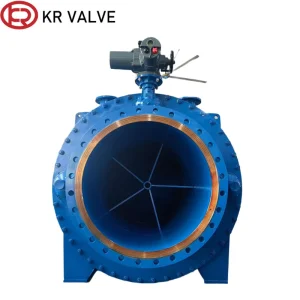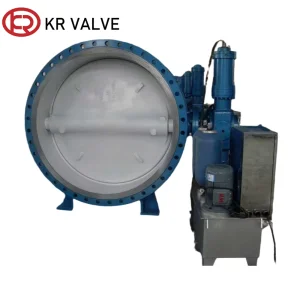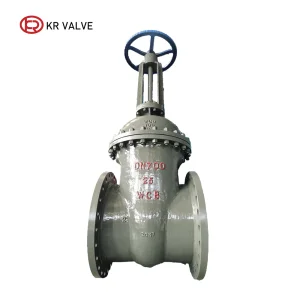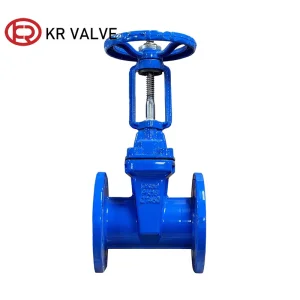
Featured OEM Valve & Flow Control Equipment
Precision-engineered industrial valves sourced directly from our certified Chinese manufacturing matrix.
1. Technical Architecture & Structural Mechanics of Knife Valves
A comprehensive analysis of shear mechanics, gate blade geometry, and sealing integrity in severe-service fluid handling.
In modern process engineering, handling media with high solids concentration—such as slurries, viscous pulps, ash, and wastewater sludge—presents one of the most severe operational challenges for pipeline equipment. Conventional wedge gate valves and globe valves fail rapidly in these environments due to particulate accumulation in seat cavities, leading to gate jamming, seat scoring, and catastrophic shut-off failure. The OEM Knife Gate Valve (KGV) and its critical internal component, the Valve Knife (Gate Blade), are engineered specifically to solve these fundamental fluid dynamics problems.
The core structural design of a knife gate valve utilizes a narrow, heavy-duty metallic blade with a precision-ground, chamfered bottom edge. As the actuator forces the valve knife vertically downward through the flow stream, this bevel edge exerts intense localized mechanical shear stress. This slicing action easily cuts through dense suspended fibers, semi-solid sludge, scale deposits, and abrasive mineral slurries, allowing the gate to clear a path directly into the elastomeric or metallic seating zone without trapping solids underneath.
Bi-Directional Knife Valves: Feature perimeter elastomer sleeves (e.g., dual heavy-duty rubber sleeves) or pressurized PTFE seats that maintain continuous contact against both faces of the valve knife blade. This eliminates downstream cavity packing, ensures zero downstream leakage regardless of flow direction, and prevents media buildup within the valve chest.
The lifespan of an industrial knife valve is fundamentally bounded by the metallurgy and surface treatment of the internal valve knife. OEM factories leverage specialized alloy compositions and hard-facing treatments to resist combined abrasive wear, chemical corrosion, and high mechanical deflection during throttling or closure cycles:
304 / 316L Stainless Steel
Standard grade for municipal wastewater, HVAC, and light pulp applications. Ground to a fine surface finish (Ra < 0.4 µm) to minimize gland packing friction and prevent elastomer seal tearing during operation.
Duplex 2205 & Super Duplex 2507
Delivers yield strength up to twice that of austenitic stainless steel, combined with exceptional resistance to pitting and crevice corrosion (PREN > 40) in acidic mineral tailings and marine environments.
Stellite 6 & Tungsten Carbide Hardfacing
Precision plasma-transferred arc (PTA) welding overlays hard carbide alloys along the cutting edge and seating boundary of the valve knife. Achieves surface hardness up to 60 HRC for severe slurry abrasion.
2. China Factory 4.0: Supply Chain Resilience & Cost Optimization
How modern Chinese valve manufacturing hubs combine digital foundry control, multi-axis CNC machining, and scale economics for global buyers.
Over the past decade, China’s industrial valve manufacturing sector has undergone a profound technological transformation. Moving far beyond traditional low-cost assembly, leading China OEM Valve Suppliers & Factories have integrated Industry 4.0 smart manufacturing workflows, high-precision automated foundries, and rigorous quality management systems aligned with Western standards (ASME, DIN, BS, ISO). This evolution gives global EPC contractors and distributors a decisive competitive advantage in lead time, structural reliability, and total cost of ownership (TCO).
Automated Casting & Metallurgical Verification
Modern Chinese foundries utilize resin-sand molding and lost-wax investment casting with automated spectroscopy analysis before every pour. This ensures ductile iron (GGG40/50), carbon steel (WCB), and stainless steel (CF8/CF8M) bodies possess zero internal porosity, optimum wall thickness, and precise chemical compliance matching ASTM A351 / ASTM A216 specs.
CNC Machining & Precision Blade Edge Finishing
Valve body chests, packing gland recesses, and flange faces are machined on multi-axis horizontal CNC centers in a single setup. Valve knife blades are subjected to automated double-sided surface grinding and laser bevel cutting, eliminating micro-burrs that could score packing seals and compromise zero-leakage guarantees.
3. Macro-Industry Solutions & Severe-Service Field Applications
Engineered flow control solutions tailored to specific operating challenges across critical industrial sectors.
Mining & Mineral Tailings
High-density iron ore, copper slurry, and coal tailings rapidly erode standard valves. OEM heavy-duty slurry knife gate valves with replaceable natural rubber or polyurethane liner sleeves isolate abrasive media completely from the metal body structure.
Pulp & Paper Processing
High-consistency wood pulp fiber (3% to 18% stock concentration) tends to dewater and compact behind conventional gates. Through-conduit O-port knife valves flush out accumulated fibers, ensuring unhindered closure in bleach plants and digesters.
Municipal Wastewater & Biosolids
Raw sewage, primary sludge, and grit require non-clogging full-bore isolation. Resilient-seated knife gate valves with PTFE or EPDM perimeter seats deliver drop-tight bubble-tight seal integrity while preventing ragging and solids collection.
Power Generation (Fly Ash & FGD)
Dry pneumatic fly ash handling and Wet Limestone Flue Gas Desulfurization (FGD) systems subject valves to thermal expansion and scaling. Hardened stainless steel gates with metallic seats provide reliable high-temperature isolation.
Chemical & Petrochemical Slurries
Highly corrosive chemical suspensions, polymer pellets, and catalyst slurry require specialized alloys (Hastelloy C276, Titanium) and full PTFE encapsulation to prevent media contamination and chemical attack.
Sugar & Food Processing
Viscous syrup lines, sugar beet pulp, and wash water require hygienic, easy-to-clean valve profiles. Stainless steel body and blade construction with food-grade FDA-compliant seat materials ensure contamination-free process control.
4. Technical Roadmap & Next-Generation Valve Knife Innovations
Pioneering future-ready technologies: Smart diagnostics, fugitive emission control, and advanced composite materials.
As industrial processing plants transition toward automated smart control and strict environmental sustainability compliance, knife valve technology is rapidly advancing beyond traditional passive mechanical isolation. Chinese OEM factories and R&D centers are leading several key technical breakthroughs:
Smart Actuation & IoT Predictive Maintenance
Integration of intelligent pneumatic, hydraulic, and electric actuators equipped with HART/Modbus digital positioners, linear vibration transducers, and packing gland leak-detection sensors. Enables real-time monitoring of stroke thrust, blade friction coefficient, and seat degradation to predict maintenance needs prior to plant downtime.
Zero Fugitive Emission Gland Packing (ISO 15848-1)
Enhanced stuffing box architecture featuring live-loaded Belleville spring washers and self-lubricating molded graphite or PTFE V-ring sets. Designed to satisfy strict EPA and ISO 15848-1 Class AH/BH fugitive emission standards for hazardous chemical and gas media.
5. Global Enterprise Procurement Matrix & Quality Standards
Comprehensive engineering compliance checklist for international EPC buyers and procurement specialists.
When sourcing industrial knife valves and OEM replacement valve knives from Chinese factories, engineering buyers must evaluate technical parameters against strict international manufacturing standards. The matrix below outlines standard baseline requirements across mechanical, pressure, and testing specifications:
| Specification Parameter | Standard Range / Compliance Options | Engineering Significance & Target Application |
|---|---|---|
| Design & Manufacturing | MSS SP-81, ASME B16.34, API 609, DIN 3202 | Guarantees standardized face-to-face dimensions and shell wall thickness for universal drop-in replacement. |
| Size Range (Bore Diameter) | DN40 to DN2000 (1.5" to 80") | Covers small-bore chemical dosing lines to ultra-large municipal raw water and mining slurry main headers. |
| Flange Connection Standard | ASME B16.5 Class 150 / 300, EN 1092-1 PN10 / PN16 / PN25 | Ensures precision bolt pattern matching with global industrial piping networks without piping stresses. |
| Pressure Ratings | PN6, PN10, PN16, Class 150 (Up to 150 psi / 10 bar tight shutoff) | Defines maximum allowable working pressure (MAWP) for dead-end and line service conditions. |
| Seat Leakage Standard | MSS SP-81 (40 cc/min/in), API 598 Rate A (Zero Visible Leakage) | Differentiates between metal-to-metal slurry isolation and resilient soft-seated zero-bubble-leakage. |
| Quality Documentation | MTC EN 10204 3.1, NDT Radiographic, NACE MR0175 / ISO 15156 | Provides complete material traceability, casting integrity, and sour gas H2S corrosion compliance. |
6. Localization Support, OEM/ODM Customization & Supply Logistics
End-to-end engineering support, tailored OEM branding, and rapid international consignment management.
Custom Engineering & CAD/FEA Simulation
Our engineering team provides comprehensive 2D dimensional approval drawings and 3D step files within 24 hours of enquiry. Finite Element Analysis (FEA) verifies blade stress deflection under severe pressure surges prior to production.
OEM Private Labeling & Packaging
Full OEM flexibility including custom casting body logos, stainless steel serial nameplates, customized epoxy powder coating colors (RAL spec), and heavy-duty sea-worthy wooden crate packaging tailored to distribution partners.
Rapid Spare Parts & Global Logistics
Standardized interchangeable inventory for replacement valve knives, packing sets, and elastomer seat rings. Expedited air-freight options and sea freight container consolidation ensure minimum project downtime.
7. Comprehensive Engineering FAQ (User Intent Mining)
In-depth answers to critical procurement and operational questions asked by plant engineers and valve buyers.
Complete Industrial Valve Portfolio & Accessories
Explore our extended series of specialized control valves, check valves, and resilient gate valves for global infrastructure.