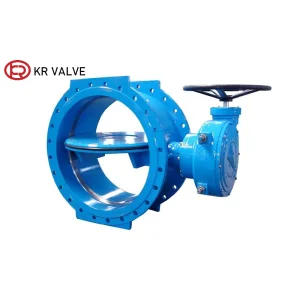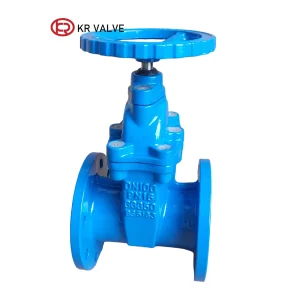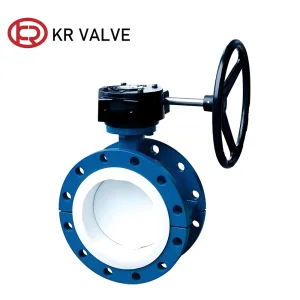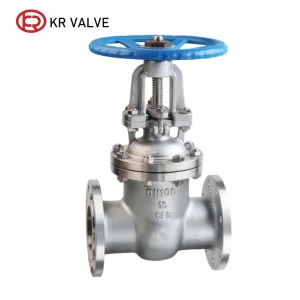
Featured Industrial Valve Portfolio
Direct manufacturer supply, precision-machined standards, and certified severe-service engineering
1. Industry Evolution & Structural Intent of OEM Lug Knife Gate Valves
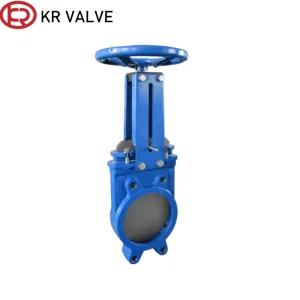
In severe fluid handling, municipal sludge management, mining tailing transport, and pulp-and-paper processing, conventional wedge gate valves and butterfly valves frequently suffer from seat clogging, disc scaling, and packing degradation. The Lug Knife Gate Valve has emerged as the definitive solution for challenging, solid-laden fluid transport pipelines. Featuring a narrow face-to-face dimension, a precision-ground stainless steel blade with a beveled cutting edge, and a full-port flow path, this valve cleanly shears through high-density suspended solids, fibrous matter, and viscous slurries.
As global industrial plants push for higher operational uptime and reduced maintenance overhead, procurement directors and engineering procurement contractors (EPCs) are increasingly partnering directly with specialized OEM Lug Knife Gate Valve Manufacturers. The shift toward OEM partnerships is driven by the demand for application-tailored seat elastomers, specialized blade metallurgy, and custom flange drilling standards (ANSI B16.5 Class 150, EN 1092-1 PN10/PN16, JIS 10K, BS 4504) that generic off-the-shelf valve suppliers cannot fulfill.
Lug Connection Topology vs. Wafer Design Mechanics
Understanding the mechanical distinctions between wafer and lug knife gate configurations is critical for process safety. While wafer valves rely on long stud bolts clamping the valve body between two mating flanges, a Lug Knife Gate Valve features threaded lugs matching flange bolt patterns integrated directly into its outer casting. This engineering configuration delivers two primary operational advantages:
Dead-End Service Capability
Lugged bodies allow downstream piping removal while keeping the valve pressurized upstream. This enables localized pipeline maintenance without draining entire tank systems.
Structural Rigidity under Thermal Stress
Individual bolt threading prevents thermal expansion differential displacement between pipe flanges and valve body, eliminating lateral shear on internal seals.
Vibration & Pressure Surge Tolerance
The rigid lug anchoring framework absorbs severe line shock waves and pump discharge pulsation, protecting internal sealing geometry from deformation.
2. OEM Engineering Metallurgy & Sealing Mechanics
As a premier manufacturing partner, KR Valve (Tianjin) Co., Ltd. builds lug knife gate valves using refined casting processes, CNC machining centers, and strict quality control protocols. Selecting the optimal body material, gate blade hardness, and seat polymer determines the operational lifespan in severe service conditions.
| Component | Material Options | Technical Characteristics | Optimal Application Medium |
|---|---|---|---|
| Valve Body | Ductile Iron GGG40 / Cast Iron GG25 WCB Carbon Steel CF8 (SS304) / CF8M (SS316) Duplex 2205 / 2507 |
High tensile strength, pressure ratings PN6-PN25 / Class 150. Precision epoxy coating (250µm DFT) prevents corrosion. | Water treatment, sewage sludge, acidic slurries, chemical reagents, and mining tailings. |
| Gate Blade | SS304, SS316L, 17-4PH Hardened Steel Stellite Overlaid / Chrome Plated |
Precision ground both sides (Ra < 0.4µm), fine beveled bottom edge. Resists mechanical friction and cutting force wear. | Paper pulp stock (>5% solids), ash slurry, plastic granules, raw cement solids. |
| Sealing Seats | EPDM, NBR (Nitrile), FKM (Viton) PTFE / RTFE Metal-to-Metal (SS316 / Stellite) |
Bi-directional zero-leakage resilient seals; reinforced metal seats for high-temperature (>400°C) abrasive flows. | Corrosive chemicals, high-temperature fly ash, abrasive sand slurries, municipal wastewater. |
| Packing System | PTFE Impregnated Synthetic Fiber Flexible Graphite with SS Reinforcement |
Live-loaded adjustable packing gland with dual-quad seal profile. Low operating torque requirement. | Volatile organic compounds, hot liquor, hazardous industrial fluids. |
Bi-Directional Zero-Leakage Sealing Architecture
Traditional uni-directional knife gate valves depend on line pressure to push the blade against a single downstream seat ring. However, backpressure, reverse flow, or vacuum conditions cause immediate seat leakage. Modern OEM engineering utilizes a Bi-Directional U-shaped Elastomer Seat encapsulated within a two-piece body or cast internal retention groove.
When the blade descends, the bottom knife edge slides smoothly into the elastomeric channel without pinching or displacing the rubber seal. The internal geometry provides continuous support on both faces of the gate, preventing seal blow-out under full reverse differential pressures up to 16 bar.
3. Macro-Industry Solutions & Field Performance
Deploying high-reliability lug knife gate valves across process industries eliminates unscheduled plant shutdowns, reduces pump motor wear, and secures plant environmental compliance.
Mining & Mineral Processing
Challenge: High-density slurry containing silica and iron ore rapidly erodes standard valve body walls and jams internal guides.
OEM Solution: Heavy-duty GGG50 lug body lined with replaceable natural rubber or polyurethane sleeves. The gate retracts fully out of the flow stream, preserving full port velocity and eliminating fluid turbulence.
Pulp & Paper Manufacturing
Challenge: High-consistency wood pulp stock (3% to 15% fiber content) weaves together, blocking standard wedge valve cavities.
OEM Solution: SS316L lug body with a self-cleaning V-notch or bevel-cut gate. The hardened stainless knife shears through wood fiber bundles cleanly during cycle completion without wedging.
Municipal Wastewater & Sludge Isolation
Challenge: Grit, stringy rags, and anaerobic digestate cause conventional gate valves to leak at the bottom seat cavity.
OEM Solution: Resilient EPDM seat with a flush-bottom pocket design. Fluid velocity flushes settled media through during operation, ensuring bubble-tight shutoff against raw sewage.
4. Global Procurement Needs & Localization Support
International engineering buyers, valve stockists, and OEM brand owners demand consistent manufacturing quality, full material traceability, and flexible actuation integration. As an established manufacturer based in Tianjin, China, KR Valve delivers comprehensive contract manufacturing services to global partners across Europe, the Americas, the Middle East, and Southeast Asia.
Comprehensive Actuation & Automation Interfaces
To match various automation levels across modern processing plants, our lug knife gate valves are engineered with standardized ISO 5211 mounting pads, allowing seamless field integration of multiple driving mechanisms:
Manual Handwheel & Bevel Gear
Equipped with non-rising stems (NRS) or rising stems (RS) featuring heavy-duty thrust bearings for smooth, low-effort manual operation on small to medium bore sizes (DN50-DN300).
Pneumatic Cylinder Actuation
Double-acting or spring-return pneumatic actuators with integrated solenoid valves, limit switches, and electro-pneumatic positioners for rapid automated isolation (<3 seconds stroke time).
Electric & Electro-Hydraulic Motors
Multi-turn explosion-proof electric actuators compliant with ATEX/IECEx standards. Features Modbus, Profibus, or 4-20mA smart feedback control for SCADA integration.
Quality Assurance & Hydrostatic Testing Protocols
Every lug knife gate valve manufactured in our facility undergoes rigorous testing prior to export packaging. Testing protocols strictly align with MSS SP-81, API 598, and ISO 5208 standards:
- Shell Hydrostatic Test: 1.5 times nominal design pressure (e.g., 24 bar for PN16 rating) to verify casing integrity and casting density without structural deformation.
- High-Pressure Seat Leakage Test: 1.1 times design pressure applied bi-directionally to ensure zero bubble leakage across elastomeric seat profiles.
- Low-Pressure Air Seat Test: 6 bar pneumatic test to verify seating contact micro-geometry under minimal differential pressure conditions.
- Dimensional & Flange Gauge Inspection: 100% verification of lug thread pitch, center-to-center distance, and face-to-face dimensions against customer approval drawings.
5. OEM Technology Roadmap & Future Engineering Outlook (2026–2030)
The industrial valve manufacturing landscape is undergoing rapid digitization and material science evolution. As an OEM innovator, KR Valve is advancing its product lines to meet next-generation industrial requirements:
IoT Smart Condition Monitoring
Integrating wireless vibration sensors, stem travel encoders, and packing gland pressure transducers directly into the valve yoke to enable predictive maintenance alerts on SCADA dashboards.
Nano-Composite Surface Cladding
Applying High-Velocity Oxygen Fuel (HVOF) tungsten carbide coatings to stainless blades, increasing surface hardness above HRC 68 to withstand highly abrasive lithium mining tailings.
Zero Fugitive Emission Packing
Developing live-loaded spring-energized packing chambers compliant with ISO 15848-1 Class A standards, reducing VOC emissions to less than 50 ppm in chemical processing lines.
6. Frequently Asked Questions (FAQ) — Engineering & Procurement Guide
Direct answers from our senior engineering team to common technical questions raised by industrial buyers and system designers:
What is the key difference between a Wafer Knife Gate Valve and a Lug Knife Gate Valve?
A Wafer Knife Gate Valve is clamped between two pipeline flanges using long threaded studs that pass completely outside the valve body. A Lug Knife Gate Valve features threaded bolt holes (lugs) cast directly into the valve casing. The lug design allows independent bolting from either side, enabling dead-end pipeline service where downstream piping can be disconnected without depressurizing or draining the upstream vessel or system.
How do bi-directional lug knife gate valves achieve zero-leakage sealing against slurries?
Bi-directional sealing is accomplished using a continuous U-shaped elastomer seal ring (EPDM, NBR, Viton, or PTFE) that encompasses the perimeter of the flow bore. The knife blade slides inside the seal channel. When fully closed, the gate compresses the resilient seat symmetrically against internal metal body supports, blocking media flow in both forward and reverse pressure directions.
What OEM customization options are available for specialized industrial projects?
KR Valve offers extensive OEM customization including custom body casting materials (Cast Iron GG25, Ductile Iron GGG40, WCB Steel, CF8, CF8M, Duplex SS), specialized blade treatments (Stellite hard-facing, chrome plating, Nitriding), custom flange drilling standards (ANSI Class 150, EN 1092-1 PN10/16, JIS 10K), custom epoxy paint thickness, brand labeling/tagging, and tailored actuation packages (pneumatic, electric, hydraulic).
Which seat elastomer material should be specified for high-temperature or chemical fluids?
Standard EPDM seats handle water, municipal sludge, and mild chemicals up to 120°C. For oil-bearing slurries and hydrocarbons, NBR (Nitrile) is recommended up to 90°C. For aggressive chemicals and acidic solutions, Viton (FKM) up to 200°C or PTFE up to 220°C should be specified. For extreme temperatures exceeding 250°C or heavy abrasive ash, metal-to-metal (Stellite hard-faced SS316) seating is required.
What testing standards govern the production of lug knife gate valves?
Our manufacturing processes follow international standards including MSS SP-81 (Stainless Steel, Bonnetless, Flangeless Knife Gate Valves), ASME B16.34 (Valves Threaded, Flanged and Welding End), API 598 (Valve Inspection and Testing), and ISO 5208 (Pressure Testing of Metallic Valves).
Complete Process Valve Solutions
Explore our full catalog of high-performance industrial valves engineered for municipal, chemical, and industrial fluid control