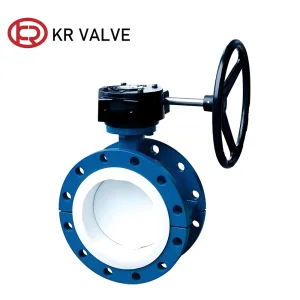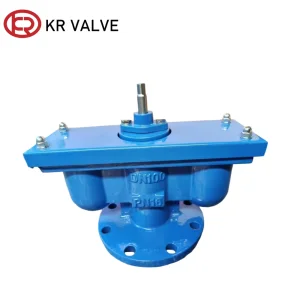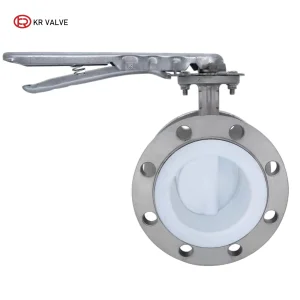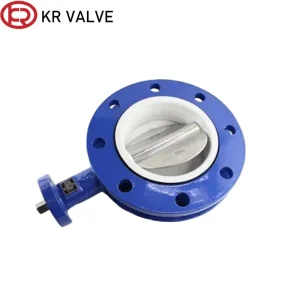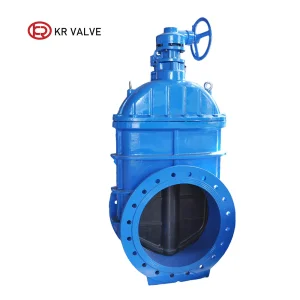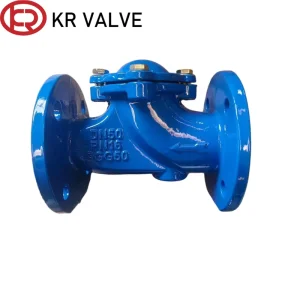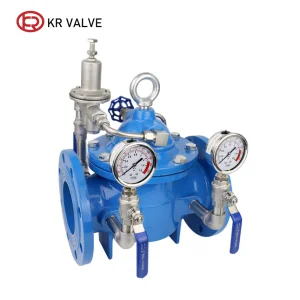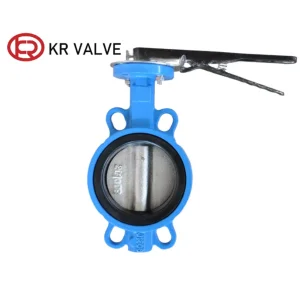
Featured OEM Flow Control Valve Portfolio (Part I)
Explore our engineered isolation, check, and control valves manufactured under ISO 9001 and API standards for worldwide municipal and industrial pipelines.
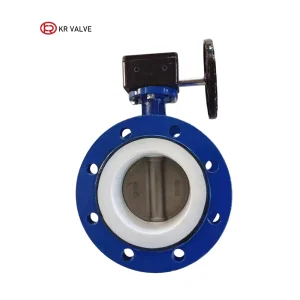
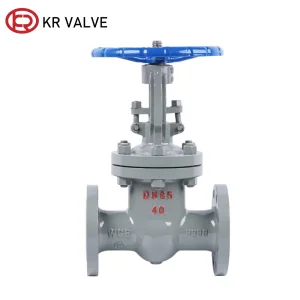
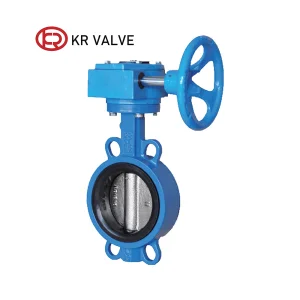
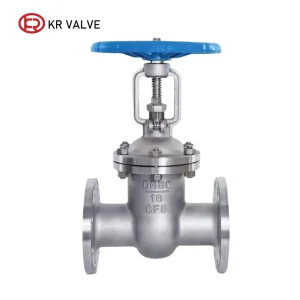
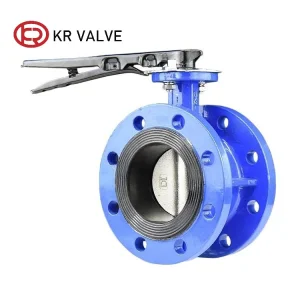
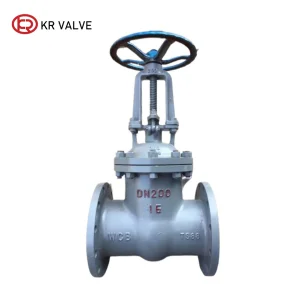
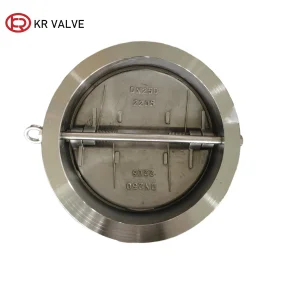
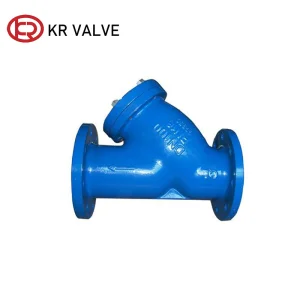
Global Industry Trends & Market Dynamics in Stainless Steel Gate Valve Manufacturing
The international industrial fluid control landscape is undergoing a profound paradigm shift driven by stringent fugitive emission mandates, aggressive chemical processing expansion, and the globalization of mega-scale seawater desalination facilities. OEM stainless steel gate valve manufacturers stand at the nexus of this transformation, evolving from traditional casting foundries into high-precision engineering hubs capable of producing custom metallurgy tailored to extreme fluid environments.
As global engineering procurement contractors (EPCs) demand higher reliability and lower total cost of ownership (TCO), standard off-the-shelf valves are increasingly superseded by custom OEM solutions. Austenitic stainless steel alloys—such as CF8 (304), CF8M (316), and low-carbon derivatives like CF3M (316L)—alongside advanced Duplex (2205) and Super Duplex (2507) stainless steels, have become indispensable in mitigating pitting corrosion, chloride stress corrosion cracking, and aggressive erosive wear in continuous processing plants.
Industrial plant operators are shifting focus from initial capital expenditure (CAPEX) to operational longevity (OPEX). High-grade stainless steel gate valves eliminate frequent replacement downtime, offering 20+ years of operational service in corrosive media.
With strict international environmental standards (ISO 15848-1 and TA-Luft), OEM factories must integrate live-loaded packing glands and precision-machined stem finishes (Ra < 0.4 µm) to achieve zero micro-leakage compliance.
Modern OEMs are designing gate valve bonnets and top flanges to ISO 5211 specifications directly out of the foundry, facilitating seamless mounting of intelligent electric, pneumatic, and electro-hydraulic actuators for Industry 4.0 automation.
Furthermore, geopolitical supply chain realignments have led overseas buyers to seek validated manufacturing partners in China that combine vertical production capabilities—from precision investment casting and CNC machining to hydrostatic testing and non-destructive examination (NDE)—with robust quality management systems compliant with European (CE/PED), American (API/ASME), and British (BS) regulatory frameworks.
OEM Stainless Steel Gate Valve Metallurgy & Engineering Specifications
As a specialized OEM stainless steel gate valve factory, understanding the microstructural properties and mechanical behavior of valve alloys under extreme pressure-temperature ratings is paramount to valve sizing and selection.
Gate valves serve primarily as full-bore, low-friction isolation devices. Unlike globe valves, which exhibit high head loss due to tortuous flow paths, rising stem gate valves (OS&Y - Outside Screw and Yoke) offer a straight-through waterway, resulting in minimal pressure drop (Cv maximization). However, improper alloy selection or seating geometry in aggressive fluid service can result in galling, seat wire-drawing, or stress-corrosion failure.
Comparative Metallurgy: Cast Stainless Steels for Industrial Gate Valves
| ASTM Grade | UNS / Equivalent | Pitting Resistance (PREN) | Optimal Temperature Range | Recommended Industrial Applications |
|---|---|---|---|---|
| ASTM A351 CF8 | UNS J92600 / 304 SS | ~18.0 - 20.0 | -196°C to +425°C | General industrial water, HVAC, mild chemical processing, food & beverage. |
| ASTM A351 CF8M | UNS J92900 / 316 SS | ~23.0 - 25.0 | -196°C to +537°C | Chemical processing, marine equipment, organic acids, pulp & paper digestors. |
| ASTM A351 CF3M | UNS J92800 / 316L SS | ~23.0 - 25.0 | Cryogenic to +400°C | High-purity pharma, welded pipeline systems to prevent intergranular corrosion. |
| ASTM A890 4A | UNS J92205 / 2205 Duplex | ≥ 34.0 | -40°C to +280°C | Seawater reverse osmosis (SWRO), high-chloride brines, offshore oil & gas platforms. |
| ASTM A890 5A | UNS J93404 / 2507 Super Duplex | ≥ 42.0 | -40°C to +250°C | Severe chemical acids (sulfuric/phosphoric), deep-water subsea flowlines, hypersaline environments. |
Austenitic stainless steel seat interfaces (e.g., 316 against 316) are naturally prone to metal galling under high differential pressures. KR Valve integrates automated plasma transferred arc (PTA) welding to apply Stellite Gr. 6 (Cobalt-base) or Hastelloy overlay on critical wedge and seat ring sealing faces, guaranteeing bi-directional tight shut-off (API 598 zero leakage) even after thousands of operational cycles.
Wedge Architecture Options in OEM Production
Depending on client specification and thermal pipeline conditions, our factory manufactures three core wedge design variants:
Simple, high-strength one-piece casting suitable for smaller nominal sizes (DN50-DN100) or low-pressure cold liquid lines. Minimal turbulence, but sensitive to thermal binding if exposed to rapid temperature spikes.
Features a central cut-out along the perimeter, enabling the seating faces to flex independently. This compensates for body seat misalignment caused by piping loads and completely prevents thermal binding in high-temperature steam lines.
Utilizes twin independent discs expanded outward by a central spring or wedge mechanism. Ideal for low-pressure gas or high-differential chemical applications requiring self-aligning low torque operation.
Global Procurement Needs & Macro Industrial Solutions
International procurement managers and project engineers face distinct operational hurdles when sourcing flow control equipment across borders. Balancing price efficiency with certified product reliability requires an OEM partner capable of delivering turnkey solutions across diverse heavy industries.
Providing high-pressure 2205 Duplex and Super Duplex gate and check valves designed to resist aggressive chloride attack in high-salinity seawater intake networks.
Supplying full-PTFE lined butterfly valves and CF8M stainless gate valves engineered to withstand strong inorganic acids, volatile solvents, and corrosive hydrocarbons.
Manufacturing large-diameter resilient seat gate valves (BS5163 / DIN F5) and hydraulic 200X pressure reducing valves for citywide distribution networks.
Cast steel (WCB/WC6) and high-temperature SS gate valves with Stellite hardfacing engineered for extreme thermal cycling in power plant boiler lines.
Localized Support, Certification & Quality Control Guarantee
Risk mitigation in global procurement relies on full traceability and stringent factory testing. Every single valve produced in our facility undergoes rigor-checked QA protocols prior to container sealing:
X-ray fluorescence (XRF) spectroscopy verification on 100% of stainless steel body castings, bonnets, stems, and wedges to guarantee exact chemical composition matching ASTM chemical limits.
100% compliance testing per API 598 / EN 12266-1. High-pressure shell hydrostatic test at 1.5x PN/Class rating, followed by high and low-pressure gas seat leakage verification.
Complete shipment documentation dossiers including EN 10204 3.1 Material Test Reports (MTRs), NDT test certificates (RT/UT/PT), pressure test charts, and Certificate of Origin.
Technology Roadmap & Future Outlook in Smart Valve Manufacturing
As heavy industries embrace digital transformation, environmental sustainability, and ultra-high efficiency, the humble mechanical gate valve is evolving into a sophisticated cyber-physical flow asset.
Future stainless steel gate valves will feature embedded micro-sensors within the packing chamber and stem assembly. These sensors transmit real-time data regarding seat torque, vibration, stem position, and micro-leakage directly to SCADA systems, enabling predictive maintenance before catastrophic failure occurs.
With the global hydrogen economy expanding, OEM foundries are optimizing extended bonnet stainless steel gate valves capable of maintaining zero-leakage tightness at liquid hydrogen temperatures (-253°C), utilizing specialized lip seals and nitrogen-purged bonnets.
Direct metal laser sintering (DMLS) 3D printing technology is being adopted to fabricate inner flow passages and internal anti-cavitation trim geometries that are physically impossible to cast using traditional sand or investment casting techniques.
Frequently Asked Questions: Technical Procurement & Engineering
Get rapid technical answers from our senior engineering team regarding valve specification, material selection, standard cross-referencing, and OEM customization options.
Extended Industrial Valve Solutions Portfolio (Part II)
Discover our full suite of complementary industrial valves including full PTFE lined butterfly valves, hydraulic control valves, non-return check valves, and air release valves.