Featured Industrial Valve Solutions
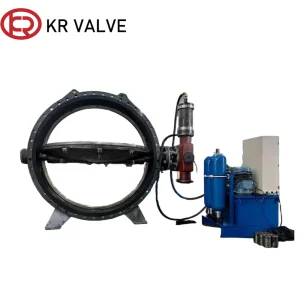
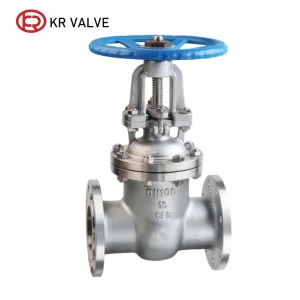
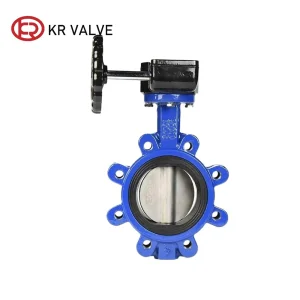
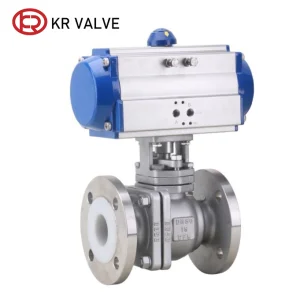
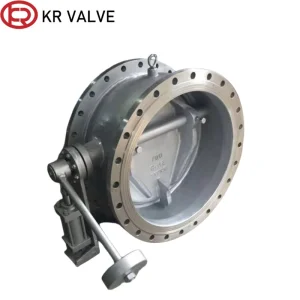
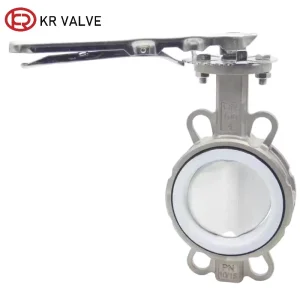
Global Industrial Status & Ecosystem of Swing Type Non-Return Valves (NRV)
In modern industrial fluid handling, municipal hydro-infrastructure, petrochemical refining, and power generation networks, the Swing Type Non-Return Valve (NRV)—commonly designated as a swing check valve—serves as an indispensable safety and control component. Designed to permit unidirectional fluid flow while automatically preventing backflow, swing NRVs protect upstream pumping assets, turbomachinery, and pressurized pipe manifolds from hydraulic transients, severe water hammer shockwaves, and catastrophic back-siphonage.
As global industrial infrastructure undergoes rapid modernization, the demand for high-integrity OEM swing type NRVs has scaled exponentially. According to recent market engineering analyses, global energy transitions, expanding sea-water reverse osmosis (SWRO) desalination networks, and industrial wastewater initiatives are driving the demand for specialized swing check valves engineered with low pressure drops, zero-seat leakage, and cavitation-resistant metallurgy.
Information Gain Insight: The evolution of swing type NRV manufacturing has shifted from traditional passive mechanical flap mechanisms to hydrodynamically optimized, CFD-assisted disc profiles integrated with micro-resistance slow-closing hydraulic dampers. This mitigates transient surge pressure spikes by up to 85% compared to conventional rapid-closing swing discs.
Fluid Dynamic Operating Mechanics
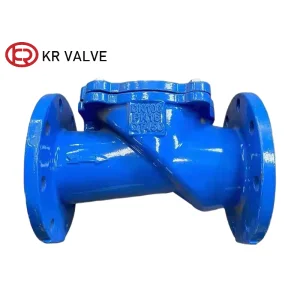
The core structural design of a swing NRV consists of a valve body, a bonnet, a disc (flap), a hinge pin, and an internal or external seat ring. The valve operates based on fluid velocity and differential pressure. As media enters the inlet port, the dynamic pressure generated by the fluid forces the disc to swing upward off the seat ring, allowing uninhibited full-bore flow. When downstream pump shutdown occurs or fluid momentum drops below the critical cracking pressure, gravity combined with reverse pressure dynamics swings the disc back onto the seating surface, establishing a positive hydraulic seal.
Engineering Advantages of Our OEM Swing NRV Platform
Full-Bore Unobstructed Hydro-Flow
Engineered with a contoured flow passage yielding a Cv/Kv flow coefficient matching maximum pipe internal diameters. This minimizes head loss and drastically reduces long-term operational pumping energy costs.
Zero-Leakage Sealing Metallurgy
Available in resilient EPDM/NBR soft seating for bubble-tight low-pressure isolation, or hard-faced CF8M/Stellite metal-to-metal seating rated for severe thermal and abrasive fluid conditions.
Anti-Water Hammer Slow Closing
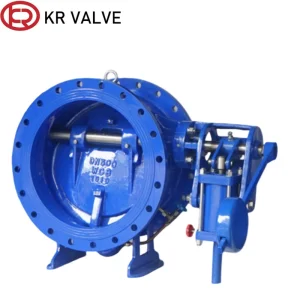
Optional hydraulic dashpot assemblies and external counterweight lever arms allow controlled seat closure curves, neutralizing transient pressure surges in large-diameter municipal pipelines.
China Industrial Ecosystem: Unmatched Efficiency in OEM Valve Manufacturing
The competitive advantage of sourcing OEM swing type NRVs from top-tier Chinese valve manufacturing hubs (such as Tianjin, Wenzhou, and Jiangsu) stems from complete industrial integration. From advanced precision shell casting foundries to fully automated multi-axis CNC machining centers and hydro-pneumatic testing rigs, Chinese manufacturing offers unparalleled scalability, structural consistency, and rapid lead-time execution.
Material Selection Matrix & Engineering Standards
Selecting the precise alloy and trim configuration is critical to preventing galvanic corrosion, disc erosion, and body wall thinnings in harsh media environments. Our OEM capability spans a broad structural spectrum:
| Body Material | Standard Specs | Trim/Seat Options | Primary Application Environment |
|---|---|---|---|
| Ductile Iron (GGG40 / GGG50) | EN-GJS-400-15 / ASTM A536 | EPDM / NBR / Bronze (BS1400) | Municipal Potable Water, HVAC, Irrigation Networks |
| Cast Carbon Steel (WCB / WCC) | ASTM A216 WCB / DIN 1.0619 | 13Cr (SS410) / Stellite Hardfacing | Boiler Feedwater, Oil & Gas Midstream Pipelines |
| Stainless Steel (CF8 / CF8M) | ASTM A351 CF8 (304) / CF8M (316) | PTFE / Metal-to-Metal Integral Seat | Chemical Processing, Desalination, Food & Beverage |
| Duplex Stainless Steel (2205 / 2507) | ASTM A890 4A / 5A | Duplex Disc / Inconel 625 Overlay | High-Salinity Seawater RO, Offshore Oil Platforms |
Quality Assurance & NDT Certification Protocols
To adhere strictly to global E-E-A-T standards and international tender compliance, every production batch undergoes rigorous non-destructive testing (NDT) and hydro-static verification:
- Radiographic & Radiopaque Testing (RT): Verifies casting integrity and internal void-free wall thickness per ASME B16.34.
- Hydrostatic Shell Testing: Executed at 1.5x designated cold working pressure (CWP) per API 598 or EN 12266-1.
- Low-Pressure Air Seat Testing: Conducted at 0.6 MPa to guarantee zero pneumatic leakage across resilient soft seats.
- Material Traceability: Complete EN 10204 3.1 Mill Test Reports (MTR) covering chemical spectro-analysis and mechanical tensile/impact testing.
Localized Application Scenarios & Global Industry Trends
High-Impact Application Scenarios
Swing type NRVs are versatile mechanical barriers deployed across diverse fluid dynamics environments:
1. Pumping Station Isolation & Backflow Protection
In municipal water distribution and sewage pump discharge lines, high-capacity centrifugal pumps generate significant dynamic head. Swing check valves positioned immediately downstream of pump discharge outlets prevent violent reverse impeller spinning upon sudden power loss.
2. Seawater Reverse Osmosis (SWRO) Desalination Plants
SWRO facilities operate under extreme pressure regimes exceeding 70 bar. OEM swing NRVs crafted from Super Duplex 2507 or CF8M lined with specialized elastomer seats withstand severe chloride pitting corrosion while maintaining low cracking pressures.
3. Thermal Power Plant Steam Condensate Systems
Elevated temperatures require robust pressure seal bonnet swing check valves. Stainless steel metal-to-metal seating featuring Stellite cladding guarantees zero galling and long service life under thermal cycling up to 450°C.
Future Technology Trends in Swing NRV Engineering
The industrial valve sector is undergoing a smart revolution. Key emerging technological vectors include:
- Smart Sensor Integration (IoT-Enabled NRVs): Embedment of wireless inductive proximity sensors and acoustic emission monitors on the hinge pin to provide real-time disc position monitoring and predictive wear detection.
- Computational Fluid Dynamics (CFD) Optimization: Advanced finite element modeling to design curved disc profiles that decrease fluid turbulence, eliminate vortex shedding, and lower pressure drop coefficients (Delta P).
- Additive Manufacturing for Special Alloy Trims: 3D laser-cladding of corrosive-resistant alloys onto disc contact surfaces, optimizing material utilization without compromising strength.
B2B Procurement Guidelines for Global OEM Valve Buyers
When procuring industrial swing type non-return valves, engineering procurement managers must evaluate several technical and commercial parameters beyond upfront unit price:
1. Face-to-Face Standard Matching
Ensure strict compliance with target engineering standards—whether DIN 3202-F6, BS 5153, ANSI B16.10, or ISO 5752—to prevent installation misalignment during retrofits.
2. Dynamic Water Hammer Risk
For systems with fluid velocity exceeding 2.5 m/s, specify swing NRVs with hydraulic dampers or counterweights to prevent destructive slamming upon rapid closure.
3. Total Cost of Ownership (TCO)
Evaluate friction head loss data. A valve with a slightly lower drag coefficient saves substantial power consumption costs over a 20-year operational lifecycle.