Featured Industrial Valve Supply Line
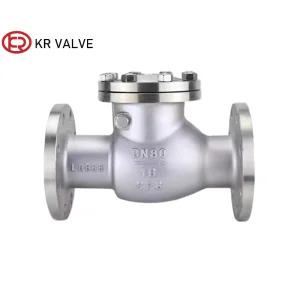
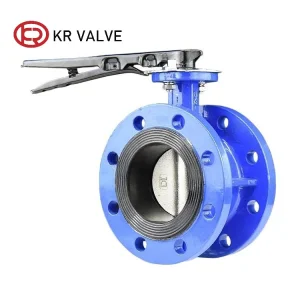
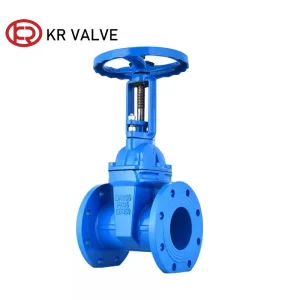
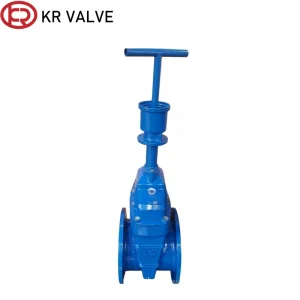
Precision-machined butterfly, gate, ball, and non-return valves manufactured to rigorous international standards.
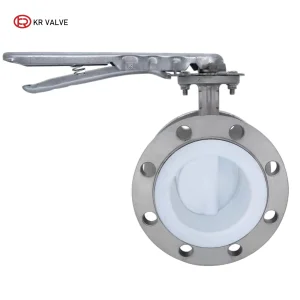
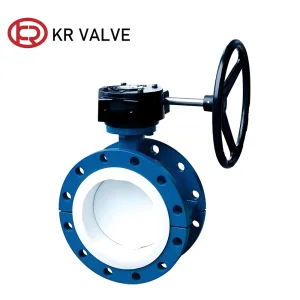
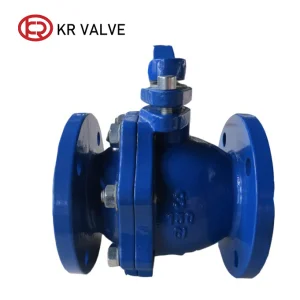
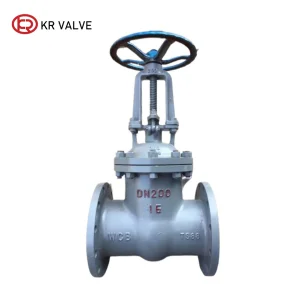
Engineering Severe-Service Flow Control: Cone Valve Technology
In high-head hydropower dams, municipal reservoir bottom outlets, and cross-basin water diversions, managing severe kinetic energy and preventing destructive cavitation are paramount engineering challenges.
Energy Dissipation Mechanics
Cone valves (commonly referred to as Howell-Bunger or fixed cone valves) utilize a stationary internal cone and a moving outer sleeve. Fluid expands radially outward into a hollow jet, spreading the water over a large area to safely dissipate massive hydraulic energy without scouring downstream structures.
Cavitation Index ($\sigma$) Optimization
By forcing air introduction along the inner boundary layer through integrated aeration hoods or natural atmospheric entrainment, cone valves dramatically elevate the cavitation index ($\sigma$), preventing implosion micro-jets from damaging heavy metal cast components.
Linear Discharge Throttling
Unlike standard butterfly or gate valves which suffer from non-linear flow coefficients ($C_v$) near closure, fixed cone valves feature a linear relationship between sleeve position and discharge volume, enabling precise reservoir elevation and environmental flow control.
Global Valve Manufacturing Metrics
Supplying high-reliability flow isolation & discharge infrastructure for heavy industry globally.
Howell-Bunger & Sleeve Valve Structural Metallurgy
Dissecting the component-level engineering that guarantees zero-vibration throttling and extended maintenance cycles.
Kinematic Sleeve Actuation & Drive Systems
The core operating mechanism relies on dual counter-synchronized drive screws powered by electro-hydraulic actuators or heavy-duty worm gearboxes. Internal radial guide ribs ensure concentric alignment of the stainless steel outer sleeve, eliminating mechanical binding even under asymmetrical hydrodynamic torque. Self-lubricating bronze or PTFE-composite bushings minimize friction coefficient ($\mu < 0.08$) during full-head emergency stroke cycles.
Trim Materials & Surface Cladding
To resist high-velocity silt erosion and cavitation degradation, critical seating surfaces are hard-faced using High-Velocity Oxygen Fuel (HVOF) applied Tungsten Carbide or Stellite-6 alloy cladding. Valve bodies are cast from high-tensile Ductile Iron ASTM A536 65-45-12, WCB Carbon Steel, or forged Stainless Steel (CF8/CF8M/Duplex 2205), accompanied by 300-micron fusion-bonded epoxy (FBE) coatings compliant with potable water standards.
Industrial Flow Isolation & Control Comparison Matrix
Evaluating Cone Valves against standard butterfly, gate, knife gate, ball, and control valves across key hydro-mechanical parameters.
| Valve Technology Type | Primary Operational Duty | Cavitation Risk | Throttling Precision | Energy Dissipation | Relative Installed Cost |
|---|---|---|---|---|---|
| Fixed Cone (Howell-Bunger) | High-Head Discharge & Bottom Outlet | Ultra Low (Aerated) | Linear (High Precision) | Severe / High Energy Dissipation | High (Specialized Heavy Infrastructure) |
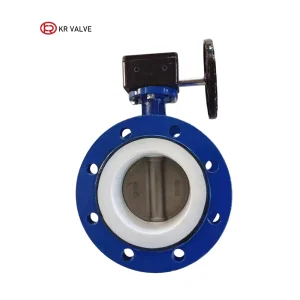
| Double-Eccentric Butterfly Valve | Pipeline Isolation & Low-Delta P Control | Moderate to High | Equal Percentage (Fair) | Low Energy Dissipation | Moderate (Economical Footprint) |
| Resilient Seated Gate Valve | Full-Bore On/Off Isolation (Clean Water) | High if Throttled | Not Suitable for Throttling | None (Designed for Low Headloss) | Low (Standard Municipal) |
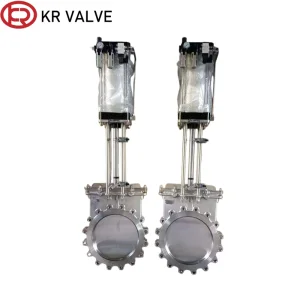
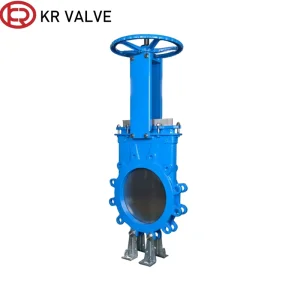
| Pneumatic / Manual Knife Gate Valve | Slurry, Mining & Wastewater Solids | High under Clean Water High-Head | Poor (On/Off Shear Duty) | Low | Low to Moderate |
| Hydraulic Water Control (200X / 100X) | Pressure Reduction & Float Level Regulation | Low to Moderate (Diaphragm-Driven) | High Automated Control | Moderate (In-line Diaphragm) | Moderate |
| PTFE Lined Concentric Butterfly | Corrosive Chemical & Pure Acid Lines | Moderate | Moderate Throttling | Low | Moderate (Specialty Lining) |
Global Procurement & Localized Certifications
Navigating global engineering standards to provide certified OEM/ODM valve packages for public works and private EPC projects.
North American Standards (AWWA / ASME)
Cone valve manufacturing aligns strictly with AWWA C520 (Hydraulic Gate and Sleeve Valves) and ASME B16.34 pressure ratings. Cast iron components conform to ASTM A126 Class B, while ductile iron parts follow ASTM A536 specifications for seismic and water hammer resiliency.
European Mandates (CE / PED / EN 1092)
For European Union infrastructure, products carry Pressure Equipment Directive (PED 2014/68/EU) CE marking. Flange dimensions comply with EN 1092-2 (PN6 to PN40), and elastomeric seals meet WRAS, DVGW, and ACS approvals for potable drinking water safety.
Middle East & Coastal Seawater Duty
High-salinity desalination discharge projects in GCC regions demand custom Super Duplex Stainless Steel (UNS S32750/S32760) trims, ceramic-coated sleeves, and heavy anti-fouling epoxy barrier layers to withstand aggressive marine environments.
Localized Application Scenarios & Field Installations
Real-world deployment dynamics across varying geographical terrains and plant architectures.
Submerged Discharge vs. Free-Discharge Hoods
When discharging directly into open air, a cone valve creates a 45-degree expanding spray cone that oxygenates the stream while dispersing energy. In confined stilling basins or urban conduits, a dynamic Discharge Hood is installed around the sleeve to redirect the aerated cone into a concentrated linear jet, suppressing noise levels below 82 dBA and protecting concrete channel walls.
Alpine Sub-Zero & High-Silt Reservoir Outlets
In high-altitude alpine reservoirs, freezing temperatures and abrasive glacial silt pose dual threats. Cone valve sleeves are equipped with thermal heating jackets along drive screws to prevent ice lock, while sleeve seating edges feature dual wiper seals that scour heavy sediment deposits during the closing stroke, preserving tight shutoff integrity.
Technology Roadmap: Next-Gen Smart Valves (2025-2035)
Pioneering digital-twin integration, smart diagnostic sensors, and advanced material engineering for severe service fluid control.
IoT Telemetry & Acoustic Cavitation Monitoring
Modern cone valves are increasingly retrofitted with embedded piezo-electric acoustic emissions sensors. These sensors detect early-stage cavitation bubble collapse frequencies (20 kHz–100 kHz) in real-time, automatically adjusting sleeve travel via smart PLCs to maintain operation in safe non-cavitation regimes.
CFD-Optimized Dynamic Cone Geometries
Using 3D Computational Fluid Dynamics (CFD) and Finite Element Analysis (FEA), internal guide vane profiles are contoured to suppress vortex shedding. This reduces dynamic turbulence forces by up to 35%, allowing lighter actuator torque ratings and lower power consumption.
High-Entropy Alloys & Ceramic Coatings
Next-generation severe-service valves feature plasma-sprayed nanostructured ceramic matrix coatings (Cr3C2-NiCr). These coatings provide ultra-high hardness (>1100 HV) and extreme corrosion resistance, extending operational lifespan in harsh slurry and chemical media by 300%.
Frequently Asked Questions (FAQ)
In-depth technical answers for hydro-electric engineers, municipal buyers, and EPC contractors.
What is the main operating difference between a Howell-Bunger Cone Valve and a standard Butterfly Valve?
How does a Discharge Hood modify the spray pattern of a Fixed Cone Valve?
What materials are recommended for cone valve seats in high-silt or corrosive environments?
What actuation methods are available for wholesale cone valve supply?
Which international manufacturing standards govern cone valve production?
Can you supply OEM branding and custom dimensions for international engineering contractors?
What routine maintenance is required to prevent sleeve jamming over long operational lifespans?
Complementary Heavy-Duty Valve Series
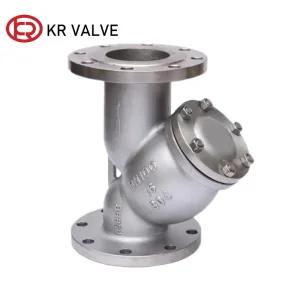
Explore our wholesale catalog of check valves, gate valves, strainers, and specialized pipeline isolation products.