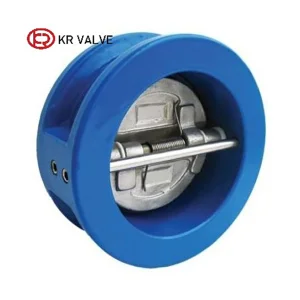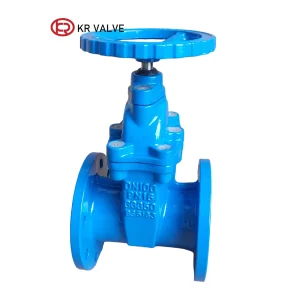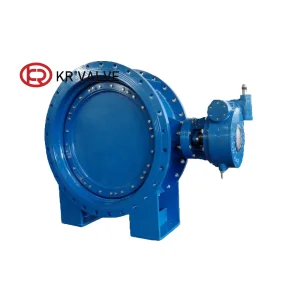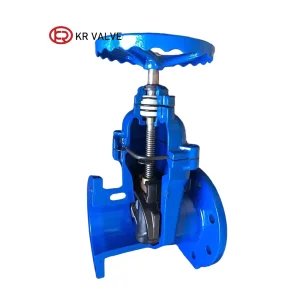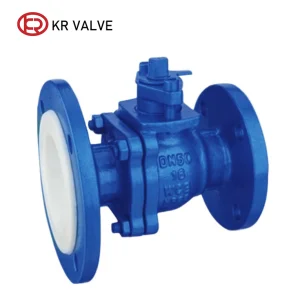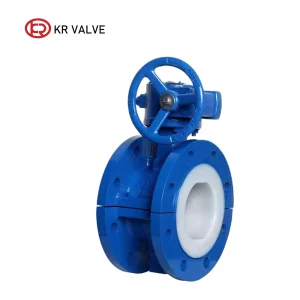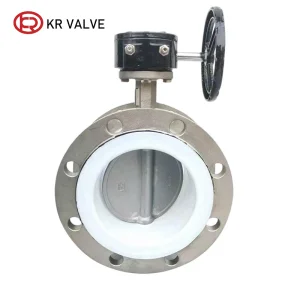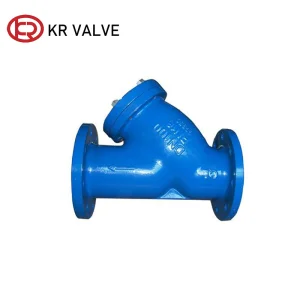
Featured Industrial Flow Control Systems (Group 1)
Explore our flagship engineered valves designed for municipal water networks, thermal power plants, and high-pressure industrial pipelines.
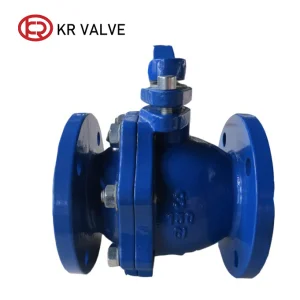
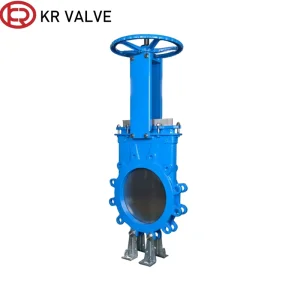
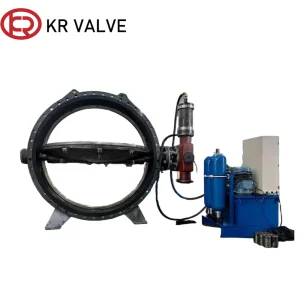
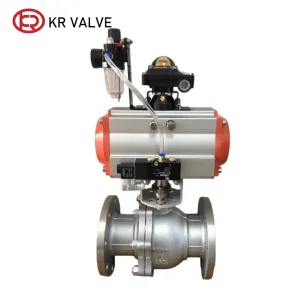
1. Global Industrial & Commercial Landscape for Ductile Iron Metal-Seated Valves
Analyzing modern infrastructure expansion, thermal cycle requirements, and the shift toward heavy-duty metal-to-metal seating solutions.
Across the global landscape of fluid handling, municipal infrastructure development, thermal energy management, and heavy industrial plant construction, the selection of robust isolation valves directly determines operational longevity and lifecycle expenditure. In recent years, global procurement directors and EPC engineering contractors have increasingly prioritized Wholesale Ductile Iron Gate Valve Brass Seat configurations over traditional grey cast iron or soft-seated alternatives.
The global industrial valve market is experiencing a structural migration. While resilient soft-seated gate valves (utilizing EPDM or NBR encapsulated wedges) perform exceptionally well in ambient potable water distribution up to 70°C, high-demand industrial circuits—such as district heating return lines, raw water intake with suspended particulate matter, agricultural irrigation, and high-pressure fire protection systems—demand superior abrasion resistance and thermal tolerance. Ductile iron (ASTM A536 / EN-GJS-400-15 / EN-GJS-500-7) paired with high-tensile brass or bronze metal seating ring faces provides the requisite mechanical ductility and anti-galling performance necessary to resist severe flow turbulence, hydraulic shock (water hammer), and particulate erosion.
Furthermore, leading manufacturing hubs in China have sophisticated their casting techniques through resin-sand molding, automated cupola melting, and CNC dual-axis seat lapping. Overseas buyers, municipal water authorities, and valve distributors seeking bulk procurement benefit from favorable economies of scale without compromising strict compliance with standards such as DIN 3352, BS 5163, AWWA C500, and ISO 7259.
2. Metallurgical Engineering, Structural Architecture & Seating Dynamics
Detailed analysis of nodular graphite cast iron, brass seat ring insertion methods, and wedge geometry.
Ductile Iron Body Metallurgy
Unlike conventional grey cast iron (GG25) which contains brittle flake graphite, Ductile Iron (EN-GJS-450-10 / GGG40 / ASTM A536 65-45-12) incorporates magnesium or cerium additives during ladle treatment to form spheroidal graphite nodules. This microstructure increases tensile strength (≥450 MPa), yield strength (≥310 MPa), and elongation (≥10%), ensuring body integrity against pipeline bending stresses and pressure spikes.
Brass & Bronze Seating Mechanics
The sealing interface utilizes high-precision brass rings (CuZn39Pb3 / HPb59-1) or DZR brass (CZ122 / C36000). The brass seat rings are either threaded into the body/wedge or mechanically hydraulic-pressed into precision-bored grooves. The soft-yet-durable crystalline surface of brass creates a micro-conforming seal under wedge compression, resisting micro-scratching from suspended solids.
Non-Rising Stem (NRS) vs. OS&Y
Wholesale manufacturing lines offer both Non-Rising Stem (NRS) for compact underground burial or valve chambers, and Outside Screw & Yoke (OS&Y) for visible stem position verification in industrial plant rooms. Stainless steel stems (410, 420, or 316 grade) feature cold-rolled ACME trapezoidal threads, ensuring low torque operation and high fatigue resistance over thousands of stroke cycles.
| Performance Parameter | Ductile Iron + Brass Seat Gate Valve | Ductile Iron Resilient Seat (EPDM) | Grey Cast Iron Metal Seat Valve | Cast Steel WCB Gate Valve |
|---|---|---|---|---|
| Nominal Pressure Rating | PN10 / PN16 / PN25 / Class 150 | PN10 / PN16 | PN6 / PN10 / PN16 | Class 150 / 300 / 600 |
| Operating Temp Range | -10°C to +150°C (Up to 180°C) | -10°C to +70°C (Max 80°C) | -10°C to +120°C | -29°C to +425°C |
| Particulate & Slurry Resistance | High (Self-cleaning metal surface) | Moderate (Risk of rubber tearing) | Moderate (Prone to body cracking) | High |
| Tensile Strength (Body) | ≥ 450 MPa (High Impact Resistance) | ≥ 400 MPa | ≥ 250 MPa (Brittle under shock) | ≥ 485 MPa |
| Corrosion Protection | Fusion-Bonded Epoxy (FBE) 250µm | Fusion-Bonded Epoxy (FBE) 250µm | Liquid Primer / Epoxy Paint | Industrial Enamel / Epoxy |
| Lifecycle Expenditure (TCO) | Lowest (30+ Year Service Life) | Low (Requires rubber disc replacement) | Medium (Higher failure rate) | High (Over-engineered for water) |
3. Enterprise Procurement Requirements & Supply Chain Risk Management
Addressing Total Cost of Ownership (TCO), supplier audit frameworks, and batch testing validation for overseas importers.
When enterprise procurement managers evaluate ductile iron gate valve brass seat suppliers & factory direct offerings, the purchasing criteria extend beyond initial unit price. Modern procurement frameworks incorporate holistic metrics including material traceability, casting defect rates, hydrostatic testing failure thresholds, and global logistics packaging safety.
Critical Procurement Evaluation Metrics:
- Wall Thickness & Weight Compliance: Standard-compliant gate valves strictly adhere to minimum wall thickness rules prescribed by ISO 5996 or BS EN 1171. Enterprise buyers must guard against "lightweighted" valves where factories cut body thickness, leading to body rupture under pressure transients.
- Hydrostatic & Pneumatic Testing: Every individual valve must undergo 100% factory hydrostatic shell testing at 1.5 times Nominal Pressure (e.g., 24 bar for PN16) and seat testing at 1.1 times Nominal Pressure (17.6 bar) per EN 12266-1 leakage rate requirements.
- Fusion-Bonded Epoxy Coating (FBE): To prevent internal tuberculation and external soil corrosion, valves must feature electrostatic FBE powder coating with a dry film thickness (DFT) of at least 250 microns, verified by holiday spark testing at 2000V.
- Stem Torque Optimization: High-performance factories utilize roll-threaded stem manufacturing and low-friction brass thrust collars, reducing the opening and closing torque by up to 35% compared to cut-thread stems. This allows lower-cost electric or pneumatic actuators to be fitted.
Custom Flange Drilling Compatibility
Factory direct orders can be customized to match flanging dimensions according to EN 1092-2 (PN10/16/25), ANSI B16.1 Class 125/250, AS 4087, or JIS B2239, allowing seamless integration into multi-national project environments.
OEM Branding & Packaging
Leading Chinese manufacturing plants provide end-to-end OEM customization, including customer logo casting on body bonnets, specialized color epoxy coatings (RAL 5005 blue, RAL 3000 fire red, or neutral grey), and heavy-duty ISPM-15 heat-treated wooden crate packaging.
Material Traceability (EN 10204 3.1)
Enterprise buyers receive certified chemical analysis (spectrometer testing) and mechanical strength reports for every heat batch, verifying carbon, silicon, manganese, phosphorus, sulfur, and magnesium content in the ductile iron matrix.
4. Technical Innovation Roadmap & Next-Generation Valve Engineering
Smart monitoring integration, lead-free brass formulations, and zero-emission manufacturing processes.
The traditional mechanical gate valve is evolving into a smart, ecologically compliant flow node within modern digital utilities and Industry 4.0 process plants. Research and development teams in top-tier ductile iron valve factories are actively advancing several key technological fronts:
1. IoT Smart Actuation & Position Sensing
Integrating wireless non-intrusive position transmitters and pressure transducers directly into the valve bonnet assembly. These sensors transmit real-time valve opening percentages, stem vibration, line pressure differentials, and seating torque spikes via LoRaWAN or NB-IoT protocols to central SCADA platforms, enabling predictive maintenance prior to catastrophic seat failure.
2. Eco-Friendly Lead-Free & DZR Brass Alloys
Driven by strict drinking water safety regulations (such as NSF/ANSI 61, California AB 1953, and European Drinking Water Directive EU 2020/2184), modern brass seat foundries are transitioning from traditional leaded brass (HPb59-1 with 1-3% Pb) to specialized Dezincification-Resistant (DZR) silicon-brass or bismuth-brass alloys (e.g., C69300 / Eco Brass). This prevents heavy metal leaching while maintaining exceptional machinability and wear resistance.
3. Advanced CFD & FEA Computer Modeling
Utilizing 3D Computational Fluid Dynamics (CFD) and Finite Element Analysis (FEA) software allows valve engineers to optimize internal body flow contours. By smoothing internal liquid pathways, modern gate valves achieve lower head loss coefficients ($K_v$ / $C_v$), minimizing pumping energy consumption across municipal water distribution networks.
5. International Compliance, Regulatory Frameworks & Quality Assurance
Cross-border certification mapping, ISO management systems, and environmental compliance.
ISO 9001 & ISO 14001 Quality Systems
Factory production lines operate under strict ISO 9001 quality management standards, enforcing incoming raw material inspection, core molding consistency, precision CNC machining tolerances within ±0.02mm, and controlled epoxy curing temperatures.
CE / PED 2014/68/EU Certification
For European Union destinations, valves comply with the Pressure Equipment Directive (PED) Category I or II Module H, enabling CE mark declaration for safe pressure vessel operation across member nations.
Water Contact Approvals (WRAS / ACS / DVGW)
All internal non-metallic components (epoxy coatings, stem o-rings, thrust washers) hold valid WRAS (UK), ACS (France), or DVGW (Germany) drinking water safety approvals, ensuring zero toxic migration or bacterial growth enablement.
6. Frequently Asked Questions (Engineering & Procurement FAQ)
Direct answers to technical queries raised by valve procurement engineers, importers, and project buyers.
Why choose a Ductile Iron Brass Seat Gate Valve over a Resilient Seated Gate Valve?
While resilient seated gate valves (using rubber-coated wedges) offer bubble-tight shut-off for clean, ambient water systems below 70°C, ductile iron brass seated valves are engineered for more severe duties. The brass-to-brass or brass-to-iron metal seating interface withstands higher temperatures (up to 150°C-180°C), resists physical abrasion from grit or sand in raw water, and prevents rubber degradation when exposed to minor oils, chemicals, or thermal cycles. Additionally, metal seats eliminate the risk of wedge rubber tearing due to high differential flow velocity.
What is the difference between GGG40 and GGG50 ductile iron body material?
GGG40 (EN-GJS-400-15) offers higher ductility and elongation (≥15%), making it excellent for resisting mechanical shock and underground piping settlement. GGG50 (EN-GJS-500-7) provides higher tensile strength (500 MPa vs 400 MPa) and higher yield strength, making it ideal for higher pressure ratings (PN25 / PN40) and high-load industrial pipeline applications.
How are brass seats attached to the ductile iron valve body and wedge?
In wholesale industrial valve factories, brass seat rings are installed using three primary methods: 1) Threaded Seat Insertion: Machined brass rings are screwed into threaded body pockets with sealing compound; 2) Hydraulic Press Fit: Precision-bored body recesses receive brass rings pressed in under high tonnage, creating an interference joint; 3) Integral Surfacing: High-end custom valves may feature brass or bronze overlay welding (cladding) directly onto the ductile iron wedge face followed by CNC grinding.
What face-to-face standards are available for ductile iron gate valves?
Our direct factories manufacture gate valves according to major global standard dimensions: DIN 3202 F4 (short pattern) and DIN 3202 F5 (long pattern), BS 5163 / BS EN 558 series 3 & 14, AWWA C500 / C509, and ISO 5752 series 14/15. Specifying the correct face-to-face standard ensures exact drop-in replacement during pipeline maintenance.
What is the typical lead time and MOQ for wholesale OEM factory orders?
Standard wholesale orders for catalog sizes (DN50 to DN600) typically carry a production lead time of 20 to 35 days depending on batch quantity. Minimum Order Quantities (MOQ) start as low as 10-20 pieces per size for standard PN16 flanged valves, while custom casting designs or specialized flange drillings can be accommodated with tailored production runs.
How do factory inspectors verify valve leak tightness before shipment?
Every single valve undergoes 100% factory hydrostatic testing in accordance with ISO 5208 or EN 12266-1 standards. The valve body (shell) is pressurized with water to 1.5 times PN for a specified hold duration (e.g., 60 to 180 seconds) to check body integrity. Next, double-face seat closure testing is conducted at 1.1 times PN to verify that seat leakage stays well within allowable Rate C or Rate D limits for metal-seated valves.
Complete Pipeline Solution Products (Group 2)
Browse additional specialized valve series including non-return check valves, Y-strainers, and double eccentric butterfly valves.