Featured Industrial Valves & Flow Control Solutions
Explore our core engineering catalog engineered to DIN, BS, ANSI, and ISO global standards.
The Architecture of Modern Non-Return Flow Control
Analyzing the transition toward high-durability EPDM ball check valves in heavy-duty municipal, wastewater, and industrial pumping networks.
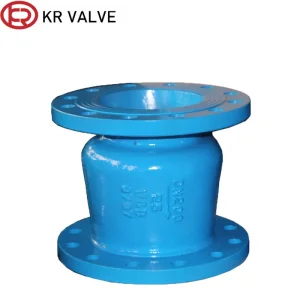
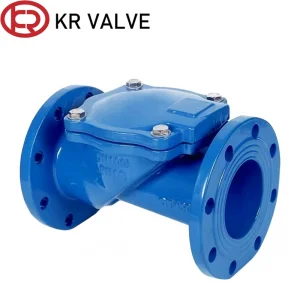
In modern hydraulic engineering and process fluid handling, the prevention of reverse flow and water hammer protection represent crucial design mandates. Among non-return valve configurations, the EPDM Ball Check Valve (frequently designated under standard models such as HQ41X-16 or DIN 3202-F6 ball check valves) has emerged as the premier mechanism for viscous, abrasive, and solid-laden media applications. Unlike conventional swing or double-disc check valves featuring mechanical hinges, pins, and external springs, the ball check design utilizes an unattached, elastomer-coated metallic core ball that moves freely inside a specially angled valve body chamber.
When fluid flows in the forward direction, kinetic hydraulic pressure pushes the EPDM-encapsulated ball off its seating surface and into an auxiliary guiding chamber located completely outside the primary flow line. This creates an uninhibited, 100% full-bore straight flow path with minimal head loss ($K_v$ value maximized). When fluid flow ceases or reverses, gravity combined with backpressure automatically guides the elastomeric ball back onto its precision-machined seat, forming a bubble-tight, zero-leakage elastomeric seal even in low-pressure conditions (down to 0.2 bar differential pressure).
EPDM Elastomer Technology & Hydrodynamic Dynamics
Deep-dive into rubber compounding, vulcanization integrity, and fluid friction reduction.
EPDM Compound Optimization
Ethylene Propylene Diene Monomer (EPDM) chosen for ball encapsulation undergoes high-pressure hot vulcanization over a solid carbon steel or ductile iron internal sphere. Formulated to resist ozone, weathering, dilute acids, alkalis, and temperatures ranging from -10°C to +120°C, ensuring high elastic memory without permanent compression set.
Self-Cleaning Geometry
During operation, the internal EPDM ball rotates continuously as it is suspended in the liquid medium. This multidirectional rotation constantly cleans the seating surface, eliminating solid buildup, scale, or ragging common in municipal sewage and industrial slurry pumping systems.
Hydraulic Shock Mitigation
Because the resilient EPDM surface absorbs mechanical kinetic energy during fast closure, the valve significantly dampens hydraulic shockwaves (water hammer) compared to metal-to-metal swing check designs, safeguarding upstream pumps and pipeline integrity.
Standard Technical Matrix: EPDM Ball Check Valve Series
The following technical table provides the standard manufacturing criteria enforced by top-tier Chinese valve OEM factories for global B2B procurement specs:
| Parameter / Feature | Technical Specification | Standard Compliance |
|---|---|---|
| Nominal Diameters | DN50 to DN600 (2" to 24") | DIN EN 1092-2 / ANSI B16.5 / BS4504 |
| Nominal Pressure (PN) | PN10 (1.0 MPa), PN16 (1.6 MPa), Class 150 | EN 12266-1 / ISO 5208 Seating Class A |
| Body & Bonnet Material | Ductile Iron GGG40 / GGG50 (EN-GJS-400-15 / 500-7), WCB, CF8 | ASTM A536 / EN-1563 / ASTM A216 |
| Ball Encapsulation | High-Density EPDM Elastomer over Steel/Ductile Core (NBR Optional) | WRAS Approved / FDA Standard / EN 681-1 |
| Coating System | Fusion Bonded Epoxy (FBE) Powder Coating, Min. 250 µm thickness | DIN 30677 / AWWA C550 Anti-Corrosion |
| Face-to-Face Dimensions | DIN 3202-F6 Series / EN 558-1 Series 48 | ISO 5752 / BS 5153 Standard Length |
| Suitable Media | Raw Sewage, Wastewater, Slurry, Viscous Liquids, Clear Water | pH Range 4.0 to 11.0 Operating Fluid |
Industry Trends & Global Procurement Drivers
Market forces driving transition toward low-maintenance non-return technologies in international engineering infrastructure.
The global industrial valve market is undergoing a significant transformation driven by strict municipal environmental regulations, smart water network upgrades, and rising Total Cost of Ownership (TCO) awareness among plant operators. Key trends shaping procurement demand for EPDM Ball Check Valves include:
1. Shift from Swing Check to Non-Clogging Ball Mechanisms
Traditional swing check valves installed in wastewater and solids-handling pumping stations suffer from high failure rates due to fibrous material (rags, wet wipes, stringy sludge) wrapping around internal hinge pins. Water authorities globally are replacing swing check units with EPDM ball check valves because the smooth, unencumbered full-bore cavity permits total solids passage without snag points.
2. Decarbonization and Pumping Energy Efficiency
With electricity accounting for over 80% of a municipal water plant's lifetime operating expenses, reducing pressure drop across valves is paramount. Modern CFD-engineered ball check valve bodies feature optimized flow channels that cut head loss coefficients ($K$) by up to 30%, directly reducing pump kilowatt requirements over continuous 24/7 duty cycles.
3. Strict Potable & Wastewater Coating Requirements
Global contracts now universally mandate toxicologically safe, heavy-duty anti-corrosion coatings. Chinese manufacturing plants lead this standard by applying automated electrostatic thermal spraying of Fusion Bonded Epoxy (FBE), certified under WRAS (UK), DVGW (Germany), and NSF/ANSI 61 (USA), protecting valve cast iron from tuberculation and galvanic corrosion.
China Industry 4.0: Supply Chain Resilience & Precision Engineering
How state-of-the-art Chinese valve foundries and automation ecosystems deliver unmatched technical compliance and cost efficiency.
Automated Resin-Sand Molding
Leading Chinese OEM factories employ CNC automated resin-sand molding lines for casting GGG40 ductile iron bodies. This guarantees consistent wall thickness, high dimensional tolerance, and zero internal casting porosity under radiography inspection.
Precision Rubber Vulcanization
The elastomer coating on the internal ball uses computer-controlled injection vulcanization presses. This eliminates microscopic voids, ensures uniform EPDM thickness across the entire circumference, and prevents rubber peeling or delamination under high shear fluid dynamics.
100% Hydrostatic Testing
Every single manufactured unit undergoes dual-stage hydrostatic shell and seat pressure testing in accordance with ISO 5208 and EN 12266-1 prior to packaging, ensuring zero-leakage performance before shipment.
Localized Engineering Use Cases & System Integration
Custom installation configurations across diverse municipal and heavy industrial operational environments.
Municipal Wastewater Lift Stations
Positioned on pump discharge pipes to prevent media backflow into wet wells when submersible pumps shut off. The EPDM ball easily permits grit, suspended solids, and rags to pass without clogging or jamming the seating mechanism.
Mining Tailings & Slurry Transport
In mineral processing plants handling abrasive slurries, metal-seated valves degrade rapidly. The thick EPDM elastomer layer provides natural impact resistance against fine quartz, ore particles, and chemical reagents, dramatically expanding operating lifespans.
Stormwater & Flood Control Facilities
Large diameter (DN300-DN600) ball check valves are deployed in high-capacity stormwater drainage systems. Operating reliably in horizontal or vertical orientation, they instantly seal against sudden tide back surge or river level spikes.
Frequently Asked Questions (FAQ)
Comprehensive technical guidance for procurement directors, MEP engineers, and industrial distributors.
Complementary Pipeline Valves & Accessories
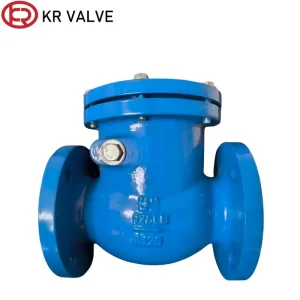
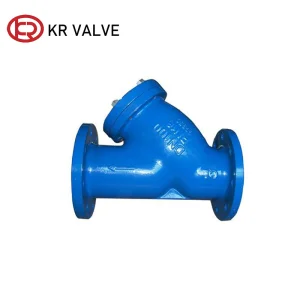
Explore our full range of swing check valves, silent check valves, Y-strainers, and air release valves.