
High-Performance Industrial Valve Solutions
Direct factory supply of precision-engineered industrial valves built to international ANSI, DIN, BS, and ISO standards.
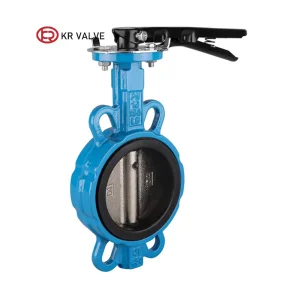
OEM China Suppliers Factory Wafer Butterfly Valve DN100 - Concentric Resilient Seated, PN6/PN10/PN16
View Details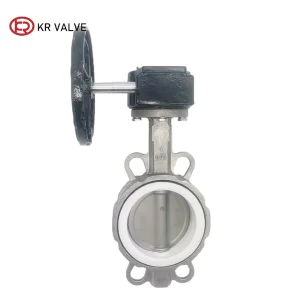
Wholesale China Stainless Steel Body PTFE Seat Wafer Butterfly Valve - D71X Series Factory Direct Supplier
View Details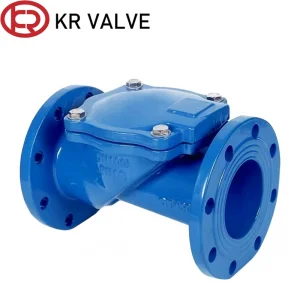
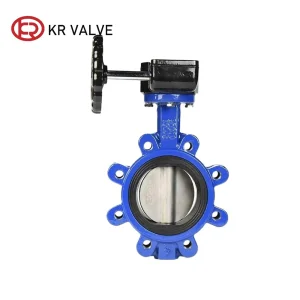
Custom Lug Butterfly Valve with EPDM Seal - Concentric Resilient Seated, Sizes DN40-DN600
View Details
The Global Commercial & Industrial Landscape of Gate Valve Stems
Understanding mechanical dynamics, wear mechanisms, and metallurgical requirements in heavy-duty flow control equipment.
Critical Force Transmission Component
In industrial fluid infrastructure, the gate valve stem serves as the primary mechanical link transmitting rotational or linear thrust from the actuator, handwheel, or gear drive directly to the valve wedge or gate disk. Because gate valves operate predominantly in critical isolation duties (on/off service), the stem is subject to intense combined stresses: high axial tension, torsional friction, cyclic compressive loading, and aggressive fluid medium exposure.
Whether handling high-pressure supercritical steam in modern thermal energy units, sour crude oil enriched with H₂S, or high-volume municipal water trunk mains, stem integrity defines operational safety and valve zero-leakage longevity.
Global Market Growth & Sourcing Shifts
The global industrial valve component market, specifically for precision-machined forged valve stems, is experiencing robust growth driven by worldwide water infrastructure renewals, LNG terminal expansion, and chemical processing automation. According to recent industrial data, the demand for high-grade alloy and stainless steel valve stems is expanding at a CAGR of 5.8% globally.
B2B procurement teams, engineering procurement construction (EPC) contractors, and valve OEM brands are increasingly migrating toward specialized wholesale suppliers capable of providing fully certified, high-precision stems that lower field maintenance downtime and pass zero-fugitive-emission criteria (ISO 15848-1 and TA-Luft).
Rising Stems vs. Non-Rising Stems: Structural Metallurgy
A granular evaluation of stem kinematics, thread profiles, and specialized heat treatment protocols for valve manufacturers.
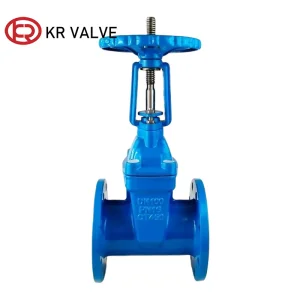
Selecting the optimal stem architecture requires a rigorous trade-off analysis between physical installation space, visual indicator needs, packing gland wear rates, and environmental exposure risk. Below is a structural technical breakdown comparing OS&Y (Outside Screw and Yoke) Rising Stems against NRS (Non-Rising Stems).
| Engineering Property | OS&Y Rising Stem (Outside Screw & Yoke) | NRS Non-Rising Stem (Inside Screw) |
|---|---|---|
| Kinematic Operation | Stem moves linearly upwards/downwards; threads remain external to fluid medium. | Stem rotates in place; gate travels up stem threads inside the valve body chamber. |
| Thread Exposure | Isolated from process fluid. Lubricated externally, protected from corrosion/slurry. | Direct contact with process fluid. Susceptible to scale, debris, and abrasive wear. |
| Visual Position Indication | Immediate visual feedback (Stem height directly indicates open/closed valve state). | Requires secondary mechanical position indicator or electronic transmitter. |
| Spatial Footprint | Requires high vertical clearance envelope for fully open stem travel position. | Compact overall height; ideal for underground burial, vaults, and cramped marine bilges. |
| Typical Stem Materials | ASTM A276 316/304, 17-4PH (UNS S17400), Duplex 2205, Monel K-500. | Dezincification Resistant (DZR) Brass, Aluminum Bronze C95800, SS410, SS316. |
| Gland Packing Stress | Pure linear sliding action across stem packing rings; lower seal degradation rate. | Rotational shear stress against gland packing; requires continuous packing adjustment. |
Advanced Thread Profiles: Acme vs. Trapezoidal Cold-Rolling
The fatigue life of a gate valve stem is predominantly governed by its thread manufacturing methodology and root radius configuration. Standard cut threads produced by conventional lathe turning introduce micro-notches along the thread root, creating severe stress concentration points under high torque loading.
Technical Superiority of Precision Thread Rolling
High-end China wholesale stem factories utilize precision cold thread rolling machines. Rolling re-aligns the metallic grain structure along the thread contour without breaking fibers, inducing compressive residual stress. This increases thread shear strength by up to 25%, improves surface smoothness to Ra 0.4µm, and dramatically reduces stem-nut galling during high-cycle operation.
Metallurgical Selection Guide for Extreme Industrial Duty
17-4PH Stainless Steel (UNS S17400)
Precipitation-hardened martensitic stainless steel offering exceptional tensile strength (up to 1100 MPa in H900 condition) and superior yield stress. Standard for high-pressure API 600 refinery gate valves.
Duplex 2205 / Super Duplex 2507
Combines austenitic and ferritic microstructures to yield high resistance to chloride stress corrosion cracking (SCC) and pitting. Fully compliant with NACE MR0175 / ISO 15156 requirements.
C95800 Nickel Aluminum Bronze
Offers exceptional bio-fouling resistance, non-sparking properties, and excellent corrosion performance in seawater desalination plants, marine ballast systems, and potable water lines.
China Factory Efficiency & Wholesale Supplier Competitiveness
How concentrated industrial clusters in Tianjin and Zhejiang deliver world-class valve stem manufacturing capability.
Integrated Metallurgical Ecosystem
Chinese valve stem factories benefit from localized supply chains, where raw forged bars, heat treatment facilities, CNC grinding centers, and plating plants operate within tight industrial hubs (such as Tianjin and Wenzhou). This eliminates raw material transit delays and reduces procurement lead times by 30-40% compared to Western manufacturers.
Multi-Axis CNC Machining Precision
Modern wholesale suppliers deploy automated multi-axis CNC turning-milling centers capable of holding stem diameter tolerances within ±0.008mm and thread pitch errors within 0.002mm per inch. Automated micro-polishing achieves mirror finishes on packing contact areas, ensuring strict TA-Luft fugitive emission compliance.
Rigorously Certified QA/QC Protocols
Tier-1 Chinese factories back OEM stem production with comprehensive non-destructive testing (NDT). Every batch undergoes Ultrasonic Testing (UT) for internal voids, Magnetic Particle (MT) or Liquid Penetrant (PT) for surface seams, and chemical composition verification via portable XRF Spectrometers with EN 10204 3.1 Material Test Reports (MTR).
Global Procurement Guide: Key Evaluation Metrics for Stem Buyers
Essential verification steps for EPC engineers and B2B buyers sourcing custom valve stems at scale.
Stem Nut & Stem Thread Matching
A frequent root cause of premature field gate valve binding is pitch mismatch between the stem drive thread and the stem nut (yoke sleeve). Global buyers must specify the exact thread standard (ACME 2G/3G, ASME B1.5, or ISO Metric Trapezoidal DIN 103) and require factory paired-fit testing to ensure smooth running torque without excess backlash.
Hardness Differential & Galling Prevention
When operating stainless steel stems against stainless steel gate wedges or stem nuts, severe metal galling can occur under load. Factory specifications must dictate a minimum 50-100 HB hardness differential between mating parts, or enforce specialized surface treatments such as nitriding, hard chrome plating, or Stelliting on stem T-heads.
Industrial Applications & Root Cause Failure Mitigation
Preventing costly field catastrophes through intelligent stem design and application-tailored material matching.
1. Underground Water Transmission
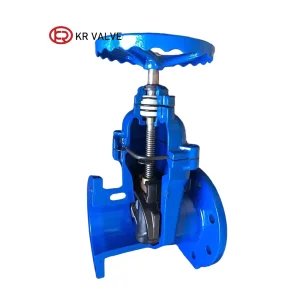
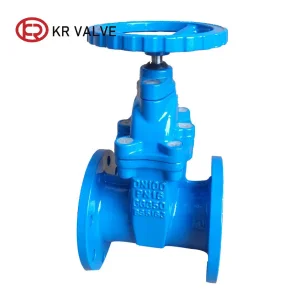
Underground resilient seated gate valves (BS5163 / DIN3352) utilize Non-Rising Stems exposed to damp soil moisture and stagnant water. Sourcing stems manufactured from DZR Brass or AISI 420 stainless steel with encapsulated rubber stem seals prevents stem snap caused by localized pitting corrosion.
2. Refining & Petrochemical Plants
API 600 heavy-duty wedge gate valves operate under high thermal cycles (up to 540°C). Stems require heat-treated SS410 or 17-4PH forged bars combined with anti-rotation keys and blow-out proof integral collars to prevent stem ejection under sudden line pressure surges.
3. Desalination & Marine Piping
Seawater reverse osmosis (SWRO) high-pressure pumps require gate valves resistant to micro-crevice attack. Standard SS316 stems fail within months. Upgrading to Super Duplex 2507 or Monel K-500 stems guarantees complete immunity to severe marine chloride degradation.
Emerging Trends: Smart Stems & Low-Emission Technologies
How digital telemetry, additive manufacturing, and fugitive emission standards are transforming valve stem production.
IoT-Integrated Smart Valve Stems
Modern process plants are rapidly introducing digital predictive maintenance. Advanced gate valve stems are now engineered with micro-embedded strain gauges and wireless telemetry modules capable of real-time stem thrust, bending strain, and stroke count transmission. This alerts operators to stem distortion or packing jamming long before a catastrophic stem buckle occurs.
ISO 15848-1 Ultra-Low Emission Polishing
With aggressive global decarbonization regulations, environmental compliance demands valve packing leaks below 50 ppm. Chinese wholesale factories are investing heavily in CNC super-finishing technology, reducing stem surface roughness to Ra 0.15µm. Combined with live-loaded Belleville spring packing glands, stem burnishing guarantees long-term zero VOC leakage.
Frequently Asked Questions by Industrial Stem Buyers
Clear, definitive answers from senior valve engineering experts regarding specifications, manufacturing, and quality control.
T = F_{total} * (d_2 / 2) * tan(\phi + arctan(\mu)).
Complete Industrial Valve Series & Accessories
Explore our complete catalog of specialized valves, underground stem extensions, strainers, and control valves.
Request Custom Stem Drawings & Factory Direct Quotes
Partner with China's leading wholesale valve stem factory. We engineer rising and non-rising stems to your exact CAD/STEP specifications, complete with material certificates, NDT reports, and competitive bulk pricing.