Industrial Valves & Non-Return Flow Control Solutions
Explore top-tier manufactured check valves, gate valves, butterfly valves, and control accessories verified for global municipal, energy, and processing infrastructure.
State of Wholesale Horizontal Check Valve Manufacturing
Understanding Fluid Mechanics, Anti-Water-Hammer Engineering, and Metallurgical Standards in Global B2B Valve Procurement.
In modern process industries, municipal infrastructure, and energy sector fluid networks, Horizontal Check Valves serve as essential automatic non-return mechanisms designed to prevent backflow, mitigate devastating hydraulic surges (water hammer), and safeguard upstream rotary equipment such as pumps and compressors. Sourcing these critical assets via wholesale check valve manufacturers and specialized foundries requires a rigorous technical evaluation extending far beyond initial unit cost.
This technical whitepaper provides EPC contractors, procurement directors, plant reliability engineers, and B2B valve buyers with deep domain knowledge regarding horizontal check valve manufacturing methodologies, fluid dynamic physics, alloy selection criteria, compliance testing, and global logistics workflows. By analyzing market trends and structural mechanics, enterprise buyers can make informed procurement decisions that optimize Total Cost of Ownership (TCO) while guaranteeing operational resilience across demanding piping networks.
Macro Demand Trends in B2B Valve Sourcing
Analyzing shifts in municipal infrastructure investments, regional energy expansions, and industrial automation mandates drive non-return valve demand.
Municipal Water & Desalination
Global urbanization and clean water initiatives have surged demand for large-bore resilient-seated horizontal check valves. Desalination plants specifically require specialized Super Duplex (CF3MN) and Nickel-Aluminum Bronze bodies to resist chloride pitting corrosion.
Oil, Gas & Petrochemical Pipelines
Midstream pipeline expansions demand heavy-duty API 6D horizontal swing check valves equipped with external dashpots or slow-closing hydraulic dampers to eliminate slam impacts under extreme pressure transients up to ASME Class 2500.
Power Generation & Thermal Utilities
High-pressure boiler feed pump discharge lines require horizontal piston and lift check valves fabricated from forged alloy steels (ASTM A182 F22, F91) capable of withstanding steam conditions exceeding 540°C with zero thermal fatigue deformation.
HVAC & Industrial Process Cooling
Energy efficiency mandates encourage the replacement of legacy check valves with low-friction, hydrodynamically optimized dual-plate wafer check valves that cut head loss by up to 30%, lowering long-term pump energy consumption.
Horizontal Check Valve Mechanical Architecture
Comparative analysis of closure mechanisms, seat seal technologies, hydrodynamics, and installation orientations.
| Valve Mechanism Type | Primary Internal Elements | Suitable Flow Media | Pressure Loss (Cv/Kd) | Anti-Water-Hammer Rating |
|---|---|---|---|---|
| Horizontal Swing Check | Hinge pin, disc arm, resilient/metal seat, body cover | Clean water, crude oil, slurries with moderate solids | Low Resistance (High Cv) | Moderate (Requires counterweight/dashpot) |
| Horizontal Lift / Piston Check | Guided piston cylinder, return spring, seating cone | High-pressure steam, gases, boiler feed lines | Moderate to High Resistance | High (Tightly dampened spring closure) |
| Dual-Plate Wafer Check | Torsion springs, dual semi-circular plates, hinge axis | HVAC water, industrial fluid lines, compact spaces | Extremely Low Resistance | Excellent (Fast spring-assisted response) |
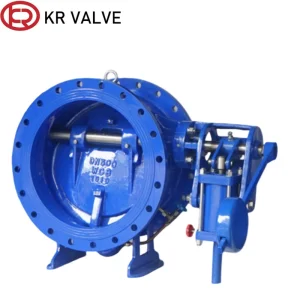
| Slanted Disc / Slow-Closing | Eccentric pivot shaft, inclined seating angle disc | Municipal raw water, sewage pumping discharge | Ultra-Low Pressure Drop | Superior (Eliminates reverse slamming) |
Fluid Dynamics & Minimum Cracking Pressure
A critical metric often overlooked during wholesale procurement is the cracking pressure (the minimum differential upstream pressure required to unseat the disc). Factories engineer internal spring force balances to guarantee disc stabilization at specific fluid velocities, avoiding destructive flutter that accelerates hinge wear and causes premature seat degradation.
Metallurgical Casting & Seat Surfacing
Industrial check valves utilize diverse body alloys. Ductile Iron (GGG40 / QT450) provides high tensile strength for municipal water, while WCB Cast Steel and CF8/CF8M Stainless Steel serve high-temperature and corrosive processes. Seat trims range from EPDM and NBR elastomeric soft seals for bubble-tight closure to Stellite overlay hard-facing for severe erosion service.
Transient Surging & Slam Suppression
When fluid flow halts abruptly, fluid momentum induces reverse flow before the valve disc completely closes. Modern manufacturers utilize inclined seats (15° to 55° angles) and spring-loaded assistance to minimize the travel distance of the disc, shutting the passage fractions of a second before zero-velocity reversal occurs.
Turnkey Solutions Across Critical Sectors
Customized non-return valve configurations designed for strict operational protocols and environmental challenges.
Wastewater Pumping Stations
Challenge: Stringy solids and debris in raw sewage frequently clog traditional swing check disc hinges.
Solution: Ball-type horizontal non-return valves with flexible NBR-encapsulated steel core balls that clear the flow path completely during operation, providing self-cleaning action and clog-free reliability.
Subsea & Offshore Oil Rigs
Challenge: Exposure to corrosive saltwater spray externally and sour gas (H2S) internally under extreme pressure.
Solution: Inconel 625 overlayed solid alloy bodies with NACE MR0175 compliance and full API 6D fire-safe certifications engineered for zero ambient environment emissions.
Chemical & Pharmaceutical Lines
Challenge: Highly reactive acid/alkali media destroying standard metal seats and elastomer gaskets.
Solution: Full PTFE/PFA fluoropolymer-lined wafer check valves with ceramic internal trim ensuring total chemical isolation and zero cross-contamination risks.
Technology Roadmap & AI-Driven Manufacturing
How leading horizontal check valve manufacturers integrate Industry 4.0 techniques to improve casting integrity, valve efficiency, and lifespan.
AI-Simulated CFD Flow Modeling
Advanced foundries use Computational Fluid Dynamics (CFD) paired with machine learning algorithms to simulate turbulence and pressure drops inside valve body cavities prior to casting mold creation. This yields refined body contours that reduce internal flow resistance, resulting in up to 14% higher flow coefficients (Cv).
Robotic Laser Cladding & Hardfacing
Replacing manual arc welding, automated robotic laser cladding deposits Stellite and Hastelloy wear layers on valve seat surfaces with zero thermal distortion, creating ultra-dense metallurgically bonded layers that withstand abrasive wear for over 50,000 operational cycles.
Smart IoT Acoustic Monitoring
Next-generation horizontal check valves incorporate external non-invasive piezoelectric dynamic acoustic sensors. These smart nodes detect subtle disc chatter, localized cavitation erosion, or reverse leakage in real time, transmitting predictive maintenance diagnostics directly to plant SCADA systems.
Compliance Standards & Factory Testing Protocols
Every wholesale valve leaving modern production facilities undergoes comprehensive mechanical and metallurgical validation.
Hydrostatic & Pneumatic Shell/Seat Pressure Testing (API 598 / ISO 5208)
Before shipment, check valve bodies undergo shell hydrostatic pressure tests at 1.5 times the rated nominal pressure (PN) to verify structural casting soundness. Subsequent low-pressure gas seat testing (at 0.6 MPa) and high-pressure liquid seat testing ensure strict compliance with Zero-Leakage (Rate A) standards for soft seats and allowable drop rates for metal-to-metal seating.
Material Traceability & EN 10204 3.1 Certification
Premium valve manufacturers provide complete Material Test Reports (MTRs) detailing chemical composition via optical emission spectrometry (OES) and mechanical testing (yield strength, tensile strength, Charpy V-notch impact toughness). Heat code tracing is permanently stamped on all pressure-retaining body castings.
Potable Water & Environmental Approvals (WRAS, NSF/ANSI 61, CE/PED)
For municipal drinking water projects, valves are certified toxicologically safe with non-leaching fusion-bonded epoxy (FBE) interior coatings exceeding 250 microns. Oil, gas, and power valves comply with the European Pressure Equipment Directive (PED 2014/68/EU) and ATEX explosion-proof requirements.
Factory-Direct Procurement & Logistics Economics
Optimizing lead times, custom OEM branding, packaging, and global freight consolidation for major enterprise buyers.
Flexible OEM/ODM Customization
Wholesale buyers can specify custom face-to-face dimensions (DIN 3202, ANSI B16.10, BS 5153), alternative flange drillings (PN10/16, Class 150/300, JIS 10K), custom color FBE coatings, and private label nameplate branding directly at the factory floor level.
Streamlined Container Loading & Packing
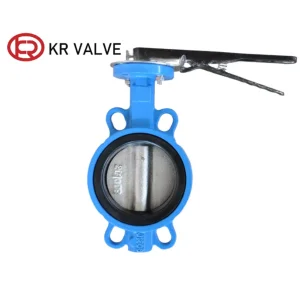
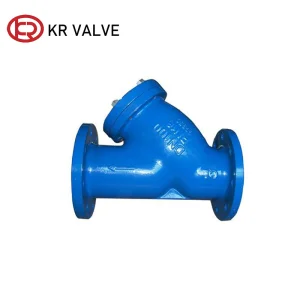
Heavy industrial valves are securely packed inside fumigated plywood cases with internal moisture-vapor barrier wrapping and corrosion inhibitors. Multi-category consolidation enables buyers to pair check valves with gate valves, strainers, and butterfly valves in single container shipments.
Total Cost of Ownership Optimization
Direct factory procurement eliminates intermediary markups, yielding 20-35% cost savings on major infrastructure RFQs while guaranteeing direct access to original manufacturer engineering support and long-term spare parts supply.
Frequently Asked Technical Questions
Detailed engineering and commercial guidance for purchasing managers and pipeline project engineers.
What is the difference between a horizontal swing check valve and a horizontal lift check valve?
A horizontal swing check valve utilizes an internal disc that rotates around a top hinge pin away from the seat, providing an unobstructed full-bore flow path ideal for liquids with minimal pressure drop. A horizontal lift (or piston) check valve features a disc guided vertically or axially inside a cylindrical body, operating via line pressure and gravity/spring return. Lift check valves offer faster closure and superior anti-water-hammer characteristics, making them preferred for high-pressure gas, steam, and pump discharge services.
Can horizontal swing check valves be installed in vertical piping runs?
Standard horizontal swing check valves are specifically engineered for horizontal pipeline installation. They can only be installed in vertical lines if the fluid flow direction is upward. Installing a horizontal swing check valve in a downward flow orientation will prevent the disc from seating correctly, leading to continuous backflow and severe valve chatter.
How do manufacturers calculate the required straight pipe length before installing a check valve?
To ensure laminar flow and prevent turbulent disc vibration, standard engineering guidelines recommend installing a horizontal check valve at a minimum distance of 5 to 10 pipe diameters (5D - 10D) downstream from pump outlets, elbows, reducers, or control valves. Turbulent flow entering the valve directly can cause severe disc flutter, accelerated pin wear, and noise.
What seat material selection is recommended for high-temperature steam applications?
For high-temperature steam systems exceeding 200°C, soft elastomeric seals (EPDM, NBR) or PTFE are unsuitable due to thermal degradation. Metal-to-metal seats with hardfaced Stellite 6 (CoCr-A) or 13Cr stainless steel overlay welds are required to resist thermal distortion, wire-drawing erosion, and seat galling under high differential pressures.
What is the standard production lead time for bulk wholesale valve orders?
Standard inventory valves (Ductile Iron/WCB bodies from DN50 to DN300) typically ship within 10 to 15 business days. Custom engineered orders involving special alloys (Duplex SS, Inconel), high pressure ratings (Class 600+), or custom actuation accessories generally require a manufacturing window of 30 to 45 days, including full non-destructive testing (NDT) and API 598 hydrostatic validation.
Specialized Valves, Strainers & Flow System Accessories
Complete your fluid control package with our certified factory-direct strainers, silent check valves, and high-performance butterfly valves.