
Featured Directional & Flow Control Products (Part I)
Engineering Dynamics of Valve Directional Control Systems
A comprehensive architectural guide for system integrators, EPC engineers, and OEM procurement officers seeking robust directional flow control solutions.
Mechanical Spool & Poppet Kinematics
In modern industrial fluid networks, directional valve control represents the core operational logic governing fluid routing, pressure regulation, and actuator displacement. Whether employing sliding-spool configurations, spring-loaded poppets, or quarter-turn rotary discs (such as double-eccentric butterfly valves and hydraulic gate systems), directional control valves manage fluid vectors across complex internal channels.
Precision machining of spool land geometry and internal porting dictates the flow coefficient ($K_v$ / $C_v$) and minimizes hydrodynamic force imbalances. As fluid transitions through internal metering notches (U-notch, V-notch, or progressive chamfers), fluid momentum forces act on the spool. Our enterprise manufacturing processes utilize 5-axis CNC grinding to maintain spool clearance tolerances within $\pm 0.003\text{ mm}$, preventing fluid cross-talk and eliminating internal leakage across working pressures exceeding 350 bar.
Pilot-Operated & Electro-Hydraulic Dynamics
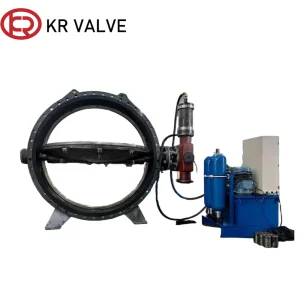
For large-bore industrial pipelines (DN200 to DN3000), direct solenoid or manual actuation is physically unfeasible due to excessive dynamic hydraulic forces. Advanced directional control relies on two-stage pilot-operated systems or integrated hydraulic cylinders.
In pilot-operated architecture, a primary pilot valve directs system line pressure to differential piston chambers within the main valve body. This hydraulic leverage enables smooth, controlled switching with minimal electrical power input. Furthermore, integrating fast-acting proportional solenoids with LVDT (Linear Variable Differential Transformer) position feedback allows closed-loop control of directional switching velocity, effectively preventing destructive water hammer ($P_{surge} = \rho c \Delta v$) in municipal water mains and high-flow industrial networks.
The volumetric flow rate ($Q$) through a directional control valve port is dictated by the equation: $Q = C_v \cdot \sqrt{\frac{\Delta P}{SG}}$, where $C_v$ is the valve flow coefficient, $\Delta P$ is the differential pressure drop across the internal spool lands ($P_{inlet} - P_{outlet}$), and $SG$ is the specific gravity of the fluid. Our engineered valves minimize pressure drop ($\Delta P$) by utilizing computational fluid dynamics (CFD) optimized internal flow passages, reducing parasitic energy losses across enterprise pumping infrastructure by up to 18%.
Global Procurement Demand & Total Cost of Ownership (TCO)
Unpacking the strategic priorities of B2B valve buyers, EPC contractors, and international original equipment manufacturers.
Metallurgical Traceability
Procurement teams in heavy industry mandate 100% chemical composition verification and mechanical strength testing. We supply EN 10204 3.1 inspection certificates covering raw materials including Ductile Iron (GGG40 / GGG50 / A536), Cast Steel (WCB), and Austenitic Stainless Steel (CF8 / CF8M / CF3M).
Supply Chain Security
Unplanned valve failure during plant operations leads to massive financial losses. By maintaining integrated foundry operations, automatic machining centers, and centralized warehousing in Tianjin, we ensure deterministic lead times and robust export logistics handling.
Lifecycle Cost Reduction
Initial acquisition cost accounts for less than 15% of a valve's lifetime TCO. Our resilient-seated designs, fusion-bonded epoxy coatings (RAL 5017, minimum thickness 250 µm), and corrosion-resistant trim components extend operational life cycles beyond 25 years.
| Valve Category | Directional Control Type | Body Materials Options | Sealing & Trim Options | Pressure Class / Standards |
|---|---|---|---|---|
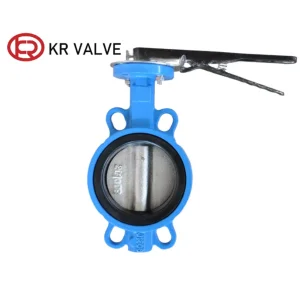
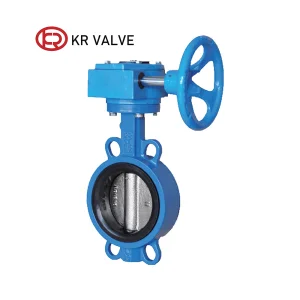
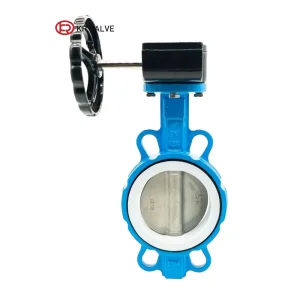
| Butterfly Valves | Concentric, Double Offset, Triple Offset | Ductile Iron GGG40, WCB, CF8 (SS304) | EPDM, NBR, PTFE, Stainless Steel 304/316 | PN6 - PN40 ANSI 150LB/300LB |
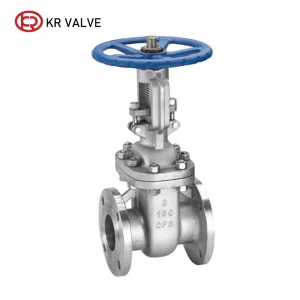
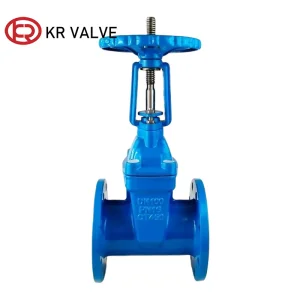
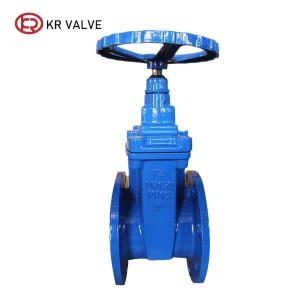
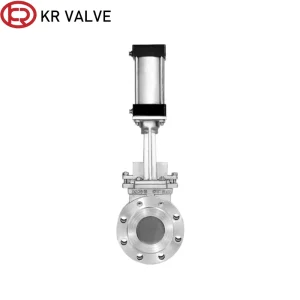
| Gate Valves | Resilient Wedge, Solid Wedge, Knife Gate | Cast Iron GG25, GGG50, CF8M (SS316) | EPDM Vulcanized, Brass Seat, Metal-to-Metal | DIN F4/F5 BS5163 |
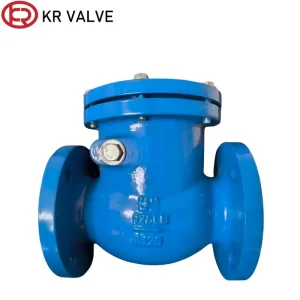
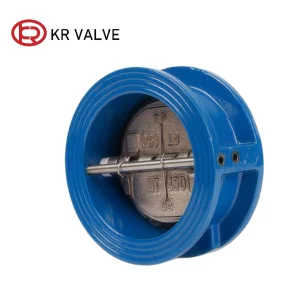
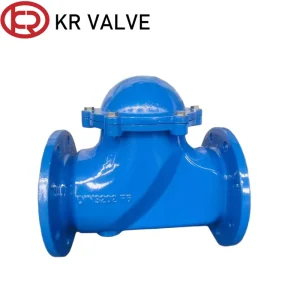
| Check Valves | Dual Plate, Rubber Flap, Ball Type, Swing | Ductile Iron, Cast Steel WCB, Stainless Steel | NBR Soft Disc, EPDM Coated Ball, CF8 Disc | BS5153 API 594 |
| Hydraulic Control Valves | Pilot Operated Diaphragm, 200X PRV, 100X Float | Ductile Iron GGG40 / GGG50 | SS304 Pilot Circuit, Reinforced EPDM Diaphragm | PN10 / PN16 / PN25 |
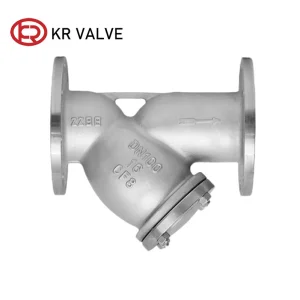
| Y-Strainers & Filters | Inline Fluid Strainer & Debris Filtration | Cast Iron GG25, GGG40, WCB, CF8 | SS304 / SS316 Perforated Mesh Screen | ANSI B16.34 DIN 3202 |
Turnkey Solutions Across Critical Industrial Sectors
Deploying robust flow control hardware engineered specifically for rigorous operational conditions worldwide.
1. Municipal Water Systems & Wastewater Treatment
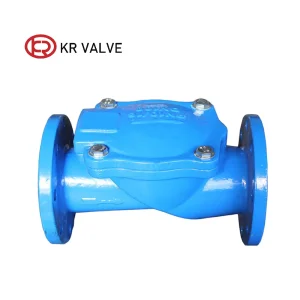
Municipal water distribution infrastructure requires non-corrosive, zero-leakage directional isolation valves capable of handling massive volumetric throughput. Our resilient-seated gate valves (DIN F5 / BS5163 standard) feature full-bore flow channels that minimize head loss. For pump station discharge lines, our dual-disc and rubber flap check valves eliminate backflow surges instantly, preventing impellor damage and system back-siphonage.
2. Heavy Machinery & Hydraulic Power Units (HPUs)
In heavy industrial manufacturing, mining equipment, and marine deck machinery, high-pressure hydraulic circuits demand exact directional switching. Adjustable hydraulic cylinder butterfly valves (DN200 to DN3000) allow automated, variable-speed line opening and closing, functioning as critical safety trip valves during emergency shutdown scenarios (ESD).
3. Chemical Processing & Corrosive Fluid Routing
Handling aggressive media such as acidic solutions, brackish water, and industrial effluents necessitates specialized chemical resistance. Our D71X series PTFE-lined concentric butterfly valves and CF8/CF8M stainless steel Y-strainers provide unyielding defense against stress corrosion cracking (SCC) and chemical erosion, ensuring complete structural integrity.
4. Oil, Gas & Energy Transmission Lines
High-pressure hydrocarbon transport requires API-certified directional control devices. Our ANSI solid wedge gate valves and forged stainless steel strainers operate reliably under extreme pressure differentials and thermal stress. Precision-ground metal seats ensure fire-safe sealing performance compliant with API 607 standards.
Future Directions in Valve Engineering & Automation
How advanced manufacturing, digital twins, and material science are redefining next-generation flow control systems.
Smart IoT & Telemetry Integration
Embedding non-intrusive Hall-effect sensors, pressure transducers, and IO-Link communication modules within valve bonnets to deliver real-time directional feedback, seat leakage diagnostics, and predictive maintenance alerts to centralized SCADA systems.
CFD Topology & Additive Manufacturing
Utilizing generative fluid design algorithms and selective laser melting (SLM) 3D printing to produce optimized valve body internal geometry. This eliminates turbulence pockets, reduces valve weight by 30%, and increases $C_v$ values by 15%.
Zero-Emission & Green Hydrogen Sealing
Developing ultra-low fugitive emission stem packing (ISO 15848-1 Class AH) and elastomeric compounds compatible with hydrogen gas blending and cryogenic liquid gas handling at temperatures down to -196°C.
Regional Trade Dynamics & Compliance Standards
Navigating regional engineering standards, tariff considerations, and local certification frameworks for frictionless international distribution.
European Union (EN / DIN)
Mandates strict adherence to Pressure Equipment Directive (PED 2014/68/EU), CE marking, and DIN 3202 face-to-face dimensions. Drinking water applications require WRAS (UK), DVGW (Germany), or ACS (France) rubber approvals. Our products fully support EU CBAM carbon reporting standards.
North America (ANSI / ASME / AWWA)
Requires compliance with ASME B16.34 for pressure ratings, AWWA C504/C509 for waterworks gate and butterfly valves, and NSF/ANSI 61/372 lead-free drinking water certifications. Flange drilling patterns must strictly match ANSI B16.5 / B16.1 Class 125/150.
Middle East & APAC Mega-Projects
Focuses heavily on large-diameter desalination mains, high-pressure oil pipelines, and urban infrastructure. Requires high-grade internal/external epoxy coatings (300 µm+), duplex stainless steel trims, and full third-party inspection (SGS, TUV, Bureau Veritas).
Zero-Defect Quality Testing Protocols
Every valve produced in our facility undergoes strict physical, chemical, and pressure verification prior to export dispatch.
Hydrostatic & Pneumatic Seat Tightness
In accordance with API 598, ISO 5208, and EN 12266-1 standards, 100% of our manufactured valves undergo shell pressure testing at 1.5 times the nominal working pressure ($1.5 \times PN$) and high-pressure seat tightness testing at $1.1 \times PN$. Low-pressure air testing (6 bar) is conducted on soft-seated valves to guarantee Rate A zero-bubble leakage.
Non-Destructive Testing (NDT) & Coating Inspection
Critical pressure-retaining castings undergo Ultrasonic Testing (UT), Magnetic Particle Testing (MT), and Dye Penetrant Testing (PT) to detect subsurface porosity or micro-fissures. Coating integrity is verified via holiday spark testing (2.5 kV) and magnetic thickness gauges to prevent pinhole corrosion.
Featured Directional & Flow Control Products (Part II)
Frequently Asked Technical Questions (FAQ)
Expert answers regarding valve directional control selection, maintenance protocols, and international supply chain integration.
What is the primary difference between a directional control valve and a throttling flow control valve?
A directional control valve specifically manages the routing path or flow vector of fluid within a system (e.g., directing fluid to Port A or Port B, stopping flow, or reversing flow direction). In contrast, a flow control valve regulates the volumetric flow rate ($Q$) or velocity of the fluid by restricting cross-sectional flow area without necessarily changing the flow path routing. Many modern double-eccentric butterfly valves and hydraulic-actuated gate valves perform hybrid directional-isolation and coarse throttling duties depending on actuator positioning.
How do I determine whether to specify a Wafer, Lug, or Double-Flange directional butterfly valve?
Selection depends on line pressure, pipe diameter, and downstream maintenance requirements:
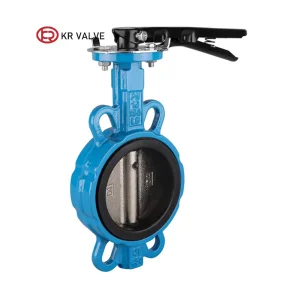
1. Wafer Type: Lightweight, economical, clamped between opposing pipe flanges. Ideal for compact plant layouts where end-of-line isolation is not required.
2. Lug Type: Features threaded lugs matching flange bolt patterns. Allows dead-end service and downstream pipe disassembly while keeping upstream pressure isolated.
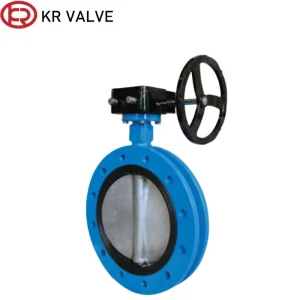
3. Double-Flange Type: Offers maximum structural rigidity for large diameters (DN300-DN3000) and high-pressure mains, ensuring perfect alignment and face-to-face compliance with EN 558 series standards.
Why is Ductile Iron (GGG40 / GGG50) preferred over standard Cast Iron (GG25) for pressure directional valves?
Ductile iron contains spheroidal nodular graphite rather than flake graphite found in gray cast iron. This structural difference increases tensile strength (min. 400–500 MPa vs 250 MPa) and elongation capacity (>10% vs <1%). Ductile iron valves withstand severe hydraulic pressure surges, thermal expansion stresses, and mechanical impact without catastrophic brittle fracture, making them mandatory for high-pressure municipal mains and heavy industrial applications.
What OEM customization options does KR Valve provide for global distributors and project contractors?
We provide complete OEM/ODM manufacturing customization including private labeling/casting branding, specialized body materials (CF8M, WCB, GGG40), custom seat elastomers (EPDM, NBR, Viton, PTFE), custom face-to-face dimensions, manual lever, worm gear, pneumatic, or electric actuation packages, and project-specific protective packaging compliant with ISPM 15 export standards.
How does a 200X Pressure Reducing Valve manage directional control and downstream stability?
The 200X valve utilizes a hydraulic pilot system that monitors downstream pressure. When downstream pressure rises above the setpoint, the pilot directs water pressure into the main diaphragm chamber, throttling the main valve opening. Conversely, when pressure drops, the pilot releases diaphragm pressure, opening the main valve to maintain a stable downstream setting regardless of upstream flow or pressure fluctuations.
What quality documentation is provided with wholesale export orders?
Every order includes EN 10204 3.1 Material Test Reports (MTRs), Hydrostatic & Pneumatic Test Certificates, Epoxy Coating Thickness Reports, Certificate of Origin (CO), and Third-Party Inspection Reports (SGS, TUV, BV) upon request prior to vessel loading.