
High-Performance Wholesale Valve Catalog (Part I)
Engineered for high-pressure isolation, corrosive fluid management, and precision throttling across global infrastructure networks.
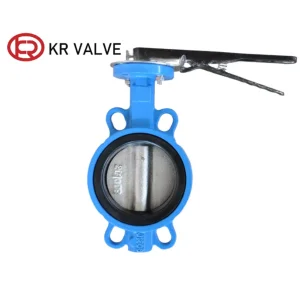
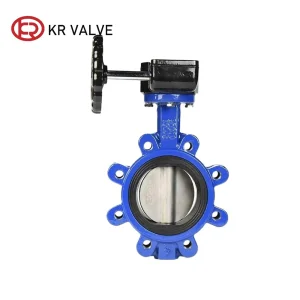
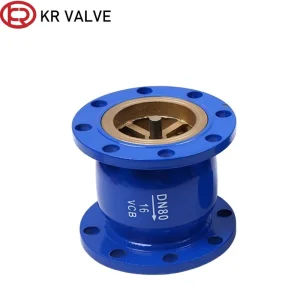
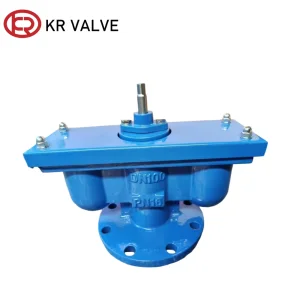
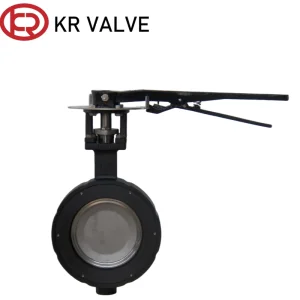
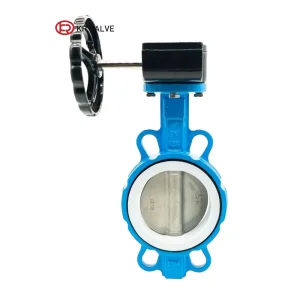
The Technological Anatomy of Modern Wafer Butterfly Valves
Understanding structural kinematics, polymer resilience, and advanced metallurgical compositions for high-load fluid dynamics.
Ductile Iron & Alloy Metallurgy
Modern wafer butterfly valves utilize spheroidal graphite iron (GGG40 / GGG50 / EN-GJS-400-15) which exhibits tensile strengths exceeding 400 MPa and elongation capacities up to 15%. Compared to conventional gray cast iron (GG25), ductile iron bodies absorb severe pressure surges, water hammer shocks, and piping expansion forces without brittle cracking.
For aggressive media, cast steel (WCB) or stainless steel alloys (CF8, CF8M, Duplex 2205) are specified to withstand pitting, chloride-induced stress corrosion, and elevated line pressures up to ASME Class 300.
Elastomer Memory & PTFE Vulcanization
Zero-leakage isolation relies on the elastic recovery of the seat ring. Premium EPDM seats feature high polymer density for hot water and HVAC lines (up to 120°C), while NBR seats offer resistance to oil and hydrocarbon media. In chemical environments, split-body designs lined with high-molecular PTFE or PFA ensure zero fluid contact with metallic surfaces.
Direct vulcanization of the rubber seat onto a rigid phenolic backing ring eliminates seat distortion under high flow velocities ($>4.5 \text{ m/s}$), lowering operating torque and doubling cycle life.
Hydrodynamic Disc Profile Optimization
The internal disc geometry dictates the pressure drop ($\Delta P$) and flow coefficient ($C_v$). Advanced CAD/CFD simulations allow engineers to design streamlined disc contours with thin edge profiles, reducing turbulence, vortex formation, and cavitation erosion.
Precision-machined disc edges with polished mirror finishes ($\text{Ra} < 0.4 \ \mu\text{m}$) dramatically decrease seat friction, ensuring low break-away torque and enabling smaller pneumatic or electric actuators to be fitted.
Engineering Insight: Selecting a concentric resilient-seated wafer butterfly valve with an ISO 5211 direct-mount flange simplifies automation retrofits, eliminating external bracket play and reducing total cost of ownership by up to 30% over a 10-year operational lifecycle.
Global Procurement Needs & Supply Chain Shift Analysis
Why Tier-1 EPC contractors, municipal water utilities, and industrial distributors are restructuring their sourcing strategies toward integrated Chinese manufacturing hubs.
1. Decarbonization & Low-Torque Energy Efficiency
Global industrial facilities are under strict mandates to reduce net-zero energy consumption. In municipal pumping stations and HVAC cooling loops, traditional gate valves impose massive weight loads and high flow resistance. Wafer butterfly valves present a lightweight, compact footprint (typically 70% lighter than flanged gate valves), requiring far less structural piping support.
Furthermore, lower operating torque directly reduces the power requirements of automatic actuators. By specifying optimized concentric and double eccentric wafer butterfly valves, plant operators achieve lower pumping head losses and reduced kilowatt-hour power consumption across 24/7 continuous duty cycles.
2. Supply Chain Consolidation & Multi-Standard Compliance
Overseas procurement managers often face logistical friction when managing separate vendors for butterfly valves, check valves, gate valves, and strainers. Modern enterprise buyers actively seek single-source manufacturers capable of delivering unified quality control standards (ISO 9001, CE PED, WRAS, API 609).
In addition, global projects require multi-flange compatibility. Wafer butterfly valve bodies with dual-drilled bolt holes (compatible with PN10, PN16, ANSI 150LB, and JIS 10K flanges simultaneously) allow stockists to streamline inventory management while serving international municipal contracts without stocking multiple casting variants.
China Industry 4.0: Supply Chain Resilience & Efficiency
How Tianjin KR Valve leverages vertical foundry integration, automated CNC machining, and zero-defect quality management to deliver unmatched enterprise value.
Vertical Casting & Foundry Integration
The Tianjin valve manufacturing cluster operates as a fully integrated industrial supply chain. From electric induction melting to automated resin-sand molding lines, sand casting quality is tightly controlled for chemical purity, tensile integrity, and surface smoothness.
Eliminating third-party foundry markups enables competitive wholesale pricing without compromising metal chemistry or wall thickness tolerances specified under EN 1092-2 and ASME B16.42.
Precision CNC Machining & Robotic Coating
Multi-axis CNC horizontal machining centers guarantee precise bore alignment, shaft concentricity, and flange face parallelism. Perfect concentricity prevents premature stem packing leaks and minimizes seat degradation.
Automated electrostatic powder coating lines apply fusion-bonded epoxy (FBE) coatings inside and out (minimum thickness $250 \ \mu\text{m}$). This delivers robust protection against underground soil salinity, aggressive water chemistry, and atmospheric weathering.
100% Quality Assurance & Traceability
Every single valve produced undergoes rigorous double-side hydrostatic shell testing and bubble-tight seat leakage checks according to ISO 5208 (Rate A zero leakage) and API 598 standard requirements prior to packaging.
Comprehensive material test reports (MTRs to EN 10204 3.1), spectrographic heat analysis, and dimensional verification sheets accompany every wholesale consignment to meet strict EPC tender requirements.
Technical Matrix: Wafer Butterfly Valve Configurations
Use this technical comparison matrix to match valve geometry, seat materials, and pressure classes directly to your project specifications.
| Design Type | Body Materials | Seat Material Options | Pressure Rating | Temperature Range | Primary Application Spectrum |
|---|---|---|---|---|---|
| Concentric Resilient Seated | Ductile Iron (GGG40/50), Cast Iron (GG25) | EPDM, NBR, Viton (FKM), Neoprene | PN10 / PN16 / 150LB | -20°C to +120°C | Potable water supply, municipal drainage, HVAC hydronics, low-pressure air lines. |
| PTFE Lined Split-Body | Ductile Iron, WCB, SS304/SS316 | PTFE, PFA, Conductive PTFE | PN10 / PN16 / 150LB | -30°C to +180°C | Highly corrosive acids, chemical processing, ultra-pure water, pharmaceutical slurry. |
| Double Eccentric (High Performance) | Carbon Steel (WCB), Stainless Steel (CF8M) | R-PTFE, Stainless Steel 316, Metal Seat | PN16 / PN25 / 300LB | -40°C to +260°C | High-pressure water distribution, steam lines, power plant cooling towers, petrochemical. |
| Triple Eccentric (Metal-Seated) | WCB, LCC, CF8M, Duplex Stainless | Laminated SS316 + Graphite, Stellite Hardfacing | PN25 - PN64 / 150LB - 600LB | -196°C to +550°C | High-temperature steam, LNG cryogenic services, oil refineries, severe fire-safe zones. |
Localized Application Scenarios & Industry Use Cases
Explore how wafer butterfly valves provide reliable, long-term flow isolation across critical global infrastructure sectors.
1. Municipal Water Treatment & Seawater Desalination
In large-scale reverse osmosis (RO) desalination plants and municipal water distribution networks, valve components must resist continuous chloride corrosion and high velocity fluid shear. Standard cast iron valves suffer from rapid pinhole oxidation and seat erosion.
Solution: Specifying ductile iron wafer butterfly valves with fusion-bonded epoxy coating (250 microns), duplex 2205 stainless steel discs, and NSF/WRAS-certified EPDM rubber liners ensures complete immunity to biocide dosing and high-salinity seawater, extending service intervals past 15 years.
2. District Cooling Towers & Commercial HVAC Systems
Commercial high-rises and data center cooling plants rely on continuous hydronic flow balancing. Space constraints within mechanical rooms make heavy flanged valves difficult to maneuver, service, and automate.
Solution: Concentric wafer butterfly valves provide a compact face-to-face dimension compliant with ISO 5752 Series 20 / API 609 Table 1. Fitted with electric or pneumatic quarter-turn actuators, these valves interface seamlessly with Building Management Systems (BMS) via Modbus or BACnet protocols for automated energy management.
3. Chemical Processing & Corrosive Fluid Lines
Handling concentrated acids, alkalis, and industrial solvent streams demands non-reactive fluid contact surfaces. Metallic valve seats or standard rubbers degrade rapidly under chemical exposure, leading to environmental contamination and costly emergency shut-downs.
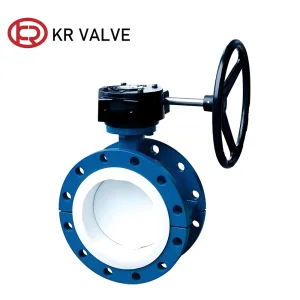
Solution: Split-body full PTFE lined wafer butterfly valves (D71X series) encapsulate both the internal body bore and stem shaft. The inert PTFE lining isolates the ductile iron outer housing completely, providing reliable zero-leakage shutoff under aggressive chemical services up to 180°C.
4. Marine Ballast Water Management & Shipbuilding
Shipboard piping installations face space restrictions, constant hull vibration, and cyclic salt mist exposure. Compact design, light total mass, and high structural resilience are non-negotiable requirements for marine classification societies (ABS, DNV, LR).
Solution: Aluminum-Bronze (C95800) disc wafer butterfly valves paired with vulcanized NBR liners offer exceptional resistance to marine fouling and cavitation damage, providing reliable performance in shipboard ballast water, bilge pumping, and deck wash networks.
B2B Technical & Procurement FAQ
Expert answers to critical engineering, manufacturing standards, and sourcing queries from global valve purchasers.
What is the core structural difference between a Wafer and a Lug style butterfly valve?
Which international manufacturing standards apply to wholesale wafer butterfly valves from China?
How do I choose between EPDM, NBR, and PTFE seat linings for wafer butterfly valves?
- EPDM: Ideal for water treatment, HVAC hydronics, steam (up to 120°C), and mild dilute alkalis. Avoid contact with petroleum oils or hydrocarbons.
- NBR (Buna-N): Excellent for oils, natural gas, fuel fluids, mineral oils, and hydraulics within -20°C to +80°C.
- PTFE / PFA: Required for concentrated acids, harsh solvents, reactive chemicals, and ultra-clean pharmaceutical or food processes up to 180°C.
Can wholesale wafer butterfly valves be retrofitted with electric or pneumatic actuators?
What quality testing procedures are conducted prior to container shipping?
- Raw Material Verification: Spectrographic material chemical analysis and tensile bar testing for castings (EN 10204 3.1 certification).
- In-Process Machining Inspection: CMM dimensional check on stem shaft concentricity and flange face alignment.
- 100% Pressure Hydrostatic Test: Shell testing at 1.5x design pressure and bi-directional seat leakage testing at 1.1x design pressure under ISO 5208 / API 598 zero-leakage criteria before automated epoxy painting and export wood-crate packaging.
High-Performance Wholesale Valve Catalog (Part II)
Complementary backflow preventers, high-pressure check valves, stainless ball valves, and heavy-duty sluice valves direct from factory lines.
Partner with a Trusted Wafer Butterfly Valve Manufacturer
Request comprehensive CAD engineering drawings, material test certifications, and factory-direct B2B wholesale quotations tailored to your global pipeline project requirements.