
Japanese Standard High-Performance Check Valves
Engineered for rapid closing response, micro-resistance fluid paths, and extreme seismic/pressure resilience across Japanese industrial ecosystems.
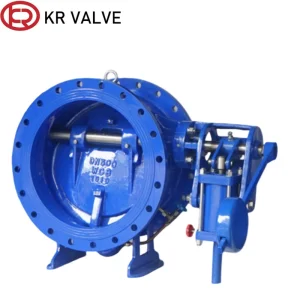
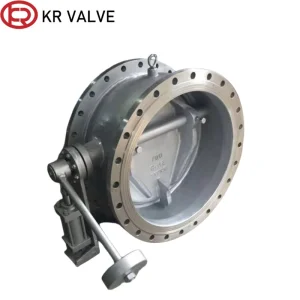
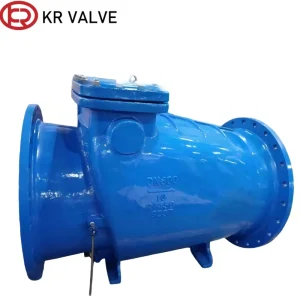
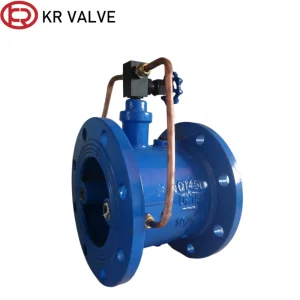
The Evolution of Tilting Disc Check Valve Demand in Japan
Analyzing Japan's industrial modernization, energy transition, municipal water protection, and stringent fluid mechanics requirements for thermal, nuclear, and hydrogen infrastructure.
Japan’s industrial sector operates under some of the most rigorous operational, environmental, and seismic safety requirements globally. From the massive coastal energy complexes in the Tokyo Bay and Hanshin Industrial Regions to municipal water distribution networks operated under Japanese Water Works Association (JWWA) standards, fluid management infrastructure demands absolute reliability. Among non-return valves, the tilting disc check valve has emerged as the engineered solution of choice across Japanese engineering, procurement, and construction (EPC) firms, plant operators, and heavy machine original equipment manufacturers (OEMs).
Unlike standard swing check valves, which are prone to violent valve slamming, severe pressure surges, and accelerated hinge pin wear under turbulent backflows, the tilting disc check valve utilizes an offset pivot geometry. This design positions the disc pivot center slightly above the pipe center line and behind the seating plane. In the Japanese industrial context—where thermal power generation, LNG receiving terminals (such as JERA and Tokyo Gas facilities), chemical manufacturing corridors (Chiba and Yokkaichi), and high-rise municipal pumping stations require zero-downtime performance—this pivot design delivers rapid, non-slam closure prior to fluid reversal.
Furthermore, Japan's strategic shift toward clean hydrogen transport networks (e.g., the Fukushima Hydrogen Energy Research Field - FH2R) and the restart of key nuclear power generation plants under the Nuclear Regulation Authority (NRA) guidelines have created stringent demands for heavy-duty forged and cast steel non-return valves. Valve factories and manufacturers supplying the Japanese market must not only conform to standard Japanese Industrial Standards (JIS B 2031, JIS B 2071, JIS B 2081), but also deliver comprehensive non-destructive testing (NDT), precise seat-lapping craftsmanship, and complete material traceability down to the raw melt heat numbers.
Physics of Tilting Disc Geometry: Mitigating Water Hammer in Critical Piping
Understanding the dynamic torque balance, double offset pivot geometry, and pressure drop characteristics that distinguish high-tier tilting disc check valves.
Double-Offset Hinge Geometry
By moving the pivot shaft center off the pipe axis and seating surface, the disc rotates freely without scuffing the seat ring. This minimizes seating friction, extends metallic seal lifespan, and allows quick opening with low forward differential pressure.
Rapid Dynamic Response
The aerodynamic, dome-shaped disc features a short rotational travel angle (typically 40° to 45° compared to 70° to 80° in conventional swing valves). This short arc ensures the disc reaches its seat fractionally before fluid velocity reverses.
Hydraulic Dampening Dashpot
For high-head pumping facilities across Japan, optional hydraulic dashpot cylinders or external counterweights can be integrated to provide dual-stage slow closing, eliminating pressure transients (Joukowsky equation spikes).
Hydrodynamic Equation & Surge Mitigation
In high-pressure cooling lines (such as power plant condenser circulation pumps), the magnitude of water hammer pressure increase ($\Delta P$) is dictated by the Joukowsky equation:
Joukowsky Transient Equation: $\Delta P = \rho \cdot a \cdot \Delta v$
Where $\rho$ is fluid density, $a$ is acoustic wave speed in the liquid media, and $\Delta v$ is the abrupt change in backflow fluid velocity at the instant of disc closure. Because a tilting disc check valve closes while forward flow is decelerating toward zero ($\Delta v \approx 0$), the destructive pressure wave $\Delta P$ is effectively eliminated, protecting expensive pump casings and pipeline welds.
This aerodynamic disc contour acts as an airfoil in open flow, maintaining stable positioning without flutter even under fluctuating flow velocities. In contrast, standard dual-plate wafer valves or lift check valves experience spring fatigue and chatter in high-turbulence zones downstream of elbows or control valves.
Engineering Comparison: Non-Return Valve Configurations
Comprehensive benchmarking of Tilting Disc Check Valves against conventional industrial check valve designs for Japanese engineering specifications.
| Performance Parameter | Tilting Disc Check Valve | Conventional Swing Check | Dual-Plate Wafer Check | Silent Nozzle Check |
|---|---|---|---|---|
| Water Hammer Prevention | Superior (Pre-reversal close) | Poor (High slamming risk) | Moderate (Spring assisted) | Excellent (Axial flow) |
| Head Loss Coefficient ($K$-Factor) | Very Low ($K \approx 0.8 - 1.2$) | Moderate ($K \approx 1.5 - 2.5$) | Higher ($K \approx 2.0 - 3.5$) | Low-Moderate ($K \approx 1.2 - 1.8$) |
| Disk Stroke Angle | 40° – 45° Short Stroke | 75° – 85° Wide Arc | 90° Folded Plates | Linear Axial Stroke |
| Seat Wear Resistance | Exceptional (Pivot unseating) | Moderate (Friction drag) | Fair (Pin hinge friction) | High (Linear sleeve guide) |
| Face-to-Face Standard | JIS B 2002 / ASME B16.10 | JIS B 2002 / ASME B16.10 | API 594 Wafer / Lug | ASME B16.10 Long Pattern |
| Maintenance & Lifecycle Cost | Lowest (Replaceable trim) | High (Pin replacement) | Moderate (Spring failure) | High (Complex internals) |
Japanese Regulatory Compliance, JIS Standards & KHK Certification
Ensuring absolute alignment with Ministry of Economy, Trade and Industry (METI) regulations, Japanese Industrial Standards, and JWWA water hygiene guidelines.
Procurement teams sourcing tilting disc check valves for installation within Japanese territory must ensure strict adherence to localized statutory requirements. Japanese municipal authorities, regional energy companies, and engineering syndicates like Mitsubishi Heavy Industries (MHI), IHI Corporation, and JGC Corporation enforce stringent quality audits on valve manufacturing facilities.
Core Japanese Standards Overview:
- JIS B 2031 / JIS B 2071 / JIS B 2081: Defines general requirements, pressure-temperature ratings, shell wall thicknesses, and face-to-face dimensions for cast iron, cast carbon steel, and stainless steel industrial valves.
- KHK (High Pressure Gas Safety Act - METI): Mandatory for valves installed in Japanese liquefied natural gas (LNG) receiving plants, hydrogen fueling stations, and high-pressure chemical gas refining units operating above 1.0 MPa.
- JWWA Z 108 / Z 110: Japan Water Works Association specifications regulating non-toxic epoxy interior coatings and leaching standards to guarantee potability in municipal drinking water infrastructure.
- Seismic Class 1E (NRA Nuclear Standard): Dynamic modal testing (finite element analysis) verifying structural integrity against high peak ground acceleration (PGA) seismic events up to 9.0 on the Richter scale.
Advanced OEM valve manufacturing plants serving Japan incorporate 100% Non-Destructive Testing (NDT). This includes Radiographic Inspection (RT) on critical casting junctions, Ultrasonic Testing (UT) for stem forgings, Dye Penetrant Testing (PT) on hardfaced Stellite 6 seating overlays, and Positive Material Identification (PMI) using X-ray fluorescence spectrometers to confirm exact nickel, chromium, and molybdenum chemistry.
Global OEM Sourcing & Hybrid Factory Collaboration with Japanese Buyers
Combining world-class manufacturing scale with Japanese quality control protocols to deliver cost-optimized, high-integrity valve infrastructure.
Cost-Effective High-Precision Casting
By pairing precision investment casting facilities and automated CNC machining cells with strict Japanese Kaizen inspection methodology, manufacturers can achieve up to 35% cost reductions without sacrificing dimensional tolerances or metallurgic purity.
Full Traceability & Third-Party Inspection
Every shipment bound for Japan comes with comprehensive EN 10204 3.1 Material Test Reports (MTRs), hydrostatic test charts, shell testing records, and optional third-party witnessing by agencies such as Lloyd's Register, Bureau Veritas, or TÜV Rheinland.
Technological Roadmap: Smart Sensors & Hydrogen-Ready Check Valves
Pioneering Next-Generation Industrial Fluid Control for Japan's Society 5.0 and Carbon-Neutral Future.
IoT Acoustic Emission Monitoring
Integration of non-intrusive piezo-electric acoustic sensors into the valve body to track micro-leakage, seat degradation, and disc flutter in real-time, feeding predictive maintenance data into Japanese factory automation (FA) systems.
Cryogenic Liquid Hydrogen ($LH_2$) Trims
Development of specialized ultra-low temperature alloys (CF3M/316L with extended bonnets and kel-F / metal-to-metal seating) operating reliably at $-253^\circ\text{C}$ for Japan's emerging clean hydrogen import terminals.
Super-Duplex Extreme Sea-Water Alloys
Utilizing UNS S32750 (2507 Super Duplex) and Titanium-clad bodies for reverse-osmosis (RO) desalination plants and offshore platform reinjection systems operating off the coasts of Honshu and Kyushu.
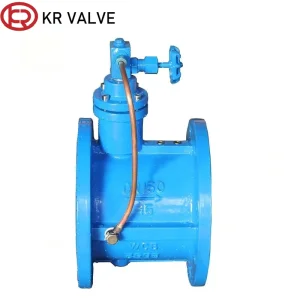
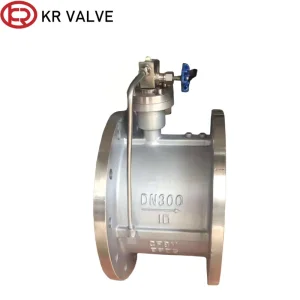
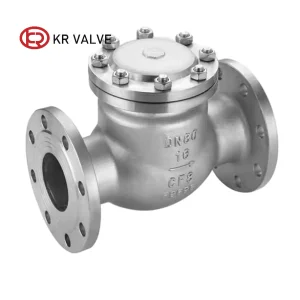
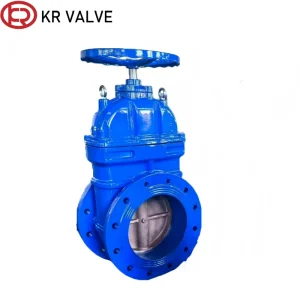
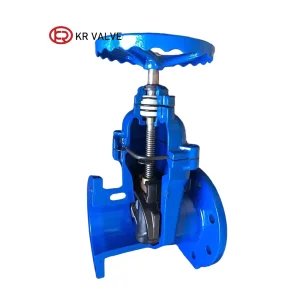
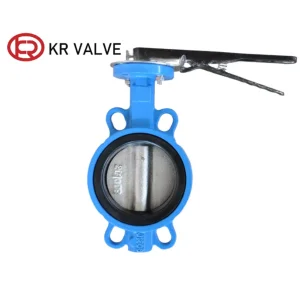
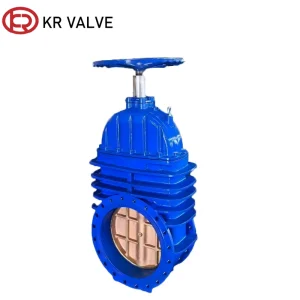
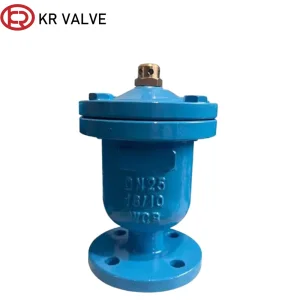
Full Range of Industrial Check Valves & Flow Control Solutions
Explore our complete product lineup engineered to JIS, DIN, ANSI, and BS standards for international project contractors and Japanese industrial buyers.
Frequently Asked Questions by Japanese Engineers & Buyers
Expert answers regarding tilting disc check valve design, installation requirements, JIS standards compliance, and sourcing procedures.
Why is a tilting disc check valve superior to a swing check valve in high-velocity pumping lines?
A tilting disc check valve utilizes an offset pivot geometry and a streamlined airfoil disc with a short rotational arc (40°-45°). This allows the disc to begin closing dynamically as forward flow velocity decelerates, reaching the seat just before flow reversal occurs. In contrast, swing check valves have a wide stroke (75°-85°) and close after flow has already reversed, resulting in destructive water hammer, valve slamming, and premature hinge pin destruction.
Can tilting disc check valves be installed in vertical piping runs?
Yes, tilting disc check valves can be installed in vertical lines with upward flow, provided that the system pressure is sufficient to fully lift the disc away from its seat during operation. For vertical downflow or horizontal lines, proper counterweight or hydraulic dashpot selection should be verified with our engineering team during the project specification stage.
How do you guarantee compliance with Japanese JIS and METI/KHK standards?
Our OEM manufacturing process adheres to strict quality assurance systems. We match face-to-face dimensions to JIS B 2002 and flange drilling to JIS B 2220 / JIS B 2239 (10K, 16K, 20K, 30K, 63K). For high-pressure gas applications falling under METI regulations, we provide complete chemical, physical, and NDT certification (RT, UT, PT, MT) in full compliance with EN 10204 3.1 standards.
What seat trim options are recommended for seawater or aggressive chemical media?
For standard raw water and municipal service, stainless steel SS304 or SS316 seating surfaces are standard. For marine, off-shore, or seawater cooling systems common in Japanese coastal power stations, we supply Stellite 6 hardfaced seat overlays, Nickel-Aluminum Bronze (NAB) trims, or solid Duplex / Super Duplex SS (2205 / 2507) internals to resist localized pitting and galvanic corrosion.
What is the typical lead time for custom OEM tilting disc check valve orders shipped to Japan?
Standard cast steel (WCB) and ductile iron orders with standard JIS or ANSI flanges typically ship within 30 to 40 days. Custom engineered alloy castings (CF8M, Hastelloy, Duplex) with custom hydraulic slow-closing cylinders or specialized KHK certification usually require 50 to 60 days, complete with expedited sea freight directly to major Japanese ports (Yokohama, Kobe, Nagoya, Tokyo).
Partner with a World-Class Tilting Disc Check Valve Manufacturer
Get comprehensive technical quotes, CAD block files, and localized compliance consultation for your next industrial fluid project in Japan or globally.
Send Inquiry Now