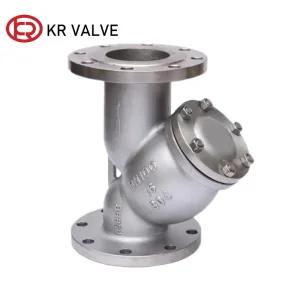
High-Performance Y Strainers for Brazilian Projects
Engineered for rigorous mechanical stress, extreme flow velocities, and corrosion resistance in Brazilian industrial processing lines.
1. Brazilian Industrial Ecosystem & Fluid Protection Demands
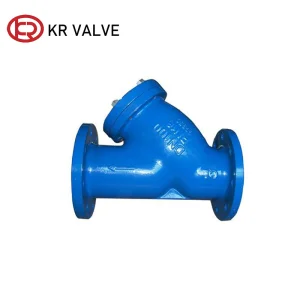
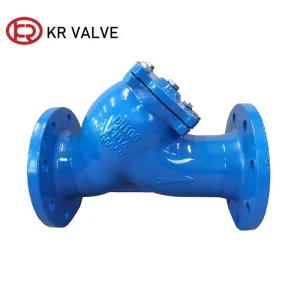
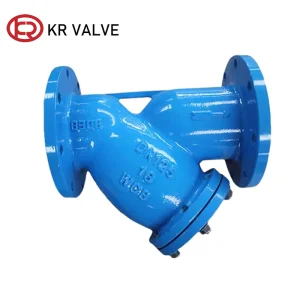
Brazil represents the largest industrial flow control market in Latin America. Driven by aggressive modernization across agricultural processing, deepwater energy extraction, and municipal sanitation infrastructure, the nation's demand for high-integrity mechanical filtration systems has reached unprecedented levels. Y-Type strainers serve as the primary defensive line for critical downstream equipment—protecting high-value control valves, positive displacement pumps, flowmeters, and turbine impellers from particulate contamination, pipe scale, and welding slag.
Sugarcane Bioethanol (Ribeirão Preto Cluster)
High-viscosity juice and fermentation slurries demand CF8/CF8M stainless steel Y strainers with custom mesh openings to resist organic acid corrosion and fiber clogging.
Offshore Oil & Gas (Santos & Campos Basins)
Pre-salt FPSO topsides and coastal refineries require WCB cast steel and duplex stainless strainers certified to ASME B16.34 and API 598 hydrostatic criteria.
Sanitation Framework (Marco Legal do Saneamento)
Massive municipal potable water expansions across São Paulo and Rio de Janeiro mandate GGG40 ductile iron strainers with WRAS/NVC non-toxic epoxy coatings.
Technical Insight for Brazilian EPC Contractors: Fluid dynamics in tropical climates present elevated bio-fouling and rapid oxidation risks. Utilizing GGG40 ductile iron or CF8 stainless steel bodies with SS316 reinforced screen mesh reduces total cost of ownership (TCO) by up to 38% over a 5-year lifecycle compared to traditional gray cast iron solutions.
2. Engineering Deep-Dive: Material Science & Flow Dynamics
The structural geometry of a Y-Type strainer must balance mechanical durability with minimal pressure drop ($\Delta P$). Fluid enters the strainer body, passes through a cylindrical perforated basket lined with wire mesh, and exits free of suspended solids. Achieving optimal filtration efficiency without inducing cavitation or severe flow restriction requires precise metallurgical matching and CFD-optimized chamber geometry.
Comparative Metallurgy Matrix for Strainer Bodies
| Material Standard | Tensile Strength (MPa) | Corrosion Resistance Rating | Primary Brazilian Industry Application | Standard Flange Compliance |
|---|---|---|---|---|
| Cast Iron GG25 (JL 1040) | ≥ 250 | Moderate (HVAC / Non-aggressive water) | Commercial Building Plumbing, São Paulo Metro HVAC | DIN EN 1092-2 PN10/PN16 |
| Ductile Iron GGG40 (JS 1030) | ≥ 400 | High (Epoxy Coated) | SABESP Municipal Water, Sewage Mains | EN1092-2, ABNT NBR 7675 |
| Cast Carbon Steel WCB (A216) | ≥ 485 | High (Petrochemical & Steam) | REDUC & REVAP Refineries, High Pressure Lines | ASME B16.5 Class 150/300 |
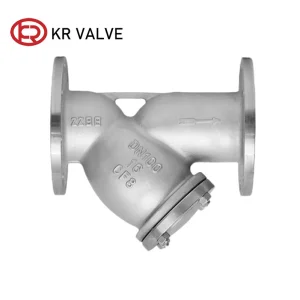
| Stainless Steel CF8 / CF8M | ≥ 485 / 515 | Superior (Acid / Chemical / Biofuel) | Sugarcane Bioethanol, Pulp & Paper (Fibria) | ASME B16.5 Class 150/300, DIN PN16 |
Mesh Sizing & Micron Selection Technical Guide
Screen performance is defined by mesh count (number of openings per linear inch) or micron rating ($\mu m$). Selecting an oversized mesh permits damaging particulates to pass downstream, whereas an undersized mesh causes rapid clogging and excessive pressure drop across the filter element.
- Coarse Protection (20 Mesh / 840 $\mu m$): Suited for raw water intake, river water pumping station protection, and heavy industrial cooling loops.
- Medium Filtration (40 to 80 Mesh / 420 to 177 $\mu m$): Standard configuration for boiler feed water, urban distribution grids, and HVAC chilled water loops.
- Fine Process Filtration (100 to 200 Mesh / 149 to 74 $\mu m$): Essential for protecting sensitive hydraulic control valves, spray nozzles in pulp processing, and ethanol distillation equipment.
3. China Factory Supply Chain Resilience & Brazilian Import Synergy
Navigating international supply networks requires balancing unit cost, metallurgical fidelity, and door-to-port lead times. As a premier Chinese manufacturer specialized in high-volume valve and strainer casting, our operational integration offers Brazilian importers, stockists, and EPC firms distinct competitive advantages over regional distributors.
Precision Casting & Scale Economy
Our automated sand-casting and investment-casting lines ensure high dimensional accuracy, eliminating wall-thickness variations and porosity defects common in legacy foundries.
Complete Quality Assurance (QA/QC)
Every batch undergoes chemical spectrum analysis, ultrasonic flaw detection, hydro-testing to API 598 / EN 12266-1, and 100% visual coating inspection prior to container loading.
Direct Freight to Santos & Paranaguá
Optimized logistics documentation for smooth clearance through Receita Federal. Standard sea freight options directly connecting Tianjin Port to Port of Santos within 30-35 days.
4. Next-Gen Roadmap: Smart Strainers & Automated Filtration
The industrial landscape in South America is rapidly adopting Industry 4.0 paradigms. Strainer technology is evolving from passive mechanical traps to active, data-rich fluid monitoring nodes.
Innovation Spotlight: Smart Differential Pressure ($\Delta P$) Integration
Modern Y strainers supplied for high-criticality lines in Santos Basin offshore platforms and major municipal plants now integrate wireless $\Delta P$ transmitters. When particulate accumulation reaches critical thresholds, an automated signal alerts control rooms or triggers an electric blow-off ball valve for automated line flushing—eliminating manual teardown and downtime.
Key Engineering Innovations
- Eco-Friendly Fusion-Bonded Epoxy (FBE): High-voltage electrostatic powder coating (RAL 5005 / RAL 5017) compliant with international drinking water contact directives.
- Magnetic Debris Separators: Integrated high-intensity neodymium magnetic cores within the Y-chamber to trap sub-micron ferrous rust particles before they reach sensitive magnetic flowmeters.
- Quick-Open Bonnet Designs: Hinged or davit-arm bonnet covers equipped with synthetic O-ring seals for rapid, tool-free mesh cleaning during maintenance turnarounds.
5. Standards Compliance & Quality Guarantee for Brazil
Contractors and distributors importing industrial hardware into Brazil must strictly comply with local safety and technical standard frameworks. Our manufacturing facilities operate under comprehensive international certifications, ensuring effortless integration into Brazilian engineering blueprints.
| International Standard | Equivalent Brazilian / Regional Standard | Technical Scope |
|---|---|---|
| ASME B16.34 | ABNT NBR 15827 | Valves — Flanged, Threaded, and Welding End (Pressure-Temperature Ratings) |
| DIN EN 1092-2 | ABNT NBR 7675 | Flanges and their joints — Ductile iron flanges for water pipelines |
| API 598 | ISO 5208 | Valve Inspection and Hydrostatic Pressure Testing |
| ASME B16.10 | DIN 3202 F1 / EN 558 | Face-to-Face and End-to-End Dimensions of Metallic Strainers |
Frequently Asked Technical Questions
Expert answers to common engineering, procurement, and installation queries from Brazilian buyers.
Complementary Pipeline Valves & Strainer Solutions
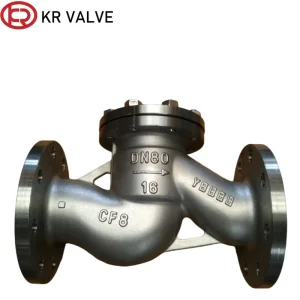
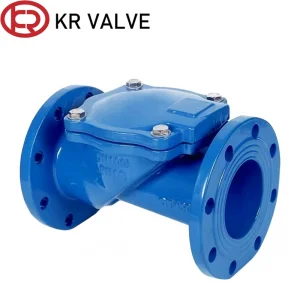
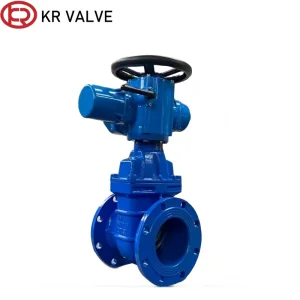
Explore our complete range of certified flow control valves, non-return valves, and specialized filtration components for Brazilian infrastructure projects.