Engineered Industrial Valve Solutions
Explore custom-manufactured valve systems designed for maximum hydraulic integrity, high surge protection, and long service life across critical water and industrial pipelines.
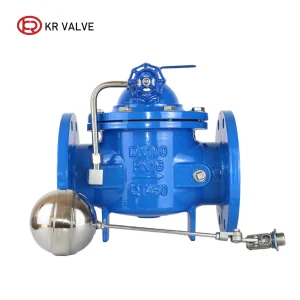
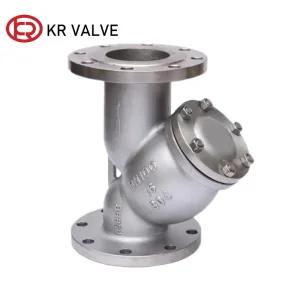
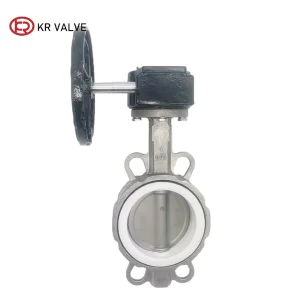
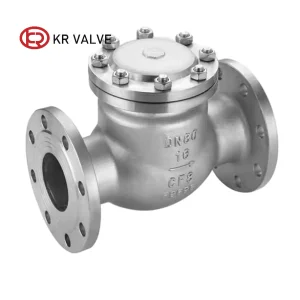
1. Executive Overview: The Critical Role of Air Release Valves in Pipeline Hydraulics
In pressurized liquid transportation systems—spanning municipal water transmission mains, industrial process piping, desalination facilities, and agricultural networks—the presence of trapped air represents one of the most severe threats to hydraulic efficiency and structural integrity. Entrained air collects at high points along pipeline profiles, forming stationary air pockets that drastically reduce the effective cross-sectional flow area. This phenomenon increases friction head loss, accelerates pump energy consumption, creates severe flow rate instability, and engenders catastrophic transient surge events (water hammer).
Custom Air Release Valves (ARVs), alongside Kinetic Air Valves and Combination Air Vacuum Valves, are automated hydromechanical safety devices specifically engineered to vent accumulated air pockets during pressurized system operation, exhaust massive air volumes during initial line filling, and admit large air volumes during rapid draining or column separation events. Partnering with specialized Custom Air Release Valve Manufacturers & Factories ensures that internal orifice kinetics, float buoyancy curves, seating elastomers, and pressure containment envelopes are perfectly tailored to system-specific operational envelope dynamics.
Engineering Information Gain Insight: Standard off-the-shelf air valves often suffer from premature closing during rapid filling due to sonic choked flow phenomena, or fail to seal under micro-pressure differentials (< 0.2 bar). Custom OEM manufacturing integrates anti-slam surge protection disks, dual-step float guide geometry, and vulcanized EPDM/FKM resilient seating to achieve zero-leakage performance across zero-to-high pressure spectra.
Global Procurement & Sourcing Ecosystem
Navigating total cost of ownership (TCO), material provenance, and manufacturing standards for enterprise B2B valve buyers.
Material Provenance & Metallurgy
Global procurement requires absolute traceability of castings. Leading factories provide full EN 10204 3.1 Material Test Reports (MTRs) for Ductile Iron (GGG40/GGG50 / ASTM A536), Cast Carbon Steel (WCB), Stainless Steel (CF8/CF8M), and Super Duplex Stainless Steels (2205/2507) for aggressive marine and chemical environments.
International Compliance Audit
Tier-1 manufacturing facilities align production lines with AWWA C512, EN 1074-4, and DIN 3542. Strict factory audits verify pressure testing compliance to ISO 5208, protective epoxy coating thickness (min. 300 µm WRAS/NSF-61 approved fusion-bonded epoxy), and non-destructive examination (NDE).
Life-Cycle Cost Optimization
Procuring directly from specialized original equipment manufacturers eliminates intermediary markup while securing customizable face-to-face dimensions, non-standard flange drilling (ANSI B16.5, EN 1092-2, AS 4087), and specialized anti-surge mechanisms that drastically lower lifetime pipeline OPEX.
2. Macro-Industry Solutions: Application-Specific Valve Architecture
Air release and vacuum release requirements vary radically depending on the working medium, working pressure, fluid viscosity, suspended solids concentration, and ambient environmental conditions. A high-performance air valve engineered for potable water distribution will swiftly jam if installed on an untreated sewage force main. Below is an analytical breakdown of sector-specific valve customization strategies:
A. Municipal Potable Water Transmission Mains
In long-distance water transmission pipelines running over undulating terrain, air accumulates continuous micro-pockets at localized summits. Custom Combination Air Valves incorporate two distinct internal orifices:
- Large Orifice (Kinetic Function): Permits rapid air evacuation during initial line filling (up to sonic velocity) and admits massive air volumes during rapid draining or pump trips to prevent destructive pipe collapse (negative pressure vacuum).
- Small Orifice (Automatic Air Release Function): Operates continuously under full system working pressure (up to 40 bar). As air accumulates in the valve chamber, the liquid level drops, releasing the buoyant float to unseat a micro-orifice seal (typically 1.5mm to 3.0mm diameter) and vent accumulated gas without liquid leakage.
B. Sewage, Wastewater & Slurry Systems
Wastewater force mains carry grease, organic solids, solids in suspension, and corrosive hydrogen sulfide gas ($H_2S$). Standard air valves clog rapidly as solids infiltrate the sealing orifice mechanism. Custom Sewage Air Release Valves utilize an elongated conical body configuration. The liquid-gas interface is maintained deep within the lower section of the elongated body, trapping an air cushion that isolates the delicate upper sealing mechanism and float lever linkage from direct contact with raw sewage.
C. Desalination, Seawater & Heavy Chemical Process Plants
High chloride content in seawater desalination plants (RO facilities) induces severe pitting and crevice corrosion in standard ductile iron or 304 stainless steel internals. Custom OEM factories utilize specialized material combinations: Super Duplex Stainless Steel (UNS S32750/S32760) internal floats and levers, coupled with Fluorocarbon (FKM) or Highly Saturated Nitrile (HSN) seals and Hastelloy C-276 micro-orifices.
| Application Sector | Primary Fluid Medium | Body & Cover Material | Float / Mechanism | Sealing Element | Critical Engineering Feature |
|---|---|---|---|---|---|
| Municipal Water | Potable / Raw Water | Ductile Iron GGG50 / WCB | SS304 / SS316 Float | EPDM (WRAS / NSF61) | Dual-Orifice Combination + Anti-Slam Disk |
| Sewage & Wastewater | Raw Sewage / Effluent | Ductile Iron / SS316 Body | SS316 / Polypropylene Float | NBR / Viton (FKM) | Elongated Conical Body / Air Cushion Isolation |
| Desalination (RO) | High-Salinity Seawater | Duplex 2205 / Super Duplex 2507 | Super Duplex S32750 | FKM / PTFE | Crevice Corrosion & Pitting Resistance |
| Mining Slurry | Abrasive Slurry / Tailings | WCB with Polyurethane Line | Heavy-Duty Reinforced SS316 | Polyurethane / Natural Rubber | High Abrasion Resistance & PN40 Rating |
3. Technical Roadmap: CFD Modeling & Anti-Slam Kinetic Mechanism Design
Modern air valve engineering has transitioned from empirical rule-of-thumb design to advanced Computational Fluid Dynamics (CFD) and Finite Element Analysis (FEA). Custom valve manufacturers simulate supersonic air discharge velocities and transient column re-adunation mechanics to prevent dynamic instability.
A. Transient Surge & The Anti-Slam Mechanism
When a pipeline experiences rapid filling or pump startup, air is forced out through the large orifice of the air valve at extreme velocities. As the last pocket of air exits, the liquid water column arrives at the valve at high velocity. If a standard kinetic valve closes instantly upon liquid contact, the abrupt deceleration of the water column generates a severe localized pressure surge (water hammer), calculated via the Joukowsky Equation:
The Joukowsky Water Hammer Equation: $\Delta P = \rho \cdot a \cdot \Delta v$
Where $\Delta P$ is the transient pressure rise, $\rho$ is fluid density, $a$ is acoustic wave speed in the fluid (~1000–1200 m/s in steel/ductile iron pipes), and $\Delta v$ is the change in fluid velocity. A sudden velocity drop from 3 m/s to 0 m/s can induce an instantaneous pressure spike exceeding 36 bar!
Custom Air Release Valve Manufacturers solve this challenge by integrating an Anti-Slam (Surge Alleviation) Mechanism. The anti-slam device consists of a spring-loaded or aerodynamically throttled internal disk positioned above the main air outlet orifice. When air discharge velocity exceeds a critical threshold (indicating imminent water column arrival), the disk automatically rises, restricting the air exhaust area. This throttling action creates a compressed air cushion within the pipeline summit, gradually decelerating the incoming water column prior to final valve closure and reducing transient pressure spikes by up to 95%.
B. Precision Orifice Sizing & Mathematical Aerodynamics
Custom factory production allows precise tailoring of the small air release orifice diameter based on system operating pressure ranges. The rate of air flow through a micro-orifice under pressurized liquid conditions follows compressible gas flow equations through choked/sub-choked orifices. Customizing the leverage arm mechanical ratio allows the float to unseat against working pressures up to 40 bar without requiring excessively large float volumes.
Aerodynamic Float Geometry
Precision-molded cylindrical and spherical floats designed with aerodynamic drag coefficients ($C_d$) that prevent premature blow-shut during high-velocity air exhaust while ensuring instantaneous buoyancy seating upon water entry.
Zero-Pressure Sealing
Specialized soft-seat elastomer profiles (EPDM/NBR/FKM) engineered with dual-durometer shore hardness to guarantee drop-tight sealing under low head conditions (< 0.1 bar) as well as extreme high-pressure surges.
Dynamic CFD Optimization
Every custom valve design undergoes 3D CFD flow velocity and pressure gradient simulation to eliminate internal turbulence zones, maximize discharge coefficients ($C_d \ge 0.75$), and optimize energy conversion.
Rigorous Factory Testing & International Standards
Ensuring 100% inspection reliability and global market compliance for zero-defect field installation.
Hydrostatic Shell Testing
100% of manufactured valve bodies undergo hydrostatic shell testing at 1.5 times the nominal working pressure (e.g., 24 bar test for PN16 rating, 60 bar test for PN40 rating) in strict adherence to ISO 5208 and BS EN 12266-1.
Air Venting Performance Verification
Factory test rigs evaluate volumetric air discharge curves and vacuum intake airflow capacity against differential pressure thresholds, verifying air discharge coefficients ($C_d$) and confirming anti-slam disk activation settings.
Global Sanitary Certifications
For drinking water applications, internal rubber components, epoxy coatings, and lubricants are certified under WRAS (UK), NSF/ANSI 61 (USA), ACS (France), and DVGW (Germany) to ensure zero toxic leaching or micro-biological growth.
Frequently Asked Engineering Questions
Detailed answers to complex air release valve sizing, selection, maintenance, and custom OEM manufacturing parameters.
4. Future Horizons: Smart IoT Air Valves & Next-Generation Fluid Engineering
The industrial valve manufacturing landscape is undergoing a digital transformation. Next-generation Air Release Valves are evolving from passive mechanical components into intelligent, data-generating nodes within Smart Water Grids and Industry 4.0 IoT infrastructure networks.
A. Integrated Acoustic & Pressure Telemetry Sensors
Custom OEM manufacturers are embedding wireless micro-acoustic sensors and dynamic pressure transducers directly into the upper bonnet assembly of combination air valves. Because air release valves are naturally located at the high points of pipeline profiles, they serve as ideal monitoring posts. Integrated telemetry monitors continuous acoustic frequencies, instantly detecting minor pinhole leaks or localized air pocket accumulation miles away and transmitting real-time cellular/LoRaWAN alerts to SCADA control centers.
B. Solar-Powered Smart Venting Actuation
In ultra-critical mega-pipelines, hybrid smart air valves feature solar-powered, low-energy solenoid overrides that allow operators to remotely open or restrict air venting parameters prior to controlled system startup or scheduled surge events, combining passive mechanical float safety with active digital command automation.
Factory Direct Product Range
Explore additional specialized flow control products manufactured to international DIN, ANSI, BS, and ISO quality standards.