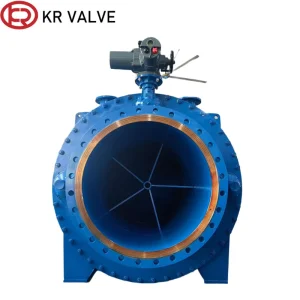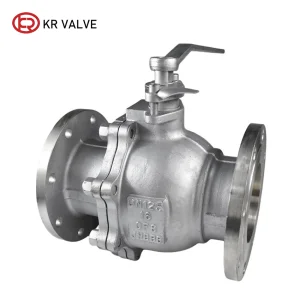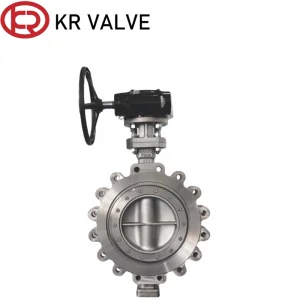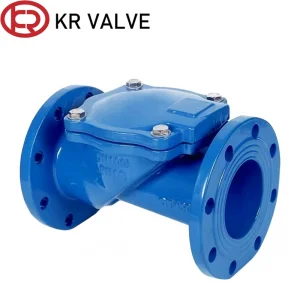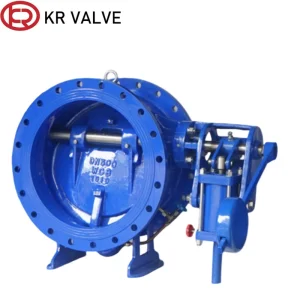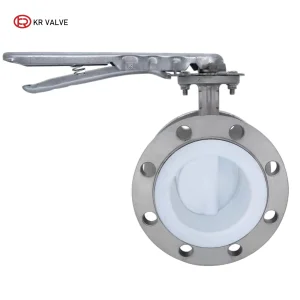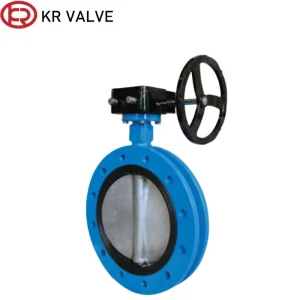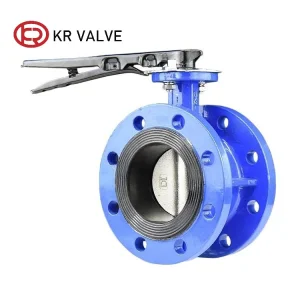
Featured Stainless Steel & Industrial Valve Series
High-performance flow isolation and control valves manufactured for global industrial standards.
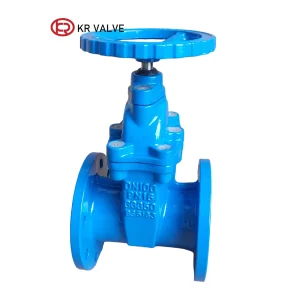
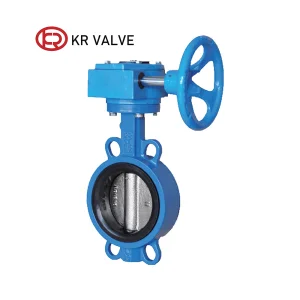
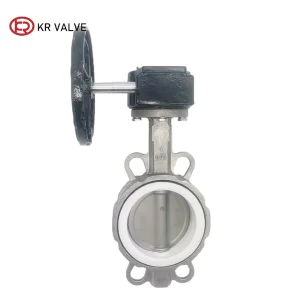
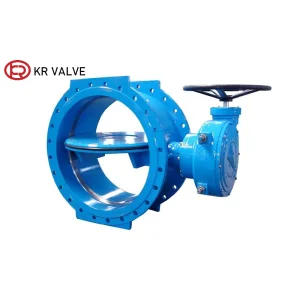
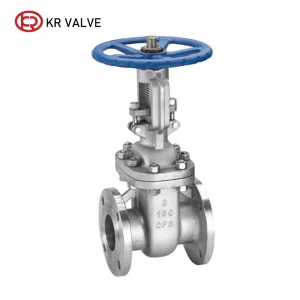
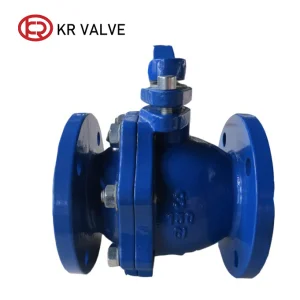
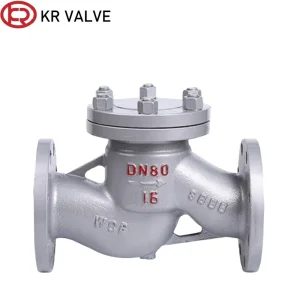
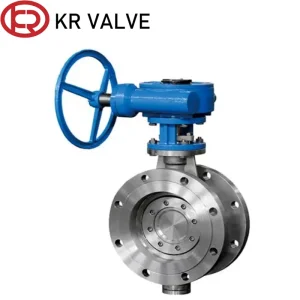
1. Executive Overview: Global Stainless Steel Butterfly Valve Market Landscape
Analyzing current global demand, fluid handling requirements, and material advancements in industrial piping systems.
The global industrial valve market is undergoing a structural transition toward materials that provide long-term corrosion resistance, mechanical durability, and minimal operational downtime. Within quarter-turn flow control solutions, custom stainless steel butterfly valves have emerged as the premier choice across critical process industries including chemical processing, seawater desalination, municipal wastewater treatment, oil and gas midstream, and hygienic food/pharmaceutical production.
Compared to conventional cast iron or carbon steel gate and globe valves, stainless steel butterfly valves provide superior strength-to-weight ratios, compact face-to-face dimensions (compliant with ISO 5752 and API 609), and dramatically reduced actuation torque requirements. As global infrastructure and process plants push toward higher operating temperatures, elevated fluid pressures, and harsher chemical environments, sourcing high-integrity custom stainless steel valves from established OEM suppliers has become a strategic priority for EPC contractors and procurement managers worldwide.
1.1 Metallurgical Breakdown: Material Grades & Selection Criteria
Customization begins at the foundry level. Selecting the correct stainless steel alloy ensures optimum resistance against pitting, crevice corrosion, and stress corrosion cracking (SCC):
- CF8 (304 Stainless Steel): The baseline austenitic stainless steel offering excellent versatility for general water distribution, HVAC, mild chemical service, and atmospheric application. Provides solid tensile strength and structural integrity.
- CF8M (316 Stainless Steel): Alloyed with 2-3% Molybdenum, CF8M exhibits significantly improved resistance to chloride-induced pitting and crevice corrosion. It is the industrial standard for marine, industrial water treatment, and moderate chemical applications.
- CF3M (316L Stainless Steel): The low-carbon variant of 316. Essential for custom-welded butterfly valve assemblies or high-temperature service where intergranular corrosion prevention in the heat-affected zone (HAZ) is mandatory.
- Duplex (2205 / 4A) & Super Duplex (2507 / 5A): Combining austenitic and ferritic microstructures, duplex stainless steels provide double the yield strength of 316 and exceptional resistance to severe chloride environments, making them ideal for high-pressure reverse osmosis (SWRO) desalination systems.
Technical Insight: Selecting between soft-seated (PTFE, RPTFE, EPDM, Viton) and triple-offset metal-to-metal seated stainless steel butterfly valves depends primarily on working temperature, fluid pressure, and media abrasiveness. Metal-seated designs withstand temperatures upwards of 450°C and high-cycle industrial duties.
2. China Manufacturing Ecosystem: Efficiency, Technology, & Supply Chain Dominance
How Tier-1 Chinese valve manufacturers deliver uncompromised quality, mass customization, and rapid lead times.
Advanced Foundry Metallurgy
Leading Chinese valve foundries utilize silica sol precision investment casting and automated sand casting lines. This ensures smooth surface finishes (Ra 3.2 to Ra 0.8 μm), zero internal porosity, and exact chemical composition verified by optical emission spectrometry (OES).
5-Axis CNC Machining Precision
By integrating multi-axis CNC machining centers, tight dimensional tolerances are maintained across valve body seats, stem journal seals, and flange bolt patterns (ANSI Class 150/300, DIN PN10/PN16/PN25, JIS 10K/20K).
Cost Efficiency & Scalability
China's centralized industrial hubs (e.g., Tianjin, Wenzhou) offer complete vertical integration—from raw raw material refining to rubber molding, machining, testing, and export logistics. This yields a 30% to 45% cost advantage over Western manufacturers.
2.1 OEM Customization Capabilities for Global Procurement
Every engineering pipeline project presents unique technical constraints. As a professional custom butterfly valve stainless supplier, Chinese manufacturers offer customized solutions tailored to specific operating conditions:
- Structural Configurations: Concentric (Rubber/PTFE lined), Double Eccentric (High-Performance), and Triple Eccentric (TOV) Metal-Seated designs.
- Body Style Customization: Wafer, Lug (threaded tapped holes for end-of-line service), Double Flanged (U-type and short/long pattern), and Butt-Welded connections.
- Stem & Actuation Adaptability: ISO 5211 direct-mount top flanges enabling seamless integration with pneumatic single/double-acting actuators, electric quarter-turn actuators, manual worm gearboxes, or lever handles.
- Surface & Lining Options: Full PTFE/PFA lining for aggressive acids, electro-polishing for food-grade cleanroom applications, and epoxy coating for external environmental protection.
3. Comprehensive Application Scenarios & Technical Specifications
Matching valve design parameters to rigorous operational environments.
| Application Scenario | Recommended Material | Sealing Type | Pressure Rating | Key Operational Benefit |
|---|---|---|---|---|
| Seawater Desalination (SWRO) | Duplex 2205 / CF8M | RPTFE / SS316 Hardfaced | PN16 - PN40 / Class 300 | Pitting resistance (PREN > 35), zero chloride degradation. |
| Petrochemical & Refining | CF8M / CF3M (316L) | Triple Eccentric Metal-to-Metal | Class 150 / Class 300 | Fugitive emission control (ISO 15848-1), fire-safe design (API 607). |
| Hygienic Food & Beverage | CF8 / SS304 (Polished) | FDA EPDM / Silicone / PTFE | PN10 / PN16 | Smooth bore surface finish (Ra < 0.8μm), CIP/SIP compatibility. |
| Municipal Water & Wastewater | Ductile Iron / CF8 Body | EPDM Soft Seal / PTFE | PN10 / PN16 / ANSI 150 | Low flow resistance, cost-effective long service life, bubble-tight shutoff. |
| Cryogenic Industrial Gas | CF8M with Extended Stem | Stellite Hardfaced Metal Seat | Class 150 / Class 300 | Operates at temperatures down to -196°C without stem packing freeze. |
3.1 Structural Advantage: Concentric vs. Double vs. Triple Offset
Understanding the kinematic differences among butterfly valve types is critical for proper plant specification:
1. Concentric Butterfly Valves: The stem passes through the center line of the disc and bore. Relying on elastomeric (EPDM, NBR) or fluoropolymer (PTFE) seat compression, concentric valves offer low installation cost and excellent shut-off performance for medium-pressure water and HVAC applications.
2. Double Eccentric (High-Performance) Valves: The stem axis is offset from the seal center line and valve body center line. This double offset creates a cam-like motion during opening, lifting the disc off the seat immediately upon rotation. This dramatically reduces seat wear, extends cycle life, and permits higher operating pressures.
3. Triple Eccentric (TOV) Valves: Incorporating a third offset—an inclined conical sealing axis—triple offset butterfly valves eliminate sliding friction completely throughout the 90-degree stroke. Sealing is achieved purely through metal-to-metal contact pressure, making TOV valves zero-leakage, fire-safe, and capable of operating under extreme temperatures and pressures.
4. Global Procurement Standard, Testing & Quality Control (QA/QC)
Guaranteeing absolute compliance, metallurgical integrity, and hydrostatic performance before export shipment.
Testing & Inspection Protocols
Every manufactured stainless steel butterfly valve undergoes 100% shell testing and seat leakage testing in strict accordance with API 598, ISO 5208, and EN 12266-1 prior to shipment.
Material Traceability & Certs
Complete raw material traceability is backed by EN 10204 3.1 Material Test Reports (MTRs), confirming precise chemical composition, heat numbers, tensile strength, yield strength, and elongation percentage.
International Standard Compliance
Engineered for seamless global integration, matching API 609 face-to-face dimensions, ISO 5211 top flange mounting dimensions, ASME B16.5 / EN 1092-1 flange standards, and CE-PED compliance.
5. Industry Evolution: Future Trends in Stainless Steel Flow Control
Emerging technologies shaping the next generation of industrial fluid regulation.
As modern industrial manufacturing moves toward Industry 4.0 and decarbonization goals, custom stainless steel butterfly valve manufacturing is rapidly evolving:
- Smart Valve Actuation & IIoT Diagnostics: The integration of digital positioners, smart sensors, and IoT transmitters allows real-time monitoring of valve cycle counts, stem torque spikes, pressure drop anomalies, and seat wear. This empowers predictive maintenance regimes and eliminates unexpected line shutdowns.
- Low-Emission Packing & Fugitive Emission Seals: Environmental compliance standards (such as ISO 15848-1 and EPA Method 21) demand ultra-low stem leakage. Custom stainless steel butterfly valves are increasingly manufactured with live-loaded graphite stem packing and dual O-ring seal barriers to achieve near-zero volatile organic compound (VOC) emissions.
- Super Alloy Hardfacing & Thermal Spray Coatings: For severe slurry handling and high-velocity steam lines, stainless steel discs are enhanced with Stellite 6, tungsten carbide, or chromium carbide coatings, extending service life by up to 300% under high-erosion conditions.
6. Frequently Asked Questions (FAQ)
Expert technical answers to technical inquiries regarding custom stainless steel butterfly valves.
Complete Industrial Valve & Flow System Catalog
Explore our extended product lines, including ball valves, check valves, cone valves, and strainers.