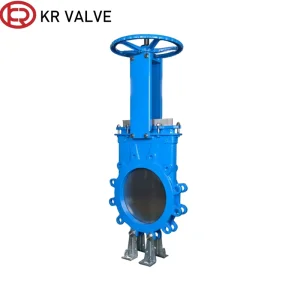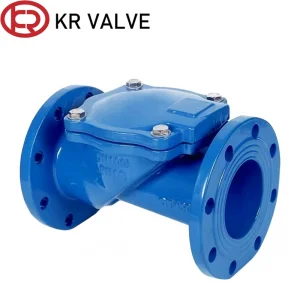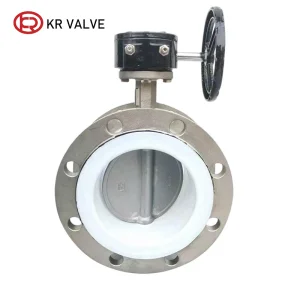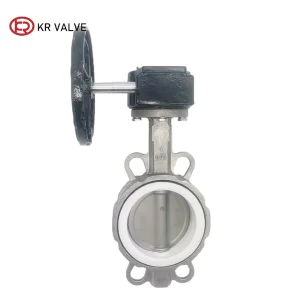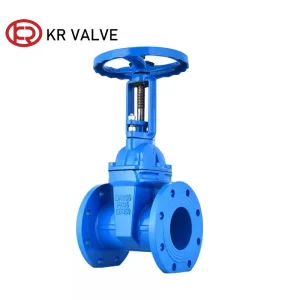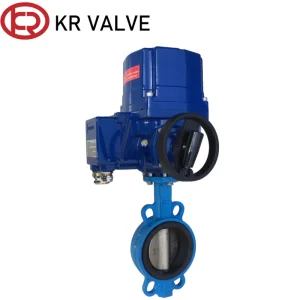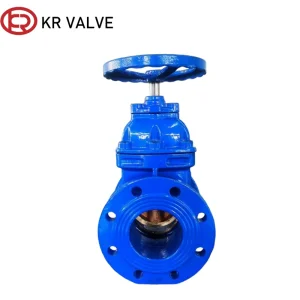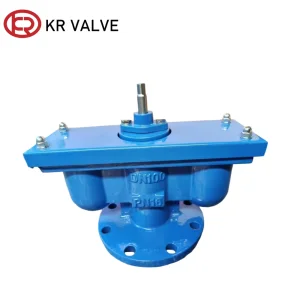
Featured Precision Valves & Hydraulic Control Series
Explore our primary inventory of specialized industrial valves, manufactured under stringent quality control standards for international pipeline infrastructure.
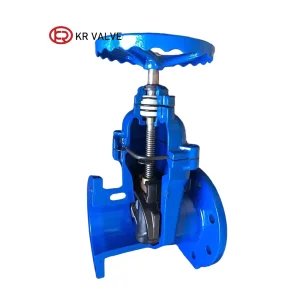
Global Procurement Dynamics for Custom CF8 Stainless Steel Gate Valves
In modern fluid processing industries, the global procurement landscape for ASTM A351 CF8 stainless steel gate valves has evolved from simple cost-per-unit evaluation to total cost of ownership (TCO) optimization, lifecycle risk mitigation, and compliance with stringent environmental fugitive emission regulations.
As international process engineering projects scale in complexity—spanning greenfield LNG terminals, high-purity chemical manufacturing facilities, and desalination networks—procurement executives require direct access to custom CF8 gate valve manufacturers capable of delivering precision-cast components backed by comprehensive material traceability (EN 10204 3.1/3.2 certification).
Custom Metallurgical Specs
Procurement teams demand exact control over chemical compositions, including tight carbon limits (≤0.08%), nickel content (8.0–11.0%), and chromium ratios (18.0–21.0%) to prevent intergranular corrosion in nitric acid and organic fluid pipelines.
Low-Fugitive Emission Compliance
Global environmental directives (ISO 15848-1 Class AH / TA-Luft) mandate stem sealing technologies that limit volatile organic compound (VOC) leakage to less than 50 ppm, driving the adoption of live-loaded PTFE packing and flexible graphite packing systems.
Supply Chain Resiliency
Tier-1 EPC contractors prioritize OEM valve factories offering fully integrated foundry-to-machining capabilities, eliminating subcontracting bottlenecks and guaranteeing consistent casting integrity verified via Non-Destructive Testing (NDT).
Information Gain Insight: ASTM A351 CF8 is the cast equivalent of AISI 304 stainless steel. When customized with specialized solution annealing treatments (heating to 1040°C–1150°C followed by rapid water quenching), CF8 exhibits superior resistance to intergranular stress corrosion cracking (SCC) while maintaining high tensile strength (485 MPa minimum) across cryogenic (-196°C) to elevated temperature (425°C) environments.
Macro-Industry Solutions & System Integration Architectures
Custom CF8 gate valves serve as critical bi-directional isolation barriers in aggressive fluid media networks. Below is an engineering overview of how specialized CF8 gate valve configurations solve operational bottlenecks across key industrial sectors.
Petrochemical & Refining
In refining units handling hydrocarbon distillation and mildly corrosive sour gas, CF8 gate valves provide full-port straight-through flow paths with minimal pressure drop ($K$-factor minimization). Custom hardfaced wedges (Stellite No. 6) eliminate galling under high differential pressures (ANSI Class 300 to Class 1500).
Chemical Processing & Fertilizers
For nitric acid synthesis, acetic acid transport, and oxidizing chemical lines, standard carbon steel valves experience rapid wall thinning. Custom CF8 stainless steel gate valves provide an inert passive chromium oxide ($Cr_2O_3$) film, ensuring zero contamination of liquid media.
Seawater Desalination & Marine
High-salinity reverse osmosis (SWRO) systems utilize customized CF8 and CF8M gate valves with extended bonnets and sacrificial anode protection, resisting localized pitting and crevice corrosion in high-chloride marine environments.
| Industry Application | Primary Operating Medium | Valve Design Customization Required | Compliance Standard |
|---|---|---|---|
| Nitric Acid Synthesis | Concentrated HNO3 (65%) | Solution Annealed CF8, Ultra-smooth disc polish (Ra < 0.4 μm) | ASTM A262 Practice E |
| Cryogenic LNG Terminals | Liquid Natural Gas (-162°C) | Extended Bonnet, Gas-relieving wedge hole, Kel-F soft inserts | BS 6364 / ISO 28921-1 |
| Pharmaceutical Processing | USP Purified Water & Solvents | Electro-polished body internal, PTFE chevron live-loaded packing | FDA 21 CFR / ASME BPE |
| High-Pressure Steam Mains | Superheated Steam (350°C) | Flexible wedge, Graphite spiral wound gaskets, Stellite hardfacing | ASME B16.34 / API 600 |
Technical Deep-Dive: Metallurgy, Flow Engineering & Design Roadmap
Understanding the structural and chemical nuances between cast austenitic stainless steel grades is essential for fluid mechanical engineers selecting gate valves for harsh operating envelopes.
ASTM A351 CF8 Chemical Composition & Mechanical Matrix
CF8 is an austenitic material suitable for temperatures up to 425°C. Unlike its low-carbon counterpart (CF3) or molybdenum-bearing cousin (CF8M), CF8 offers the optimal balance of toughness, weldability, and resistance to oxidizing acids at a favorable cost curve.
| Cast Grade (ASTM A351) | Wrought Equivalent | Carbon (C max %) | Chromium (Cr %) | Nickel (Ni %) | Molybdenum (Mo %) | Tensile Strength (Min. MPa) |
|---|---|---|---|---|---|---|
| CF8 | AISI 304 | 0.08 | 18.0 - 21.0 | 8.0 - 11.0 | - | 485 |
| CF3 | AISI 304L | 0.03 | 17.0 - 21.0 | 8.0 - 12.0 | - | 485 |
| CF8M | AISI 316 | 0.08 | 18.0 - 21.0 | 9.0 - 12.0 | 2.0 - 3.0 | 485 |
| CF3M | AISI 316L | 0.03 | 17.0 - 21.0 | 9.0 - 13.0 | 2.0 - 3.0 | 485 |
Advanced Engineering Features of Custom CF8 Gate Valves
Precision Cast Body & Shell Thickness
Calculated in full compliance with API 600 and ASME B16.34 standards. Wall thickness incorporates a corrosion allowance margin, preventing structural deformation under thermal expansion and pipe stress loads.
Flexible Wedge Geometry
Custom CF8 gate valves feature a flexible wedge design engineered with a central groove. This allows independent seating surfaces to flex under differential thermal loads, eliminating valve thermal binding during high-temperature cycling.
Anti-Galling Stem Thread Design
ACME stem threads are CNC machined and burnished. The stem is paired with an aluminum-bronze (ASTM B148) stem nut, mitigating friction and galling during manual handwheel or motorized actuator operation.
Global Industrial Landscape & Supplier OEM Ecosystem
The global market for stainless steel gate valves is experiencing a paradigm shift. End users in North America, Europe, and the Middle East are expanding their qualified vendor lists (QVL) to include advanced manufacturing hubs in Asia capable of executing bespoke OEM/ODM requests.
Custom CF8 gate valve factories in China have invested heavily in vacuum induction melting (VIM), investment casting (lost-wax process) for small bores (DN15–DN50), and sand casting with sand reclamation systems for large bores (up to DN1200). Combined with 5-axis CNC machining centers, domestic suppliers deliver precise flange facing tolerances (ASME B16.5 stock finish Ra 3.2–6.3 μm) and consistent wall integrity.
Investment Casting (Lost-Wax)
Provides exceptional surface finish (RMS 125) and dimensional precision for high-purity micro-valve lines, reducing secondary machining costs.
Sand Casting (Resin Sand)
Ideal for large-diameter gate valves (DN200 to DN1200), ensuring dense grain structure free of gas porosity and slag inclusions.
Full In-House Machining
Multi-axis CNC turning and boring centers ensure concentricity between valve seat rings and wedge faces, guaranteeing zero-leakage shutoff.
Automated Welding & Hardfacing
Plasma Arc Welding (PAW) techniques deposit Stellite hardfacing on CF8 seats to withstand abrasive particle erosion in slurry pipelines.
Localized Technical Support, Quality Assurance & Compliance Guarantees
To satisfy global safety standards, custom CF8 gate valve suppliers must implement rigorous quality management systems that span raw material melt verification to final hydro-testing.
Material Verification (PMI & MTR)
Every casting heat undergoes Positive Material Identification (PMI) using X-ray fluorescence (XRF) analyzers before machining. Chemical and mechanical properties are documented on EN 10204 3.1 Mill Test Reports.
API 598 Pressure Testing
100% of manufactured valves are hydrostatically tested for body shell tightness (1.5x cold working pressure) and high-pressure seat leakage (1.1x rating), alongside low-pressure air seat testing (6 bar).
Non-Destructive Testing (NDT)
Critical pressure-containing castings undergo Radiographic Testing (RT), Ultrasonic Testing (UT), and Liquid Penetrant Testing (PT) per ASME Section V to detect subsurface defects.
Regulatory Compliance Standards Handled: API 600 (Steel Gate Valves), ASME B16.34 (Valves Flanged, Threaded, and Welding End), API 598 (Valve Inspection and Testing), ISO 15848-1 (Fugitive Emissions), CE-PED 2014/68/EU (Pressure Equipment Directive), and NACE MR0175/ISO 15156 for corrosive sulfide stress cracking environments.
Frequently Asked Questions (Engineering & Procurement FAQ)
Technical responses to common engineering queries regarding ASTM A351 CF8 custom gate valve design, procurement, and field performance.
Complete Valve & Flow Control Portfolio
Discover our broader catalog of knife gate valves, butterfly valves, check valves, and air release systems tailored for worldwide industrial infrastructure projects.