
Featured OEM Valve Assemblies (Part I)
Industrial-grade ball, check, and control valves certified for global EPC projects
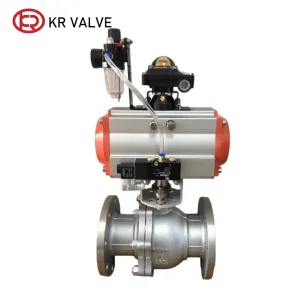
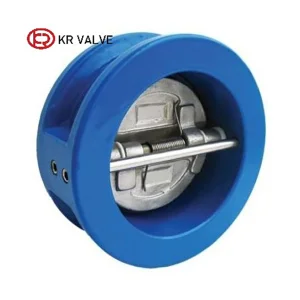
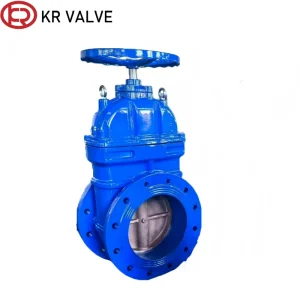
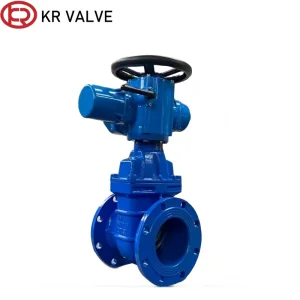
Global Market Intelligence: The Shift Toward Smart & Resilient Valve Architectures
The global industrial valve market is undergoing a structural paradigm shift. Driven by megatrends such as clean energy transition, municipal water infrastructure upgrades, and process automation, the demand for precision-engineered Ball Valves and Check Valves is expanding rapidly across cross-border industrial sectors.
Water & Wastewater Modernization
Aging municipal pipelines in North America and Western Europe, coupled with mega-desalination projects across the GCC region, demand resilient seated gate valves and dual disc check valves compliant with AWWA C594 and BS5153 standards to mitigate hydraulic water hammer and backflow contamination.
Energy & Hydrogen Transition
As green hydrogen, LNG export terminals, and carbon capture (CCUS) facilities expand, OEM manufacturers are called upon to deliver ultra-low fugitive emission ball valves equipped with smart pneumatic positioners and metal-to-metal seating designed for cryogenic or high-temperature media.
IIoT & Automated Process Control
Modern plant operations are phasing out manual lever-only valves in critical loops. The integration of electric/pneumatic actuators with limit switches, HART protocol positioners, and predictive maintenance diagnostics ensures zero operational downtime in continuous chemical plants.
Engineering Architecture: Kinematics, Tribology & Fluid Mechanics
To achieve maximum efficiency and operational longevity in process systems, piping design engineers must understand the mechanical distinctions, flow coefficients ($C_v / K_v$), and sealing mechanics between quarterly-turn quarter-turn isolation devices (Ball Valves) and self-acting directional flow preventers (Check Valves).
1. Ball Valve Kinematics
Ball valves utilize a spherical closure element with a precision-machined bore through its centerline. Rotating the stem by 90 degrees aligns or blocks the flow path. Key design variations include:
- Floating Ball Architecture: Upstream pressure pushes the unanchored sphere against the downstream seat for tight sealing at lower pressures.
- Trunnion-Mounted Architecture: The ball is anchored by top and bottom stems, dramatically reducing operating torque and seat wear in high-pressure (Class 600-2500) or large-bore applications.
2. Check Valve Dynamics
Check valves are automatic non-return valves operated purely by medium differential pressure. Critical dynamic mechanisms include:
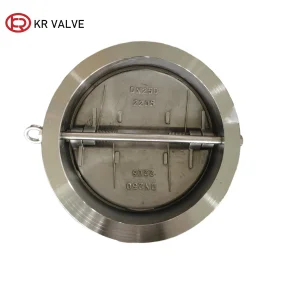
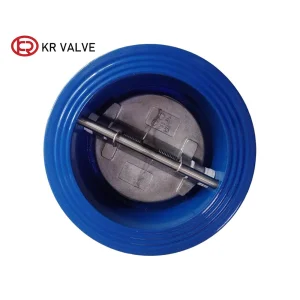
- Dual Disc Wafer Type: Dual spring-loaded plates collapse against the center post upon forward flow and snap shut rapidly prior to flow reversal, effectively eliminating water hammer.
- Ball Check Valves: An elastomeric-coated sphere lifts out of the flow path under forward head pressure and settles tightly onto a conical seat during zero-flow or back-pressure conditions.
3. Sealing Materials & Tribology
Selecting the optimal seat matrix dictates temperature ratings, chemical compatibility, and fugitive emissions performance:
- Soft Seats (EPDM, NBR, PTFE, PEEK): Provide Class VI zero-leakage tight shutoff for clean fluids, water, and moderate chemical media.
- Metal Seats (Stellite #6, HVOF Tungsten Carbide): Designed for abrasive slurries, high temperatures (>300°C), and severe service erosive fluids.
Fluid Dynamics & Sizing Formula Matrix
Engineers must evaluate the Cavitation Index ($K_c$) and Pressure Recovery Factor ($F_L$) when selecting OEM valve configurations for high-velocity liquid piping:
| Valve Category | Standard Design Code | Flow Coefficient ($C_v$) Profile | Typical Cavitation Index ($K_c$) | Optimal Operating Medium |
|---|---|---|---|---|
| Full Bore Ball Valve | API 6D / ASME B16.34 | Ultra-High (Minimal pressure drop) | 0.55 - 0.65 | Crude Oil, Hydrocarbons, Natural Gas, Steam |
| Dual Disc Wafer Check | AWWA C594 / BS5153 | Medium-High (Streamlined twin plates) | 0.40 - 0.50 | Potable Water, Cooling Towers, Sewage Mains |
| Resilient Seat Gate Valve | DIN F5 / BS5163 | Full Unobstructed Bore ($C_v \approx$ Pipe $C_v$) | 0.70 - 0.80 | Municipal Water Supply, Fire Hydrant Systems |
| Ball Type Check Valve | DIN 3202-F6 / EN 1092-2 | Full Bore (Self-cleaning unobstructed path) | 0.45 - 0.55 | Viscous Wastewater, Slurry, Pumping Stations |
Localized Engineering Application Scenarios
Different industrial sectors present unique physical, chemical, and environmental challenges. Below are four primary operational environments where tailored OEM valve configurations provide maximum operational uptime and risk mitigation.
High-Pressure Water Desalination
Environment: Seawater reverse osmosis (SWRO) facilities requiring extreme resistance to chloride pitting corrosion.
OEM Valve Spec: Super Duplex SS2507 / CF3M dual disc check valves equipped with custom rubber lining and Hastelloy springs to prevent rapid localized corrosion and back-flushing shockwaves.
Refinery & Hydrocarbon Processing
Environment: High-temperature, high-pressure catalytic cracking and hydrocarbon transportation pipelines.
OEM Valve Spec: WCB / CF8M API 6D trunnion ball valves featuring metal-to-metal seats, graphite fugitive packing, anti-static stems, and fire-safe certification to API 607 / ISO 10497.
Municipal Sewage & Wastewater Mains
Environment: Raw sewage pumping lines prone to solid clogging, stringy debris, and hydrogen sulfide ($H_2S$) biogenic corrosion.
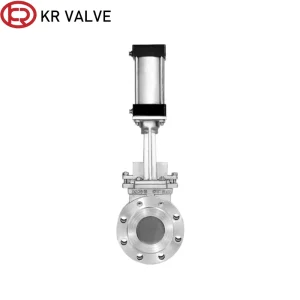
OEM Valve Spec: Ductile iron GGG40 ball check valves with sinking NBR/EPDM coated iron balls and stainless steel knife gate valves with pneumatic actuators for automatic solids shearing.
District Heating & HVAC Networks
Environment: Closed-loop chilled and hot water distribution networks demanding low torque, high cycle frequency, and compact face-to-face dimensions.
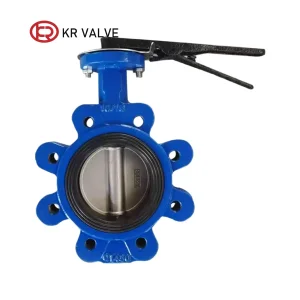
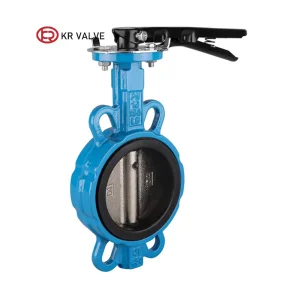
OEM Valve Spec: Concentric wafer and lug butterfly valves alongside electric actuated gate valves with position feedback sensors for central building management integration.
OEM Manufacturing Rigor, Advanced Metallurgy & E-E-A-T Assurance
In critical fluid infrastructure, supplier credibility is established through strict metallurgical verification, automated CNC machining, and comprehensive Nondestructive Testing (NDT).
Material Integrity & Spectrometry
Every batch of raw iron, ductile iron (GGG40/GGG50), carbon steel (WCB), or stainless steel (CF8, CF8M, CF3M) undergoes Positive Material Identification (PMI) optical emission spectrometry to guarantee exact chemical composition before casting.
Micron-Level Surface Finish
Ball valve spheres and metal seats undergo multi-axis CNC turning and ultra-fine spherical lapping, achieving surface roughness ($Ra$) under 0.1 microns to guarantee low breakaway torque and zero-leakage sealing performance under maximum rated working pressure.
Hydrostatic & Pneumatic Testing
Following ISO 5208 and API 598 protocols, 100% of manufactured valves are hydrostatically tested for shell strength (1.5x PN/Class) and seat tightness (1.1x PN/Class), complemented by low-pressure air seat testing to verify zero bubble formation.
Technology Roadmap: The Future of Valve Manufacturing (2025 - 2035)
As industrial operators transition toward smart factories and decarbonized processing, industrial valve manufacturing is integrating advanced digital monitoring, additive manufacturing, and eco-designed seal chemistry.
Smart Actuation & IIoT Sensor Integration
Integration of micro-embedded vibration, temperature, and stem torque sensors directly inside smart positioners. Enables real-time seat wear monitoring and predictive alert signals transmitted via wireless HART, Modbus, or IO-Link to edge control platforms.
Additive Manufacturing for Custom Severe-Service Trims
Adoption of Direct Energy Deposition (DED) and Selective Laser Melting (SLM) 3D printing for specialized anti-cavitation valve trims, internal flow conditioning channels, and non-standard alloy valve bodies, cutting prototype lead times from months to days.
Zero-Emission & Bio-Based Fluoropolymer Sealing
Elimination of legacy PFAS chemistries in soft seat manufacturing in compliance with strict EU/US environmental directives. Development of next-generation bio-based elastomers and self-healing metal matrix composites for lifetime zero-fugitive emission valves.
Macro Industry Solutions Selection Framework
A strategic decision guide for project engineers, procurement managers, and plant operators seeking optimized valve selection.
Solution Matrix A: Slurry & Mining Piping
Challenge: Heavy erosion, particulate jamming, and scale build-up in slurry transport lines.
Recommended Combination: Stainless Steel Pneumatic Knife Gate Valves (for line isolation) paired with Ductile Iron Ball Check Valves (to prevent slurry back-settling).
Solution Matrix B: High-Temperature Steam Mains
Challenge: Thermal expansion, steam hammer, and seat deformation above 250°C.
Recommended Combination: High-Temperature WCB Metal Seated Gate Valves ANSI 150LB/300LB paired with Forged Steel Lift Check Valves featuring hardfaced Stellite trims.
Solution Matrix C: Potable Water Distribution
Challenge: Hydraulic head pressure fluctuations, water hammer prevention, and non-toxic coating compliance.
Recommended Combination: Resilient Seat Gate Valves (DIN F5 / BS5163) with EPDM full encapsulation, coupled with Stainless Steel Wafer Dual Disc Check Valves (AWWA C594).
Featured OEM Valve Assemblies (Part II)
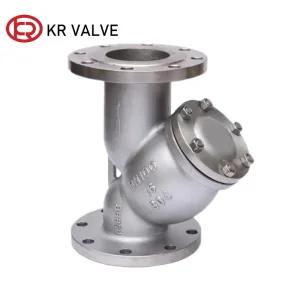
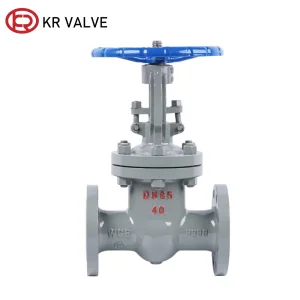
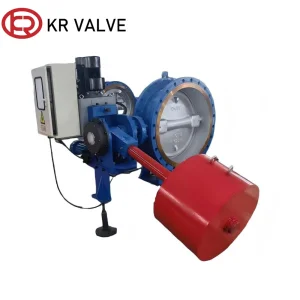
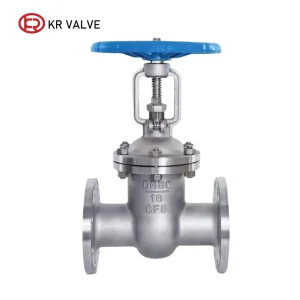
Heavy-duty strainers, gate, butterfly, and hydraulic control valves
Frequently Asked Questions: OEM Valve Engineering & Selection
In-depth answers curated by senior flow control engineers to resolve design, compliance, and custom manufacturing inquiries.
Selection depends primarily on pressure rating, line size, and cost constraints. Ball valves provide a straight-through full bore with higher flow coefficients ($C_v$), superior bubble-tight shutoff at high pressures (up to ASME Class 2500), and excellent resistance to abrasive or slurry-laden media. However, they become heavy and cost-prohibitive in sizes above DN300 (12 inches). Butterfly valves offer a compact, lightweight, face-to-face wafer or lug profile ideal for large-diameter lines (DN50 to DN3000) at lower pressure classes (PN10/PN16/Class 150), though the disc remains in the flow stream, creating slightly higher pressure drop.
Conventional swing check valves rely on gravity and fluid backflow to push a single heavy disc back onto its seat, which often results in dynamic slam when flow reverses rapidly (causing severe shock pressure spikes known as water hammer). Dual disc wafer check valves utilize twin lightweight semi-circular plates loaded by high-torsion springs. The springs initiate closure the instant forward flow decelerates, snapping the plates shut at zero fluid velocity before reverse flow can build momentum, effectively dampening hydraulic shock waves.
Our OEM factory capability provides comprehensive customization, including cast body materials (Ductile Iron GGG40/GGG50, Cast Steel WCB, Stainless Steel CF8/CF8M/CF3M, Super Duplex 2205/2507), trim combinations (Stellite hardfacing, Monel, Hastelloy), soft seat compounds (WRAS/NSF certified EPDM, NBR, Viton, PTFE, PEEK), custom face-to-face dimensions to EN 558 / ASME B16.10, private label casting logos, customized epoxy powder coating colors (RAL codes), and direct actuator mounting flanges meeting ISO 5211 standard.
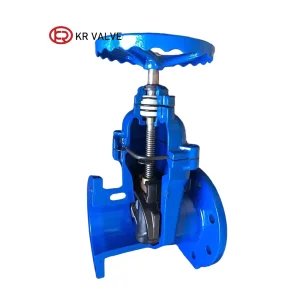
BS5163 (British Standard) and DIN 3352 F5 (German Standard) define rigid structural standards for face-to-face dimensions, wall thickness, torque requirements, and wedge encapsulation for gate valves installed in underground municipal water distribution lines. Compliance ensures that resilient EPDM-vulcanized wedges form a smooth, obstructionless bottom seat cavity free of sediment-trapping recesses, allowing 100% zero-leakage isolation and direct pipe-cleaning pig access without damaging internal valve components.
Every export shipment is backed by a robust Quality Assurance Dossier compliant with EN 10204 3.1 Certification. This includes raw material mill test reports (MTRs) detailing chemical and mechanical properties, 100% hydrostatic shell and seat leak inspection test certificates (API 598 / ISO 5208), paint coating thickness measurements, PMI verification reports, wall thickness logs, and optional Third-Party Inspection (TPI) witness sign-offs (SGS, TÜV, Bureau Veritas, DNV).