1. Executive Summary & The Evolution of Automated Flow Control
In modern process automation, municipal engineering, and chemical transport pipelines, the requirement for zero-leakage fluid isolation coupled with high dynamic torque control has elevated the industrial butterfly valve from a simple manual shut-off element to a sophisticated, mechatronic flow management system. As global industrial infrastructures modernize, EPC (Engineering, Procurement, and Construction) contractors, plant engineers, and OEM buyers face rising operational pressures: reducing pressure drops across pipeline loops, minimizing fugitive emissions, ensuring compatibility with digital protocols (such as Modbus, HART, and PROFIBUS), and extending total operational lifespans under aggressive media conditions.
Selecting the ideal OEM Butterfly Valve And Actuator Manufacturer is no longer merely a purchasing decision based on unit cost. It represents a long-term strategic commitment to system safety, hydro-dynamic efficiency, and operational uptime. A fully integrated valve and actuator package must harmonize mechanical metallurgy, precision elastomeric or metallic sealing surfaces, ISO 5211 mounting interface standards, and precise torque matching under variable fluid velocities. When improper actuator sizing occurs, operational failure mode risks multiply—ranging from stem galling and seat erosion to total actuator stall during pressure surges.
Technical Insight: Fluid dynamics data indicates that over 68% of automated valve failures stem from inaccurate dynamic torque sizing (ignoring dynamic fluid breakaway torque) and poor alignment between the actuator yoke and valve stem, rather than intrinsic seal fatigue.
2. Valve Kinematics & Sealing Metallurgy Engineering Deep Dive
Understanding the kinematic classification of butterfly valves is essential for optimizing plant performance. Modern OEM valve design categorizes butterfly bodies according to disc offset geometry and seat lining chemistry:
2.1 Concentric (Zero-Offset) Resilient-Seated Architecture
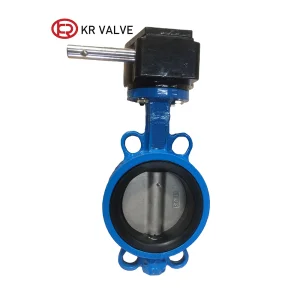
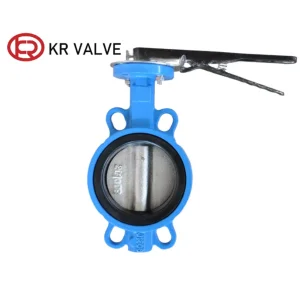
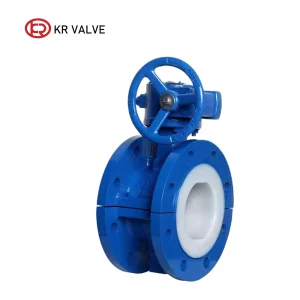
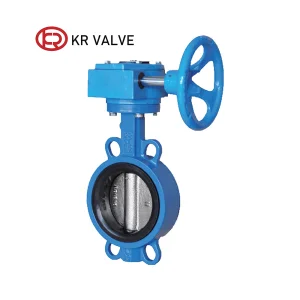
Concentric butterfly valves position the stem shaft through the center of the valve body and disc bore. Sealing relies on radial compression of an elastomeric liner (such as EPDM, NBR, Viton/FKM, or molded PTFE). These valves excel in low-to-medium pressure applications (PN6 to PN16 / ANSI Class 150) where tight bubble-shutoff (API 598 zero leakage) is required. Split-body designs lined with full virgin PTFE or PFA are specifically engineered for highly corrosive chemical lines (chlor-alkali processing, acid transport, and pharmaceutical manufacturing) to isolate metallic wetted parts completely from aggressive fluids.
2.2 Double Eccentric (High-Performance) Topology
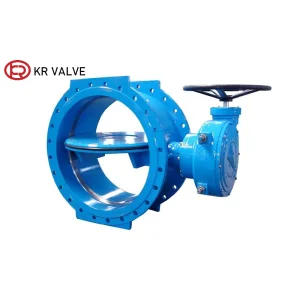
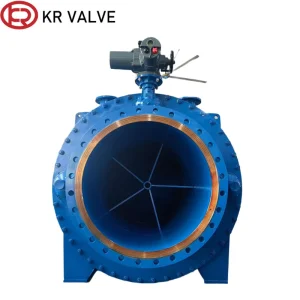
Double offset butterfly valves shift the stem shaft axis back from the seat plane (Offset 1) and off the pipeline center axis (Offset 2). This dual displacement creates a camming effect as the disc rotates open, immediately lifting the disc edge clear of the resilient or stainless steel seat within the first 5 to 10 degrees of rotation. This mechanism drastically reduces friction, minimizes mechanical wear, lowers required operating torque by up to 30%, and extends seal operational cycles to hundreds of thousands of operations in HVAC cooling loops and water distribution lines.
2.3 Triple Offset (TOV) Metal-Seated Geometry
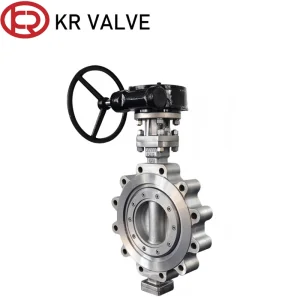
For extreme temperature profiles (-196°C cryogenic to +600°C superheated steam) and high-pressure regimes (ANSI Class 300 to Class 600), Triple Offset Valves incorporate a third offset: an inclined conical sealing cone angle. The triple offset eliminates all sliding friction throughout the disc travel stroke, achieving true bi-directional metal-to-metal contact sealing via torque action rather than mechanical interference. Stellite-hardfaced seats and laminated stainless steel/graphite seals deliver fire-safe performance certified to API 607.
| Design Configuration | Seat & Lining Material | Pressure Rating | Disc Kinematics | Primary Industry Application |
|---|---|---|---|---|
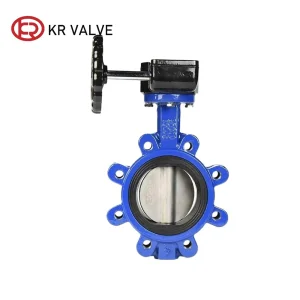
| Concentric Wafer/Lug | EPDM / NBR / Neoprene | PN6 - PN16 (Class 150) | Zero Offset Friction Seal | Municipal Water, HVAC, Irrigation |
| Split-Body Concentric | Full PTFE / PFA Lined | PN10 - PN16 | Zero Offset Corrosion Isolation | Chemical Processing, Acids, Fine Bio-Tech |
| Double Eccentric Flanged | SS304 Surfacing / EPDM | PN10 - PN25 (Class 150/300) | Dual Offset Camming Motion | Main Water Transmission, Pumping Stations |
| Triple Offset Heavy Lug | Stellite / SS316 + Graphite | PN16 - PN100 (Class 150 - 600) | Conical Angle Torque-Seated | Petrochemical Refineries, Steam, Power Plants |
3. Actuator Selection, Sizing Margins & Smart Control Automation
Pairing an industrial butterfly valve with the appropriate automatic actuator requires meticulous torque calculation. The total hydrodynamic torque ($T_{total}$) experienced by the valve assembly consists of five discrete component vectors:
Torque Calculation Formula: Ttotal = Tseat (Seating/Unseating Friction) + Tbearing (Stem Bearing Friction) + Thydro (Dynamic Fluid Force) + Thydrostatic (Differential Pressure) + Tpacking (Stem Gland Friction)
When engineering OEM custom valve-actuator integration, professional manufacturers apply a safety factor margin of at least 25% to 30% above the peak breakaway torque under maximum differential pressure ($\Delta P$) operating conditions. actuator automation options fall into three major tech categories:
3.1 Pneumatic Rack-and-Pinion & Heavy-Duty Scotch Yoke Actuators
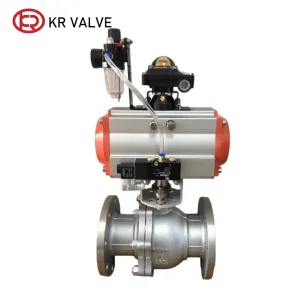
Pneumatic rotary actuators offer high cycle speed, inherent explosion-proof capability (ATEX compliance), and fail-safe spring-return action (Fail-Closed or Fail-Open). Double-acting models provide precise quarter-turn positioning, while Scotch Yoke designs deliver high starting torque profiles tailored specifically for unseating large-diameter double/triple offset valves.
3.2 Intelligent Motorized Electric Actuators
Electric actuators (operating on 24VDC, 220VAC, or 380VAC 3-phase power) integrate brushless motors, planetary gear reduction systems, and electronic torque switches. Modern smart electric actuators feature integrated electro-pneumatic positioners accepting 4-20mA control signals or digital fieldbus communication protocols (Modbus RTU, HART, CANopen). Optical absolute encoders provide continuous valve disc position feedback accurate to within 0.1% of total stroke length.
ISO 5211 Standard Interface
Direct-mount flange dimensions according to ISO 5211 eliminate costly mounting kits, reduce hysteresis, and ensure perfect stem-to-actuator concentricity.
Intelligent Limit Switch Boxes
Weatherproof (IP67/IP68) and explosion-proof enclosures house micro-switches or proximity sensors for reliable open/close remote visual confirmation.
Electro-Pneumatic Modulation
Proportional positioners adjust air distribution dynamically, converting continuous 4-20mA process signals into precise modulating flow trim settings.
4. Strategic Advantages of Manufacturing in China's Valve Clusters
China has established itself as the global manufacturing hub for industrial flow control hardware, combining comprehensive upstream metallurgical foundries with advanced CNC precision machining clusters. Concentrated industrial regions—specifically in Tianjin, Zhejiang, and Jiangsu—offer unique supply chain synergies for OEM procurement specialists:
- Foundry Integration & Metallurgical Control: In-house electric induction melting and spectrographic chemical analysis ensure strict compliance with ASTM A216 WCB, ASTM A351 CF8/CF8M, and EN 1563 Ductile Iron (GGG40 / GGG50) chemical compositions.
- Precision CNC Machining & Automation: Multi-axis horizontal machining centers handle large valve body bores up to DN3000, maintaining tight tolerance fits for stems, bearing bushings, and sealing faces.
- End-to-End Quality Management Systems: Premier manufacturers maintain ISO 9001, CE-PED (Pressure Equipment Directive), API 6D, API 609, and WRAS (Water Regulations Advisory Scheme) certifications to ensure hassle-free global deployment.
- Custom OEM / ODM Customization: Engineering teams provide full white-label manufacturing, custom face-to-face dimensions (EN 558 series 20/13, API 609), non-standard flange drilling (PN10, PN16, Class 150, JIS 10K), and tailored epoxy powder coating (RAL 5005/5017, minimum 250 microns).
5. Localized Application Scenarios & Macro Engineering Solutions
5.1 Municipal Water Supply, Desalination & Sewage Treatment
In municipal clean water transmission networks, energy loss across throttling elements must be minimized. Large-diameter double eccentric flanged butterfly valves with SS304 micro-finished disc edge sealing surfaces and WRAS-approved EPDM body seats deliver minimal hydraulic resistance and zero head loss penalty over decades of continuous submerged service. For sea water reverse osmosis (SWRO) desalination plants, duplex stainless steel (2205 / 2507) disc construction prevents pitting and crevice corrosion under high salinity environments.
5.2 Petrochemical Corrosive Fluid Isolation & Refining
Refinery hydrocracking, flare gas handling, and aromatic hydrocarbon lines demand robust fire-safe containment. Metal-seated triple offset butterfly valves with graphite seal rings prevent fugitive VOC leakage. When handling harsh inorganic acids (sulfuric, hydrochloric, hydrofluoric), split-body full PTFE-lined concentric valves isolate metal bodies completely, preventing chemical attack and stress corrosion cracking.
5.3 Commercial HVAC & Smart District Heating Networks
Smart building automation relies on modulating electric actuated wafer butterfly valves to regulate chilled and hot water distribution across heat exchangers. Integrated BACnet/Modbus actuator electronics allow facility engineers to balance flow dynamically based on real-time room occupancy and thermal loads, lowering boiler and chiller electrical consumption by up to 22% annually.
6. Enterprise Global Procurement & Inspection Assurance Protocol
To mitigate risk when sourcing industrial valves internationally, global procurement managers should enforce a standardized 5-step factory inspection and verification protocol before shipment approval:
Material Verification
Positive Material Identification (PMI) testing using handheld XRF analyzers to confirm alloy composition against mill test certificates (EN 10204 3.1).
Dimensional Audit
Verification of face-to-face dimensions, bolt circle hole alignment, stem keyway tolerances, and ISO 5211 mounting flange concentricity.
Pressure Testing
100% hydrostatic shell testing (1.5x PN rating) and high-pressure air seat leakage testing (1.1x PN rating) in accordance with API 598 or ISO 5208 Rate A.
Actuator Functional Test
Full stroke open/close cycling test, limit switch position signal validation, 4-20mA positioner step response calibration, and torque trip verification.