Featured OEM Industrial Valves & Strainers
Precision-manufactured non-return check valves, resilient seat gate valves, and strainers built for global pipeline infrastructure.
Cast Iron (CI) vs. Ductile Iron (DI) Check Valve Engineering
Understanding microstructural composition, mechanical stress threshold, and thermal-shock resistance for optimal non-return valve selection.
Engineering Information Gain: Microstructural Differentiation
The critical distinction between Cast Iron (Grey Iron - GG25 / EN-GJL-250) and Ductile Iron (Nodular Iron - GGG40 / EN-GJS-400-15 / ASTM A536) lies within the carbon graphite morphology. Grey cast iron contains sharp, flake-like graphite structures that act as internal stress concentrators, rendering the alloy brittle under tensile shock loads. Conversely, ductile iron incorporates a magnesium inoculation process that transforms graphite flakes into spherical nodules. This nodular structure eliminates micro-crack propagation, boosting tensile strength from 250 MPa up to 450-500 MPa and elongation from 0.5% up to 18%.
| Mechanical & Physical Property | Cast Iron (CI - GG25 / FC200) | Ductile Iron (DI - GGG40 / EN-GJS-400) | Ductile Iron (DI - GGG50 / EN-GJS-500) |
|---|---|---|---|
| Microstructural Graphite Form | Flake Graphite (ASTM Type VII) | Spheroidal Nodular (ASTM Type I/II) | Spheroidal Nodular (ASTM Type I/II) |
| Tensile Strength ($\sigma_b$) | 250 MPa (36,000 PSI) | 400 MPa (58,000 PSI) | 500 MPa (72,000 PSI) |
| Yield Strength ($\sigma_s$) | N/A (Brittle Fracture) | 250 MPa (36,000 PSI) | 320 MPa (46,000 PSI) |
| Elongation Rate ($\delta$) | 0.3% – 0.8% | 15% – 18% | 7% – 10% |
| Impact Resistance (Charpy V-Notch) | Low (< 3 Joules) | High (≥ 12 Joules at -10°C) | Moderate (≥ 9 Joules) |
| Water Hammer Shock Tolerance | Moderate Shock Vulnerability | Superior Surge Resistance | High Surge Resistance |
| Standard Pressure Ratings | Class 125, PN6, PN10 | Class 150, PN10, PN16, PN25 | Class 150, Class 300, PN16, PN40 |
Kinematics of Non-Return Mechanisms & Anti-Slam Technology
Evaluating dual-disc wafer, rubber flap flange, swing check, and ball check valves to eliminate transient hydraulic shocks.
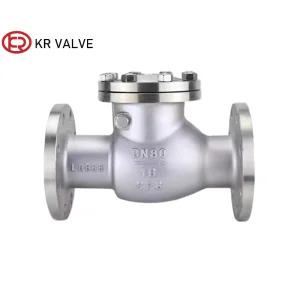
Dual-Disc Wafer Check Valve
Featuring twin spring-loaded semicircular plates hinged around a center pin. The dynamic spring tension forces the plates to close rapidly prior to flow reversal, cutting response times to under 0.15 seconds.
- Ultra-short face-to-face dimension (ISO 5752)
- Minimal weight for high-rise HVAC & cooling towers
- Vulcanized EPDM/NBR seat prevents disc wear
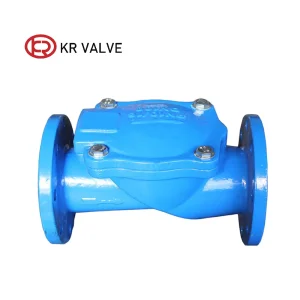
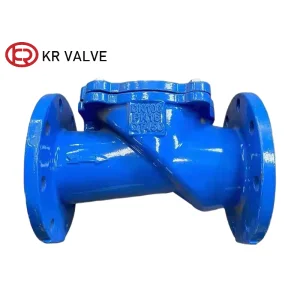
Rubber Flap Flange Check Valve
Engineered with a 45-degree inclined seat angle and a 100% elastomer-encapsulated steel flap. The inclined seat design reduces travel stroke distance by 50%, virtually eliminating slam impact.
- Zero mechanical hinge pins to corrode or jam
- Rated for 1,000,000+ continuous flex cycles
- Ideal for raw municipal sewage & sludge lines
Non-Clog Ball Check Valve
Utilizes an NBR/EPDM coated hollow aluminum or iron ball that rolls out of the flow path during forward fluid velocity. Provides a 100% full-bore opening with negligible head loss.
- Self-cleaning ball rotation prevents particulate buildup
- Vertical & horizontal installation versatility
- DIN 3202 F6 face-to-face standard compliant
Total Cost of Ownership (TCO) & Supply Chain Risk Mitigation
How enterprise EPC contractors and valve distributors evaluate factory capabilities, chemical composition verification, and long-term operating costs.
1. Raw Material Traceability
Every casting batch undergoes optical emission spectrometry (OES) analysis to verify C, Si, Mn, P, S, and Mg ratios, yielding EN 10204 3.1 chemical & physical test certificates for total traceability.
2. Hydrostatic Shell & Seat Testing
100% of check valves undergo high-pressure hydraulic shell testing (1.5x PN) and low/high-pressure resilient seat closure testing (1.1x PN) under ISO 5208 Rate A standards to guarantee zero leakage.
3. Life Cycle Cost (LCC) Reduction
Optimized hydrodynamic valve body cavities reduce coefficient of resistance ($\zeta$), cutting pumping energy consumption by up to 14% over a 25-year operational plant lifespan.
International Standard Mapping & OEM Customization Protocol
Seamlessly matching custom valve dimensions, flange drilling patterns, and trim metallurgy to major international codes.
| Standard Region | Check Valve Standard | Gate Valve Standard | Flange Drilling Standard | Face-to-Face Code |
|---|---|---|---|---|
| North America (ANSI/AWWA) | AWWA C508 / API 594 | AWWA C509 / AWWA C515 | ASME B16.1 Class 125 / B16.5 | ASME B16.10 |
| Europe (BS / EN / DIN) | BS EN 12334 / DIN 3202 F6 | BS EN 1171 / DIN 3202 F4 F5 | EN 1092-2 PN10 / PN16 / PN25 | EN 558 Series 10, 14, 15, 48 |
| British Standard (BS) | BS 5153 | BS 5163 Type A/B | BS 4504 Table 10/16 | BS 2080 |
| International (ISO) | ISO 15761 / ISO 5208 | ISO 7259 | ISO 7005-2 | ISO 5752 |
OEM / ODM Private Label Customization Program
As a specialized China check valve factory, we offer complete OEM engineering customization. Options include: customized valve body casting logos, custom Ral color epoxy powders (WRAS / NSF61 certified), stainless steel SS304/SS316/Aluminum-Bronze disc trims, bypass piping installations, hydraulic slow-closing dashpots, extension stems, and specialized marine-grade packaging.
Macro Industry Applications & Enterprise Flow Solutions
Engineered to deliver high-integrity backflow isolation across diverse severe-service industrial sectors.
Municipal Water Supply & Desalination
High-capacity ductile iron swing and dual-disc check valves protect booster pumping stations against sudden pump outages. Internal FBE coating resists aggressive salt and potabilized water chemicals.
Sewage & Slurry Transport
Non-clogging ball check valves and rubber flap flange valves prevent backflow in abrasive wastewater containing suspended solids, fibrous rags, and industrial sludge.
HVAC, Power & District Cooling
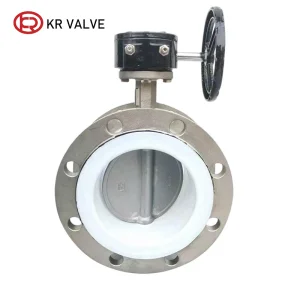
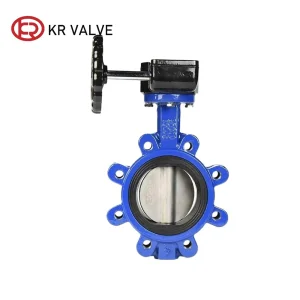
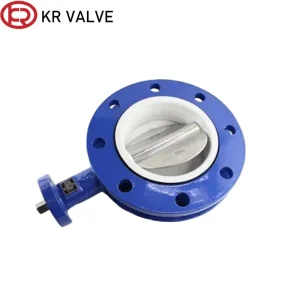
Wafer check valves and concentric butterfly valves offer minimal pressure drops, stabilizing chilled water flow loop pressure while preserving energy efficiency in commercial towers.
Rigorous Quality Verification & International Compliance
From spectrographic raw material inspection to zero-leakage pressure testing, every valve meets international safety standards.
Potable Water Certifications
Our EPDM seals and epoxy coatings strictly adhere to WRAS, NSF/ANSI 61, and DVGW drinking water health standard guidelines, preventing chemical leaching.
CE PED 2014/68/EU Directive
Certified for European pressure equipment safety standards under Category II/III, Module H pressure equipment directive oversight.
ISO 9001:2015 Manufacturing
Complete quality management control covering pattern design, DISAMATIC green sand molding, CNC precision turning, assembly, and hydrotesting.
Technical Roadmap & Future Smart Valve Innovations
Next-generation non-return flow control incorporating IoT acoustics, zero-slam hydraulic dampers, and eco-foundry methods.
Smart Valve Condition Sensors
Integrating wireless acoustic emission sensors inside the check valve bonnet to detect internal reverse leakage, seat erosion, and cavitation prior to catastrophic line failure.
Hydraulic Damping Anti-Slam
Developing multi-stage hydraulic slow-closing cylinders for large-diameter (DN600-DN1200) swing check valves, reducing dynamic slam pressures by over 90%.
Sustainable Green Foundry
Transitioning to electric induction melting, 98% recycled sand reclamation systems, and zero-VOC water-based epoxy coatings to cut embodied manufacturing carbon emissions.
Frequently Asked Questions by Global Valve Buyers
Expert answers regarding valve engineering, material selection, standard compliance, and OEM ordering protocols.
What is the primary difference between a Cast Iron (CI) check valve and a Ductile Iron (DI) check valve?
How does a dual-disc wafer check valve prevent water hammer compared to a conventional swing check valve?
Which seat material should I specify: EPDM, NBR, or Metal-to-Metal?
- EPDM: Best for clean municipal water, potable drinking water, and HVAC systems (-10°C to +120°C). Excellent resistance to ozone and water treatment chemicals (WRAS/NSF certified).
- NBR (Nitrile): Recommended for oily water, sewage, hydrocarbons, and gas lines (-10°C to +80°C). Superior petroleum solvent resistance.
- Metal-to-Metal (Bronze / SS304): Required for high-temperature service (>120°C), steam, dirty raw water containing debris, or abrasive slurry lines where soft elastomers would degrade.
Can your factory manufacture valves compliant with AWWA C508 and BS EN 12334 standards?
What quality assurance documentation is provided with OEM check valve shipments?
What are the installation orientation requirements for ball check valves versus swing check valves?
What is your typical OEM factory lead time and minimum order quantity (MOQ)?
Specialized Control Valves, Knife Gates & Accessories
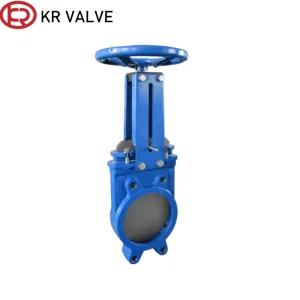
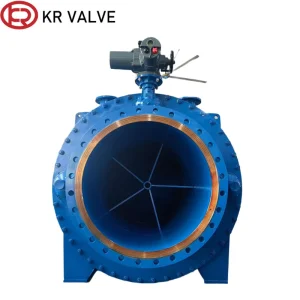
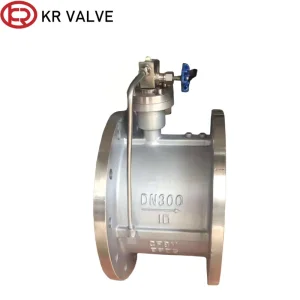
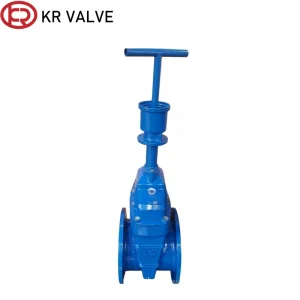
Advanced slurry knife gate valves, electric hydraulic cone valves, slow-closing check valves, and underground resilient seated valves.