
Primary Industrial Valve Collection
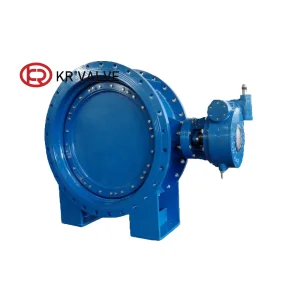
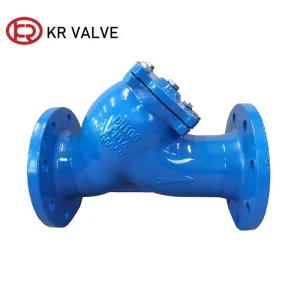
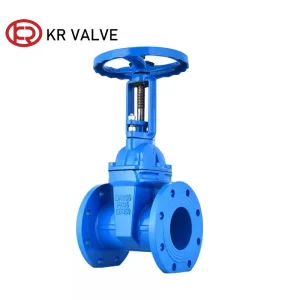
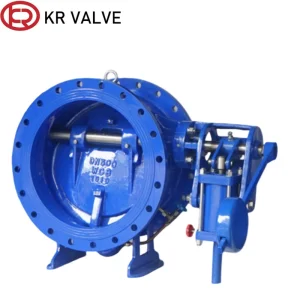
Explore our high-demand OEM/ODM valve line built to DIN, ANSI, and BS international engineering standards.
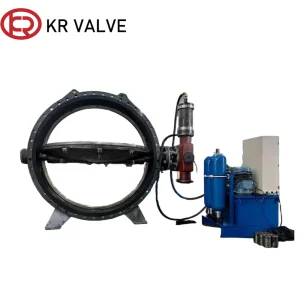
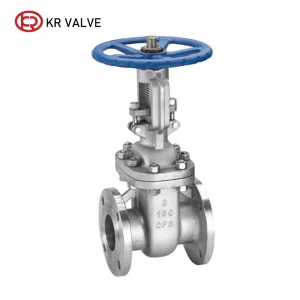
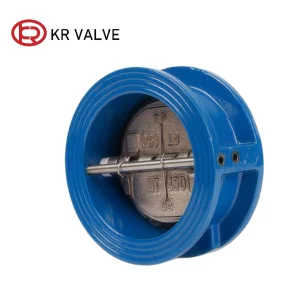
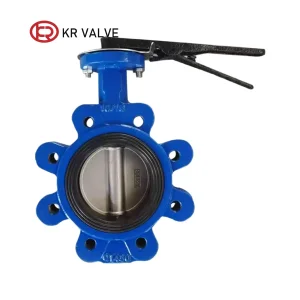
Global Industrial Status & Macro Landscape of Directional Control Valves
An in-depth whitepaper on fluid power mechanics, market dynamics, and critical operational demands.
Directional Control Valves (DCVs) represent the fundamental nerve center of modern hydraulic and pneumatic fluid power networks. Responsible for directing fluid path, controlling motion vectors, and initiating precise mechanical sequences, DCVs govern operations across multi-ton excavators, automated manufacturing robotics, aerospace actuators, and high-pressure municipal water control systems. In an era where global industries demand heightened power density, micro-second response fidelity, and stringent zero-leakage energy conservation, directional control valve engineering has evolved into a highly specialized discipline combining advanced metallurgy, Computational Fluid Dynamics (CFD), and electro-hydraulic proportional integration.
$5.8 Billion Global Market Projection
Driven by mobile machinery automation and industrial infrastructure expansion across North America, Europe, and Asia-Pacific, global DCV consumption continues to record a steady CAGR of 5.4%.
Severe Duty Environment Requirements
Modern applications operate under continuous system working pressures up to 350-420 bar, necessitating advanced cast irons (GGG50/QT500-7) and nitriding surface treatments.
Electro-Hydraulic Shift Integration
Transitioning from traditional manual/lever actuation toward digital proportional solenoids, CANbus interfaces, and real-time spool position LVDT feedback sensors.
Architectural Taxonomy & Functional Classification
Directional control valves are structurally categorized into two major design topologies: Monoblock Valves and Sectional (Modular) Valves. Monoblock designs feature a single, rigid cast iron body housing multiple internal spools. This construction yields minimal external leak points, high structural stiffness, and cost efficiency for standardized high-volume machinery like agricultural tractors and compact loaders. Conversely, Sectional Valves consist of individual work sections clamped together between inlet and outlet plates via tie-rods, affording infinite customization, field repairability, and independent pressure-compensation capability per section.
Furthermore, based on internal moving elements, DCVs are divided into:
- Spool Type Valves: Utilizing a cylindrical hardened steel spool moving axially inside a precisely honed valve body bore. Spool valves excel in multi-port routing (3-way, 4-way, 5-way) and provide smooth throttling characteristics when equipped with metering notches.
- Poppet Type Valves: Utilizing ball, cone, or flat seats to achieve absolute zero-leakage isolation. Poppet valves are preferred for safety load-holding circuits, pressure-relief safety functions, and high-duty cycle hydraulic lock systems.
Engineering Expertise & Micro-Precision Manufacturing
How state-of-the-art Chinese OEM factories bridge micrometer-level machining tolerances with ultra-reliable metallurgical integrity.
Precision Metallurgical Control & Spool Tribology
The reliability of an OEM directional control valve hinges on maintaining stable hydraulic clearances under dynamic temperature fluctuations (-20°C to +80°C) and pressure surges. In our manufacturing processes, valve bodies are cast from shell-mold nodular ductile iron (GGG50 / QT500-7), offering tensiles exceeding 500 MPa and exceptional damping properties against hydraulic shockwaves. Spools are machined from alloy steel (20CrMnTi or 8620H), followed by deep carburizing or salt-bath nitriding to attain a surface hardness of 58-62 HRC while maintaining a ductile core to prevent brittle fracture.
CFD Fluid Path Optimization & Hysteresis Reduction
Through finite-element fluid dynamics modeling, internal flow galleries within the valve body are optimized to minimize flow velocity spikes, fluid turbulence, and localized cavitation zones. Metering notches on the spool lands are CNC-ground with sub-micron repeatable accuracy, ensuring smooth transition curves between flow ports (A/B to P/T). This reduces operational mechanical hysteresis below 2% in proportional valve configurations and prevents sudden pressure spikes that compromise hydraulic motor longevity.
Strategic Procurement Advantages of China OEM Valve Factories
Maximizing Return on Investment (ROI) and supply chain resilience through cluster efficiency and custom engineering flexibility.
End-to-End Vertical Integration
From in-house sand casting foundries and high-speed multi-axis CNC honing centers to automated assembly rigs, our centralized supply chain eliminates third-party markups and lead-time delays.
Extensive OEM/ODM Customization
Custom spool metering, specialized mounting patterns (ISO 4401 / CETOP 03, 05, 07, 08), non-standard voltage solenoids (12VDC, 24VDC, 110VAC, 220VAC), and custom anti-corrosion paint coatings.
Rigorous Quality Assurance Standards
Certified under ISO 9001:2015 quality management systems. Every manufactured DCV undergoes 100% dynamic pressure testing, internal leakage rate inspection, and solenoid insulation resistance verification.
Localized Industrial Application Scenarios
Tailored hydraulic directional control valve configurations optimized for diverse global industry environments.
Mobile Construction & Earthmoving
Work Duty: Hydraulic excavators, wheel loaders, backhoes, and mobile cranes.
Valve Configuration: Load-sensing (LS) multi-spool sectional valves with secondary port relief valves and main anti-cavitation check valves to handle high peak impulse flows.
Agricultural & Forestry Equipment
Work Duty: Tractors, harvesters, forestry forwarders, and bale wrappers.
Valve Configuration: Compact monoblock valves featuring mechanical joystick cable controls, float spool positions for implement dragging, and heavy-duty weather seals.
Industrial Machinery & Injection Molding
Work Duty: Plastic injection molding presses, metal stamping machinery, CNC machine tools.
Valve Configuration: High-frequency electro-hydraulic subplate directional valves (ISO 4401 size 03/05/07) engineered for fast switching cycles and low pressure drops.
Future Industry Trends & Strategic Buyer Requirements
Navigating the global shift toward smart hydraulics, energy efficiency, and digitalized procurement.
1. Electrification & Smart Proportional Valves
As off-highway mobile equipment transitions to battery-electric and hybrid power platforms, traditional hydraulic systems must operate at peak thermodynamic efficiency. Modern global procurement teams are shifting away from purely mechanical DCVs toward digital electro-hydraulic proportional valves equipped with onboard electronics (OBE), IO-Link, and CANopen/J1939 protocols. These intelligent valves allow real-time diagnostic monitoring, programmable spool movement curves, and automatic temperature compensation, cutting overall system energy dissipation by up to 25%.
2. Total Cost of Ownership (TCO) & Supply Risk Mitigation
Global original equipment manufacturers (OEMs) and fluid power distributors require partners capable of guaranteeing consistent manufacturing quality across high volume batches. Procurement strategies now prioritize suppliers offering comprehensive material traceability (EN 10204 3.1 certification), zero-defect PPAP (Production Part Approval Process) documentation, and flexible safety stock warehousing to withstand global logistics disruptions.
Directional Control Valve Selection & Specification Matrix
Quick-reference technical standard guide for engineering procurement and design teams.
| Valve Type / Series | Actuation Method | Max Pressure (Bar) | Max Flow Rate (L/min) | Mounting Standard | Primary Target Applications |
|---|---|---|---|---|---|
| Monoblock DCV Series | Manual / Cable / Pneumatic | 250 - 315 Bar | 45 - 120 L/min | Threaded Ports (BSP / SAE) | Agricultural Tractors, Forklifts, Small Loaders |
| Sectional Modular DCV | Electro-Hydraulic / Proportional | 350 Bar | 80 - 240 L/min | Threaded / Flanged Ports | Excavators, Mobile Cranes, Drilling Rigs |
| Solenoid Subplate Valve | Direct / Pilot Solenoid (AC/DC) | 315 - 350 Bar | 60 - 300 L/min | ISO 4401 / CETOP 03, 05, 07 | Industrial Automation, Metal Presses, Injection Molding |
| Load-Sensing Proportional | CANbus / PWM Electric / Pilot | 420 Bar | 100 - 380 L/min | Custom Manifold Block | Mining Trucks, Heavy Infrastructure, Forestry Equipment |
| Poppet Zero-Leakage Valve | Solenoid / Hydraulic Lock | 350 Bar | 20 - 150 L/min | Cartridge / Subplate | Safety Load-Holding, Outrigger Jacks, Winches |
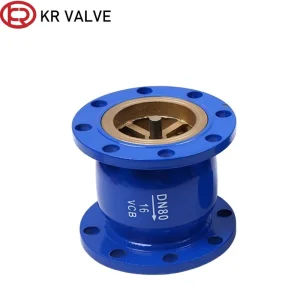
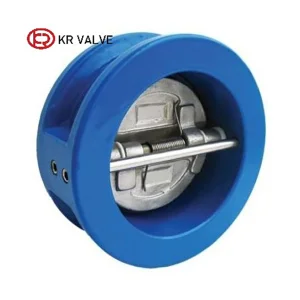
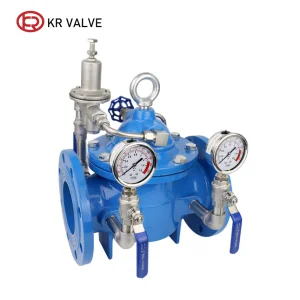
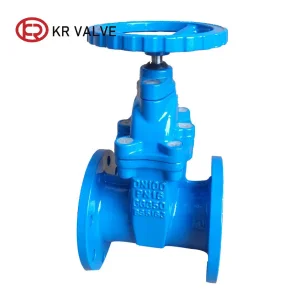
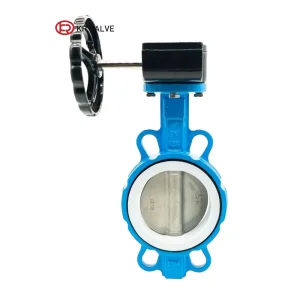
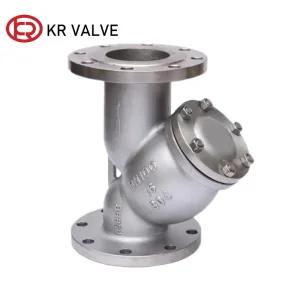
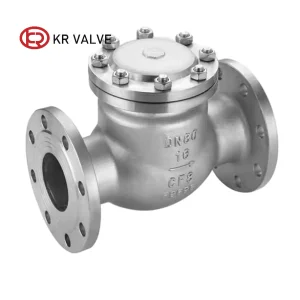
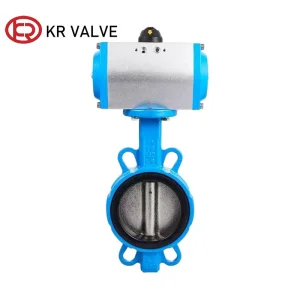
Specialized Flow Control & Auxiliary Valve Collection
Complementary high-pressure industrial valves for flow regulation, pressure relief, and backflow prevention.
Frequently Asked Questions (FAQ) for Engineering Buyers
Detailed technical answers to common questions regarding OEM directional control valve selection, customization, and factory operations.