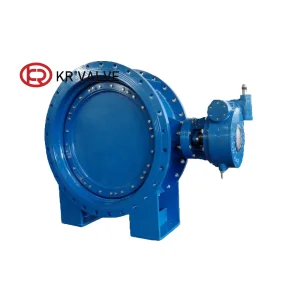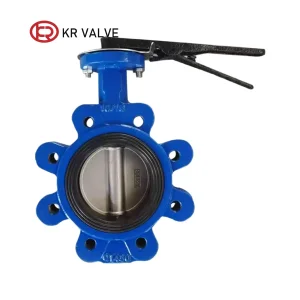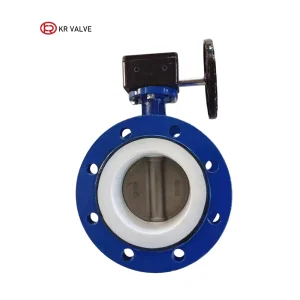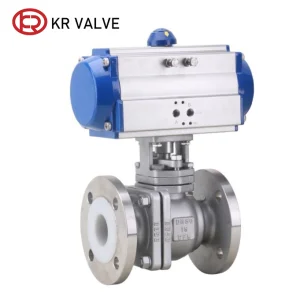
High-Performance OEM Valve Portfolio
Engineered for high-pressure municipal water transmission, industrial wastewater, and heavy-duty flow control systems worldwide.
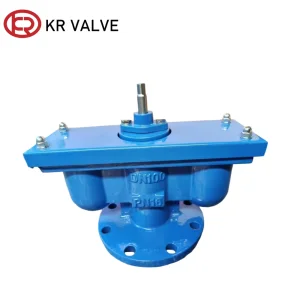
Comprehensive Technical Blueprint: Dual Port Exhaust Valves
Understanding the mechanical operation, thermodynamic air venting, and transient water hammer mitigation capabilities of dual-orifice kinetic air release systems.
1. Dual Orifice Mechanics: Kinetic vs. Automatic Functionality
In modern pipeline design, standard single-port air valves frequently fail under complex hydraulic transients. An OEM Dual Port Exhaust Valve (also recognized in fluid engineering as a double-orifice or combination air release valve) integrates two distinct mechanical mechanisms within a single body housing to manage air pockets under varying dynamic pressures:
- Large Orifice (Kinetic Air Venting & Vacuum Breaking): Operating primarily during initial pipeline filling or rapid pipeline draining, the large orifice exhausts massive volumes of air at high velocity to prevent air pockets from obstructing water column movement. Conversely, during sudden pump shutoffs or pipe drain scenarios, it admits air rapidly to break negative pressure vacuums, protecting thin-walled pipes from structural collapse.
- Small Orifice (Continuous Automatic Air Release): Under pressurized operating conditions (typically up to PN16, PN25, or PN40), dissolved air gradually comes out of solution due to temperature variations and dynamic pressure drops. The small orifice utilizes a leverage-actuated float mechanism to bleed small micro-bubbles continuously without permitting liquid leakage or pressure drop.
Information Gain Insight: Entrained air pockets in water distribution networks can reduce effective cross-sectional pipe area by up to 35%, causing exponential friction loss, booster pump cavitation, and inaccurate flow metering. Dual-port architecture addresses both macro-volume air movement and micro-bubble accumulation simultaneously.
2. Mathematical Fluid Dynamics of Air Evacuation
Calculating the correct discharge orifice size requires analyzing choked compressible flow dynamics across the valve seat. When differential pressure across the valve seat exceeds critical pressure thresholds, air discharge reaches sonic velocity ($M = 1.0$).
Engineers specifying custom OEM dual-port valves must balance high-velocity discharge against premature float closure (a phenomenon where dynamic air pressure forces the float upward to seal the large orifice before all air has been evacuated). High-grade OEM manufacturers integrate aerodynamic float guides and anti-slam baffle plates to maintain an open channel until liquid physically fills the float chamber.
Enterprise Sourcing Trends & International Compliance
How global EPC contractors, municipal water authorities, and industrial valve buyers evaluate OEM dual-port exhaust valve suppliers in 2025/2026.
Standardization & Quality Compliance
Global project tenders require strict compliance with international manufacturing frameworks. Modern buyers demand AWWA C512, EN 1074-4, and BS EN 12266-1 pressure testing certifications. Potable water installations require WRAS, NSF/ANSI 61, or ACS hygienic material approvals for EPDM seats and FBE body coatings.
Custom Material & Trim Configurations
Standard off-the-shelf cast iron body valves are rapidly being replaced by specialized alloys. Procurement teams seek OEM suppliers offering Ductile Iron EN-GJS-400-15 (GGG40), WCB Carbon Steel, SS304, SS316, and Duplex Stainless Steel (2205/2507) trims for aggressive desalination, mining slurry, and offshore duties.
Total Cost of Ownership (TCO)
Strategic buyers prioritize TCO over initial unit purchase cost. Maintenance-free stainless steel spherical floats, anti-stick vulcanized rubber seating surfaces, and self-cleaning mechanical levers reduce field service calls by up to 60% over a 15-year operational lifecycle.
China Industry 4.0: Supply Chain Resilience & OEM Edge
China’s advanced valve manufacturing clusters (such as Tianjin and Zhejiang valve manufacturing hubs) have transformed traditional foundry work into automated, precision-guided smart production networks.
- Automated Resin Sand & Shell Mold Casting: Ensures uniform wall thickness, zero internal porosity, and flawless tensile strength (minimum 400 MPa for Ductile Iron GGG40), preventing valve body rupture under transient surge pressures.
- Electrostatic Fusion Bonded Epoxy (FBE) Coating: Fully automated fluidized bed coating lines apply non-toxic epoxy resins at precise thicknesses (250 µm to 350 µm), delivering high impact resistance and zero corrosion in aggressive soil environments.
- Multi-Axis CNC Machining & 100% Hydrostatic Inspection: Every dual-port valve body undergoes multi-stage CNC flange facing, thread tapping, and mandatory dual-seat hydro-testing (Shell test at 1.5x PN; Seat test at 1.1x PN) prior to export packaging.
- Vertical Supply Chain Integration: In-house rubber vulcanization, stainless steel float drawing, and foundry operations enable complete control over delivery lead times and rapid prototyping for customized OEM dimensions.
OEM & Private Label Capabilities
We offer end-to-end manufacturing customization tailored to international engineering firms, brand distributors, and OEM partners:
Engineering Comparison: Air Release Valve Architecture
Evaluate structural differences, flow capacities, and application suitability across primary air release valve configurations.
| Performance / Spec Metric | Single Port Air Release Valve | Dual Port Exhaust Valve (Standard) | Triple-Function Combination Air Valve |
|---|---|---|---|
| Primary Functions | Small Orifice Continuous Release Only | Large Orifice Filling/Draining + Small Orifice Bleed | Kinetic Venting + Small Bleed + Integrated Anti-Slam Surge Protection |
| Air Venting Capacity | Low (Micro-bubbles only) | Very High | Maximum (Surge Controlled) |
| Vacuum Breaking Capability | None / Negligible | Instantaneous Full Bore | Instantaneous Controlled Intake |
| Water Hammer Protection | Poor | Moderate (Requires proper sizing) | Excellent (Anti-Slam Disc) |
| Typical Size Range | DN15 – DN25 (1/2" to 1") | DN50 – DN300 (2" to 12") | DN50 – DN500 (2" to 20") |
| Primary Target Applications | HVAC Loops, Small Pump Housings | Municipal Water Mains, Transmission Pipelines | High-Head Pumping Lines, Sewage Mains, Raw Water |
Worldwide Industrial & Municipal Application Scenarios
Key localized installation requirements for dual-port air release systems across critical infrastructure sectors.
Municipal Water Trunk Mains
Installed at high elevation points, ridge crossings, and long horizontal pipeline stretches. Dual-port valves continuously discharge accumulated air during normal operations, preventing localized head loss and maintaining maximum pumping network efficiency.
Pump Station Discharge Manifolds
Mounted immediately downstream of check valves and booster pumps. Upon pump start up, the large orifice vents air rapidly as the water column accelerates. When power failures occur, the valve opens instantly to admit air and prevent column separation water hammer.
Desalination & Seawater Intake
Operating in aggressive marine environments. OEM dual port valves utilize Super Duplex Stainless Steel (2507) floats, Monel trim, and high-build epoxy or rubber lining to resist high chloride pitting and galvanic corrosion.
Frequently Asked Questions (FAQ)
Detailed technical responses to common engineering, procurement, and installation queries.
How do I correctly size an OEM dual port exhaust valve for a long transmission pipeline?
Sizing an OEM dual port air release valve involves calculating two critical parameters:
- Air Evacuation Rate During Filling: Determine the maximum pipe filling velocity (typically restricted to 0.3 m/s to 0.6 m/s for safety). Multiply this by the cross-sectional area of the main pipe to calculate the required volumetric air venting capacity ($m^3/h$).
- Vacuum Intake Rate During Draining: Calculate the maximum potential gravity flow rate during a pipe burst or rapid drain scenario using the Hazen-Williams equation. The valve's large orifice must admit an equivalent volume of air at a differential pressure not exceeding 0.35 bar (5 psi) to prevent pipe collapse.
As a rule of thumb in municipal engineering, the nominal diameter of a dual-port air valve should be 1/8th to 1/10th of the main pipeline diameter for standard water mains (e.g., a DN100 air valve for a DN800 or DN1000 main pipeline).
What causes an air valve to leak water from the large orifice under high working pressure?
Water leakage from the large orifice under operating pressure is typically caused by three factors:
- Insufficient System Operating Pressure: Resilient float seats require a minimum operating pressure (usually 0.2 bar / 3 psi) to achieve a positive bubble-tight compression seal against the seat elastomer. Operating below minimum pressure can lead to weeping.
- Debris or Scale Contamination: Sand, rust scale, or line debris caught between the float guide disc and the EPDM seat ring prevents full seating contact. Installing an upstream Y-Strainer or specifying an isolation ball valve facilitates easy maintenance.
- Float Misalignment or Damage: Excessive pressure surges or water hammer can collapse low-quality hollow metal floats. High-grade OEM valves utilize solid spherical stainless steel (SS316) or high-density polycarbonate/EPDM floats to eliminate deformation.
What is the difference between a double orifice air valve and a combination air valve with an anti-slam device?
A standard double orifice air valve allows unrestricted air discharge. However, when the escaping air column is suddenly replaced by incoming water, the float slams rapidly into the seat, generating severe localized pressure spikes (water hammer).
A combination air valve with an anti-slam mechanism incorporates a secondary spring-loaded disc or throttling baffle above the large orifice. As air velocity approaches sonic thresholds during rapid pipeline filling, the anti-slam disc automatically closes, throttling the remaining air discharge. This creates a temporary air cushion that decelerates the incoming water column gently, protecting system components.
Can dual port exhaust valves be used in sewage or wastewater pipelines?
Standard clean water dual-port valves should not be used directly in raw sewage applications because solids, grease, and fibrous material will clog the narrow internal levers and small orifice channels.
For wastewater service, engineers must specify a specialized Wastewater Dual Port Air Valve. These feature an elongated conical body that keeps the liquid level far below the upper operating mechanism, providing an air cushion that isolates working parts from sludge accumulation.
What OEM custom options can Chinese manufacturers provide for international project contracts?
Leading Chinese OEM manufacturers offer comprehensive customization, including:
- Custom body castings: Ductile Iron (EN-GJS-400-15 / GGG40, EN-GJS-500-7), Cast Steel (WCB), Stainless Steel (CF8, CF8M, CF3M), and Duplex Alloys.
- Specialized internal trims: Monel springs, Hastelloy levers, and 316SS floats for corrosive environments.
- Custom pressure classes: PN10, PN16, PN25, PN40, ANSI Class 150, Class 300, and Class 600.
- Color and coating choices: WRAS-approved Epoxy powder coating, polyurethane coats, or custom RAL color schemes for brand distributors.
Industrial Valve Product Solutions
Discover our extended line of high-performance butterfly, gate, check, and control valves manufactured under international standards.